TL;DR

Get business pricing on tools and workshop supplies
- Business-only prices and quantity discounts
- Tax-exempt purchasing
- Multiple users, one account, clear invoices
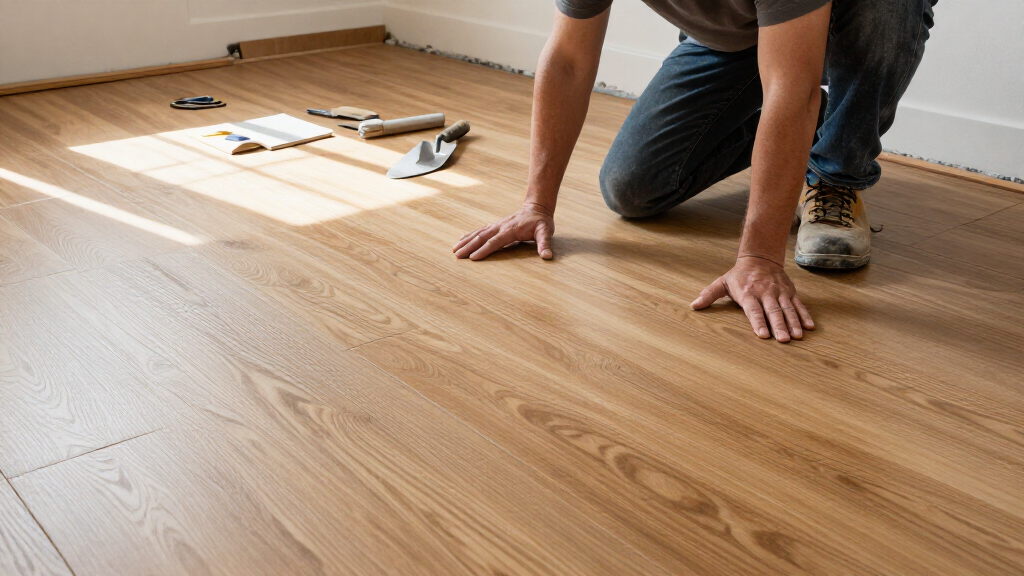
Wood-look porcelain tile is getting more realistic, with new collections shown at Cersaie and products from brands including Atlas Concorde, Marca Corona and Floor & Decor. Designers see it as useful in moisture-prone or outdoor spaces, but it is not a wholesale replacement for hardwood: tile can feel harder and colder, and installation may put its cost on par with wood.
Wood-look porcelain tile is becoming more convincing, but designers quoted by House Beautiful do not describe it as a broad replacement for hardwood. New collections shown at this year’s Cersaie tile exhibition reproduce varied wood grains and textures, while designers point to moisture resistance as an advantage in kitchens, bathrooms and outdoor areas—and to comfort and cost as reasons to choose carefully.
At Cersaie, the annual ceramic tile and bathroom furnishings exhibition in Bologna, Italy, House Beautiful reported seeing porcelain planks designed to resemble species including oak, walnut, teak and ash. The report says the newer products use more detailed grain patterns, knots, color variation and textured finishes than earlier wood-look tiles. That assessment describes the products on display; it does not establish that consumers are replacing hardwood at a particular rate.
Among the launches, Italian manufacturer Atlas Concorde expanded its Log Anthology collection with six wood species: Douglas fir, ash, elm, walnut, teak and zebrano. Its Sensitech surface is described by the company as combining slip resistance with a softer feel, and high-definition decoration is used to reproduce wood markings. Marca Corona introduced Elisir Pura, inspired by Slavonian oak, in versions with either restrained or more pronounced grain. Floor & Decor also introduced its NatureMatch line, which the company says focuses on realistic visuals and textures.
Designers cited in the report describe practical uses rather than a universal flooring switch. Britney Stein of Florida-based Sketch Design Studio said her team chose wood-look porcelain for an oceanfront home exposed to humidity, salt air and moisture. She is also working on an outdoor loggia with chevron porcelain selected to coordinate with the home’s indoor hardwood. The report notes that porcelain is generally more resistant than natural hardwood to moisture, scratches and everyday wear, while also being harder and cooler underfoot.
Where Porcelain Can Outperform Wood
The appeal is strongest where water, humidity or heavy use make natural wood more demanding to maintain. Kitchens, bathrooms, mudrooms and outdoor spaces can benefit from porcelain’s resistance to moisture and wear, according to the report. For homeowners, that can make wood-look tile a way to carry a timber-like appearance into areas where hardwood may be less suitable.
The material can also help link interior and exterior areas visually. Stein’s loggia project uses tile selected to match indoor hardwood, while Atlas Concorde offers coordinated indoor planks and outdoor pavers. These examples show how designers may use the material selectively, rather than treating it as a substitute across every room. The trade-off remains practical as well as aesthetic: tile is firmer and cooler than wood, and a premium tile installation is not automatically less expensive.
Popular right now

Ninja CREAMi Scoop & Swirl 13-in-1 Ice Cream and Soft Serve Maker, NC701

Roborock F25 Ultra Steam Wet Dry Vacuum Mop

De'Longhi Magnifica Evo Fully Automatic Espresso Machine with Manual Milk Frother, Silver
As an affiliate, we earn on qualifying purchases.
A More Textured Tile Market
Wood-look porcelain has been sold for decades, and the development described in the House Beautiful report is an improvement in product design—not the arrival of a new flooring category. Manufacturers are now emphasizing tactile surfaces alongside printed grain, with finishes intended to mimic the irregularities and feel of timber. The report places that work within a broader interest in texture and material experimentation in tile.
The product examples also move beyond a single familiar oak pattern. Atlas Concorde’s collection includes several species and formats, and Marca Corona’s launch offers two levels of visible grain. At Floor & Decor, design and trend expert Ashley Biscan said lighter tones, restrained grain and limited color variation are popular styles. Her comments describe the company’s view of demand and style preferences; the source does not provide sales figures or market-wide data.
““Realism today is as much about touch as it is about sight.””
— Viola Pagani of Atlas Concorde
No Evidence of a Hardwood Switch
The report documents new products and several designers’ project choices, but it does not show that wood-look tile is replacing hardwood across the flooring market. It gives no sales comparisons, adoption rates or survey of designers as a whole. The headline question is therefore broader than the evidence presented: the material is gaining attention and has specific applications, but the scale of any shift remains unknown.
Price also depends on the product and installation. Stein said higher-end porcelain, once installation is included, can cost as much as natural hardwood. The report does not provide a standard price comparison, nor does it quantify differences in long-term maintenance costs. The account’s final section begins to present another designer’s view but the supplied source text cuts off before the comment is complete, so it cannot support a fuller summary of that designer’s position.
Compare Products Room by Room
For now, the reported development is a set of product launches and design examples, not a confirmed market-wide change. Homeowners weighing the options can compare the specific tile and hardwood products, including purchase and installation costs, and consider how each room will be used. For moisture-prone or outdoor areas, porcelain’s performance is a stated advantage; for rooms where underfoot warmth and a softer surface matter, hardwood may remain preferable.
Further evidence would be needed to establish whether these launches lead to a wider shift: comparable sales data, pricing across installed products, and broader designer or homeowner surveys. The source does not give a timeline for such data or report a follow-up milestone. It remains to be seen how widely the newer collections are adopted beyond the projects and manufacturers described.
Key Questions
Is wood-look tile replacing hardwood floors?
The report does not establish that. It describes more realistic porcelain collections and designers using them in selected projects, but provides no market-wide sales or adoption data.
What are the main advantages of wood-look porcelain?
Porcelain is described as more resistant than natural hardwood to moisture, scratches and everyday wear. Designers cited it for humid, coastal and outdoor settings where wood may be harder to maintain.
What are the drawbacks of wood-look tile?
It can feel harder and cooler underfoot than hardwood. Higher-end products and installation may also cost as much as natural wood, according to designer Britney Stein.
Which new wood-look tile collections are mentioned?
The report names Log Anthology from Atlas Concorde, Elisir Pura from Marca Corona and Floor & Decor’s NatureMatch line.
Is wood-look tile less expensive than hardwood?
Not always. The source says tile can be a more affordable alternative, but Stein notes that premium porcelain and installation can bring the total to the cost of natural hardwood. It provides no standard price comparison.
Source: rss