

For intricate wood cutouts, I’d start with the DEWALT 18-Inch Scroll Saw for its larger throat and variable-speed control, while the WEN 3922 stands out for blade-change convenience and the Dremel Moto-Saw for compact, portable work. The main tradeoff is between a full-size machine’s reach and steadiness and a smaller saw’s easier storage and handling. Features such as blade changes, speed adjustment, table support, and compatible blade types can matter more to detailed work than a long feature list. I’ve compared the 11 listed options by their likely fit for fine cutting, usability, and workshop needs. Read on for the full breakdown and guidance on choosing the right setup.

Get business pricing on tools and workshop supplies
- Business-only prices and quantity discounts
- Tax-exempt purchasing
- Multiple users, one account, clear invoices
Complete the kit


Key Takeaways
- The DEWALT 18-inch model is the full-size lead pick: its larger cutting capacity gives intricate projects more room than the 16-inch saws, though it takes up more workspace.
- The WEN 3922 emphasizes blade-change convenience: that can help when a pattern calls for frequent internal cuts, while the WEN 3921 offers a two-direction cutting feature instead.
- The Dremel Moto-Saw fills a different role from the bench models: its compact kit suits small projects and limited work areas, not buyers seeking the reach of a full-size saw.
- Table size and work lighting shape practical control: models with tilting tables or LED/work lights can help with angled or closely observed cuts, but neither feature replaces careful blade selection.
- The FOXBC blade pack is an accessory, not a saw: it belongs in the comparison as a replacement-blade option, but buyers must check blade-end compatibility with their machine.
| Dremel MS20-01 Moto-Saw Variable-Speed Compact Scroll Saw Kit |  | Best Compact Pick | Model: MS20-01 | Power source: Corded electric | Voltage: 120 volts | VIEW LATEST PRICE | See Our Full Breakdown |
| WEN 16-Inch Variable Speed Two-Direction Scroll Saw with Work Light (3921) |  | Best for Internal-Cut Flexibility | Power source: Corded electric | Speed: 400–1,600 strokes per minute | Stroke length: 9/16 inch | VIEW LATEST PRICE | See Our Full Breakdown |
| DEWALT 18-Inch Scroll Saw with Variable Speed |  | Best for Larger Patterns | Model: DXVS4502 | Motor: 1.6 amp | Variable speed: 500–1,500 strokes per minute | VIEW LATEST PRICE | See Our Full Breakdown |
| 16-Inch Variable-Speed Scroll Saw with Adjustable Tilting Work Table |  | Best for Beveled Cutouts | Power source: Corded electric | Table tilt: 0° to 45° | Speed: 400–1,600 strokes per minute | VIEW LATEST PRICE | See Our Full Breakdown |
| Proxxon DS 230/E Scroll Saw, 85 W |  | Best for Fine Hobby Work | Model: 27088 | Power: 85 W | Voltage: 220–240 V | VIEW LATEST PRICE | See Our Full Breakdown |
| BUCKTOOL 16-Inch Variable-Speed Scroll Saw |  | Best for Angled Intricate Cuts | Power source: Corded electric | Motor: 1.3 A | Speed range: 360–1,550 RPM | VIEW LATEST PRICE | See Our Full Breakdown |
| SKIL 1.2 Amp 16-Inch Variable-Speed Scroll Saw with LED Work Light |  | Best for Cut-Line Visibility | Model: SS9503-00 | Power source: Corded electric | Current: 1.2 A | VIEW LATEST PRICE | See Our Full Breakdown |
| FOXBC 5-Inch Pin-End Scroll Saw Blades, High-Carbon Steel, 48 Pack | 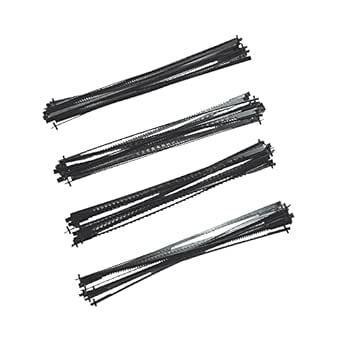 | Best Blade Variety for Pin-End Saws | Blade length: 5 inches | Blade type: Pin end | Material: SK5 high-carbon steel | VIEW LATEST PRICE | See Our Full Breakdown |
| RYOBI SC165VS 16-Inch Corded Scroll Saw |  | Best for Straightforward Wood Cutouts | Model: SC165VS | Power source: Corded electric | Voltage and current: 120 V; 1.2 A | VIEW LATEST PRICE | See Our Full Breakdown |
| WEN 3922 16-Inch Variable Speed Scroll Saw |  | Best for Interior Cuts and Bevel Work | Model: 3922 | Speed: 550–1,600 strokes per minute | Stroke length: 9/16 inch | VIEW LATEST PRICE | See Our Full Breakdown |
| PioneerWorks 16-Inch Variable-Speed Scroll Saw with Tilting Work Table | | Best for Angled Detail Work | Power source: Corded electric | Motor power: 0.9A | Blade length: 16 inches | VIEW LATEST PRICE | See Our Full Breakdown |
| scroll saws for intricate wood cutout | Weight | Power source | Model |
|---|---|---|---|
| Dremel MS20-01 Moto-Saw Variab | 4.12 kg | Corded electric | MS20-01 |
| WEN 16-Inch Variable Speed Two | 25.5 pounds | Corded electric | — |
| DEWALT 18-Inch Scroll Saw with | 34.2 pounds | — | DXVS4502 |
| 16-Inch Variable-Speed Scroll | 24.3 pounds | Corded electric | — |
| Proxxon DS 230/E Scroll Saw | Approx. 2 kg | — | 27088 |
| BUCKTOOL 16-Inch Variable-Spee | — | Corded electric | — |
| SKIL 1.2 Amp 16-Inch Variable- | 24.7 lb | Corded electric | SS9503-00 |
| FOXBC 5-Inch Pin-End Scroll Sa | 0.06 kg | — | — |
| RYOBI SC165VS 16-Inch Corded S | 27 lb | Corded electric | SC165VS |
| WEN 3922 16-Inch Variable Spee | — | — | 3922 |
| PioneerWorks 16-Inch Variable- | — | Corded electric | — |
More Details on Our Top Picks
Dremel MS20-01 Moto-Saw Variable-Speed Compact Scroll Saw Kit
The Dremel Moto-Saw is the most flexible choice here for small, intricate cutouts and occasional work away from a fixed bench. Its clamp base turns it into a stationary saw, while the removable tool can serve as a handheld coping saw—useful when a workpiece is awkward to move or position. Tool-free blade changes with automatic tensioning also reduce setup friction when a pattern calls for frequent internal cuts. Compared with the larger WEN 3921, it gives up throat capacity and a larger work surface, so it is a poor match for broad panels or repeated full-size projects. Variable speed supports different materials, but the compact format and 120-watt motor favor lighter work. The packaging may show blue edge-guide locking levers that are not included.
Pros:- Converts between stationary scroll-saw use and handheld coping-saw use
- Variable speed supports work across several materials
- Tool-free blade changes include automatic blade tensioning
- Clamp base attaches to a table or bench
Cons:- Compact format is less suited to large patterns and broad workpieces
- Blue edge-guide locking levers pictured on packaging are not included
Best for: Hobbyists making small wood, plastic, or laminate cutouts who want a compact saw that can also be used by hand.
Not ideal for: Woodworkers cutting large panels or thick stock, since its compact format offers less capacity than the 16- and 18-inch saws in this lineup.
- Model:MS20-01
- Power source:Corded electric
- Voltage:120 volts
- Wattage:120 watts
- Weight:4.12 kg
- Dimensions:9.84 × 8.5 × 10.6 inches
- Blade length:3.8 inches
- Included components:Accessories, clamp base, Moto-Saw, storage case, vacuum adapter
Our verdict“Choose the Moto-Saw for small, detailed projects where portability and two ways to use the saw matter more than throat capacity.”
WEN 16-Inch Variable Speed Two-Direction Scroll Saw with Work Light (3921)
The WEN 3921 earns its place for intricate patterns that need internal cuts: its blade can be installed in a standard or 90-degree orientation, letting the workpiece feed from a different direction when the cut layout is awkward. The 16-inch throat and tool-free blade changes make it a more capable bench saw than the compact Dremel Moto-Saw, while its 400–1,600 strokes-per-minute range gives the operator room to adjust pace for the material and pattern. A work light, air pump, dust port, and onboard storage are useful shop features, though they do not remove the need for careful blade control on delicate work. Its stated cutting thickness tops out at 2 inches, and product information lists conflicting table dimensions, so buyers should verify the working area before planning a project.
Pros:- Standard and 90-degree blade orientations add flexibility for internal cuts
- Variable speed covers 400–1,600 strokes per minute
- Tool-free blade changes simplify pattern work
- Includes a work light, air pump, dust port, and onboard storage
Cons:- Maximum stated cutting thickness is 2 inches
- Product information gives different table dimensions
Best for: Scroll-saw users making frequent internal pattern cuts in wood up to 2 inches thick who want flexible blade orientation and built-in work-area features.
Not ideal for: Buyers who need a compact, portable saw or plan to cut stock thicker than 2 inches.
- Power source:Corded electric
- Speed:400–1,600 strokes per minute
- Stroke length:9/16 inch
- Throat depth:16 inches
- Maximum cutting thickness:2 inches
- Table bevel:Up to 45 degrees
- Blade compatibility:Pinned and pinless
- Weight:25.5 pounds
- Warranty:Two years
Our verdict“Pick the WEN 3921 if internal-cut flexibility and useful built-in features matter more than extra throat capacity or portability.”
DEWALT 18-Inch Scroll Saw with Variable Speed
For intricate cutouts that extend across a larger panel, the DEWALT DXVS4502 offers the most throat capacity among these five picks: its 18-inch reach gives more room to rotate and feed a pattern than the WEN 3921 with its 16-inch throat. A die-cast aluminum table provides a substantial work surface, and the front-facing bevel scale makes angle adjustments easier to read while setting up angled cuts. The 500–1,500 strokes-per-minute range and oversized front controls suit deliberate, controlled work rather than a compact hobby setup. That added reach comes with a real space and handling cost: at 34.2 pounds, this saw is less convenient to move than the WEN, and its corded design ties it to an outlet. Its listed material compatibility covers wood, engineered wood, and plastic, not metal.
Pros:- 18-inch throat accommodates larger pattern work than the 16-inch WEN 3921
- Die-cast aluminum table offers a stable work surface
- Front-facing bevel scale supports direct angle setup
- Oversized front controls are easy to reach
Cons:- At 34.2 pounds, it is cumbersome to move frequently
- Corded operation requires access to a power outlet
- Listed compatible materials do not include metal
Best for: Woodworkers cutting detailed patterns on larger boards who want an 18-inch throat and an accessible bevel scale.
Not ideal for: Small-space hobbyists who need a saw they can move often, or buyers seeking a stated metal-cutting option.
- Model:DXVS4502
- Motor:1.6 amp
- Variable speed:500–1,500 strokes per minute
- Throat capacity:18 inches
- Bevel range:45° left to 15° right
- Table material:Die-cast aluminum
- Compatible materials:Wood, engineered wood, plastic
- Weight:34.2 pounds
- Warranty:3-year limited warranty
Our verdict“Choose the DEWALT when larger panels and an 18-inch throat matter more than portability or a lighter bench footprint.”
16-Inch Variable-Speed Scroll Saw with Adjustable Tilting Work Table
The SierraSquad 16-inch scroll saw is the angle-focused option in this group. Its work table tilts from 0° to 45°, making it a fit for cutouts that combine intricate outlines with beveled edges. The 400–1,600 strokes-per-minute range matches the WEN 3921 on speed range, and the integrated dust port offers a way to connect a shop vacuum during fine work. Unlike the WEN, the supplied description does not list a work light, air pump, blade orientation options, or blade compatibility details, so it offers less documented setup flexibility. At 24.3 pounds, it is slightly lighter than the WEN, but still a corded bench tool rather than a compact carry-around saw. The LED light is only available on select configurations, so buyers should check what their chosen version includes.
Pros:- Table tilt from 0° to 45° supports beveled cutouts
- Variable speed ranges from 400 to 1,600 strokes per minute
- Integrated dust port can connect to a shop vacuum
- Lighter than the WEN 3921 listed here
Cons:- LED work light is not included with every configuration
- Blade compatibility details are not provided in the product data
- Corded design and 24.3-pound weight limit portability
Best for: Hobby woodworkers adding bevels to detailed cutouts who already have a shop vacuum and do not need a compact saw.
Not ideal for: Buyers who rely on an included work light or need clearly specified blade compatibility and internal-cut features.
- Power source:Corded electric
- Table tilt:0° to 45°
- Speed:400–1,600 strokes per minute
- Dimensions:25.79 × 12.99 × 14.17 inches
- Weight:24.3 pounds
- Blade material:Stainless steel
- Dust management:Integrated dust port
- Brand:SierraSquad
Our verdict“Choose this SierraSquad model for table-tilt flexibility, but verify the configuration and blade details before buying.”
Proxxon DS 230/E Scroll Saw, 85 W
The Proxxon DS 230/E is the specialist pick for small, controlled work in model making, toy making, and precision mechanics—not a scaled-down substitute for a full-size shop saw. Its stroke rate adjusts from 150 to 2,500 per minute, and the headboard has three positions, giving fine-work users more ways to set up the cut and manage blade use. It also lists capacities for softwood, hardwood, plastic, and non-ferrous metal, unlike the DEWALT 18-inch saw, whose listed materials are wood, engineered wood, and plastic. The tradeoff is scale: its 300 mm frame projection and limited capacity for harder materials make it a poor fit for broad wood panels or demanding stock. Its 220–240-volt rating also differs from the 120-volt saws in this group, so buyers should check electrical compatibility.
Pros:- Adjustable 150–2,500 strokes-per-minute rate supports fine control
- Three headboard positions allow setup adjustments
- Listed for softwood, hardwood, plastic, and non-ferrous metal
- Approximately 2 kg weight suits a compact precision-work setup
Cons:- Cutting capacity is limited, especially for hardwood and harder materials
- Designed for hobby and precision work rather than large cutouts
- 220–240-volt rating may not suit a 120-volt supply
Best for: Model makers and precision hobbyists cutting small details in softwood, thin hardwood, plastic, or non-ferrous metal.
Not ideal for: Woodworkers cutting large patterns, thick hardwood, or anyone whose electrical supply is limited to the 120-volt standard listed for the other saws here.
- Model:27088
- Power:85 W
- Voltage:220–240 V
- Stroke rate:150–2,500 strokes/min
- Maximum cutting capacity:Softwood 40 mm; hardwood 10 mm; plastic approx. 4 mm; non-ferrous metals 2 mm
- Saw frame projection:300 mm
- Headboard positions:3
- Weight:Approx. 2 kg
- Blade material:High-speed steel
Our verdict“Pick the Proxxon for small-scale precision and varied thin materials, not for large wood cutouts or heavy stock.”
BUCKTOOL 16-Inch Variable-Speed Scroll Saw
The BUCKTOOL’s pivoting arm is its clearest advantage for angled cutouts: it lets you tilt the blade assembly while keeping the workpiece in place, which can be easier when a detailed piece is awkward to reposition. Its 360–1,550 RPM range also gives more room to adjust the cut pace than a single-speed saw. Compared with the SKIL SS9503-00, which tilts the table, the BUCKTOOL shifts the angle at the arm instead—a difference that may suit pieces where keeping the stock flat matters. Tool-less blade changes and upper-arm access help with interior cutouts, while the magnetic hood and blower support visibility around the line. The tradeoffs are a wood-focused application description and only two included blades, so intricate work will likely call for additional blade types.
Pros:- Pivoting arm supports angled cuts without tilting the workpiece
- Variable speed accommodates different cutting demands
- Tool-less blade changes and upper-arm access help with interior cuts
- Magnetic dust hood, adjustable blower, and hose fitting aid cut-line visibility
Cons:- Product description focuses on wood, limiting confidence for other materials
- Only two included blades, both pinless, leave blade selection to the buyer
Best for: Woodworkers making angled or interior cutouts who want to keep the workpiece flat while changing blade angle.
Not ideal for: Buyers who need a saw explicitly suited to a broad range of materials or want several blade types included.
- Power source:Corded electric
- Motor:1.3 A
- Speed range:360–1,550 RPM
- Arm pivot:30° left and 45° right
- Worktable:19-11/16 × 13-3/8 in
- Drive system:Double parallel-link
- Dust features:Magnetic dust hood, adjustable blower, external hose fitting
- Included blades:One 18 TPI and one 15 TPI pinless blade
- Warranty:2-year limited
Our verdict“Choose the BUCKTOOL if angled cutouts and keeping stock flat matter more than having a broad starter blade assortment.”
SKIL 1.2 Amp 16-Inch Variable-Speed Scroll Saw with LED Work Light
For fine patterns, being able to see the blade meet the drawn line is as useful as speed control. The SKIL pairs electronic variable speed with an LED work light and dust removal system, giving it a visibility-focused setup for detailed work. Its table tilts up to 45 degrees, unlike the BUCKTOOL’s pivoting arm; that may be a more familiar approach for bevel cuts, though the workpiece angle changes with the table. Keyless blade changes and onboard storage reduce interruptions when switching blades. Compared with the WEN 3922, the SKIL’s supplied details emphasize lighting and storage rather than a stated air pump, dust port, or cutting-thickness figure. At 24.7 pounds and benchtop-sized, it is a shop machine rather than a portable option, and the provided blade details do not establish a pinless system.
Pros:- LED work light helps illuminate the cut line
- Electronic variable speed supports changes in cutting pace
- Dust removal system helps keep the working area clearer
- Keyless blade changes and onboard blade storage add convenience
Cons:- 24.7-pound benchtop design is not suited to frequent carrying
- Tilting table changes the workpiece angle for bevel cuts
- Provided specifications do not state maximum cutting thickness or included blade quantity
Best for: Benchtop users cutting detailed patterns who want built-in lighting, dust removal, and convenient blade storage.
Not ideal for: Makers who need a portable saw, a specified maximum cutting thickness, or a workpiece that stays flat during bevel cuts.
- Model:SS9503-00
- Power source:Corded electric
- Current:1.2 A
- Voltage and wattage:120 V; 144 W
- Throat depth:16 in
- Worktable:16 × 10 in
- Table tilt:0–45 degrees
- Weight:24.7 lb
- Warranty:3-year limited
Our verdict“Pick the SKIL when lighting and a clear view of intricate cut lines matter more than portability or a stated cutting-capacity limit.”
FOXBC 5-Inch Pin-End Scroll Saw Blades, High-Carbon Steel, 48 Pack
Intricate cutouts depend on using a blade suited to the material and detail, and this 48-blade assortment offers four tooth counts—10, 15, 18, and 24 TPI—to cover different cutting needs. That makes it a useful supply choice for compatible pin-end saws, rather than a machine alternative to the BUCKTOOL or WEN 3922. The listed material range includes wood, plastic, copper, and other soft metals, giving these blades more stated versatility than the wood-focused RYOBI SC165VS. The central limitation is fit: these are 5-inch pin-end blades, not a universal scroll-saw format. They will not suit a saw that requires pinless blades, so buyers should check their saw’s holder and blade requirements before ordering. The product data also does not specify blade widths or thicknesses, which limits how precisely the assortment can be matched to especially fine work.
Pros:- Four tooth counts offer options for varied cut detail
- 48 blades provide a substantial replacement supply
- SK5 high-carbon steel is described as corrosion-resistant
- Listed for wood, plastic, copper, and other soft metals
Cons:- Fits only saws that accept 5-inch pin-end blades
- Not suitable for pinless blade holders
- Blade width and thickness are not specified
Best for: Owners of compatible 15- or 16-inch scroll saws that accept 5-inch pin-end blades and want several tooth-count options on hand.
Not ideal for: Users whose saw requires pinless blades or another blade length, and woodworkers who need stated blade dimensions for very fine cuts.
- Blade length:5 inches
- Blade type:Pin end
- Material:SK5 high-carbon steel
- Pack quantity:48 blades
- Tooth counts:10, 15, 18, and 24 TPI; 12 blades each
- Compatible materials:Wood, plastic, copper, and other soft metals
- Compatible devices:Including WEN 3921, WEN 3923, Dremel, Craftsman, Delta, Ryobi, SKIL, and Rikon
- Weight:0.06 kg
Our verdict“Buy this assortment only if your saw accepts 5-inch pin-end blades and you want multiple tooth counts for different cutouts.”
RYOBI SC165VS 16-Inch Corded Scroll Saw
The RYOBI SC165VS keeps its setup focused: a 16-inch blade, tool-free changes, and an integrated dust blower cover the core needs of wood cutouts without the extra visibility features found on the SKIL SS9503-00. That simplicity can suit a buyer who wants a familiar benchtop saw for patterns and interior cuts, but the supplied description gives less detail about speed range and blade access than the BUCKTOOL. Its 45-degree cutting angle supports angled work, though the data does not clarify the adjustment method. The integrated blower can help clear the line, but there is no stated dust port or broader dust-management setup like the WEN 3922’s. The sharpest drawback is the 30-day limited warranty, shorter than the SKIL and the two-year coverage listed for the BUCKTOOL and WEN.
Pros:- Tool-free blade changes simplify routine setup
- Integrated dust blower can clear debris near the cut
- 16-inch blade supports a range of project sizes
- Includes a blade, hex wrench, and switch key
Cons:- 30-day limited warranty is shorter than the listed coverage for the SKIL and WEN
- Product details do not specify a speed range
- Dust features are limited to an integrated blower in the supplied description
Best for: Woodworkers seeking a basic corded saw for routine cutouts who value tool-free blade changes and an integrated blower.
Not ideal for: Buyers who want a longer stated warranty, detailed speed specifications, or lighting and more extensive dust-management features.
- Model:SC165VS
- Power source:Corded electric
- Voltage and current:120 V; 1.2 A
- Wattage:144 W
- Blade length:16 inches
- Cutting angle:45 degrees
- Special features:Tool-free blade changes and integrated dust blower
- Weight:27 lb
- Warranty:30-day limited
Our verdict“Choose the RYOBI for uncomplicated wood cutouts if its short stated warranty and limited feature detail are acceptable.”
WEN 3922 16-Inch Variable Speed Scroll Saw
The WEN 3922 is a strong fit for intricate patterns that involve repeated blade changes or angled sections. Its side panel provides access to the lower blade holder, a practical advantage when threading a blade through interior openings; the BUCKTOOL also offers upper-arm access, but the WEN’s stated lower-holder access makes that specific task a clear part of its design. A 550–1,600 strokes-per-minute range gives room to adjust pace, while the table bevels up to 45 degrees. The air pump and dust port help keep the work area clearer than the RYOBI’s listed blower-only setup. It also includes both pinned and pinless blades, though only three are supplied. Its 2-inch maximum cutting thickness limits thicker stock, and the listed 15-volt specification is unusual beside the stated 225 watts, so buyers may want to verify that detail.
Pros:- Side-panel access to the lower blade holder helps with interior cuts
- Variable speed supports adjustments for different cutting tasks
- Table bevels up to 45 degrees
- Air pump and dust port help clear the work area
Cons:- Maximum cutting thickness is 2 inches
- Listed voltage of 15 volts may need verification
- Three included blades provide only a small starter selection
Best for: Scroll-saw users who frequently make interior cutouts and bevels, and want access to the lower blade holder plus both pinned and pinless starter blades.
Not ideal for: Buyers cutting stock over 2 inches thick or those who need fully consistent, verified electrical specifications before choosing.
- Model:3922
- Speed:550–1,600 strokes per minute
- Stroke length:9/16 inch
- Throat depth:16 inches
- Maximum cutting thickness:2 inches
- Table size:16.25 × 10 inches
- Maximum bevel:45 degrees
- Power:225 W; listed voltage 15 V
- Included blades:Three 5-inch blades: one 15 TPI pinned, one 18 TPI pinned, and one 18 TPI pinless
Our verdict“Choose the WEN 3922 for interior cutouts and bevel work if its 2-inch capacity suits your stock and you verify the listed voltage.”
PioneerWorks 16-Inch Variable-Speed Scroll Saw with Tilting Work Table
I’d pick the PioneerWorks 16-Inch for intricate cutouts that mix fine curves with bevels. Its speed range of 400–1,600 strokes per minute gives room to slow down for controlled cuts or work faster on less demanding sections, while the table tilts up to 45 degrees for angled details. Compared with the WEN 3921, which is listed with a work light, PioneerWorks puts its clearest distinction in the tilting steel table and included hold-down shoe and blade guard. The integrated dust port can help manage debris around a detailed pattern, though it does not specify a dust-collection system.
The tradeoff is its listed 0.9A motor: I’d favor it for lighter decorative work rather than demanding cuts through thick or hard stock. Its 16-inch blade capacity is also less than the DEWALT 18-Inch Scroll Saw, so buyers prioritizing greater throat capacity should compare that model instead.
Pros:- Variable speed from 400 to 1,600 strokes per minute supports controlled work across different materials.
- Steel worktable tilts up to 45 degrees for bevel cuts.
- Integrated dust port can help clear debris from the cutting area.
- Includes a hold-down shoe and blade guard.
Cons:- The listed 0.9A motor may limit demanding cuts.
- Its 16-inch blade capacity is smaller than the DEWALT 18-Inch Scroll Saw.
- No work light or dust-collection unit is listed.
Best for: Woodworkers making decorative cutouts with occasional bevels who want variable speed, a tilting table, and basic blade-area safety features.
Not ideal for: Buyers regularly cutting thick or hard stock, or those who need an 18-inch throat capacity or a specified work light.
- Power source:Corded electric
- Motor power:0.9A
- Blade length:16 inches
- Speed range:400–1,600 strokes per minute
- Maximum cutting angle:45 degrees
- Worktable:Adjustable tilting steel
- Dust collection:Integrated dust port
- Dimensions:25.98 × 12.8 × 14.17 inches
- Blade material:Alloy steel
Our verdict“Choose the PioneerWorks for light-to-moderate intricate cutouts that benefit from bevel capability, but look elsewhere for more motor capacity or a larger throat.”

How We Picked
I ranked the saws around the demands of intricate cutouts: steady control at variable speeds, usable work support, access for threading blades through interior openings, and the ability to handle detailed patterns. I also weighed practical differences such as throat capacity, work lighting, table angle, portability, and the likely effort involved in blade changes. Those factors affect how comfortably a buyer can follow tight curves and repeat small cuts, not just what the specification sheet lists.
The order favors machines that appear to balance fine-cutting control with useful capacity and day-to-day usability. The DEWALT leads for buyers who want a full-size platform; WEN, SKIL, BUCKTOOL, RYOBI, and the other 16-inch models offer different feature mixes and value priorities rather than one universal advantage. The Dremel earns a separate compact role, while the FOXBC blades are treated as a supporting accessory rather than a competing saw. Since model configurations and blade compatibility can vary, I recommend checking the current manual and included accessories before purchase.
Factors to Consider When Choosing Scroll Saws For Intricate Wood Cutouts
For fine scroll work, the machine is only one part of the setup. I’d choose around the patterns you cut, the material thickness you use, and how often you need to make interior cuts or change blades.
Match Throat Capacity to Your Patterns
Throat capacity describes the distance from the blade to the rear frame, which limits how far a workpiece can extend while you turn it. A larger throat, such as the DEWALT’s 18-inch format, gives more room for broad panels and long patterns than the 16-inch options. That extra reach may be wasted if you mostly cut small ornaments, and it can mean a larger machine footprint. Don’t choose by throat size alone: the shape of the workpiece and how you rotate it also affect usable clearance. Measure a typical project, including the space needed to turn it through tight curves. For small work in a shared space, a compact saw may be more practical than buying capacity you rarely use.
Treat Blade Changes as Part of the Cutting Process
Many intricate designs require holes drilled into the workpiece so the blade can be removed, threaded through, and reattached for interior cuts. If a pattern contains many enclosed areas, blade-change access can save frustration over the course of a project. A quick-release feature is useful only if the blade is secured correctly and compatible with the saw. Before buying, check whether the machine takes pinned blades, plain-end blades, or both; don’t assume a blade pack fits every model. Blade changes also affect accuracy: rushed tensioning can lead to wandering or broken blades. Try to budget attention for this step, not just for cutting speed.
Choose Speed and Blade for the Material Together
Variable speed gives you room to adjust the cutting pace, but the best setting depends on the wood, blade, and pattern. A slower pace can offer more control on delicate curves or fragile material, while a suitable faster setting can help with straightforward cuts. A speed dial does not compensate for a dull, coarse, or incorrectly installed blade. Fine-tooth blades can leave a cleaner edge in thin stock, while thicker material may call for a different blade choice and slower, patient feeding. Avoid forcing the workpiece to keep up with the saw; that can bend the blade and spoil a tight curve. Check the machine’s stated material capacity and blade guidance before planning a project.
Prioritize a Stable Table and a Clear View
Intricate work benefits from a flat, stable surface that supports the piece close to the blade. A tilting table can help with bevel cuts, but it is not automatically an advantage for flat portrait cutouts or fretwork. Work lights and LEDs can make a pencil line easier to follow, especially when the saw casts a shadow over the cut. Good lighting still depends on placement, ambient light, and keeping dust away from the line. Check whether the table angle is easy to set and whether the workpiece stays supported across the area you use. For precision, a comfortable stance and clear sightline may matter more than an extra feature on the machine.
Account for Vibration, Noise, and Workshop Space
A scroll saw that shifts or vibrates on its bench makes small curves harder to control, so consider both the machine’s stability and the surface where it will sit. A full-size saw may offer more reach but demands a permanent or semi-permanent spot, while the Dremel Moto-Saw suits buyers who need a more compact setup. Think about noise and dust as well: long sessions in a small room can make both more noticeable. A stable bench, suitable lighting, and dust management can improve the experience regardless of model. Don’t rely on a machine’s size alone to predict smooth operation; mounting and setup matter. If you plan frequent detailed work, leave enough room to guide and rotate larger pieces safely.
Know When Paying More or Buying an Accessory Makes Sense
Paying more can make sense when a feature removes a repeated bottleneck, such as limited throat capacity, awkward blade changes, or insufficient work support. It is less compelling if the added capacity or adjustments rarely match your projects. Beginners may get more from a stable setup, appropriate blades, and clear visibility than from a premium feature set they have not learned to use. The FOXBC pack can serve as a blade-supply option, but it is not a substitute for checking the saw’s required blade type and size. Keep a record of which blades work well for your material and cut style. That small habit can prevent wasted cuts and help you judge whether an upgrade would solve a real problem.
Frequently Asked Questions
Is an 18-inch scroll saw worth choosing over a 16-inch model for detailed work?
Choose the larger throat if your designs include wide panels or you regularly need to rotate sizeable pieces around the blade. It gives more working room, but it does not automatically make small curves cleaner. For ornaments and compact fretwork, a 16-inch machine may provide enough capacity while taking up less bench space. Compare the size of your usual workpiece with the stated throat measurement, then allow extra room for turning it. If most projects are small, prioritize control and setup convenience over capacity you rarely use.
Do I need quick blade changes for interior cutouts?
Quick blade changes are most useful when a pattern has many enclosed sections that require threading the blade through drilled holes. They can reduce interruptions, but correct tension and secure clamping still matter for accurate cuts. If you mostly make outside contours, the feature may have less impact on your routine. Check the saw’s blade-change method and the blade types it accepts before deciding. A convenient mechanism cannot solve compatibility issues or poor blade installation.
Can I use the FOXBC 5-inch pin-end blades with any saw in this roundup?
No. Pin-end blades fit only saws designed to accept that blade style, and compatibility also depends on the required blade length and specifications. Check the manual for your exact saw model rather than relying on a general product description. Some machines use plain-end blades or support more than one style, while others have narrower requirements. The FOXBC pack is an accessory choice, not a universal blade solution. Confirm fit before buying a bulk pack so you do not end up with blades your machine cannot hold.
Should a beginner choose the compact Dremel Moto-Saw or a full-size 16-inch saw?
The Dremel Moto-Saw makes more sense when portability, storage, or occasional small projects lead your priorities. A full-size 16-inch saw is a better starting point if you expect to cut larger panels or want a more traditional bench setup. Consider where the machine will sit and how large your usual workpieces are, not only how easy the saw looks to operate. A compact tool may feel convenient but can limit reach; a bench model needs dedicated space. Your first choice should match the projects you plan to make, rather than an assumption that one format is easier for everyone.
Which features matter more for clean curves: variable speed, a tilting table, or a work light?
For flat intricate cutouts, variable speed and a clear view of the cut line usually have a more direct role than a tilting table. A tilt feature matters when bevel cuts are part of your projects, but it adds little to ordinary flat fretwork. Speed adjustment gives you flexibility across materials, though blade choice, tension, and steady feeding remain important. A work light can help you track pencil lines, especially in a dim workspace. Choose features around the cuts you actually make, and do not expect any single feature to replace careful setup.
Conclusion
For a full-size all-rounder, I’d choose the DEWALT 18-Inch Scroll Saw; its extra reach suits larger intricate panels. The WEN 3921 is my value-oriented pick for buyers drawn to its two-direction feature, while the WEN 3922 is the better match if frequent blade changes are part of your patterns. Beginners with limited space should look at the Dremel Moto-Saw for compact projects, while buyers who want a feature-rich 16-inch bench format can compare the SKIL, BUCKTOOL, RYOBI, and PioneerWorks models against their lighting and table needs. For bevel-focused work, prioritize a model with a tilting table; for blade restocking, consider the FOXBC pack only after confirming compatibility. My final choice would come down to project size, blade-change frequency, and available bench space—not the longest feature list.
Halloween Picks

Halloween Inflatable Haunted House Maze – 20×20 ft with Removable Roof and Blower

12-Foot Inflatable Pumpkin Halloween Archway with LED Lights

Kalolary 11 ft Halloween Inflatable Archway Ghost House Tunnel
As an affiliate, we earn on qualifying purchases.