TL;DR

Get business pricing on tools and workshop supplies
- Business-only prices and quantity discounts
- Tax-exempt purchasing
- Multiple users, one account, clear invoices
Durable finishing starts with matching finish chemistry to exposure: polyurethane for wood floors and furniture, epoxy for concrete and bar tops, exterior-grade UV-stable coatings outdoors. Water-based finishes have closed the durability gap with oil-based, drying in 2 hours instead of 24 while emitting far less VOC. Prep and film thickness matter more than brand — a $30 finish applied to well-sanded, sealed wood outlasts a $90 finish slapped over dust.
I once refinished a dining table with a cheap one-coat wipe-on finish because the can promised “museum quality.” Eighteen months of coffee cups and homework later, the top looked like it had been attacked with sandpaper by an angry toddler. The lesson cost me a full strip-and-refinish weekend.
Here’s the truth nobody at the big-box store tells you: finish durability is mostly about matching the chemistry to the abuse, not about buying the priciest can. A kitchen table takes a different beating than a bookshelf. A covered porch is not a bathroom is not a garage floor.
In this guide, you’ll get a straight-shooting breakdown of the major finish types — polyurethane, epoxy, oil, shellac, and paint — what each one actually survives, what they cost, and which ones a small garage shop can apply without a spray booth and a respirator budget. I’ll cover interior wood, exterior exposure, and concrete, with real numbers you can take to the hardware aisle.
Match the finish to the worst week the surface will face — abuse level, moisture, and UV exposure decide the chemistry before price does.
Water-based polyurethane now matches oil-based for interior durability, drying in ~2 hours versus 24 and emitting under 275 g/L VOC.
Film finishes (poly, epoxy) protect best but repair worst; penetrating oils repair with a wipe-down but need reapplication every 6–12 months on high-wear surfa…
On exterior horizontal surfaces, use pigmented stains instead of film varnish — pigment blocks UV and fades gracefully instead of peeling in sheets.
Roughly 60% of finish durability comes from prep: full grit progression, dust control, three thin coats, and a 7–30 day full cure before real use.
Selecting the Best Finishing Materials for Durability
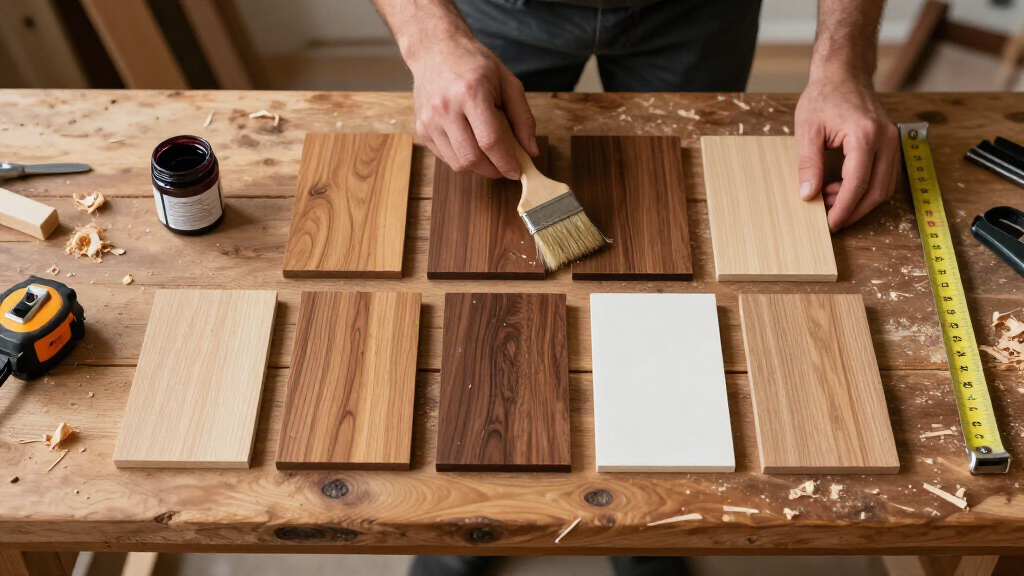
Finish durability is mostly about matching the chemistry to the abuse — not buying the priciest can. A kitchen table takes a different beating than a bookshelf; a covered porch is not a bathroom is not a garage floor. This guide breaks down polyurethane, epoxy, oil, and hardwax by what each actually survives.
Full grit progression, dust control, and three thin coats matter more than brand or price.
Water-based polyurethane now rivals oil-based — three coats in one Saturday, not three weekends.
The 5 Questions That Decide Which Finish Survives Your Life
Match the finish to substrate, traffic, moisture, and sunlight. Ask these before you look at a single label — and the choice usually makes itself. Rule of thumb: match the finish to the worst week the surface will ever have, not the average one.
What’s underneath it?
Wood, metal, or concrete each demand different adhesion. Oily exotic woods like cocobolo refuse water-based poly without a shellac sealer coat.
How much abuse?
A hallway table sees more collisions in a month than a bedroom dresser sees in a decade. High-touch surfaces need abrasion resistance, measured in Taber cycles — higher numbers mean tougher films.
How wet does it get?
Kitchens and bathrooms need finishes rated for standing water, not just spills. A water ring left overnight on pure oiled wood will leave a ghost.
How much sun?
UV destroys finishes and grays the wood beneath. South-facing windows and outdoor projects need UV inhibitors — or the finish chalks within two summers.
Can you actually apply it?
Some finishes forgive a foam brush in a dusty garage. Epoxy does not — it demands a profiled substrate, tight temperature control (60–90°F), and a pot life measured in minutes. A workbench that takes clamps, cast iron, and coffee mugs daily earns three coats of oil-based poly; a wall shelf gets two coats of water-based acrylic. Different jobs, different finishes.
Oil-Based vs Water-Based: The Durability Gap Has Closed
Both now deliver comparable interior durability. The real differences are dry time, ambering, and VOC content. Oil still wins two fights: a warm honey glow that flatters walnut and cherry, and flow-out flat enough to hide brush marks. But that ambering turns maple yellow within a year.
| Property | Oil-Based Poly | Water-Based Poly |
|---|---|---|
| Dry time (recoat) | 12–24 hours | 2–4 hours |
| Color shift | Ambers over time | Stays clear |
| VOC | 350+ g/L | Under 275 g/L |
| Abrasion resistance | Excellent | Very good (2K: excellent) |
| Price per quart | $25–$40 | $30–$50 |
What Each Finish Actually Survives
Epoxy
Two-part · Concrete & bar topsThe most durable finish for concrete floors and high-abuse surfaces — a cross-linked film that resists chemicals, hot tires, and standing water. Every commercial garage floor you’ve walked on is epoxy.
Trade-off: demands a profiled, moisture-tested substrate and a pot life measured in minutes.
Polyurethane
Film · Floors & furnitureThe standard for wood floors and heavy furniture. Oil-modified floor poly at $50–$70/gallon does 500+ sq ft in two coats and handles stiletto heels and office chairs for decades.
Warning: moisture-cured poly contains isocyanates — respirator and hard ventilation required.
Penetrating Oils
Tung · Linseed · HardwaxSoak in and harden the wood itself — impossible to flake or peel, and exquisitely repairable. Hardwax oils handle kitchen floors surprisingly well.
Trade-off: reapplication every 6–12 months on high-wear surfaces; water rings and heat mark easily.
Shellac & Sealer Coats
Barrier · Universal primerThe go-between: seals oily exotic woods so water-based poly can adhere, and blocks contaminants. Not a wear finish, but the enabler of durable systems.
Best role: sealer coat under film finishes on difficult substrates.
Pigmented Stains
Exterior · UV defenseOn exterior horizontal surfaces, pigment blocks UV and fades gracefully instead of peeling in sheets the way film varnish does outdoors.
Rule: outdoors, pigment beats varnish on anything horizontal.
2K Waterborne Poly
Pro-tier · $70+/quartTwo-component waterborne polys genuinely outperform everything interior — excellent Taber abrasion numbers with low VOC. A small furniture shop doesn’t need them.
Verdict: save the money for sharpening stones.
Prep & Film Thickness: The 60% Nobody Sells You
A $30 finish applied to well-sanded, sealed wood outlasts a $90 finish slapped over dust. Film finishes protect best but repair worst; oils repair best but protect worst — pick which failure you can live with, then prep like it matters. Because it does.
Full grit progression
Sand through every grit — skipping steps leaves scratches that telegraph through the film.
Dust control
Vacuum and tack between coats. Every airborne particle lands in wet epoxy forever.
Sealer coat
Shellac sealer on oily woods ensures adhesion for the film build that follows.
Three thin coats
Thin coats level better and cure harder than one thick, gummy pour.
7–30 day cure
Wait for full cure before real use — the film reaches final hardness only after this window.
Match chemistry to the worst week — abuse level, moisture, and UV exposure decide the finish before price does.
Water-based has closed the gap — ~2 hr dry time, under 275 g/L VOC, comparable interior durability.
Film protects, oil forgives — poly and epoxy protect best but repair worst; oils repair with a wipe but need reapplication every 6–12 months.
Exterior horizontal = pigment — pigmented stains block UV and fade gracefully instead of peeling in sheets.
A dining table refinished with a cheap one-coat wipe-on finish — because the can promised “museum quality” — looked like it had been attacked with sandpaper by an angry toddler after eighteen months of coffee cups and homework. The lesson cost a full strip-and-refinish weekend. Budget honestly: $30–$50 per quart for quality water-based, $25–$40 for oil-based, $50–$70 per gallon for floor poly. The pro-tier $70+ 2K quarts genuinely outperform — but most small shops should spend that money on sharpening stones.
The 5 Questions That Decide Which Finish Survives Your Life
The best finishing material for durability is the one matched to four things: substrate, traffic, moisture, and sunlight. Ask these before you look at a single label, and the choice usually makes itself. Skip them and you’re guessing with a $60 can of guess.
- What’s underneath it? Wood species, metal, or concrete each demand different adhesion. Oily exotic woods like cocobolo refuse water-based poly without a shellac sealer coat.
- How much abuse? A hallway table sees more collisions in a month than a bedroom dresser sees in a decade. High-touch surfaces need abrasion resistance, measured in Taber abrasion cycles — higher numbers mean tougher films.
- How wet does it get? Kitchens and bathrooms need finishes rated for standing water, not just spills.
- How much sun? UV destroys finishes and grays the wood beneath. South-facing windows and outdoor projects need UV inhibitors or the finish chalks within two summers.
- Can you actually apply it? Some finishes forgive a foam brush in a dusty garage. Epoxy does not.
For instance, my shop’s workbench got three coats of oil-based poly because it takes clamps, cast iron, and coffee mugs daily. My daughter’s wall shelf got two coats of water-based acrylic. Different jobs, different finishes, both still intact.
Rule of thumb: match the finish to the worst week the surface will ever have, not the average one.
water-based polyurethane for furniture
As an affiliate, we earn on qualifying purchases.
As an affiliate, we earn on qualifying purchases.
Oil-Based vs Water-Based: The Durability Gap Has Closed
Oil-based and water-based polyurethane now deliver comparable durability for interior work — the real differences are dry time, ambering, and VOC content. According to industry VOC data, water-based finishes run under 275 g/L VOC while oil-based formulas often exceed 350 g/L. Water-based also dries in about 2 hours versus up to 24 hours for oil-based, which in a garage shop means three coats in one Saturday instead of three weekends.
Oil-based still wins two fights. It ambers into a warm, honey-toned glow that flatters walnut and cherry, and it flows out flatter, hiding brush marks like they were never there. But that ambering turns maple yellow within a year — if you want the wood to look the way it did when you milled it, water-based is the honest choice.
| Property | Oil-Based Poly | Water-Based Poly |
|---|---|---|
| Dry time (recoat) | 12–24 hours | 2–4 hours |
| Color shift | Ambers over time | Stays clear |
| VOC | 350+ g/L | Under 275 g/L |
| Abrasion resistance | Excellent | Very good (2K formulas excellent) |
Budget-wise, expect $30–$50 per quart for quality water-based and $25–$40 for oil-based. The pro-tier two-component waterborne polys at $70+ a quart genuinely outperform — but a small shop doing furniture and trim doesn’t need them. Save that money for sharpening stones.
epoxy resin for concrete countertops
As an affiliate, we earn on qualifying purchases.
As an affiliate, we earn on qualifying purchases.
Epoxy and Polyurethane: What to Use When Failure Isn’t an Option
Epoxy is the most durable finish available for concrete floors and high-abuse surfaces, forming a cross-linked film that resists chemicals, hot tires, and standing water. That’s why every commercial garage floor and restaurant kitchen you’ve ever walked on is epoxy. Two-part chemistry cures hard — like pouring a sheet of engineering plastic over your surface.
The catch is application. Epoxy demands a profiled, moisture-tested substrate, tight temperature control (usually 60–90°F), and pot discipline — once mixed, you have a working window measured in minutes, not hours. Miss the window and you’re scraping gummy partial cure off a roller pan. For a bar top or river table, you also need to torch out bubbles and babysit dust, because every airborne particle lands in that wet mirror forever.
For wood floors and heavy furniture, polyurethane remains the standard — moisture-cured and two-part floor polys especially, which flooring contractors use because they handle stiletto heels and office chairs for decades. Oil-modified floor poly at $50–$70 a gallon does 500+ square feet in two coats and can be recoated without sanding to bare wood if you stay inside the recoat window.
Warning: moisture-cured polyurethane contains isocyanates. It’s shop-grade or pro-grade chemistry — wear an organic vapor respirator, ventilate hard, or hire a licensed pro for occupied-home applications.
As an affiliate, we earn on qualifying purchases.
Penetrating Oils: Beautiful, Forgiving, and Honest About Their Limits
Penetrating oils like tung oil, linseed oil, and hardwax oils don’t form a surface film — they soak in and harden the wood itself. That makes them impossible to flake or peel, exquisitely repairable (sand the scratch, re-oil, done), and a joy to apply with nothing but a rag. Hardwax oil blends, popular on European flooring, combine plant oils with waxes for a finish that handles kitchen floors surprisingly well.
But be honest about the trade: oil finishes sacrifice top-layer protection. A water ring left overnight on a pure oiled tabletop will leave a ghost. Heat from a pizza stone will mark it. High-traffic oiled floors need reapplication every 6–12 months, a 20-minute wipe-on job that film finishes never require until full refinishing — which, to be fair, film finishes do need, and it’s a full strip.
The antithesis is simple: film finishes protect best and repair worst; oils repair best and protect worst. My kitchen counters got hardwax oil because I’d rather wipe on maintenance than sand off failure. My coffee table, which hosts mugs and remote controls, got poly. Both decisions were correct.
One safety note that matters: oil-soaked rags can spontaneously combust as linseed oil cures. Lay rags flat outside to dry or submerge them in water. This burns down garages every year — treat it like the fire hazard it is.
oil-based vs water-based wood finish
As an affiliate, we earn on qualifying purchases.
As an affiliate, we earn on qualifying purchases.
Outdoor Finishes: Sunlight Destroys More Projects Than Rain
For exterior durability, you need three things in one coating: UV inhibitors, water repellency, and flexibility to move with the wood’s seasonal swelling. UV is the silent killer — it photodegrades both the finish film and the lignin in the wood itself, which is why an unprotected deck turns silver-gray within a year and a half of southern exposure.
The workhorse choices:
- Marine spar varnish — high-solids, UV-filtering polyurethane varnish with flex additives. Best for doors, trim, and outdoor furniture. Expect 2–3 years before recoating in full sun.
- Semi-transparent exterior stain — pigment does the UV blocking, so it lasts 3–5 years on decks and never peels when it fades. My pick for anything horizontal.
- Exterior paint — 100% acrylic latex forms a thick UV-stable film that can go 10 years on siding. Flexible, low-maintenance, easy to touch up.
- Exterior penetrating oil — one-coat annual application, minimal prep. Maximum maintenance, minimum drama.
Here’s the strategy most DIYers miss: on horizontal surfaces like decks and tabletops, skip film finishes entirely. Water sits on them, works under the edges, and the film peels in sheets that require full stripping. Pigmented stain that fades gracefully will outperform varnish that fails catastrophically — maintenance you can wipe on beats failure you have to sand off.
Prep and Film Thickness: The 60% of Durability Nobody Sells You
Finish durability is determined more by surface preparation and film build than by brand — a mid-priced finish over well-prepped wood outperforms premium finish over a rushed job, every time. I’d put it at roughly 60% prep, 25% correct product choice, 15% brand quality. No can label will tell you that, because prep doesn’t come in a can.
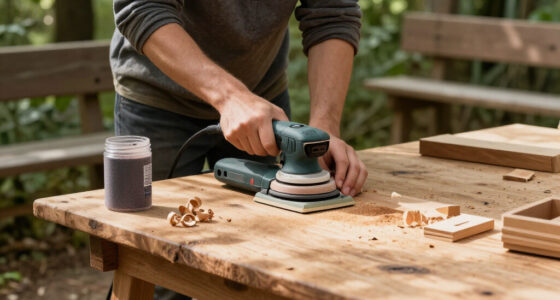
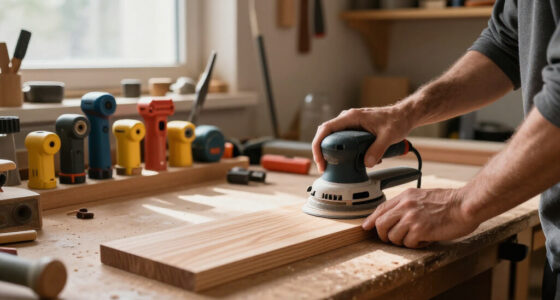
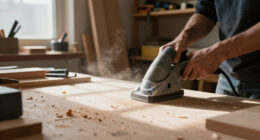
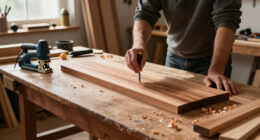
- Sand through the grits — 120, then 150, then 180 for film finishes. Skipping grits leaves scratches that telegraph through clear coats like ridges under fresh snow.
Vacuum and tack — my shop runs a dust extractor pulling proper CFM at the sander, then a tack cloth. A single silicon drip from an old rag will crater every coat that follows. - Seal or condition when needed — blotchy woods like pine and cherry need a conditioner; oily exotics need a shellac barrier coat.
- Build adequate film — three thin coats beat one thick coat. Thin coats level, cure fully, and don’t trap solvent. Aim for roughly 3–5 mils dry film thickness on furniture.
- Respect cure time — dry-to-touch is not cured. Most finishes reach full chemical hardness in 7–30 days. Don’t place a vase on that table for two weeks.
The scenario that proves it: a friend’s walnut console, mid-grade water-based poly, prepped like a violin — still flawless after six years of daily use. Meanwhile my early “premium finish over dusty wood” experiments looked chalky within a year. The finish was never the variable. The sandpaper was.
Frequently Asked Questions
Which finishing material is most durable for high-traffic areas?
For wood floors and furniture, two-part or moisture-cured polyurethane offers the best abrasion resistance. For concrete floors, epoxy is the industry standard — it resists chemicals, hot tires, and standing water. Standard oil-based or quality water-based poly handles residential traffic well at a fraction of the application difficulty.
Are eco-friendly or low-VOC finishes as durable as traditional ones?
Modern water-based and plant-based finishes have largely closed the durability gap. High-quality waterborne polyurethane now matches oil-based for scratch and stain resistance in interior settings. The exception is extreme exterior exposure, where high-solids marine varnishes still outperform most eco options — though pigmented exterior stains compete well because pigment itself blocks UV.
How many coats of finish do I actually need?
Three thin coats is the durable standard for film finishes on furniture — enough to build roughly 3–5 mils of dry film without trapping solvent. Wipe-on oils typically need 2–3 applications with drying time between. One thick coat is a trap: it skins over, stays soft underneath, and fails early.
Can I apply durable finishes myself, or should I hire a professional?
Water-based poly, exterior stain, and penetrating oils are very DIY-friendly with a foam brush or pad and good ventilation. Two-part epoxies and moisture-cured polys are less forgiving — they demand tight temperature control, respirator protection, and fast pot times. For occupied homes, chemical-cure products with isocyanates are best left to a licensed pro.
How do I know when a finish needs maintenance?
Watch for water that no longer beads on the surface, dull high-wear spots, or gray wood showing through exterior stain. Oiled surfaces typically need a refresher coat every 6–12 months in hard use. Film finishes last years, but once you see cracking or peeling, you’ll need to sand back and recoat — spot-fixing peeling film rarely works.
Conclusion
Pick the finish for the abuse, prep like it matters — because it’s most of the game — and build three thin coats instead of one heroic one. That formula beats any premium can on the shelf, and it works whether you’re finishing a cutting board or a garage floor.
The finish isn’t the last step of a project. It’s the part your hands touch every day for the next decade. Choose like it.
Fall Picks
fall essentials
As an affiliate, we earn on qualifying purchases.