TL;DR

Get business pricing on tools and workshop supplies
- Business-only prices and quantity discounts
- Tax-exempt purchasing
- Multiple users, one account, clear invoices
Shop air filtration systems recirculate room air to capture airborne particles, but they do not replace tool-connected dust collection, suitable ventilation, or respiratory protection. Size a unit by delivered airflow and room volume, check filter sealing and maintenance requirements, and use equipment designed for the specific hazard—especially with fumes or combustible dust.
A planer can fill your shop with a pale haze before you finish stacking the boards. An ambient air cleaner can catch some of that airborne dust, but it cannot pull chips out of the planer hood or make every kind of shop air safe to breathe.
This guide gives you key facts for choosing shop air filtration systems that fit a home woodworking shop. You’ll learn how an ambient cleaner differs from a dust collector, what MERV and HEPA ratings do and don’t tell you, how to think about airflow, and where safety needs more than a filter.
Think of dust control like keeping mud out of a house: a mat at the door catches the mess before it spreads, while a broom handles what gets tracked inside. In a woodshop, source capture is the mat; room filtration is the broom. Both can help, but the first does the heavier work.
Connect a suitable extractor or dust collector at the tool before relying on room filtration.
Treat MERV and HEPA ratings as filter information, not a guarantee of complete-shop performance.
Compare delivered airflow with shop volume, and keep the unit’s air path clear.
Follow manufacturer guidance for filter inspection and replacement; handle dusty filters carefully.
Use hazard-specific equipment for fumes, welding, metal grinding, and combustible dust.
Know What an Air Cleaner Can Catch—and What It Can’t
Shop air filtration systems pull room air through filters and return cleaner air to the space; they capture some particles already floating around but do not automatically remove the hazard at its source. A ceiling unit may collect fine sanding dust after it escapes your sander, while a tool-connected extractor catches dust before it spreads.
The distinction matters because wood dust, metal grinding dust, welding fume, paint overspray, and chemical vapors do not call for the same equipment. A general-purpose shop air cleaner is not a substitute for source capture or a system made for a specific contaminant. For a small garage shop, an air cleaner can help with the fine veil left after sanding, but a hood or extractor at the sander should handle the dust plume first.
Dust collection, ventilation, and ambient filtration solve different problems. A dust collector takes material from a tool; ventilation exhausts or exchanges air; a room cleaner recirculates air through a filter. Those functions can support one another, but recirculating room air does not necessarily bring in fresh air or carry away gases.
That last point matters at the finishing bench. HEPA filters capture particles, not most gases or vapors; activated carbon can reduce some odors and gases, but performance depends on the chemical and the amount of carbon. If you spray finish or weld, identify the hazard and use suitable controls rather than trusting an ordinary shop unit.
Popular right now

Ninja Crispi Glass Air Fryer (Stone) – 4‑in‑1

Ninja Flip Toaster Oven & Air Fryer, Large Capacity, Stainless, SP151

Vitamix Propel Series 750 Professional-Grade Blender, 4 Programs, Black
As an affiliate, we earn on qualifying purchases.
Capture Dust at the Tool Before It Fills the Room
The most effective first move is usually to catch dust close to the tool, before room air carries it across the bench. That means connecting a suitable dust collector or extractor to the machine, fitting the hood close to the cutting point, and keeping the hose and duct path clear.
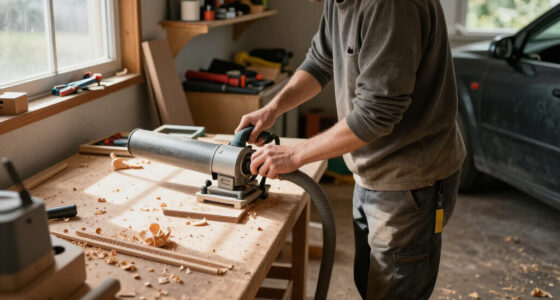
Imagine sanding a cabinet door with a small sander. A close-fitting tool port and extractor can pull much of the dust into a collection bag as the abrasive cuts; an ambient cleaner has to wait until the escaping dust drifts across the room and reaches its intake. Source collection will not catch everything, so room filtration can help with the particles that escape, but it works as a second layer.
Use this order when you plan systems that help control airborne dust and particles in your shop:
- Reduce dust generation where you can, such as choosing a lower-dust process or keeping cutting tools sharp.
- Capture emissions at the source with a close hood, tool port, or suitable extractor.
- Use ventilation and ambient filtration for the remaining particles, with equipment matched to the hazard.
- Use respiratory protection when needed, following applicable workplace rules and qualified guidance.
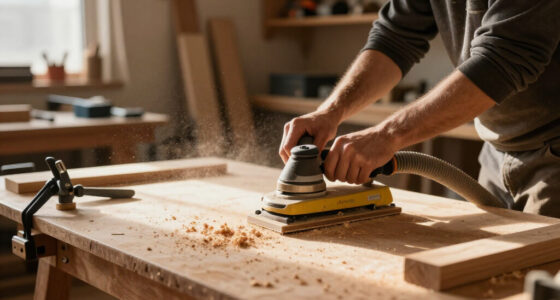
Fine dust from a random-orbit sander can hang in the light above your bench even after the floor looks clean. That visible haze is a useful reminder that sweeping chips and controlling suspended dust are separate jobs.
Compare MERV and HEPA Without Getting Fooled by a Label
MERV describes a filter’s ability to capture particles across specified size ranges under test conditions; HEPA filtration captures at least 99.97% of particles at 0.3 micrometers under its applicable test method. Those ratings describe filter performance, but they do not rate the complete machine’s ability to clean your workshop.
A high-efficiency filter inside a leaky housing can let dirty air sneak around the media. A restrictive filter can also reduce airflow if the fan cannot push air through it effectively, especially as dust loads the filter. Think of the filter as a fine-mesh screen in a garden hose: tighter mesh catches more small material, but the whole setup still depends on seals and enough flow.
When you compare products, look for published airflow and filter-performance information, then check that the filter fits snugly and the housing seals properly. Product designs increasingly include filter-change indicators and clearer performance data, but a light on the panel is a reminder, not proof that the room air is clean.
For example, a woodworker choosing between a unit with a very high filter rating and one with stronger delivered airflow should compare the full specifications, intended use, and replacement-filter cost. Filter rating alone is not whole-room performance. If your work creates a hazard beyond ordinary wood dust, ask a qualified professional what capture and filtration standard applies.
Size the Unit for Your Room and the Work You Do
Choose a shop air filtration unit by comparing its delivered airflow with your room volume, then account for filter loading, obstructions, and the dust your work creates. Air changes per hour can help you compare systems, but that number does not guarantee safe air or show how well a unit captures a plume at a particular machine.
Start with your shop’s length, width, and ceiling height to estimate its volume. Then compare that volume with the unit’s stated airflow, paying attention to whether the figure reflects useful delivered airflow rather than an idealized fan rating. A compact garage with low ceilings and a benchtop sander has different needs from a long shop where a planer, table saw, and wide-belt sander run through a full shift.
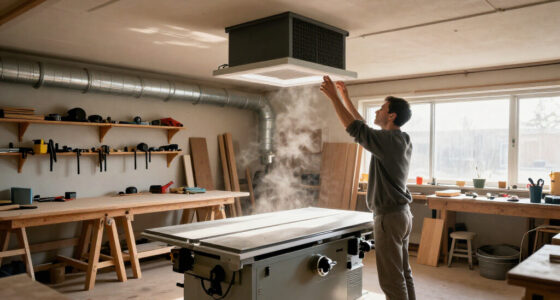
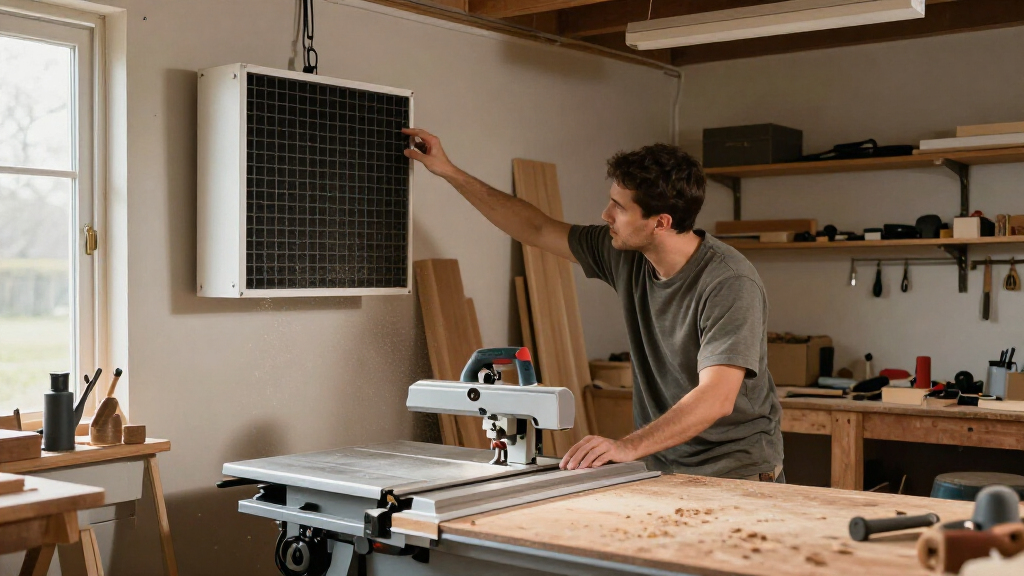
Placement changes the result. If a ceiling-mounted cleaner sits behind a tall lumber rack, the rack may block the path and leave a quiet pocket of dusty air near the bench. Keep the intake and outlet clear, and consider the room’s actual air movement instead of assuming that a central ceiling location reaches every corner.
Run the unit while dusty work happens and afterward according to the manufacturer’s guidance. A portable cleaner beside a sanding station may make sense in a small shop, while a fixed unit can cover a broader space if air can circulate freely. Match airflow to room volume and task, then treat the air-change figure as a comparison aid rather than a safety certificate.
Keep Filters Working and Treat Combustible Dust Seriously
Inspect and replace filters on the schedule and by the method given by the manufacturer, because a loaded filter can restrict airflow and reduce the system’s performance. Dust-packed pleats may look like they are holding a lot of material, but that is not a reason to keep using them past their service guidance.
Handling a used filter can stir settled dust back into the air. In a small garage shop, shut the unit off, follow the manufacturer’s removal instructions, and use appropriate personal protective equipment for the dust and task. Bag the used filter as directed rather than shaking it over the trash can beside your open sander.
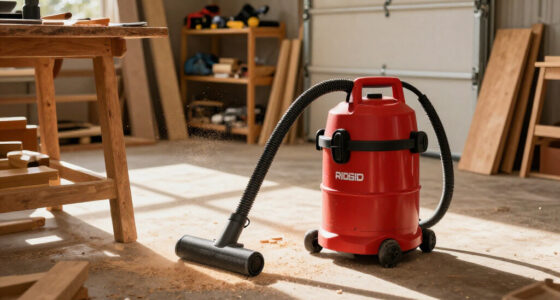
Fine combustible dust presents a different kind of risk: under the right conditions, it can ignite or explode. Equipment handling combustible dust may need specialized construction, grounding, separation, and other safeguards. A standard shop vacuum or ambient air cleaner may not be suitable for that job, so check the equipment’s intended use and get qualified help when the hazard is unclear.
A shop air cleaner is not a universal safety device. Match the equipment to the material, inspect seals and filters, and do not treat a clean-looking room as proof that hazardous dust or fumes are gone.
That warning applies especially when you mix processes. A unit suitable for ordinary woodworking dust does not automatically suit metal grinding, welding, or finishing. Hazard-specific controls come first; where electrical, structural, or other regulated work is involved, use a licensed professional and follow applicable code and safety requirements.
Build a Practical Dust-Control Plan for a Small Garage Shop
A workable small-shop plan puts capture at the tool first, uses ambient filtration for what escapes, and keeps the equipment easy enough to maintain that you actually use it. You do not need to buy the largest machine on the catalog page before checking your tools, room layout, and filter costs.
Take a one-car garage with a table saw, lunchbox planer, and sanding bench. The saw and planer need suitable source collection because they make chips and heavy dust at the cut; the sanding station may benefit from a close extractor plus a room cleaner that circulates air without blowing dust across the bench. Keep the cleaner’s inlet and outlet unobstructed by lumber and cabinets.
Before buying, compare the published airflow, filter type, replacement costs, noise, controls, and intended use. Quieter operation, variable speeds, remote controls, and filter indicators can make an air cleaner easier to live with, but they do not compensate for poor seals or an undersized airflow rating. If you work mostly at one bench, a portable model may fit better than a permanently mounted unit; if you move around the shop, broad circulation may matter more.
- Choose for the hazard, not just the advertised filter grade.
- Check delivered airflow, housing seals, and replacement-filter availability.
- Keep source extraction close to the saw, sander, or other dusty tool.
- Budget for maintenance and use respiratory protection when the task calls for it.
A clean floor is satisfying, but it cannot tell you what remains suspended above the bench. Set up the capture, filtration, and ventilation that fit your work, and consult qualified guidance for hazardous processes.
Frequently Asked Questions
What’s the difference between a dust collector and a shop air cleaner?
A dust collector connects to a tool and captures chips or dust near where the tool makes them. A shop air cleaner recirculates room air to collect some particles that have already escaped into the space.
How do I size an air filtration unit for my shop?
Estimate your room volume from its length, width, and height, then compare it with the unit’s published delivered airflow. Treat air changes per hour as a comparison aid, and account for filter loading, obstructions, and the dust your work produces.
Is a MERV 13 filter enough, or should I buy HEPA?
It depends on the hazard, the complete unit’s airflow, and how well its housing seals around the filter. HEPA captures at least 99.97% of 0.3-micrometer particles under its applicable test method, but that rating alone does not establish whole-room performance or suitability for every shop process.
Does HEPA filtration remove paint fumes and odors?
No. HEPA filters capture particles and do not remove most gases or vapors. Activated carbon can reduce some gases and odors, but effectiveness depends on the specific contaminant and carbon capacity; use controls designed for the finishing product and task.
Will an air cleaner mean I don’t need a respirator?
No single room cleaner can establish that a task is safe or remove the need for respiratory protection. Select and fit respirators according to the hazard, applicable workplace rules, and qualified guidance, while using source capture and suitable ventilation.
Conclusion
Build your dust-control plan around the work: capture dust at the tool, use room filtration for what escapes, and choose equipment for the material you actually process. Filter ratings, airflow, seals, placement, and maintenance all shape the result.
When the saw shuts off and the light stops revealing a fine haze above your bench, remember that clean-looking air is only one part of the job. Keep the dust at the cut, where it is easiest to control.