TL;DR

Get business pricing on tools and workshop supplies
- Business-only prices and quantity discounts
- Tax-exempt purchasing
- Multiple users, one account, clear invoices
Durable finishing materials protect surfaces, cut maintenance, and extend replacement cycles, but no single material wins everywhere — the right choice depends on the specific traffic, moisture, impact, and chemical stresses of the space. Evaluate finishes on verified test data and life-cycle cost rather than price or looks alone, because water intrusion and poor installation cause more premature failures than weak materials do.
The most expensive finish in the catalog can fail in eighteen months, and a modest one can last twenty years. I’ve seen both. The difference is almost never the price tag — it’s whether the finish matched the job it was asked to do.
A polyurethane that shrugs off a dropped wrench in the workshop will cloud and peel in a bathroom where humidity never drops below 70%. A beautiful matte stone countertop in a kitchen full of turmeric and red wine becomes a stain map by year two. Durability isn’t a property you buy; it’s a match you make.
This guide walks you through how to make that match: the stresses different spaces impose, how to read technical data instead of marketing copy, why life-cycle cost beats sticker price, and where most finish failures actually start. According to Werkberger’s materials reporting, water and poor substrate preparation cause more premature finish failures than any weakness in the finish itself — which should already tell you where to focus your attention.
Durability is application-specific: list the traffic, moisture, chemicals, UV, and impact stresses of the exact location before comparing any products.
Judge finishes by life-cycle cost, not price — a finish costing 2–3x more that lasts three times longer with less maintenance is the budget choice.
Water and poor substrate preparation cause more finish failures than weak materials; test slab and substrate moisture before coating anything.
Abrasion resistance and impact resistance are different properties, and harder isn’t always better — brittle, unrepairable hard finishes often lose to repairab…
Test samples at home under real lighting, real cleaners, and real abuse before committing, and match the maintenance schedule to habits you actually have.
Guide to Selecting Durable Finishing Materials
Durability isn’t a property you buy — it’s a match you make. No single material wins everywhere. The right finish depends on the specific traffic, moisture, impact, and chemical stresses of the space. Judge finishes on verified test data and life-cycle cost, because water intrusion and poor installation cause more premature failures than weak materials ever do.
Match the Finish to the Abuse: Where Will It Actually Live?
A finish is durable only against the specific stresses in its environment. A bedroom-grade finish in a commercial kitchen fails fast — and the same logic applies in your house. Before you look at a single swatch, list what the surface will endure.
Kitchens & Entryways
The domestic equivalents of commercial lobbies: concentrated foot traffic, standing water at the sink, grease near the stove, and grit tracked in on boots that grinds into floors like sandpaper under every footstep.
Bathrooms & Laundries
Constant humidity and cleaning chemicals. A polyurethane that shrugs off a dropped wrench in the workshop will cloud and peel where humidity never drops below 70%.
Facades, Decks & Trim
UV, rain, thermal movement, and in cold climates freeze-thaw cycles that split porous materials from within. Exterior finishes play a harder game than any interior surface.
Workshops & Garages
Abrasion, impact, and chemical spills call for a hard oil-based film you can scuff-sand and recoat in an afternoon. Different job, different spec than the shelf above it.
Food & Dining Surfaces
A beautiful matte stone countertop in a kitchen full of turmeric and red wine becomes a stain map by year two. Porous materials require sealing in stain-prone areas.
Mismatch Blamed on Product
A bedroom-suitable finish gets installed in an entrance lobby or exterior facade — then someone blames the product. Write down the abuse profile before you shop.
Why the Cheap Option Usually Costs More
Life-cycle cost is the total cost of owning a finish over its service life: purchase, installation, maintenance, repair, replacement, and downtime. A material that costs 40% more up front but lasts three times longer is the cheaper material — the arithmetic is that simple.
By year eight: four coats of paint, four weekends of scraping, repeated downtime. Budget finish, premium headache.
Same square footage, same prep labor each time — but done once. After year eight, the premium option still has years left.
| Cost Factor | Budget Finish | Premium Finish |
|---|---|---|
| Material price | ✓ Low | Often 2–3× higher |
| Prep & installation | ✗ Similar or higher — frequent redo | ✓ Similar, done once |
| Maintenance | ✗ Frequent recoating / cleaning | ✓ Periodic, lighter |
| Replacement cycle | ✗ Short — poor cycle extension | ✓ Long — extends replacement cycles |
| Downtime & hassle | ~ Repeated | ✓ Minimal |
One caveat: expensive doesn’t automatically mean durable. Price can reflect branding, scarcity, or appearance rather than performance. Compare verified data — technical data sheets, standardized test results, warranty terms — not the number on the price tag.
How to Read Performance Specs Without Getting Fooled
You verify durability through standardized test results, technical data sheets, and warranty terms — not showroom gloss, not a salesperson’s enthusiasm. Here’s what to look for, matched to real stresses.
Hardness & Scratch Resistance
Matters for floors and tabletops — look for abrasion ratings (Taber wheel cycles, or flooring’s AC rating for laminates).
Water Absorption
The spec that decides bathroom and exterior survival. Low absorption, long life.
Stain & Chemical Resistance
Test data against common household and cleaning chemicals — not marketing claims.
Slip Resistance
Critical for wet areas and stairs. Textured surfaces help but trap dirt.
Fade Resistance / UV Stability
Anything near windows or outdoors needs documented colorfastness.
Dimensional Stability
How much the material moves with humidity swings. Big movers crack rigid coatings.
The Hardness Trap — Harder Is Not Always Better
Two traps catch almost everyone. First, abrasion resistance is not impact resistance — a material can ace one and fail the other. Second, read the warranty like a contract lawyer: most exclude improper installation, unusual chemicals, excessive moisture, and insufficient maintenance — conveniently, the four things that actually cause most failures.
Water and Installation: Where Finishes Actually Go to Die
Most finish failures trace back to two culprits — moisture and poor installation — not defective material. Water is the single most common cause of premature finish failure, and a badly prepared substrate can kill a premium finish in months.
The pre-finish checklist — confirm before anything goes down
Substrate Preparation
Cleaning, sanding profile, leveling, and full curing time for new concrete or plaster.
Moisture Testing
Calcium chloride or plastic-sheet test — test the substrate; don’t guess from how it looks.
Correct Adhesives & Primers
Right primers, adhesives, or fasteners — verified for compatibility with your finish.
Movement Allowances
Expansion gaps and thermal movement so the finish never fights the building.
Match the Finish to the Abuse: Where Will It Actually Live?
Durable finishing materials are chosen by application first: a finish is durable only against the specific stresses in its environment — traffic, moisture, heat, chemicals, impact, UV, and freeze-thaw. A bedroom-grade finish in a commercial kitchen fails fast; the same logic applies in your house.
Before you look at a single swatch, list what the surface will endure. In my shop, the workbench top takes abrasion, impact, and chemical spills — so it wears a hard oil-based film I can scuff-sand and recoat in an afternoon. The shelf above the finishing station? Latex paint. Different job, different spec.
Kitchens and entryways are the domestic equivalents of commercial lobbies. You get concentrated foot traffic, standing water at the sink, grease near the stove, and grit tracked in on boots — grit that grinds into floors like sandpaper under every footstep. Bathways add constant humidity and cleaning chemicals. Exterior surfaces face UV, rain, thermal movement, and, in cold climates, freeze-thaw cycles that split porous materials from within.
The failure mode is predictable: a finish suitable for a bedroom gets installed in an entrance lobby or on an exterior facade, then someone blames the product. Don’t be that person. Write down the abuse profile before you shop, because it eliminates two-thirds of your options in five minutes.
durable polyurethane finish for workshops
As an affiliate, we earn on qualifying purchases.
As an affiliate, we earn on qualifying purchases.
Life-Cycle Cost: Why the Cheap Option Usually Costs More
Life-cycle cost is the total cost of owning a finish over its service life: purchase, installation, maintenance, repair, replacement, and downtime. A material that costs 40% more up front but lasts three times longer is the cheaper material — the arithmetic is that simple.
Here’s a scenario I’ve lived. A budget porch floor paint runs $35 a gallon and needs recoating every two years. A premium exterior deck coating runs $90 and lasts eight. Same square footage, same prep labor each time. By year eight, the budget option has cost you four coats of paint and four weekends of scraping — and the premium option still has years left. That’s the long-term value of a building or product hiding in boring math.
| Cost Factor | Budget Finish | Premium Finish |
|---|---|---|
| Material price | Low | Often 2–3x higher |
| Prep and installation | Similar or higher (frequent redo) | Similar, done once |
| Maintenance | Frequent recoating/cleaning | Periodic, lighter |
| Replacement cycle | Short — extends replacement cycles poorly | Long — extends replacement cycles |
| Downtime and hassle | Repeated | Minimal |
One caveat: expensive doesn’t automatically mean durable. Price can reflect branding, scarcity, or appearance rather than performance. Compare verified performance data — technical data sheets, standardized test results, warranty terms — not the number on the price tag.
moisture resistant countertop sealant
As an affiliate, we earn on qualifying purchases.
As an affiliate, we earn on qualifying purchases.
How to Read Performance Specs Without Getting Fooled
You verify a finish’s durability through standardized test results, technical data sheets, and warranty terms — not appearance, not showroom gloss, not a salesperson’s enthusiasm. Manufacturers publish this data; the trick is knowing which numbers matter for your application.
Here’s what to look for, matched to real stresses:
- Hardness and scratch resistance — matters for floors and tabletops; look for abrasion ratings (Taber wheel cycles, or flooring’s AC rating for laminates).
- Water absorption — the spec that decides bathroom and exterior survival. Low absorption, long life.
- Stain and chemical resistance — test data against common household and cleaning chemicals.
- Slip resistance — critical for wet areas and stairs; textured surfaces help but trap dirt.
- Fade resistance / UV stability — anything near windows or outdoors.
- Dimensional stability — how much the material moves with humidity swings. Big movers crack rigid coatings.
Two traps catch almost everyone. First, abrasion resistance is not impact resistance — a material can ace one and fail the other. A hard ceramic tile resists scratches beautifully and cracks when you drop a cast-iron pan on it. Second, harder is not always better: extremely hard finishes tend to be brittle and difficult to repair, where a slightly softer, repairable finish may deliver better long-term value.
And read the warranty like a contract lawyer. Most exclude improper installation, unusual chemicals, excessive moisture, and insufficient maintenance — which are, conveniently, the four things that actually cause most failures.
As an affiliate, we earn on qualifying purchases.
Water and Installation: Where Finishes Actually Go to Die
Most finish failures trace back to two culprits: moisture and poor installation — not defective material. Water is the single most common cause of premature finish failure, and an unsuitable or badly prepared substrate can kill a premium finish in months.
I learned this the expensive way with a garage floor coating. The concrete slab looked bone dry. I degreased, etched, rolled on a two-part epoxy, and admired the glossy grey result. Six months later it was peeling in sheets near the door — moisture migrating up through the slab, because I’d never done a calcium chloride or plastic-sheet moisture test. The epoxy was fine. The installation was wrong.
Before any finish goes down, confirm the unglamorous checklist:
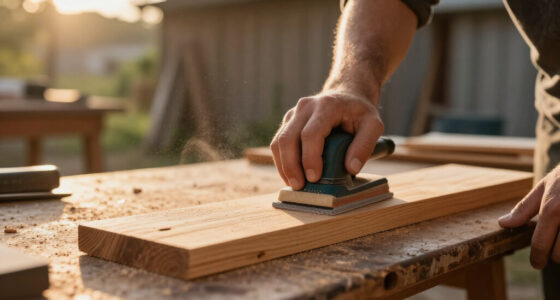
- Substrate preparation requirements — cleaning, sanding profile, leveling, curing time for new concrete or plaster.
- Moisture limits — test the substrate; don’t guess from how it looks.
- Correct adhesives, primers, or fasteners — and their compatibility with your finish.
- Expansion and movement allowances — materials move; rigid finishes over moving substrates crack.
- Installation conditions — temperature and humidity ranges the manufacturer actually specifies.
Compatibility matters more than people expect: the finish, substrate, adhesive, grout, sealant, and even your cleaning products form one system. One wrong link — an incompatible cleaner dulling a coating, a sealant that reacts with a membrane — and the whole chain underperforms.
One safety note: many coatings, solvents, and stripping products demand real ventilation, nitrile gloves, and a proper respirator with organic vapor cartridges — not a dust mask. For anything involving structural work, roofing, or electrical near your finishing project, bring in a licensed professional and check permit requirements before you start.
As an affiliate, we earn on qualifying purchases.
Test Before You Commit: The Sample Ritual That Saves Projects
Always test samples under realistic conditions before buying in quantity — lighting, moisture, cleaning products, and abuse. A swatch under showroom fluorescents tells you almost nothing about how the material behaves in your space.
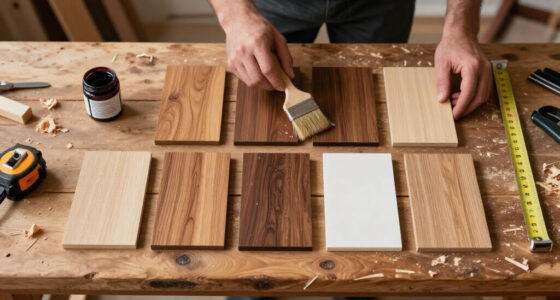
My ritual, refined over too many mistakes: I bring samples home, put them in the actual room, and live with them for a week. Then I abuse them. A drop of coffee left overnight. A scrub with the cleaner I actually use. A key dragged across the surface. Water pooled on a porous stone sample for an hour — if it darkens, that material needs sealing in any moisture-prone location, and porous materials usually do.
Check color and texture in morning and evening light. Dark colors and high-gloss surfaces show scratches, dust, and wear faster than mid-tone matte finishes — a fact that surprises anyone who paid extra for that piano-black gloss. Textured surfaces improve slip resistance but are harder to clean; that tradeoff is real and worth deciding consciously.
Also test whether a damaged area can be repaired and matched later. A finish you can spot-repair — touch-up coatings, replaceable panels, sand-and-recoat oils — often beats a slightly more wear-resistant finish that must be fully replaced when damaged. Repairability is an underrated durability strategy, and modular and touch-up systems are growing in the market precisely for that reason.
Maintenance Reality Check: Durable Doesn’t Mean Maintenance-Free
Durable finishes still require maintenance — the question is what kind, how often, and whether you’ll actually do it. Materials that tolerate simple routine cleaning usually outperform exotic finishes that demand specialized care nobody provides.
Before choosing, check what the material requires: specialized cleaners, periodic resealing, waxing or refinishing, immediate spill removal, or professional restoration. A natural stone countertop that needs annual resealing is only durable if you reseal it. Monitor for the tell-tale signs — water absorbing instead of beading, staining that wipes off less easily, visible dullness — and reseal based on condition, not just the calendar.
The counterintuitive insight from Werkberger’s materials reporting: neglected maintenance is among the most common causes of finish failure, right up there with harsh cleaning chemicals and inadequate curing. People destroy durable finishes with the wrong cleaner more often than with wear. An alkaline degreaser on a waxed floor, ammonia on a waxed finish, an abrasive pad on a soft coating — the finish never stood a chance.
Match the maintenance profile to your actual habits, not your aspirational ones. If nobody in your house wipes spills immediately, choose stain resistance over stain-prone beauty. If you’ll never re-oil a surface every six months, pick the finish that doesn’t need it.
Health, Sustainability, and the Trends Worth Knowing
A durable finish can absolutely be sustainable — long service life, repairability, low maintenance, and responsible sourcing often beat a ‘green’ material you replace every three years. But sustainability should be judged across the full life cycle: manufacturing, maintenance, and disposal included.
Practical things to check: VOC emissions and indoor air quality impact, recycled or renewable content, ingredient transparency documentation like environmental product declarations, and local availability (a long-service-life material shipped across the planet may not win the math). Low-emission and bio-based formulations — plant-based resins, recycled aggregates — are growing fast, but verify their performance independently; newer isn’t automatically more durable.
A few current trends matter to a home decision-maker. Digital documentation — EPDs, health product declarations, material passports — makes comparing products on substance instead of looks easier than ever. Easy-repair systems like modular flooring and replaceable panels reduce waste and downtime. Antimicrobial surfaces and designs with fewer joints can support hygiene in kitchens and baths, though they never replace regular cleaning. And climate-resilient specification — picking finishes rated for heat, humidity, and flooding exposure your region now actually gets — is becoming standard practice rather than paranoia.
The through-line: the industry is moving toward durability you can verify and repair rather than durability you take on faith. Ride that wave.
Frequently Asked Questions
What is the most durable finishing material?
There is no universal winner. The most durable option depends on traffic, moisture, impact, chemicals, climate, maintenance, and installation conditions. Porcelain tile dominates wet high-traffic areas; hardened oils and two-part coatings excel on woodwork; dense natural stone works brilliantly when sealed. The question to ask is ‘most durable against what?’ — then match the test data to that stress.
Is the most expensive material always the best choice?
No. Price often reflects appearance, branding, scarcity, or installation complexity rather than superior performance. Compare life-cycle cost — purchase, installation, maintenance, and replacement frequency — plus verified performance data. A repairable mid-price finish frequently delivers better long-term value than a premium finish that must be fully replaced when damaged.
How can I tell whether a finish is truly durable?
Look for standardized test results and technical data sheets covering abrasion, water absorption, chemical and stain resistance, and UV stability. Check warranty terms closely, including what’s excluded. Then test samples yourself under realistic lighting, cleaning, and abuse conditions, and seek performance references from similar applications.
Which matters more, the material or the installation?
Both matter, and a durable material installed over a poorly prepared or wet substrate can fail prematurely. Confirm substrate preparation requirements, moisture limits, compatible adhesives and primers, and the manufacturer’s recommended installation conditions. Water is among the most common causes of premature finish failure — test for it rather than assuming.
How often should surfaces be resealed?
It depends on the product, exposure, traffic, and maintenance routine. Follow manufacturer guidance as a starting point, but also monitor the surface itself: water absorbing instead of beading, staining that lingers, and visible dullness all signal it’s time. In heavy-use wet areas, resealing may be needed annually; in low-use areas, far less often.
Are natural materials less durable than synthetics?
Not necessarily. Stone, wood, and ceramic can be highly durable when properly selected, installed, finished, and maintained — porcelain tile is among the toughest floor surfaces available. The tradeoff is usually maintenance: porous natural materials typically require sealing in moisture- or stain-prone areas, where some synthetics don’t.
Do durable finishes require less maintenance?
Often, but not always. A durable surface may resist wear while still needing regular cleaning, sealing, or refinishing. Materials that tolerate simple routine cleaning usually perform better in real-world conditions than demanding finishes whose care requirements get neglected — neglected maintenance is one of the most common causes of finish failure.
Conclusion
Here’s the whole guide in one sentence: durability depends on performance in context, not price or appearance — so spec the stresses first, verify with test data second, and nail the substrate prep third. If you get those three right, even a mid-tier finish will outlast a premium one installed carelessly.
Before your next project, do the sample ritual. One spare tile, one board, one painted scrap — coffee, cleaner, keys, pooled water, a week of real light. Five dollars of testing protects a five-thousand-dollar installation. The finish you can’t kill in a week on your counter is the one that survives a decade on your floor.
Fall Picks
fall essentials
As an affiliate, we earn on qualifying purchases.