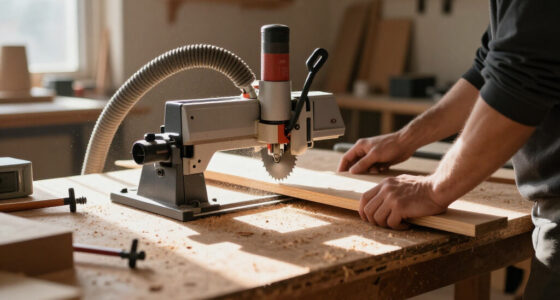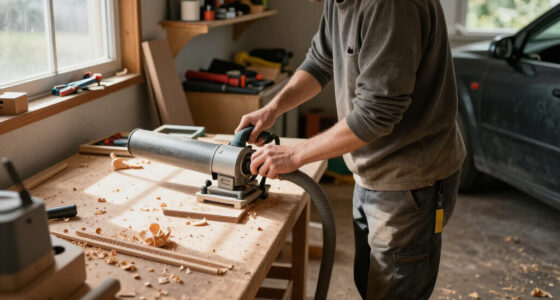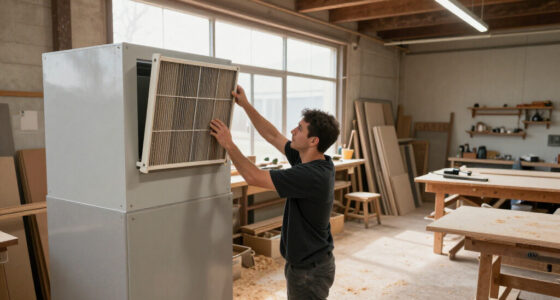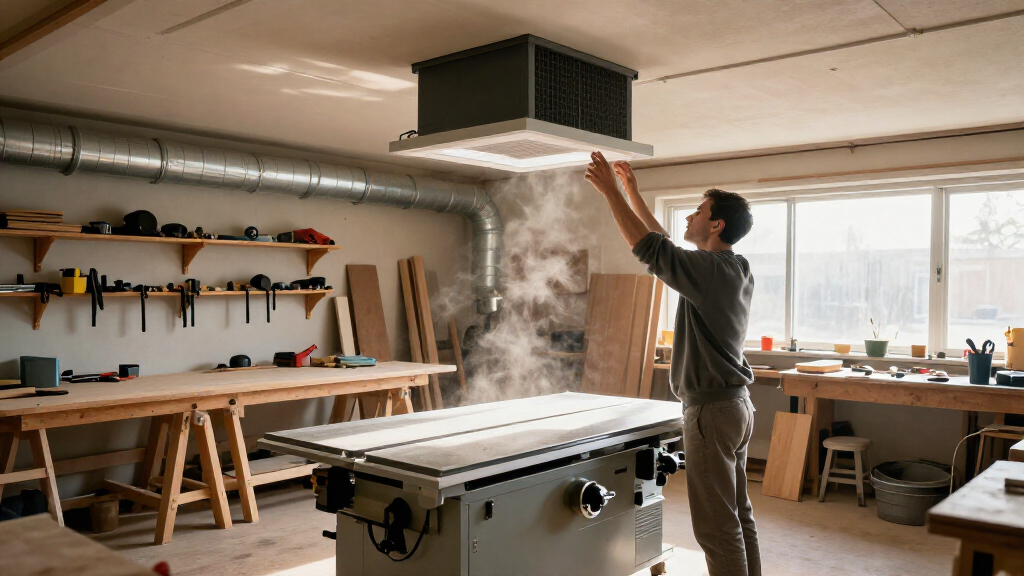
Choosing a shop air filtration system comes down to where you want dust controlled. Portable shop air filtration systems circulate room air through filters, targeting fine particles that remain airborne after cutting or sanding. Ducted dust collection systems connect hoses or pipes to machines and capture much of the dust and debris as it is produced. The difference shapes what each system can accomplish: a portable cleaner can improve general room air but does not stop chips at a saw, while source collection reduces the dust that escapes into the room but may leave fine airborne particles behind. Choose portable filtration if you already have machine collection and want an added layer for suspended dust; choose ducted collection if your machines lack effective source capture. Many busy shops benefit from both.

Get business pricing on tools and workshop supplies
- Business-only prices and quantity discounts
- Tax-exempt purchasing
- Multiple users, one account, clear invoices

WEN 3417 3-Speed Remote-Controlled Air Filtration System
- ✔ Airflow: 556, 702 or 1,044 CFM
- ✔ Coverage area: Up to 1,000 sq ft
- ✔ Filters: 5-micron pre-filter and replaceable 1-micron filter

DEWALT DWXAF101 Air Filtration System for Woodworking
- ✔ Filtration: Washable cotton pre-filter and H11 HEPA filter
- ✔ Particle capture: Over 95% of particles as small as 0.3 microns
- ✔ Modes: HI, MID, LO and AUTO
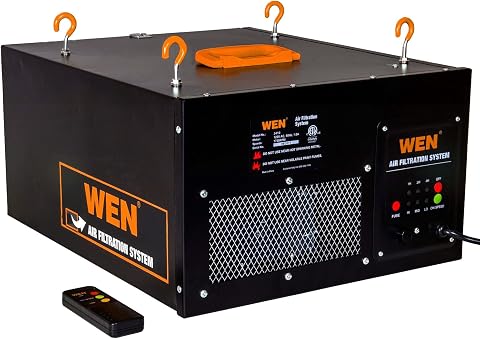
WEN 3410 3-Speed Remote-Controlled Air Filtration System, 400 CFM
- ✔ Airflow: 300, 350 or 400 CFM
- ✔ Coverage area: Up to 400 sq ft
- ✔ Filters: 5-micron pre-filter and replaceable 1-micron filter
At a Glance
| Criteria | Portable shop air filtration systems | Ducted dust collection systems | Winner |
|---|---|---|---|
| Where dust is captured | Filters particles already circulating in the shop | Captures dust and debris at a machine hood or port | B |
| Fine airborne particle control | Designed to reduce suspended particles; performance depends on filter rating, airflow, placement, and room conditions | Can reduce the amount of fine dust released if machine ports and ductwork are effective; escaped particles may remain airborne | Depends |
| Wood chips and larger debris | Does not collect chips at the machine; use machine dust collection or a shop vacuum | Handles chips and dust at connected machines, subject to collector design and suitable ducting | B |
| Coverage and machine compatibility | Covers a room or zone according to airflow and layout | Serves connected machines; performance depends on airflow, duct layout, and machine ports | Depends |
| Installation and flexibility | Usually hangs from a ceiling or sits on a stand; can move between areas | Requires hoses or ductwork and may need space planning; a mobile collector offers some flexibility | A |
| Maintenance | Clean or replace filters and keep intakes clear | Empty the collection bin or bag, inspect filters, and maintain ducts and connections | Depends |
| Cost and overall value | Often lower upfront cost for room air treatment, but it does not replace source collection | Higher initial cost and setup effort; can prevent more debris from reaching the room and reduce cleanup | Depends |
WEN 3417 3-Speed Remote-Controlled Air Filtration System
For a workshop that needs more air movement than a compact system can provide, the WEN 3417 is the most capable match in this group. Its three airflow settings span 556, 702 and 1,044 CFM, and its stated coverage reaches up to 1,000 square feet. That gives buyers more headroom for larger spaces than the WEN 3410, whose maximum is 400 CFM and whose listed coverage is up to 400 square feet.Both WEN models use the same basic 5-micron pre-filter and replaceable 1-micron filter, along with a remote and programmable shutoff timer. The 3417’s advantage is capacity, not a different filtration approach. Its tradeoffs are substantial for a home shop: it weighs 55 pounds, measures 30.3 by 24 by 12.2 inches, and its listed noise range of 63–68 dB is higher than the 3410’s. We’d favor it when room size and airflow take priority, and consider DEWALT instead when the stated H11 HEPA filtration is the deciding factor.
Pros:
- Airflow settings of 556, 702 and 1,044 CFM
- Coverage listed up to 1,000 square feet
- Replaceable 5-micron pre-filter and 1-micron filter
- Remote control and programmable shutoff timer
Cons:
- Listed noise level is 63–68 dB
- At 55 pounds, it is the heaviest option here
- Larger dimensions require more space for placement
Best for: Woodworkers with a larger shop who want three airflow settings and remote timer control.
Not ideal for: Small-shop owners who need a compact, quieter unit, or buyers seeking a specified H11 HEPA filter.
Bottom line: The WEN 3417 is our leading choice for larger shops that need its higher airflow and stated coverage, provided its weight and noise suit the workspace.
“The WEN 3417 is our leading choice for larger shops that need its higher airflow and stated coverage, provided its weight and noise suit the workspace.”
DEWALT DWXAF101 Air Filtration System for Woodworking
DEWALT takes a different route from the two WEN systems: its H11 HEPA filter is specified to capture over 95% of particles as small as 0.3 microns. That gives buyers a finer stated particle-capture benchmark than the WEN models’ listed 1-micron filters. The washable cotton pre-filter, filter replacement indicator and four operating modes—HI, MID, LO and AUTO—also make maintenance and control central parts of its appeal.Where it falls behind the WEN 3417 is stated airflow and room coverage: neither figure is provided in the supplied specifications, so we can’t compare its capacity directly with the WEN’s 1,044 CFM and coverage up to 1,000 square feet. DEWALT is also listed at 64 dB, close to the WEN 3417’s noise range. Its ceiling-mounted design saves floor space, but that only helps if the shop can accommodate ceiling installation. Compared with the WEN 3410, this model is lighter at 20.9 pounds and offers the more specific fine-particle filtration claim; the WEN remains easier to assess for small-room airflow because its coverage and CFM are stated.
Pros:
- H11 HEPA filter specified for over 95% capture of particles as small as 0.3 microns
- Washable cotton pre-filter and filter replacement indicator
- HI, MID, LO and AUTO operating modes
- Ceiling-mounted design keeps the unit off the floor
Cons:
- Requires ceiling installation
- Listed noise level is 64 dB
- Supplied specifications do not state airflow or coverage
Best for: Woodworkers who prioritize a stated fine-particle capture level, washable pre-filter maintenance and ceiling mounting.
Not ideal for: Buyers who need a stated CFM or coverage figure before choosing, or who cannot install a ceiling-mounted unit.
Bottom line: The DWXAF101 is the clearest choice here when fine-particle filtration and ceiling placement matter more than having a published airflow or coverage figure.
“The DWXAF101 is the clearest choice here when fine-particle filtration and ceiling placement matter more than having a published airflow or coverage figure.”
WEN 3410 3-Speed Remote-Controlled Air Filtration System, 400 CFM
The WEN 3410 brings the shared WEN controls and two-stage filter setup to a smaller stated coverage area. Its three settings provide 300, 350 or 400 CFM, for rooms up to 400 square feet. That is the natural fit when the WEN 3417’s 55-pound body and higher airflow would be more system than a small workshop needs. It is also the quietest-listed choice here, at 50–60 dB, though actual suitability still depends on how a shop is arranged and used.Like the 3417, it includes a 5-micron pre-filter, a replaceable 1-micron filter, a programmable shutoff timer and an RF remote that works without direct line of sight. Compared with DEWALT, the 3410 has a clear stated CFM and coverage figure, but its filtration spec does not make the same 0.3-micron capture claim. Its main limitation is equally clear: 400 square feet is the stated ceiling, and it cannot match the 3417’s higher airflow for a larger shop. Choose it for a smaller room where those limits fit, rather than expecting it to scale up with a growing workspace.
Pros:
- Three airflow settings up to 400 CFM
- Coverage listed up to 400 square feet
- Replaceable two-stage filtration
- RF remote and programmable shutoff timer
Cons:
- Listed coverage is limited to rooms up to 400 square feet
- Noise reaches a listed maximum of 60 dB
- Its 1-micron filter specification is less specific than DEWALT’s 0.3-micron particle-capture claim
Best for: Owners of smaller workshops up to 400 square feet who want three speeds, remote operation and a programmable timer.
Not ideal for: Owners of larger shops who need the WEN 3417’s higher airflow, or buyers seeking DEWALT’s stated H11 HEPA particle-capture specification.
Bottom line: The WEN 3410 makes the most sense when a smaller shop fits its stated coverage and we want WEN’s practical remote and timer controls in a more compact system.
“The WEN 3410 makes the most sense when a smaller shop fits its stated coverage and we want WEN’s practical remote and timer controls in a more compact system.”
As an Amazon Associate we earn from qualifying purchases.
Key Differences
The systems solve different parts of the dust problem. A portable air cleaner draws room air through a filter, so it is most useful for fine particles that have escaped a machine hood or remain suspended after work. Its results depend on how much air it moves, the filter it uses, where it sits, and whether the room layout lets air circulate through it. It does not pull dust directly from a blade, sander, or router.
Ducted collection works at the machine. A properly matched collector and connection can remove chips and dust before they spread, making it the stronger first purchase when a shop has no source capture. Its limits are also practical: it only serves connected machines, and weak ports, leaks, restrictive ductwork, or poor setup can reduce capture. Fine particles that escape can still linger. For many shops the useful sequence is source collection first, then room filtration to address what remains.
Cost should be judged against the job each system does. A portable unit is often cheaper and simpler to add, but it cannot substitute for a collector when a machine is throwing chips into the room. Ducted systems cost more to set up, yet provide more direct control and can reduce sweeping and airborne dust at the source. Pay for both when the shop produces dust regularly, has multiple machines, or needs an additional layer of room-air cleaning.
Detailed Comparison
Where dust is captured (Ducted dust collection systems wins — major)
Ducted collection wins by design: it draws dust from a machine port or hood as the work happens. Portable filtration treats air after particles have entered the room. This is a major practical difference for saws, sanders, and routers that release visible debris. A room cleaner can catch some of what escapes, but it cannot prevent the initial spread.
Fine airborne particle control (major difference)
This depends on the specific equipment and setup. A portable unit is built to circulate and filter room air, so it can help with particles left airborne after source collection. A ducted collector can reduce fine dust at its origin when the machine connection and filtration are suitable, but it may not capture particles that escape the hood. Neither label alone guarantees performance; compare filter specifications, airflow, and the intended use.
Chips and larger debris (Ducted dust collection systems wins — major)
Ducted collection clearly wins. Its hoses and collection container are intended to carry chips and larger debris away from connected machines. Portable air cleaners use airflow through filters and are not designed to handle a stream of chips or shop-floor waste. If a machine generates visible debris, source collection is the relevant tool.
Coverage and machine compatibility (moderate difference)
Neither is universally better. A portable cleaner can serve a room or work zone without connecting to each machine, but its effectiveness depends on room size, airflow, placement, and obstacles. Ducted systems serve the machines connected to them, and performance varies with collector capacity, port size, and duct layout. Choose based on whether the priority is general room circulation or capture at specific tools.
Installation and flexibility (Portable shop air filtration systems wins — moderate)
Portable filtration usually wins for simplicity. Many units can be hung overhead or placed on a stand, then relocated as the work area changes. Ducted collection takes more planning because hoses or ducts must reach machines, although a mobile collector can serve tools one at a time. The gap is moderate: a fixed multi-machine setup can be convenient once installed, but it takes more effort to build.
Maintenance (minor difference)
This is a model and usage question, so there is no universal winner. Both systems require filter care. A ducted collector also needs attention to its bin or bag, connections, and duct paths; a portable cleaner needs its intake kept clear and filters cleaned or replaced. Compare filter availability, replacement cost, and how easy it is to inspect each system before buying.
Cost and overall value (major difference)
Portable filtration often wins on entry cost and ease of adding room-air treatment. Ducted collection can deliver greater value when the shop needs chips and dust captured at the tools, since a portable unit cannot perform that role. The difference in value is major only when comparing unlike needs: buy the system that addresses the main dust source, then add the other if your remaining dust problem warrants it.
Portable shop air filtration systems: Pros and Cons
Pros:
- Treats suspended particles throughout a room or zone
- Usually simpler to install and reposition
- Can complement existing machine collection
- Often lower upfront cost for added room-air filtration
Cons:
- Does not capture chips or dust directly at the machine
- Effectiveness depends on airflow, filter, placement, and room layout
- Cannot replace a suitable dust collector or shop vacuum at dusty tools
Ducted dust collection systems: Pros and Cons
Pros:
- Captures chips and dust at connected machines
- Can reduce the amount of debris released into the shop
- Addresses the source of dust and can reduce cleanup
- Can serve multiple machines when properly sized and ducted
Cons:
- Higher setup cost and installation effort
- Only serves machines connected to the system
- Leaks, restrictive ducting, or poor machine ports can weaken capture
- Does not automatically remove fine particles that escape into room air
Who Should Choose What
Choose Portable shop air filtration systems if:
- You already collect dust at the machine and want additional filtration for particles left in the room.
- You need a system that can cover a work zone without running ductwork to every tool.
- You want a relatively simple addition that can be repositioned as the shop layout changes.
Choose Ducted dust collection systems if:
- Your machines release chips or dust into the shop because they lack effective source collection.
- You run dusty tools regularly and want to capture debris as it is produced.
- You can plan hoses or ductwork around the machines that generate the most dust.
Skip both if: If your need is only occasional cleanup of a small work area, a suitable shop vacuum and tool attachment may be a better starting point than a dedicated room cleaner or fixed duct network.
Value for Money
Pay more for ducted collection when the central problem is dust and chips coming directly from machines. Its higher initial cost can make sense for a regularly used shop because it targets the source and may reduce cleanup. Pay for portable filtration when source collection is already in place or when lingering airborne dust is the main concern; it is often an accessible room-air upgrade, but poor value if you expect it to collect debris at the tool. In a busy shop with both problems, the systems complement each other. Buy for the main source of dust first, then add the second system if the remaining problem justifies the cost.
Final Verdict
For a shop without effective machine collection, choose ducted dust collection first. It is the more useful foundation because it handles chips and dust at the source, where portable room filtration cannot reach. Choose portable shop air filtration if your tools already have suitable collection and you want to treat particles that remain airborne. The deciding factor is whether dust is escaping from machines or lingering in room air. For frequent cutting or sanding and a cleaner shop overall, use both when the budget and layout allow.
Frequently Asked Questions
Can a portable shop air cleaner replace a dust collector?
No. A portable cleaner filters air circulating through the room; it is not designed to pull chips and dust from a machine port. Use source collection for dusty tools, then consider room filtration for particles that escape.
Which system should I buy first for a new woodworking shop?
Start with dust collection matched to the machines you use most, especially tools that generate substantial chips or dust. Add a portable air cleaner if fine particles remain in the room after source capture.
Do I need both a dust collector and a shop air filter?
Not every shop does, but they cover different stages. The collector captures debris at connected tools; the air cleaner filters particles left in the room. Regular dusty work and multiple machines make the combination more useful.
What matters when choosing a portable air filtration system?
Check its airflow and the room area it is intended to serve, filter specifications, placement options, and replacement filter cost. Actual results also depend on the room layout and how well air can circulate through the unit.