
TL;DR
For a typical one-car garage woodshop, a dust collection system delivering 400–600 CFM at the tool, with 4-inch ductwork and a filter rated for fine dust, covers the realistic needs of a hobbyist. Shop vacs handle sanders and routers; a single-stage collector handles the tablesaw, planer, and jointer. Spend your budget on filtration and tight duct runs, not on horsepower you’ll never use.
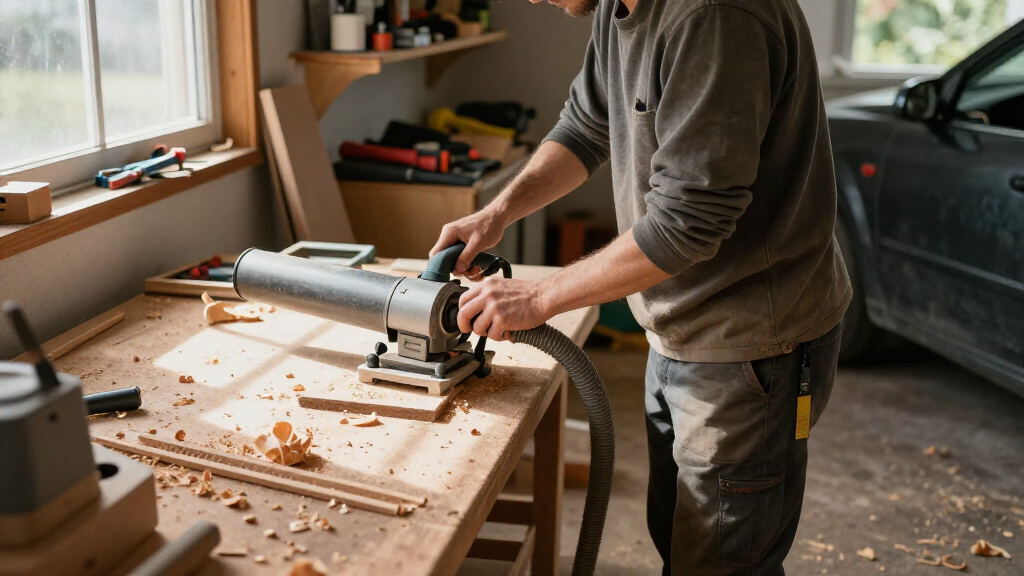
The first time you rip a stack of 8/4 maple on a tablesaw in a closed garage, you learn something fast: the dust doesn’t leave. It hangs in the air like fog, coats every surface, and ends up in your lungs for days afterward. A one-car garage is 200 to 400 square feet of trapped air, and wood dust — especially the fine stuff under 10 microns — is the part that actually hurts you.
This guide walks you through matching a dust collection system to a real small shop: how much CFM you need, why filtration matters more than motor size, and how ductwork decisions quietly make or break everything. I’ve run a two-car-turned-one-car garage shop for years, made most of the mistakes, and I’ll tell you honestly where budget gear is fine and where cheaping out costs you.
No product roundups here. Just the numbers and the logic, so whatever you buy or build fits your space instead of your neighbor’s.
Target 400–600 delivered CFM for a one-car garage; judge collectors by measured airflow at the tool, not free-air CFM on the box.
A shop vac handles sanders and routers; anything with a planer or jointer needs a real single-stage collector — don’t mix the two jobs.
Filtration is the health purchase: 1-micron cartridge or HEPA media beats a big motor breathing through a 30-micron bag every time.
Keep flex hose short, elbows few, joints sealed, and blast gates closed except at the machine in use — ductwork discipline preserves CFM you already paid for.
A $40 cyclone separator lid and a monthly filter check are the highest-return maintenance habits in a small shop.
Choosing the Right Dust Collection System for a One-Car Garage
200–400 square feet of trapped air, one machine running at a time, and fine dust under 10 microns that actually hurts you. Here’s how to match a collector to a real garage shop — by measured airflow at the tool, filtration that protects your lungs, and ductwork that doesn’t choke the CFM you already paid for.
How Much CFM Does Your Garage Actually Need?
The number that matters isn’t the free-air CFM printed on the box — it’s the CFM arriving at your tool after the air fights through ductwork, bends, and a filter. Manufacturers quote free-air CFM like a carmaker quoting top speed downhill with a tailwind: a “650 CFM” collector can easily deliver 350 at the end of the run.
The trap: buy a 1 HP collector rated 500 CFM, run 15 feet of corrugated flex through two 90° elbows to your planer — and the chip chute clogs mid-pass. That’s not the planer’s fault; you asked the airflow to carry more chips than it could. Undersizing costs you clogged ducts and airborne dust. Target 400 CFM delivered at your farthest tool.
Shop Vac, Portable Collector, or Central System?
For a one-car garage, a portable single-stage collector is the sweet spot — but it depends entirely on which tools you run. One combination to push back against: a benchtop planer on a shop vac. The bin fills every few board feet and fine dust passes straight through a standard filter.
| System Type | Typical CFM | Best For | Verdict in a Garage |
|---|---|---|---|
| Shop vacuum + HEPA bag | 100–150 | Sanders, routers, track saws, handheld tools | ✗ Chokes on chips; tiny bin fills in minutes at the planer |
| Portable single-stage collector | 500–1,100 | Tablesaw, jointer, planer, bandsaw — one at a time | ~ Sweet spot — but stock filtration is often poor on fine dust |
| Central system with ductwork | 1,100+ | Multiple machines running, larger shops | ✗ Cost, ceiling space, overkill under 400 sq ft |
Filtration Is Where Cheap Collectors Betray You
The dust you can see — curls and chips — is not the problem. A stock 30-micron bag catches the visible stuff and passes the hazardous fraction right back into your garage air. Clean floor, dirty lungs. Budget for the filter before the motor.
30-Micron Stock Bag
Catches chips and visible dust. Passes everything under 30 microns — including the fine fraction that drives long-term respiratory damage — straight back into the room.
1-Micron Felt Bag
The minimum sensible upgrade over stock. Cuts the fine-dust passthrough dramatically at low cost; a good match for a modest 1.5 HP single-stage unit.
Cartridge / HEPA Media
99.9% capture at 0.3 microns. Canister cartridges pack more filter area into the same footprint, keep static pressure low, and clean with a crank instead of a trip outside. A modest 1.5 HP unit with a good cartridge beats a 3 HP cyclone breathing through a 30-micron bag.
Rules That Keep Your Airflow From Choking
Ductwork is where good collectors go to die. In a one-car garage, runs can stay short enough that 4-inch duct works for a single-machine-at-a-time setup — but only if you respect the rules that matter more than diameter.
Minimize flexible hose
Smooth-wall PVC or HVAC duct flows far better than corrugated flex. Use flex only for the last foot connecting to a machine.
Count your bends
Every 90° elbow costs the resistance of several feet of straight pipe. Two elbows at the far end of a run can eat 100+ CFM.
Seal the joints
Silicone caulk every connection. Leaks at the machine end bleed airflow; leaks near the collector blow fine dust into the room.
Use blast gates
Only the machine in use should be open. Three open gates split your hard-won CFM three ways and starve every tool on the line.
From Tool to Clean Air
Tool Port
Blast gate open only at the machine in use; short flex for the last foot.
Cyclone Lid ($40)
Chips drop into a steel trash can before they ever touch the filter.
1.5 HP Single-Stage
Delivers 400–600 CFM at the tool through sealed 4-inch runs.
1-Micron Cartridge
99.9% capture at 0.3 µm. Check and clean monthly.
Clean Garage Air
The dust doesn’t hang like fog — and doesn’t end up in your lungs.
What Actually Works
Target 400–600 delivered CFM for a one-car garage; judge collectors by measured airflow at the tool, not free-air CFM on the box.
Match the machine to the job: a shop vac handles sanders and routers; anything with a planer or jointer needs a real single-stage collector — don’t mix the two jobs.
Filtration is the health purchase: a 1-micron cartridge or HEPA media beats a big motor breathing through a 30-micron bag every time.
Ductwork discipline preserves CFM you already paid for: flex hose short, elbows few, joints sealed, blast gates closed except at the machine in use.
Highest-return habits: a $40 cyclone separator lid and a monthly filter check — the best money-per-CFM-saved in a small shop.
How Much CFM Does Your Garage Actually Need? (The Honest Math)
Your one-car garage needs a dust collection system in the 400–600 CFM range — that’s the short answer, and it holds for most hobbyist tool collections [1]. But the number that matters isn’t the CFM printed on the box. It’s the CFM arriving at your tool after the air fights its way through ductwork, bends, and a filter bag. Manufacturers quote free-air CFM, which is like a car manufacturer quoting top speed downhill with a tailwind.
Different tools drink different amounts of air. A random-orbit sander sips maybe 100–150 CFM. A 6-inch jointer or a benchtop planer gulps 350–400 CFM because those machines eject chips at high volume. Your tablesaw’s blade guard port wants 200–300 CFM on its own. Add static pressure losses — roughly 1 inch of water column per 10 feet of flexible hose when things are going badly — and a “650 CFM” collector might deliver 350 at the end of the run.
Here’s the scenario that catches people: you buy a 1 HP collector rated 500 CFM, run 15 feet of corrugated flex hose to your planer through two 90-degree elbows, and the planer’s chip chute clogs mid-pass. That clog isn’t the planer’s fault. It’s physics — you asked the machine to move more chips than the airflow could carry. Oversizing slightly costs you money; undersizing costs you clogged ducts and airborne dust.
For a garage with a tablesaw, planer, and one stationary machine running at a time, target real delivered CFM of 400 or better at your farthest tool. That usually means a 1.5 to 2 HP single-stage unit in the real world.
400 CFM dust collector for woodworking
As an affiliate, we earn on qualifying purchases.
As an affiliate, we earn on qualifying purchases.
Shop Vac, Portable Collector, or Central System: Which Fits a 12×24 Shop?
For a one-car garage, a portable single-stage collector is the sweet spot for most people — but it depends entirely on which tools you run [1]. Here’s the honest comparison, scaled to a small shop rather than a production workshop.
| System Type | Typical CFM | Best For | Weakness in a Garage |
|---|---|---|---|
| Shop vacuum + HEPA bag | 100–150 | Sanders, routers, track saws, handheld tools | Chokes on chips; tiny bin fills in minutes at the planer |
| Portable single-stage collector | 500–1,100 | Tablesaw, jointer, planer, bandsaw — one at a time | Stock filtration often poor on fine dust |
| Central system with ductwork | 1,100+ | Multiple machines running, larger shops | Cost, ceiling space, overkill under 400 sq ft |
My own setup evolved the way most do: a shop vac for years, then a 1 HP collector on casters I dragged machine to machine, then a wall-mounted 1.5 HP unit with short hard-pipe runs. Each step fixed a real problem. If you’re only doing weekend furniture work, dragging a portable collector to each machine is genuinely fine — blast gates and permanent ductwork are convenience, not necessity.
The one combination I’d push back against: running a benchtop planer into a shop vac. The bin fills every few board feet, the filter cakes instantly, and fine dust passes straight through a standard filter. You’ll spend more time emptying than planing.
HEPA filter for dust collection system
As an affiliate, we earn on qualifying purchases.
As an affiliate, we earn on qualifying purchases.
Filtration Is Where Cheap Collectors Betray You
The dust you can see — the curls and chips — is not the problem. The problem is fine wood dust below 10 microns, the fraction that reaches deep into your lungs and drives long-term respiratory damage [1]. A stock 30-micron collection bag on a budget collector catches the visible stuff and passes the hazardous stuff right back into your garage air. You end up with a clean floor and dirty lungs.
Look for HEPA or high-efficiency cartridge filtration, typically rated 99.9% at 0.3 microns, or at minimum a 1-micron felt bag as an upgrade over stock [1]. Canister cartridge filters are the modern standard on mid-tier single-stage collectors — they pack far more filter area into the same footprint, which keeps static pressure low, and they clean with a crank rather than a trip outside to shake a bag over a trash can.
Newer designs have gotten noticeably better here [1]. Recent collector generations feature improved fine-particle filtration, and some include automatic on/off activation when a tool starts — a small luxury that genuinely improves usage, because the collector you have to walk across the garage to switch on is the one you’ll skip “just for one quick cut.” That single skipped cut is how the garage air goes bad.
Rule of thumb: budget for the filter before the motor. A modest 1.5 HP collector with a good cartridge filter protects you better than a 3 HP cyclone breathing through a 30-micron bag.
Two-stage separation — a trash-can cyclone lid or a thien baffle ahead of the collector — is cheap insurance. Chips drop into the can before they ever touch the filter, so the cartridge stays clean longer and airflow stays consistent. A $40 lid and a steel trash can is the best money-per-CFM-saved in a small shop.
4 inch ductwork for dust collection
As an affiliate, we earn on qualifying purchases.
As an affiliate, we earn on qualifying purchases.
Ductwork Rules That Keep Your Airflow From Choking
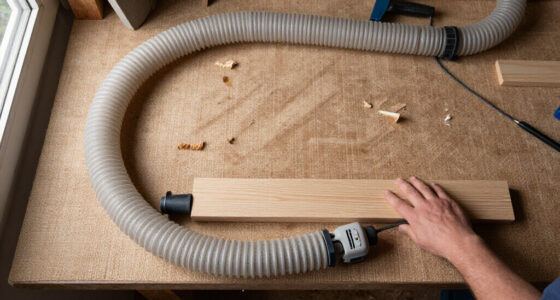
Ductwork is where good collectors go to die. In a one-car garage, you can keep runs short enough that 4-inch diameter duct works for a single-machine-at-a-time setup [1] — but only if you respect a few rules that matter more than the diameter itself.
- Minimize flexible hose. Smooth-wall PVC or HVAC duct flows far better than corrugated flex. Use flex only for the last foot connecting to a machine.
- Count your bends. Every 90-degree elbow costs roughly the same resistance as several feet of straight pipe. Two elbows at the far end of a run can eat 100+ CFM.
- Seal the joints. Silicone caulk on every connection. Small leaks at the machine end bleed airflow; leaks near the collector blow fine dust into the room.
- Use blast gates. Only the machine in use should be open. Three open gates split your CFM three ways, and nothing gets enough.
- Ground non-metal duct. Static buildup in plastic pipe is real, though the ignition risk with home-shop dust concentrations is modest — grounding wire is cheap peace of mind.
Remember that 6-inch-versus-4-inch fact: airflow capacity scales with duct area, and 6-inch pipe carries roughly double what 4-inch does. If you ever upgrade to a larger collector or a cyclone, run 6-inch main lines and step down at the machines. I piped my shop in 4-inch initially and repiped it in 6 two years later — learn from my wallet.
If any part of your installation touches electrical wiring — adding a 220-volt circuit for a larger collector, or hardwiring an auto-start relay — shut power at the breaker and wear eye protection, or better, hire a licensed electrician. A new 240V circuit in a garage usually needs a permit, and that’s not paperwork worth skipping.
cyclone separator lid for shop dust collector
As an affiliate, we earn on qualifying purchases.
As an affiliate, we earn on qualifying purchases.
What It Costs: Budget, Mid-Tier, and Where the Money’s Worth It
You can solve dust in a one-car garage at three price points, and the honest answer is that the middle one fits most hobbyists. Here’s how the tiers shake out, including the hidden costs people forget [1].
- Budget ($150–400): Shop vac with HEPA bag plus a separator lid, or a small 1 HP bag collector. Fine for sanding-heavy, handheld-tool work. Weak on stationary machines and fine-dust filtration.
- Mid-tier ($400–1,000): 1.5–2 HP single-stage collector with cartridge filter, plus a trash-can separator and basic 4-inch ducting. This is the garage-shop sweet spot.
- Pro tier ($1,500+): Cyclone systems with enclosed filtration and 6-inch ductwork. Genuinely better — and genuinely more than a 300-square-foot shop with one machine running at a time requires.
Beyond the unit itself, budget for the boring stuff: blast gates run $10–20 each, ground wire, hangers, and hose clamps add up to $100+ before you notice. And ongoing costs are real — check filters monthly and clean or replace per the manufacturer’s schedule, because a caked filter can cut airflow dramatically while the motor hums along sounding fine [1].
Trends also work in your favor right now: compact wall-mounted designs, quieter motors, and energy-efficient units aimed exactly at small shops [1]. A wall-hung collector frees up floor space that a car-adjacent shop can’t spare, and quieter operation means you’ll actually run it during evening sessions instead of annoying the household.
A 5-Step Plan to Match the System to Your Garage
Dust collection for a small garage is a sequencing problem — do these in order and the equipment choice almost makes itself. This is the process I’d hand a friend setting up their first one-car shop.
- Map your machines. Sketch the garage to scale. Note each tool’s port size and location. Your longest duct run defines your minimum airflow requirement.
- Calculate worst-case CFM. Take your dustiest machine (usually the planer), add 20% for duct losses on the longest run. That number — likely 400–600 CFM — is your target [1].
- Choose filtration before features. Compare units on filter rating and filter area, not peak HP. A canister cartridge at 1 micron or better is the floor for health.
- Plan the duct route before buying pipe. Straightest path, fewest elbows, blast gate at every drop. Buy one size up on the main line if you might upgrade.
- Add an air cleaner last. A ceiling-hung ambient air filter catches the fine dust that escapes machine collection — it’s a supplement, never a substitute.
That last step deserves a sentence more: even a great collection system misses some fine dust, and in a closed garage that residue accumulates. A $150–300 ambient air cleaner running for 20 minutes after a session scrubs the room noticeably. Think of it as the mop after the broom.
And a safety note that isn’t optional: fine wood dust is combustible in concentrated suspension, and some hardwoods are outright toxic. Wear a properly rated respirator (N95 minimum, P100 better) for sanding and routing regardless of what your collector captures, and keep the shop ventilated when finishing work is underway.
Frequently Asked Questions
What size dust collector do I need for a one-car garage?
For a typical 200–400 sq ft garage shop, a system delivering 400–600 CFM at the tool covers hobbyist needs [1]. That usually means a 1.5–2 HP single-stage collector. If your dustiest machine is a benchtop planer, size toward the top of that range to cover duct losses on your longest run.
Can I install a garage dust collection system myself?
Yes — the ductwork, blast gates, and machine hookups are basic carpentry and well within DIY reach. Anything involving new electrical circuits (like adding 220V for a larger collector) should go to a licensed electrician, with the breaker off and permits pulled where required. Ungrounded DIY wiring in a dusty space is a genuine fire risk, not a code technicality.
What type of filter is best for woodworking dust?
HEPA media or a cartridge filter rated 1 micron or finer is the standard recommendation for fine wood dust [1]. The visible chips are harmless compared to sub-10-micron particles, which pass straight through the 30-micron bags shipped on many budget collectors. Upgrading the filter is usually the single best improvement you can make to an existing unit.
Is a shop vac enough for a small garage workshop?
It depends on your tools. For sanders, routers, and handheld power tools, a shop vac with a HEPA bag works well. For stationary machines like a planer or jointer, no — the chip volume overwhelms a vac within minutes. Most garage woodworkers end up running both: vac for handhelds, collector for the big machines.
How often should I clean or replace dust collector filters?
Check filters monthly and clean or replace them per the manufacturer’s guidelines [1]. Cartridge filters with a cleaning crank can go longer between deep cleans, but a caked filter quietly cuts your airflow while sounding normal. If you notice chips escaping machines that used to clear instantly, the filter is the first suspect.
How much floor space does a dust collection system need?
Portable single-stage collectors take up roughly a 2×2 foot footprint, and wall-mounted compact units free even that up [1]. Central systems need dedicated space for the unit plus headroom for ductwork. In a car-adjacent garage, a wall-hung collector with a suspended separator can is the most space-efficient full solution.
Conclusion
Size the system to your tools, not your ambitions. A 1.5–2 HP single-stage collector with a cartridge filter, short 4-inch runs, and a separator can under the whole thing will handle everything a one-car garage can realistically throw at it — and no marketing badge changes that math. The dust you never inhale is the collection system you never regret.
So sketch your layout tonight, count your machines, and buy for the air you can’t see. Your lungs will still be thanking you twenty years from now, every time you flip that blast gate open and the chips vanish instead of hanging in the light.