TL;DR

Get business pricing on tools and workshop supplies
- Business-only prices and quantity discounts
- Tax-exempt purchasing
- Multiple users, one account, clear invoices
A Livingetc report describes preserved flowers set in resin appearing in new hospitality interiors and collectible design, including a Paris herbal infusion house and work by botanical artist Marcin Rusak. Designers interviewed in the report connect the material’s appeal to nostalgia and the idea of preserving a moment, though the examples do not establish how widespread the trend is.
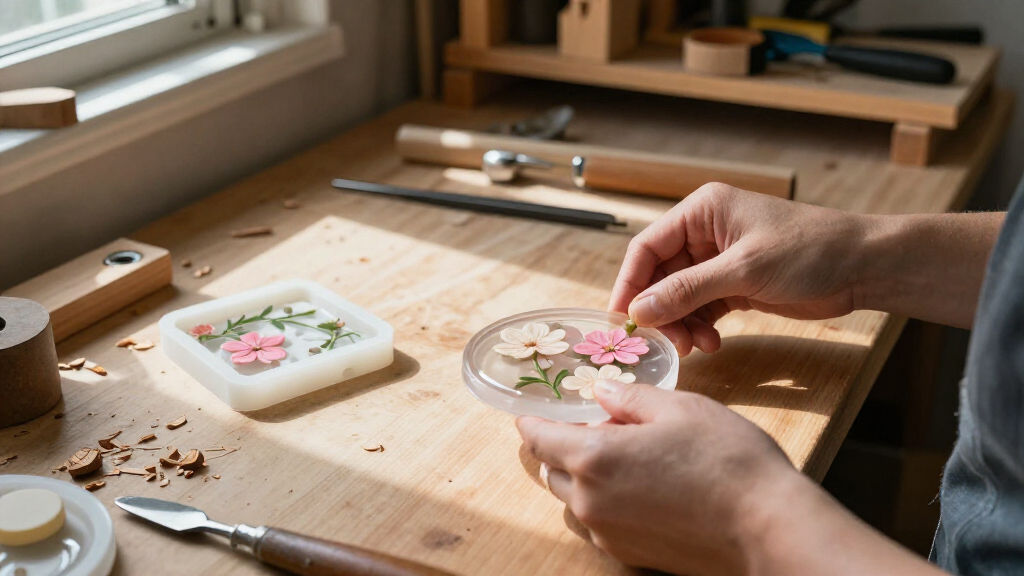
Preserved flowers set in resin are appearing in a range of recent interior and design projects, according to a Livingetc report highlighting a Paris herbal infusion house, furniture and lighting, and botanical artist Marcin Rusak. The examples show how designers are using resin to display flowers as enduring decorative elements, but the report does not establish how widespread the style is across the interiors industry.
One featured example is Apoticari’s La Tisanerie, a herbal infusion house in Paris’s Haut-Marais district. The report says the venue opened in September and has a floral-enriched resin bar counter, which connects its interior materials to its botanical focus. Founder Elsa Snakers describes the business as bringing traditional herbal tea into a modern ritual of pleasure.
The report also points to resin furniture and lighting, including Gelo side tables by Monologue and Paraforma, made from hand-cast resin in varied textures and colors. London- and Geneva-based creative agency founder Romain Casella says he has observed increased use of resin in client projects, particularly tables, consoles and lighting. His comments are an account of his own professional observations, not an industry-wide measure.
Botanical artist and designer Marcin Rusak makes floral works that treat plants as records of culture and time. The feature says he planned to show Flora Herbarium Clear Amber 152 at Salon Art + Design in New York from November 4 to 8. It also names designer Laurids Gallée’s Node 01 light and Sabine Marcelis’s resin work as examples of the material’s use in contemporary design.
Resin Turns Flowers Into Interior Records
Resin changes flowers from temporary decoration into objects that can be displayed as part of furniture, lighting or a venue’s architecture. That gives the material a practical design role while also making the preserved plants carry symbolic weight: they can suggest memory, nature and the passage of time.
Casella links resin’s appeal to nostalgia and a desire to hold a moment still. For readers, the report offers a way to understand why similar floral forms are showing up in settings with different purposes, from a tea house to collectible design. It does not show that customers are buying more resin furniture or that the look has become a dominant market trend.
Popular right now

KitchenAid Artisan Series 5-Quart Tilt-Head Stand Mixer, Dried Rose (KSM150PS)

Ninja Foodi DualZone 10-Qt Air Fryer, 6-in-1, Black (DZ302)

KitchenAid Classic Series 4.5-Quart Tilt-Head Stand Mixer, Onyx Black
As an affiliate, we earn on qualifying purchases.
A Material With Earlier Design Lives
The Livingetc feature describes floral epoxy resin furniture as a genre that originated in the 1940s and returned in the 1980s. It places the current examples alongside renewed interest in amber tones and describes a broader “One Decorative Gesture” idea cited in the publication’s Style Pulse S/S27 report.
The examples span commercial interiors and individual designers rather than a single coordinated collection. The report’s framing is observational: its writer says the pieces have become noticeable across recent visits and online research. That perspective explains the article’s trend claim, but the feature supplies no sales figures, survey results or broader count of projects.
““Like the mosquito in amber in Jurassic Park, we’re deliberately choosing to freeze time — and there’s something reassuring in that in such unstable times: it doesn’t move; it’s there, still.””
— Romain Casella, founder and director of MAY
How Broad Is the Design Revival?
The feature identifies selected projects and designers, but it provides no market data to show whether floral resin use is growing across the industry or whether the examples reflect a limited set of high-profile interiors. Casella’s observation comes from his work with client platforms and is not a quantified trend assessment.
The report also does not provide detailed information about the resin formulations, flower-preservation methods, durability, repair or environmental impacts of the featured pieces. Those details may differ by maker and product. It is not clear from the article whether the cited projects are available for purchase, produced in limited editions or made to commission.
Upcoming Shows and Design Projects
The next event named in the report is Salon Art + Design at New York’s Park Avenue Armory, scheduled for November 4–8, where Rusak was expected to present Flora Herbarium Clear Amber 152. The feature also lists Sabine Marcelis’s solo exhibition, “Sabine Marcelis: Light and Color,” at Zurich’s Museum für Gestaltung from October 30, 2026, to April 4, 2027.
Further reporting would be needed to determine whether these appearances lead to more floral resin commissions or sustained use in hospitality and residential projects. For now, the confirmed picture is a set of notable examples and designers’ explanations, rather than measured evidence of a broad market shift.
Key Questions
What does floral resin mean in this report?
It refers to flowers set within resin and used as visible elements in objects such as furniture, lighting or interior features.
Where is floral resin being used?
The report highlights a floral resin bar counter at Apoticari’s La Tisanerie in Paris, alongside resin tables and lighting by designers and studios including Monologue and Paraforma.
Why do designers say the material appeals to them?
Casella connects resin with nostalgia and preserving time. Rusak describes preserved flowers as potential records of how people relate to nature and beauty. These are attributed views, not measured explanations for the trend.
Is floral resin proven to be a widespread trend?
No. The Livingetc report documents several projects and an individual design professional’s observations, but includes no sales figures or industry-wide data establishing how common the style is.
What events featuring the designers are listed?
Rusak was due to show work at Salon Art + Design in New York from November 4–8. The report also lists Sabine Marcelis’s exhibition at Zurich’s Museum für Gestaltung from October 30, 2026, to April 4, 2027.
Source: livingetc.com