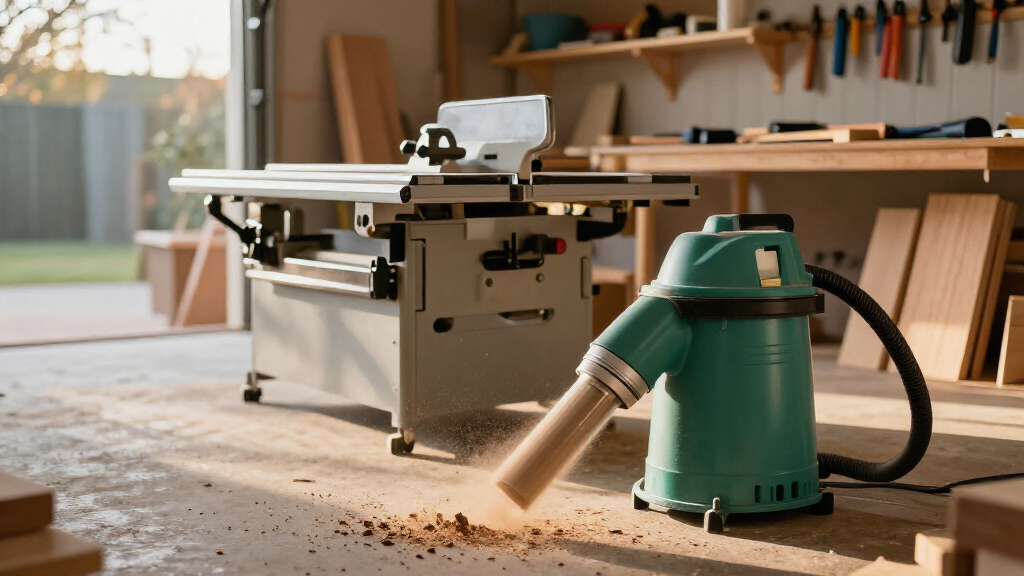
For most woodworking shops, I’d start with the Festool CLEANTEC CT 26 EI: it balances HEPA filtration, usable capacity, and job-site mobility. The Bosch VAC140AH stands out for larger capacity and automatic filter cleaning, while the Festool CT SYS suits portable setups where compact storage matters more than bin size. Choosing among dust extractor vacuums for woodworking means weighing fine-dust control and tool connection against capacity, filter maintenance, and portability. A larger extractor can run longer between emptying, but it takes more room; a compact unit is easier to move but fills sooner. Read on for the full breakdown and guidance on matching an extractor to your tools and shop.

Get business pricing on tools and workshop supplies
- Business-only prices and quantity discounts
- Tax-exempt purchasing
- Multiple users, one account, clear invoices
Complete the kit


Key Takeaways
The CT 26 EI is the balanced pick: Its mid-size format makes more sense for mixed shop and job-site work than either the smaller CT SYS or the larger CT 36 EI.
Automatic filter cleaning matters most during demanding sanding: The Bosch VAC140AH and DEWALT DWV010 make this feature a central part of their appeal, while buyers should still plan for filter care and dust-bag changes.
Capacity and portability pull in opposite directions: The Bosch VAC140AH and DYNAVEX 12-Gallon prioritize fewer interruptions, while the FEIN Turbo I and Starmix Powerhouse Basic are easier to place in tighter work areas.
Wet/dry versatility is not the same as fine-dust specialization: Options such as the PEMEDOR and Metabo HPT combine wet/dry use with extraction features, but buyers should match filtration and tool compatibility to their actual woodworking tasks.
Brand and model family do not settle the choice: Festool’s CT SYS, CT 15, CT 26 EI, and CT 36 EI serve different capacity and mobility needs, so the right pick depends on workflow rather than badge alone.
| ECOMAX 8-Gallon HEPA Shop Vac and Dust Extractor |  | Best Overall for Mixed Shop Cleanup | Capacity: 8 gallons | Filtration: HEPA | Power: Corded electric, 120 V, 15 A | VIEW LATEST PRICE | See Our Full Breakdown |
| Festool CLEANTEC CT SYS HEPA Dust Extractor |  | Best Compact Extractor for Mobile Work | Capacity: 0.92 gallons | Filtration: HEPA, full-unit certified | Motor power: 1000 W | VIEW LATEST PRICE | See Our Full Breakdown |
| PEMEDOR 9-Gallon Wet/Dry Dust Extractor with Dual Cyclone Separator |  | Best for High-Volume Debris Collection | Capacity: 9 gallons (35 liters) | Motor power: 1400 W | Listed suction: Up to 19 kPa | VIEW LATEST PRICE | See Our Full Breakdown |
| Festool CLEANTEC CT 26 EI HEPA Dust Extractor |  | Best Premium Choice for a Connected Workshop | Capacity: 26 liters | Filtration: HEPA | Maximum suction: 96 inches | VIEW LATEST PRICE | See Our Full Breakdown |
| Festool CT 15 HEPA Mobile Dust Extractor |  | Best for Small Shops and General Cleanup | Container capacity: 15 liters (3.96 gallons) | Filtration: HEPA | Power source: Corded electric | VIEW LATEST PRICE | See Our Full Breakdown |
| Bosch VAC140AH 14-Gallon Dust Extractor with Auto Filter Cleaning and HEPA Filter |  | Best for Long, Dust-Heavy Sessions | Capacity: 14 gallons | Maximum airflow: 150 CFM | Maximum static water lift: 97.3 inches | VIEW LATEST PRICE | See Our Full Breakdown |
| DEWALT DWV010 8-Gallon HEPA Dust Extractor with Automatic Filter Cleaning |  | Best for Mobile Jobsite Woodworking | Capacity: 8 gallons | Airflow: 155 CFM | Motor: 15 A | VIEW LATEST PRICE | See Our Full Breakdown |
| Metabo HPT ASR 35 AutoCleanPlus 9-Gallon HEPA Wet/Dry Vacuum |  | Best for Wet-and-Dry Workshop Cleanup | Capacity: 9 gallons | Airflow: Up to 157 CFM | Motor: 11 A, 1,400 W | VIEW LATEST PRICE | See Our Full Breakdown |
| Festool CLEANTEC CT 36 EI HEPA Dust Extractor |  | Best for Connected Festool Workflows | Capacity: 9.5 gallons | Filter type: HEPA | Power levels: 5 | VIEW LATEST PRICE | See Our Full Breakdown |
| Makita VC4210L 11-Gallon Wet/Dry HEPA Dust Extractor |  | Best for Quieter Workshop Use | Capacity: 11 gallons | Suction: 148 CFM | Water lift: 92 inches | VIEW LATEST PRICE | See Our Full Breakdown |
| FEIN Turbo I Wet/Dry Dust Extractor, 5.8-Gallon |  | Best for Quiet, Mobile Tool Cleanup | Capacity: 5.8 gallons | Motor power: 1100 watts | Airflow: 151 CFM | VIEW LATEST PRICE | See Our Full Breakdown |
| DYNAVEX 12-Gallon Portable Woodworking Dust Extractor |  | Best for High-Capacity Shop Cleanup | Tank capacity: 12 gallons | Motor: 1.5 HP, 10 amps | Airflow: 142 CFM | VIEW LATEST PRICE | See Our Full Breakdown |
| Starmix Powerhouse Basic HEPA Wet/Dry Industrial Vacuum Cleaner, 6.6 Gallons |  | Best for Fine-Dust, Long-Duration Extraction | Capacity: 6.6 gallons (25 L) | Airflow: 157 CFM | Power: 1,600 W | VIEW LATEST PRICE | See Our Full Breakdown |
| dust extractor vacuums for woodworking | Capacity | Filtration | Weight | Noise level |
|---|---|---|---|---|
| ECOMAX 8-Gallon HEPA Shop Vac | 8 gallons | HEPA | — | 75 dB |
| Festool CLEANTEC CT SYS HEPA D | 0.92 gallons | HEPA, full-unit certified | — | 67 dB |
| PEMEDOR 9-Gallon Wet/Dry Dust | 9 gallons (35 liters) | — | 35.5 pounds | — |
| Festool CLEANTEC CT 26 EI HEPA | 26 liters | HEPA | 17.19 kg | — |
| Festool CT 15 HEPA Mobile Dust | — | HEPA | — | — |
| Bosch VAC140AH 14-Gallon Dust | 14 gallons | — | — | 65 dB |
| DEWALT DWV010 8-Gallon HEPA Du | 8 gallons | HEPA | 22 pounds | 80 dB |
| Metabo HPT ASR 35 AutoCleanPlu | 9 gallons | Two washable HEPA filters; captures particles down to 0.3 microns | — | — |
| Festool CLEANTEC CT 36 EI HEPA | 9.5 gallons | — | 39.3 pounds | — |
| Makita VC4210L 11-Gallon Wet/D | 11 gallons | Two-stage; HEPA captures 99.97% of particles 0.3 microns and larger | 35 lbs | 60 dB(A) |
| FEIN Turbo I Wet/Dry Dust Extr | 5.8 gallons | — | 25 pounds | 66 dB |
| DYNAVEX 12-Gallon Portable Woo | — | — | 29.9 pounds | — |
| Starmix Powerhouse Basic HEPA | 6.6 gallons (25 L) | Two HEPA filters; 1,200 sq in filter surface area | 27 pounds | 69 dB(A) |
More Details on Our Top Picks
ECOMAX 8-Gallon HEPA Shop Vac and Dust Extractor
The ECOMAX earns my best overall spot for woodworkers who want one machine to handle tool-connected extraction and ordinary shop cleanup. Its automatic tool activation starts the vacuum when a connected power tool runs, while the 8-gallon tank offers much more room than the Festool CT SYS’s 0.92-gallon container. HEPA filtration, semi-automatic filter cleaning, and a dust-full indicator add useful support during dusty work, and the 10-foot anti-static hose helps with reach around a bench. The tradeoff is a corded, relatively bulky unit rather than the CT SYS’s carry-friendly format; its tool compatibility is also less specifically limited in the supplied details than the CT SYS’s Festool-focused trigger description. Choose this for a fixed or semi-fixed shop, not frequent stair or site moves.
Pros:- Switches between wet-dry vacuuming and power-tool dust extraction
- Automatically starts with a connected power tool
- HEPA filtration with semi-automatic filter cleaning and a dust-full indicator
- Includes a 10-foot anti-static hose, tool adapter, and three disposable filter bags
Cons:- Corded operation limits mobility around a large shop or job site
- Its 8-gallon body takes more storage space than compact extractors such as the Festool CT SYS
- The supplied data does not specify tool-trigger compatibility beyond connected power tools
Best for: Woodworkers who want a single corded machine for power-tool dust collection, general dry cleanup, and occasional wet cleanup in a garage or workshop.
Not ideal for: Mobile tradespeople or small-shop users who need a light extractor that is easy to carry between work areas.
- Capacity:8 gallons
- Filtration:HEPA
- Power:Corded electric, 120 V, 15 A
- Hose:10 feet, anti-static
- Noise level:75 dB
- Dimensions:15.7 × 15.2 × 22 inches
- Included accessories:Two extension wands, floor nozzle, universal adapter, crevice nozzle, round brush, three disposable filter bags, HEPA filter, utility nozzle, and foam filter
Our verdict“Choose the ECOMAX if you want a versatile, higher-capacity shop extractor with tool-triggered operation and can work around a cord.”
Festool CLEANTEC CT SYS HEPA Dust Extractor
The CT SYS is the lineup’s clearest choice when portability matters more than capacity. Its Systainer-compatible case, shoulder strap, and onboard hose and cord storage suit installers and finish carpenters moving between rooms, while full-unit HEPA certification provides a defined filtration standard for indoor work. At 67 dB, its listed noise level is lower than the ECOMAX’s 75 dB and PEMEDOR’s 80 dB. That compact format comes with a real compromise: a 0.92-gallon capacity means frequent bag changes during sustained sanding or cutting, unlike the larger ECOMAX and PEMEDOR tanks. Automatic tool activation is described for connected Festool tools, so buyers relying on another brand’s trigger setup should check compatibility before choosing it. I’d pick this for short, mobile tasks, not as the main extractor for heavy production.
Pros:- Compact Systainer-compatible design with shoulder strap
- Full-unit HEPA certification
- Automatic tool activation for connected Festool tools
- Onboard hose and cord storage with a listed 67 dB noise level
Cons:- Very small 0.92-gallon capacity calls for frequent bag changes
- Automatic tool activation is specified for connected Festool tools
- Less suited to sustained, high-volume dust collection than the ECOMAX or PEMEDOR
Best for: Finish carpenters, installers, and Festool users who need a compact HEPA extractor for brief tool sessions and room-to-room work.
Not ideal for: Woodworkers running long sanding sessions or high-volume cutting who would be slowed by the 0.92-gallon capacity, or users needing confirmed automatic activation with non-Festool tools.
- Capacity:0.92 gallons
- Filtration:HEPA, full-unit certified
- Motor power:1000 W
- Power:Corded electric, 120 V, 8.33 A
- Noise level:67 dB
- Tool activation:Automatic activation with connected Festool tools
- Portability features:Systainer compatibility, shoulder strap, and hose and cord storage
- Warranty:3 years
Our verdict“Choose the CT SYS for portable, short-duration extraction with Festool tools, but not for long runs that fill a small bag quickly.”
PEMEDOR 9-Gallon Wet/Dry Dust Extractor with Dual Cyclone Separator
For a woodshop that produces plenty of chips and shavings, the PEMEDOR’s strongest distinction is its dual cyclone pre-separator. It is designed to separate debris before it reaches the HEPA filter, which can help limit filter buildup during heavier cleanup. The 9-gallon wet-dry tank also holds more than the ECOMAX’s 8-gallon container and far more than the Festool CT SYS, making it a better fit for larger debris loads and mixed cleanup. This capacity has a mobility cost: at 35.5 pounds and 25.4 inches tall, it is a substantial machine to move. Its 80 dB listed noise level is also higher than the ECOMAX and CT SYS. Unlike those models, the supplied details do not list automatic tool activation, so I’d treat it as a strong collection-and-cleanup option rather than a confirmed tool-triggered extractor.
Pros:- Dual cyclone pre-separator is designed to reduce debris reaching the HEPA filter
- 9-gallon tank supports larger dry debris loads and wet cleanup
- Includes an 8.2-foot anti-static hose
- Listed suction reaches up to 19 kPa
Cons:- At 35.5 pounds, it is less convenient to move than the Festool CT SYS
- Listed noise level of 80 dB is higher than the ECOMAX and CT SYS
- Automatic tool activation is not specified in the supplied data
Best for: Woodworkers and garage-shop owners who collect large amounts of chips, shavings, and sawdust and want wet-dry cleanup with cyclone pre-separation.
Not ideal for: Users who need a quiet, lightweight extractor or rely on automatic power-tool activation, which is not listed in the supplied product details.
- Capacity:9 gallons (35 liters)
- Motor power:1400 W
- Listed suction:Up to 19 kPa
- Filtration and separation:HEPA filter with dual cyclone pre-separator
- Hose:8.2 feet, anti-static
- Weight:35.5 pounds
- Dimensions:20.8 × 15 × 25.4 inches
- Power and noise:AC power, 110 V, 6.3 A; 80 dB
Our verdict“Choose the PEMEDOR for higher-volume wet-dry shop cleanup and cyclone-assisted collection if weight and noise are acceptable.”
Festool CLEANTEC CT 26 EI HEPA Dust Extractor
The CT 26 EI is the most workshop-system-oriented pick here: its 26-liter capacity, five suction levels, Bluetooth connectivity, and T-LOC Systainer attachment suit a shop where the extractor stays paired with tools and organized accessories. Variable suction gives woodworkers more control across different tasks than the Festool CT 15’s single listed power level, while the larger container outlasts the CT SYS’s compact 0.92-gallon setup between changes. The tradeoff is less emphasis on portability: at 17.19 kg, this is a heavier canister than the CT SYS, and the description frames it for indoor use. Automatic operation is specified with compatible corded tools, so buyers should not assume every cordless tool will trigger it. I’d favor this model for a connected indoor workshop rather than frequent transport or outdoor job-site cleanup.
Pros:- 26-liter container offers much more capacity than the CT SYS
- Five suction levels allow adjustment for different tools and surfaces
- Bluetooth connectivity and T-LOC Systainer attachment support a connected workshop setup
- HEPA filtration with automatic operation for compatible corded tools
Cons:- At 17.19 kg, it is substantially less portable than the CT SYS
- The supplied description positions it for indoor use
- Automatic tool operation is specified for compatible corded tools
Best for: Woodworkers building an indoor Festool-centered setup who want a larger container, adjustable suction, and connected-tool features.
Not ideal for: Mobile users seeking a light carry-on extractor, or buyers who need a confirmed tool-trigger setup for cordless or non-compatible tools.
- Capacity:26 liters
- Filtration:HEPA
- Maximum suction:96 inches
- Suction adjustment:Five levels
- Weight:17.19 kg
- Power source:AC/DC
- Tool and system features:Automatic operation with compatible corded tools, Bluetooth connectivity, and T-LOC Systainer attachment
- Included components:Main filter, SELFCLEAN filter bag, and 27/32 × 3.5 m smooth suction hose
Our verdict“Choose the CT 26 EI for a connected indoor workshop where capacity and adjustable suction matter more than easy carrying.”
Festool CT 15 HEPA Mobile Dust Extractor
The CT 15 fills the middle ground between the tiny CT SYS and the larger CT 26 EI: its 15-liter container gives a small shop more working capacity than the CT SYS without stepping up to the CT 26’s 26-liter body. HEPA filtration, automatic tool start, and an AutoClean system make it a capable choice for bench work and routine cleanup, while the included crevice nozzle and upholstery brush extend its use beyond tool extraction to furniture and work areas. Compared with the CT 26 EI, though, it has only one listed power level, so there is less control when switching between tasks. It is also corded, and the supplied details do not give a noise figure or adjustable suction settings. I’d choose it for a compact, mixed-use shop, not for buyers who need fine control or a cordless workflow.
Pros:- 15-liter container offers more capacity than the CT SYS’s 0.92-gallon tank
- HEPA filtration, automatic tool start, and AutoClean system
- Includes crevice nozzle and upholstery brush for general cleanup
- Compact, stable design with a robust chassis
Cons:- Corded power limits movement around the shop
- Only one power level is listed, unlike the CT 26 EI’s five settings
- Smaller capacity than the CT 26 EI for longer or heavier extraction sessions
Best for: Small-shop woodworkers who want a mid-capacity HEPA extractor for tool use plus cleanup of floors, furniture, and upholstery.
Not ideal for: Woodworkers who need multiple suction settings, cordless mobility, or a larger container for sustained production than 15 liters provides.
- Container capacity:15 liters (3.96 gallons)
- Filtration:HEPA
- Power source:Corded electric
- Tool operation:Automatic tool start
- Filter cleaning:AutoClean system
- Controls:Touch operation; one power level listed
- Included accessories:27/32 × 3.5 m suction hose, filter bag, crevice nozzle, and upholstery brush
- Warranty:3-year comprehensive warranty including wear and tear
Our verdict“Choose the CT 15 if you want a compact, mid-capacity extractor for tool work and household-style cleanup, but skip it if adjustable suction is a priority.”
Bosch VAC140AH 14-Gallon Dust Extractor with Auto Filter Cleaning and HEPA Filter
The Bosch VAC140AH suits woodworking sessions where filter loading and repeated emptying can interrupt work. Its 14-gallon capacity is larger than the DEWALT DWV010’s 8 gallons, while automatic filter cleaning every 15 seconds is more frequent than the DEWALT’s 30-second cycle. That combination favors sustained collection when sanding or routing for long stretches. The HEPA filter is specified to capture 99.97% of particles 0.3 microns and larger, and tool activation helps the extractor run with a connected tool. Adjustable suction also gives more control than the single listed power level suggests, though no range is provided. One specification lists a 22.25-inch hose while the included hose is described as 9.85 feet, so I would verify the hose details before buying. Its size makes it less appealing for cramped shops.
Pros:- 14-gallon capacity reduces interruptions for emptying compared with the DEWALT DWV010.
- Automatic filter cleaning runs every 15 seconds to help maintain suction.
- HEPA filtration is specified to capture 99.97% of particles 0.3 microns and larger.
- Power-tool activation and adjustable suction support connected-tool use and airflow control.
Cons:- The listed 22.25-inch hose length conflicts with the included 9.85-foot hose description.
- Only one power level is listed, leaving limited detail about suction adjustment.
- Its larger capacity may be more machine than a compact workshop needs.
Best for: Woodworkers who run dust-producing tools for extended sessions and want larger capacity with frequent automatic filter cleaning.
Not ideal for: Small-shop users who need a compact extractor, or buyers who require clear, consistent hose specifications before choosing accessories.
- Capacity:14 gallons
- Maximum airflow:150 CFM
- Maximum static water lift:97.3 inches
- HEPA filtration:Captures 99.97% of particles 0.3 microns and larger
- Filter cleaning:Automatic, every 15 seconds
- Voltage:120 volts
- Noise level:65 dB
- Included hose:9.85 ft. vacuum hose
Our verdict“Choose the Bosch if you prioritize longer woodworking runs and frequent filter cleaning over a smaller footprint.”
DEWALT DWV010 8-Gallon HEPA Dust Extractor with Automatic Filter Cleaning
The DEWALT DWV010 is the more portable choice here for woodworkers moving between tools or work areas: it weighs 22 pounds and rolls on four heavy-duty wheels. Its 15-foot antistatic hose gives more reach than the included hose listed for the Bosch VAC140AH, whose product data provides conflicting hose lengths. The DEWALT also pairs HEPA filtration with tool actuation and automatic filter-cleaning pulses every 30 seconds, making it suited to connected-tool work without frequent manual filter attention. Its 8-gallon capacity is notably smaller than the Bosch’s 14 gallons, so larger cleanup jobs mean more stops. At 80 dB, it is also louder on paper than the quieter Makita VC4210L. The corded design limits movement, and the stated filter requirement is worth checking before purchase.
Pros:- 22-pound weight and four wheels support movement between jobsite work areas.
- 15-foot antistatic hose offers useful reach around tools and benches.
- Automatic filter cleaning pulses every 30 seconds, with HEPA filtration.
- Power-tool actuation starts and stops the vacuum with a connected tool.
Cons:- 8-gallon capacity is substantially smaller than the Bosch VAC140AH’s 14 gallons.
- Listed noise level of 80 dB is higher than the Makita VC4210L’s 60 dB(A).
- Corded operation restricts mobility, and the specified filter requirement should be checked.
Best for: Woodworkers who transport an extractor around a jobsite and want a long antistatic hose, tool-triggered operation, and HEPA filtration.
Not ideal for: Stationary workshop users handling large volumes of sawdust, or anyone prioritizing low noise and longer intervals between emptying.
- Capacity:8 gallons
- Airflow:155 CFM
- Motor:15 A
- Filtration:HEPA
- Hose:15 feet, 1.25-inch diameter
- Weight:22 pounds
- Noise level:80 dB
- Power:Corded, 120 volts
Our verdict“Pick the DEWALT for a wheeled, jobsite-ready extractor with a long hose, not for quiet operation or high-capacity collection.”
Metabo HPT ASR 35 AutoCleanPlus 9-Gallon HEPA Wet/Dry Vacuum
The Metabo HPT ASR 35 AutoCleanPlus stands apart from the dry-focused Bosch VAC140AH by handling both wet and dry cleanup, giving a woodworking shop one extractor for sawdust and occasional liquid spills. Its sealed Class H system uses two washable HEPA filters specified to capture particles down to 0.3 microns, and automatic cleaning helps keep airflow steadier during continuous use. At up to 157 CFM, its listed airflow exceeds the Bosch’s 150 CFM, though airflow figures alone do not settle how well either unit will perform with a particular tool or hose. A tool-activated inlet automates operation, and four wheels help with movement. The 9-gallon capacity is smaller than the Bosch’s 14 gallons, so large dust-producing jobs may call for more frequent emptying. Its corded supply also keeps it tied to an outlet.
Pros:- Wet/dry capability handles workshop dust as well as liquid cleanup.
- Sealed Class H system uses two washable HEPA filters rated down to 0.3 microns.
- Automatic filter cleaning supports sustained operation.
- Tool-activated inlet and four wheels suit connected-tool workshop use.
Cons:- 9-gallon capacity is smaller than the Bosch VAC140AH’s 14 gallons.
- Corded power limits movement away from available outlets.
- The listed 11 A motor and 157 CFM airflow do not provide a direct comparison of tool-specific collection performance.
Best for: Woodworkers who want one wheeled extractor for fine dust, connected-tool collection, and occasional wet cleanup.
Not ideal for: Shops that need a large dust bin for long production runs or workers who need cordless movement around a site.
- Capacity:9 gallons
- Airflow:Up to 157 CFM
- Motor:11 A, 1,400 W
- Filtration:Two washable HEPA filters; captures particles down to 0.3 microns
- Dust class:Class H
- Vacuum pressure:3.6 psi
- Power:Corded electric, 120 V
- Wheels:4
Our verdict“Choose the Metabo HPT if wet/dry versatility and sealed fine-dust filtration matter more than a larger bin or cordless mobility.”
Festool CLEANTEC CT 36 EI HEPA Dust Extractor
The Festool CLEANTEC CT 36 EI HEPA is the lineup’s most tailored option for a workshop built around compatible Festool tools and storage. Its five suction levels let a woodworker adjust draw for different tasks, unlike the Bosch VAC140AH, which lists only one power level. Automatic starting works with compatible corded tools or Bluetooth battery packs, while T-LOC attachment lets Systainers ride on the extractor rather than sit separately. That workflow focus helps explain why its 9.5-gallon capacity is not the main selling point: it is smaller than the Bosch’s 14-gallon tank, but offers more control and system integration. HEPA filtration and four wheels round out a shop-oriented setup. At 39.3 pounds and with a corded power source, it is less suited to frequent carrying or cordless work beyond the supported tool-trigger setup.
Pros:- Five suction levels provide more adjustment than the Bosch VAC140AH’s single listed power level.
- Automatic activation supports compatible corded tools and Bluetooth battery packs.
- T-LOC attachment integrates compatible Systainers with the extractor.
- HEPA filtration and four wheels suit regular workshop dust collection.
Cons:- 9.5-gallon capacity is smaller than the Bosch VAC140AH’s 14 gallons.
- 39.3-pound weight makes it less convenient to carry between work areas.
- Requires corded power even though Bluetooth tool activation is supported.
Best for: Festool owners who want adjustable suction, automatic tool activation, and Systainer-compatible storage in a connected workshop.
Not ideal for: Buyers seeking a lightweight extractor, a large-capacity bin, or an extractor that works without corded power.
- Capacity:9.5 gallons
- Filter type:HEPA
- Power levels:5
- Connectivity:Bluetooth
- Power source:Corded electric, 120 volts
- Wattage:800 watts
- Weight:39.3 pounds
- Warranty:3 years
Our verdict“Choose the Festool CT 36 EI if your priority is adjustable extraction and a connected Festool workflow rather than portability or maximum capacity.”
Makita VC4210L 11-Gallon Wet/Dry HEPA Dust Extractor
The Makita VC4210L is the quieter-sounding pick in this group, with a listed 60 dB(A) noise level—below the DEWALT DWV010’s 80 dB. That distinction matters in a small shop or during extended tool use, where extractor noise adds to the sound of the saw or sander. The Makita also combines wet/dry capability, automatic filter cleaning, two-stage filtration, and a HEPA filter specified to capture 99.97% of particles 0.3 microns and larger. Its 11-gallon tank offers more room than the DEWALT’s 8 gallons but less than the Bosch VAC140AH’s 14. A 13-foot antistatic hose and tool-activated outlet support connected-tool collection. The electrical data lists both a 12-amp motor and 7.4 A amperage, alongside 240 volts, so I would confirm power compatibility before purchase.
Pros:- Listed 60 dB(A) noise level is lower than the DEWALT DWV010’s 80 dB.
- 11-gallon capacity exceeds the DEWALT’s 8 gallons.
- Wet/dry operation, automatic filter cleaning, and two-stage HEPA filtration support varied shop tasks.
- Tool-activated outlet and 13-foot antistatic hose suit connected woodworking tools.
Cons:- Corded power limits mobility around the shop or jobsite.
- The listed electrical specifications include both a 12-amp motor and 7.4 A amperage, as well as 240 volts; confirm compatibility.
- Its 11-gallon capacity is smaller than the Bosch VAC140AH’s 14 gallons.
Best for: Woodworkers who want wet/dry cleanup, automatic filter cleaning, and a quieter extractor for a fixed workshop.
Not ideal for: Buyers who need cordless mobility or cannot verify compatibility with the listed electrical specifications.
- Capacity:11 gallons
- Suction:148 CFM
- Water lift:92 inches
- Filtration:Two-stage; HEPA captures 99.97% of particles 0.3 microns and larger
- Noise level:60 dB(A)
- Weight:35 lbs
- Included hose:13-foot anti-static hose
- Listed voltage:240 volts
Our verdict“Pick the Makita for quieter wet/dry workshop extraction, provided its listed electrical requirements match your setup.”
FEIN Turbo I Wet/Dry Dust Extractor, 5.8-Gallon
The FEIN Turbo I fits woodworking shops where lower noise and useful reach matter more than a large collection bin. Its 66 dB operation is quieter than the Starmix Powerhouse Basic, while the 13-foot hose and nearly 20-foot cord reduce how often I need to reposition it around a bench. The tool-activated outlet also starts extraction with a connected tool, making it practical for sanding or routing sessions. At 151 CFM with 98 inches of water lift, it offers solid pickup for tool-connected cleanup, but its 5.8-gallon capacity means more frequent emptying than the DYNAVEX’s 12-gallon tank. The HEPA filter and wet/dry capability add flexibility; the tradeoffs are corded mobility and the possibility of needing separate anti-static accessories for some setups.
Pros:- Quiet 66 dB operation compared with the louder Starmix Powerhouse Basic
- 13-foot hose and 19.7-foot power cord provide useful reach around a workstation
- Tool-activated outlet starts extraction alongside a compatible tool
- HEPA filtration and wet/dry pickup support varied shop cleanup
Cons:- 5.8-gallon capacity requires more frequent emptying than the DYNAVEX 12-gallon tank
- Corded power limits mobility around larger workshops
- Anti-static accessories may need to be purchased separately
Best for: Woodworkers who run power tools near a fixed bench and want quieter extraction with a long hose and cord.
Not ideal for: Shops that prioritize long runs between emptying or need cordless mobility; its 5.8-gallon tank and corded power are limiting.
- Capacity:5.8 gallons
- Motor power:1100 watts
- Airflow:151 CFM
- Maximum suction:98 inches of water lift
- Filter:HEPA
- Noise level:66 dB
- Hose and cord:13-foot hose; 19.7-foot power cord
- Weight:25 pounds
Our verdict“Choose the FEIN Turbo I for quieter, tool-linked cleanup at a mostly stationary woodworking bench, not for maximum bin capacity or cordless freedom.”
DYNAVEX 12-Gallon Portable Woodworking Dust Extractor
The DYNAVEX is the capacity-focused pick here: its 12-gallon steel tank holds substantially more debris than the FEIN Turbo I’s 5.8-gallon bin, so longer cleanup sessions involve fewer stops to empty it. Its 0.5-micron HEPA filter is specified for fine-particle capture, and the auto-start outlet can link extraction to a compatible woodworking tool. That outlet has a real limit, though: the connected tool must stay under 550 watts and cannot run continuously for more than an hour. At 142 CFM, airflow is below the Starmix Powerhouse Basic’s 157 CFM, making the DYNAVEX’s appeal its larger tank rather than the highest stated airflow. Wheels are included as fittings but require installation, so it suits a shop willing to set it up rather than someone expecting a ready-to-roll extractor straight out of the box.
Pros:- 12-gallon steel tank reduces emptying frequency compared with the FEIN Turbo I
- 0.5-micron HEPA filter is specified for fine-particle capture
- Auto-start outlet links extraction to a compatible power tool
- Includes hose adaptors, clamps, replacement paper filters, and wheel fittings
Cons:- Tool outlet is limited to 550 watts and one hour of continuous use
- Wheels require installation before the unit can be rolled
- 142 CFM is lower than the Starmix Powerhouse Basic’s stated 157 CFM
Best for: Woodworkers tackling extended cleanup or producing enough chips and dust to benefit from a larger tank, with compatible lower-wattage tools.
Not ideal for: Users who need automatic extraction with tools above 550 watts or uninterrupted tool runs longer than one hour.
- Tank capacity:12 gallons
- Motor:1.5 HP, 10 amps
- Airflow:142 CFM
- Filter:0.5-micron HEPA
- Tool outlet limit:550 watts; continuous use up to one hour
- Dimensions:15.75 × 15.75 × 24.4 inches
- Weight:29.9 pounds
- Included hose:4-inch × 6.5-foot hose
Our verdict“Pick the DYNAVEX when tank capacity and fine-particle filtration matter more than a higher airflow figure or unrestricted tool-outlet use.”
Starmix Powerhouse Basic HEPA Wet/Dry Industrial Vacuum Cleaner, 6.6 Gallons
The Starmix Powerhouse Basic is the strongest fit in this group for woodworkers who want filter maintenance handled automatically during demanding dust collection. Its electromagnetic filter cleaning works without operator involvement, while two HEPA filters and 1,200 square inches of filter surface support fine-dust work. That system sets it apart from the simpler FEIN Turbo I, which is quieter at 66 dB but does not list automatic filter cleaning. The Starmix also posts the highest stated airflow among these three at 157 CFM, and its 17-foot hose and 26-foot cord give a broad working radius. The costs are practical rather than feature-related: it runs at 69 dB, weighs 27 pounds, and its 6.6-gallon capacity is far below the DYNAVEX’s 12 gallons. Its cord also keeps it tied to an outlet.
Pros:- Automatic electromagnetic filter cleaning reduces manual filter maintenance during use
- Two HEPA filters and 1,200 square inches of filter surface are specified for fine-dust work
- 157 CFM is higher than the stated airflow of the FEIN Turbo I and DYNAVEX
- 17-foot hose and 26-foot cord provide generous reach
Cons:- 6.6-gallon capacity is much smaller than the DYNAVEX’s 12-gallon tank
- At 69 dB, it is louder than the FEIN Turbo I
- Corded design and 27-pound weight limit portability
Best for: Woodworkers generating fine dust during extended tool use who value automatic filter cleaning and a long working reach.
Not ideal for: Shops that need a large debris tank, quieter operation, or a cordless extractor for moving between work areas.
- Capacity:6.6 gallons (25 L)
- Airflow:157 CFM
- Power:1,600 W
- Filtration:Two HEPA filters; 1,200 sq in filter surface area
- Filter cleaning:Automatic electromagnetic cleaning
- Noise level:69 dB(A)
- Hose and cord:17-foot hose; 26-foot cord
- Weight:27 pounds
Our verdict“Choose the Starmix for automatic filter cleaning and strong stated airflow during fine-dust woodworking, provided its smaller tank and corded setup suit your shop.”
How We Picked
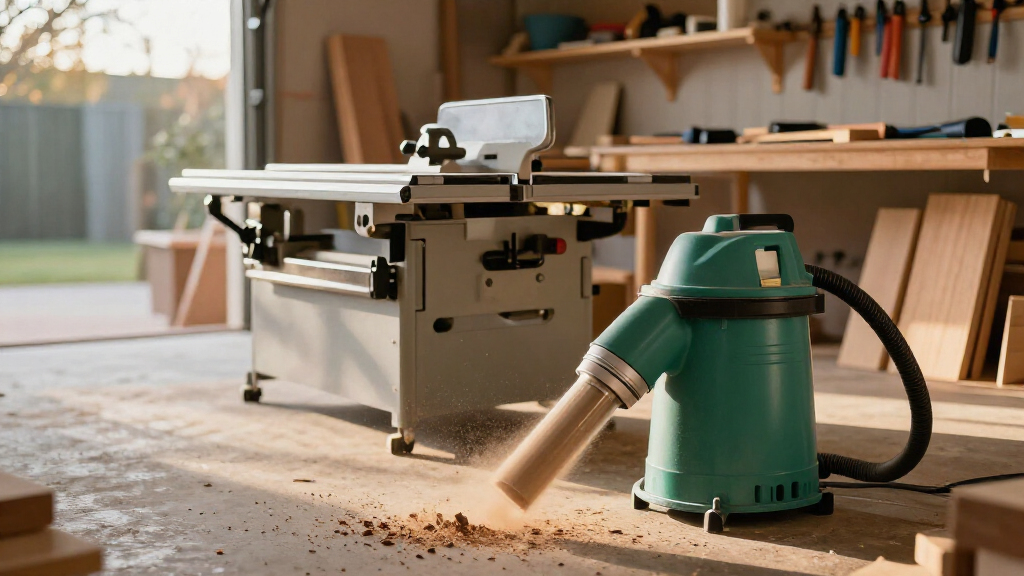
I ranked these extractors around the jobs woodworkers ask them to do: capture fine dust at a connected tool, keep airflow usable as filters load, move around a shop or job site, and hold enough debris to limit interruptions. I also weighed stated filtration, automatic filter-cleaning features, wet/dry flexibility, container size, and the practical burden of storing and maintaining each unit. A high-capacity tank is useful only if the extractor fits the workspace, while a compact body is less appealing if frequent emptying interrupts a long sanding session.
The ranking favors balanced woodworking performance over any single headline specification. The Festool CT 26 EI leads as a versatile middle ground; the Bosch VAC140AH earns a high place for capacity and automatic cleaning, while compact and specialty units rank higher for buyers with matching needs than as universal shop choices. Models with limited details in their supplied names are treated cautiously: I describe their stated format and features without assuming unlisted airflow, filter class, tool-trigger functions, or accessory compatibility. Before buying, confirm those specifications for your tools and dust-control requirements.
| dust extractor vacuums for woodworking | Filtration |
|---|---|
| ECOMAX 8-Gallon HEPA Shop Vac | HEPA |
| Festool CLEANTEC CT SYS HEPA D | HEPA, full-unit certified |
| PEMEDOR 9-Gallon Wet/Dry Dust | — |
| Festool CLEANTEC CT 26 EI HEPA | HEPA |
| Festool CT 15 HEPA Mobile Dust | HEPA |
| Bosch VAC140AH 14-Gallon Dust | — |
| DEWALT DWV010 8-Gallon HEPA Du | HEPA |
| Metabo HPT ASR 35 AutoCleanPlu | Two washable HEPA filters; captures particles down to 0.3 microns |
| Festool CLEANTEC CT 36 EI HEPA | — |
| Makita VC4210L 11-Gallon Wet/D | Two-stage; HEPA captures 99.97% of particles 0.3 microns and larger |
| FEIN Turbo I Wet/Dry Dust Extr | — |
| DYNAVEX 12-Gallon Portable Woo | — |
| Starmix Powerhouse Basic HEPA | Two HEPA filters; 1,200 sq in filter surface area |
Factors to Consider When Choosing Dust Extractor Vacuums For Woodworking
Choosing an extractor is less about finding the biggest motor and more about fitting dust collection to how you work. I’d start with the tools that produce the finest, most persistent dust, then check the extractor’s filtration, controls, and consumable setup against those tasks.
Match Filtration to the Dust You Make
Fine sanding dust places a different demand on filtration than occasional chips from routing or sawing. A HEPA label can be useful, but check whether it describes the filter itself or a tested complete system, including how the bag, seals, and connections contain dust. A poorly sealed hose joint can undermine a strong filter. Also check whether the filter and bags are readily available and whether the unit needs a specific bag type to maintain dust containment. Buyers who mainly collect coarse debris may value capacity more, while frequent sanding calls for closer attention to the complete filtration path. Don’t assume that every wet/dry vacuum advertised for dust collection is equally suited to fine woodworking dust.
Check Tool Compatibility Before Comparing Capacity
Write down the tools you expect to connect, including their hose-port sizes and whether they need a power-tool outlet or automatic start. An extractor can have ample capacity and still prove awkward if adapters are required or the tool does not trigger it automatically. Confirm the hose diameter, connector style, and any included adapter rather than assuming that products from the same brand fit together. For a fixed bench setup, a manual switch may be acceptable; for sanding across a project, automatic tool activation can reduce missed starts and unnecessary running. If you plan to connect several tool types, a well-supported adapter system may matter more than a small difference in tank volume. Check the exact model configuration, since accessories can vary by package.
Choose Filter Cleaning for Your Work Rhythm
Filter-cleaning systems help address the gradual loss of airflow that can happen as fine dust accumulates. They matter most during extended work with dust-heavy tools, where stopping to clean a filter can disrupt the job. Automatic cleaning can also add noise, complexity, or maintenance steps, so it is not a feature every occasional user needs. Ask whether the cleaning cycle can run while the extractor is connected to your tool and whether the process interrupts suction. Bag choice affects this equation too: a suitable dust bag can keep the main filter cleaner, while a full or unsuitable bag can limit performance. If your sessions are short, a straightforward filter that is easy to inspect and clean may be a better fit than paying for a more involved system.
Size the Container to the Work, Not the Workshop Fantasy
A larger container reduces trips to empty dust, but it also takes up more floor space and can be less convenient to load into a vehicle. Estimate how much waste your usual task creates and how often you are willing to stop; sanding dust, planer shavings, and mixed shop debris fill containers at different rates. Pay attention to whether capacity refers to the container’s nominal volume rather than the amount of dust you can collect before changing a bag. A compact extractor can work well for a single tool or mobile repairs, even if it needs more frequent attention. For a shared shop or long sessions, capacity may outweigh easy carrying. Do not buy a large unit solely for a tool you rarely use.
Account for Noise, Footprint, and Hose Management
Extractor noise matters when you work indoors, share a shop, or spend long stretches sanding. Check the manufacturer’s sound information when available, but remember that the connected tool often adds its own noise. Hose length and flexibility affect how often you need to reposition the unit, and a bulky hose can pull a lightweight tool or knock workpieces out of place. Look at where the hose and cord are stored, whether the unit can fit under a bench, and how easily it rolls across the surfaces in your shop. Compact choices such as the CT SYS trade container volume for easier transport and storage. A larger extractor is a poor fit if it routinely blocks access to the machines you use most.
Compare Ongoing Costs and Maintenance
The purchase is only one part of owning a dust extractor: bags, filters, adapters, and replacement parts can shape the long-term experience. Before choosing, check which consumables the model requires, whether reusable collection options are supported, and how readily parts can be obtained. A bagless setup may appear simpler, but emptying fine wood dust can expose you to more airborne debris unless it is handled carefully. Wet pickup also calls for different maintenance, including drying the tank and filter as directed before returning to dry dust collection. Think about whether you want a dedicated woodworking extractor or one machine for mixed wet and dry cleanup. Paying more can make sense when a feature saves time every week, but not when it adds capability your workflow rarely uses.
Frequently Asked Questions
Can I use a regular shop vacuum as a woodworking dust extractor?
Sometimes, but the name alone does not tell you whether a shop vacuum is suited to fine dust from sanding. Check the complete filtration arrangement, hose fit, and how dust is contained when the tank or bag is emptied. A basic vacuum may be adequate for occasional coarse cleanup, while frequent tool-connected sanding calls for stronger attention to filtration and consistent airflow. Also confirm that the vacuum can connect securely to your tool; adapters that leak or loosen can undermine collection. If fine dust is a routine part of your work, choose based on documented filtration and compatible collection accessories rather than wet/dry capability alone.
Is HEPA filtration enough to make an extractor suitable for every woodworking task?
No. A HEPA filter is one part of dust control, but the collection setup also depends on seals, bags, airflow, and a close connection to the dust-producing tool. A filter cannot collect dust that escapes at the saw, sander, or hose joint. Check whether the maker specifies HEPA filtration for the complete unit or only identifies the filter media, and follow the recommended bag and maintenance setup. You may also need room ventilation and suitable respiratory protection for tasks that create substantial airborne dust. Choose a system based on the whole workflow, not a single label.
Should I choose a larger extractor or one with automatic filter cleaning?
Choose based on what interrupts your work most. A larger container helps when you produce a lot of debris or want fewer emptying stops, while automatic filter cleaning can help maintain airflow during prolonged, fine-dust work. These features solve different problems, and neither guarantees a better result if the hose or tool connection is poorly matched. For short sessions, a smaller unit may be easier to store and move; for extended sanding, filter maintenance may matter more than extra tank volume. Compare your typical job length and debris type before choosing between them.
Do I need a power-tool outlet or automatic start on a dust extractor?
It is helpful when you regularly connect a corded tool and want extraction to start with the tool, but it is not necessary for every shop. Automatic start can reduce the chance of forgetting to switch on collection and avoids leaving the extractor running after the tool stops. Check the outlet’s permitted load and confirm that your tool is compatible with the model’s controls. Battery-powered tools may not benefit from a built-in outlet, so a remote switch or manual operation could be enough. Prioritize this feature if you move between connected tools often or want a simpler start-and-stop routine.
Can one dust extractor handle both wet cleanup and woodworking dust?
Some models are designed for wet and dry pickup, but switching between the two needs care. Follow the manual’s instructions for removing or changing bags, preparing the filter, and drying the tank after liquid pickup. A damp filter can cause problems when the machine returns to fine dry dust, and residual debris can contaminate a clean collection setup. If your main priority is sanding dust, consider whether wet pickup is a useful extra or a compromise that adds maintenance. For frequent wet cleanup and woodworking, check that the maker explicitly supports both uses and provides clear changeover instructions.
Conclusion
For a flexible primary extractor, I’d choose the Festool CLEANTEC CT 26 EI as the best overall fit across shop and mobile work. Buyers who want more capacity and automatic filter cleaning should compare the Bosch VAC140AH; for a compact setup that is easier to carry and store, the Festool CT SYS is the more specialized choice. I’d treat the ECOMAX 8-Gallon as a potential value pick only after confirming its filtration details, tool connections, and consumables, since its product name alone does not establish those capabilities. Beginners should prioritize a manageable size, clear maintenance instructions, and a secure fit with their main tool rather than buying the largest unit. For longer sessions with frequent filter loading, focus on models with automatic cleaning; for mixed wet and dry jobs, check changeover requirements before deciding. Match the extractor to your tools and work pattern, and the shortlist becomes much easier to choose from.