
TL;DR

Get tools and workshop supplies delivered free — and shop member deals
- Fast, free delivery on millions of items
- Access to Prime Big Deal Days deals on October 6–7
- Prime Video, Amazon Music and more included
Interior designers recommend choosing a room’s paint color after its harder-to-change finishes and furnishings are settled. They say this helps the color work with flooring, counters, cabinets and textiles; samples should also be tested at home because light and surroundings affect how paint appears.
A House Beautiful report says interior designers recommend choosing paint after settling a room’s other finishes and furnishings, including flooring, counters, cabinets and large furniture. The advice matters because those surfaces are harder to change than paint and can affect how a color looks once it is on the walls.
Designer Dana Arazi Levine says rugs, curtains, upholstery and art offer fewer options than paint, whose colors are nearly infinite. In her view, choosing a wall color too early can constrain later decisions or lead to spending more on custom pieces to make the room work together.
Lisa Quinn likewise says she finalizes items that cannot easily be painted or swapped before choosing a hue. She points to the way a sample can look different beside particular materials: a shade that appears neutral on a chip may clash with honey oak flooring or cool marble.
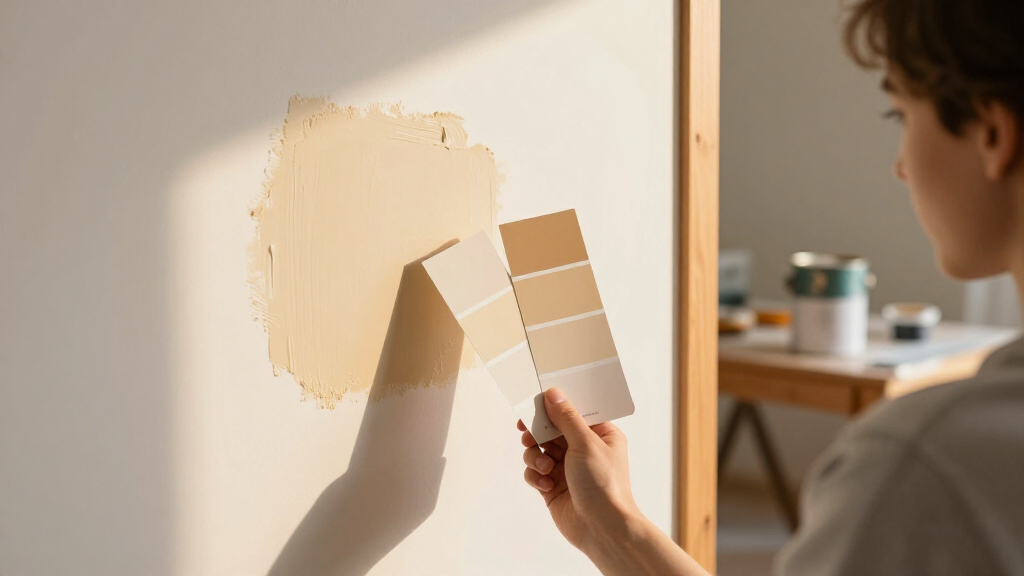
The report also advises looking beyond the paint chip, checking a color’s undertones and testing finalists in the room. Designer Lindsay Atapattu of LEB Interiors recommends putting samples on the wall and observing them for at least 24 hours, since lighting, room direction and existing decor can change their appearance.
Why Finishes Shape Paint Choices
Paint is often easier to change than flooring, counters or cabinetry. Choosing it first can make later decisions harder if the selected color does not suit those fixed elements. The designers’ suggested order gives readers a way to narrow the paint options around what is already in the room.
The report presents this as professional advice, not a tested guarantee that a particular sequence will prevent mistakes. Its practical point is that paint should be judged in its intended setting, alongside the materials and furnishings it needs to complement.
How Designers Narrow the Palette
The report describes a familiar problem: choosing among many similar paint shades, often after viewing small samples in a store. Its central recommendation is to settle the room’s less changeable elements first, then select a color that works with them.
Once the shortlist is smaller, the designers offer additional checks. Lauren Grant says she tends to choose a paint color more subdued or neutral than the final effect she imagines, because reflected light and color from other walls can make it appear more pronounced. Quinn recommends comparing undertones, asking whether a shade leans yellow, pink, purple or green rather than focusing only on its broad color category.
““A color that looks neutral on a chip can clash the very second it meets honey oak flooring or cool marble.””
— Lisa Quinn, interior designer
What the Advice Cannot Settle
The report does not identify a single paint color that will suit every room, nor does it provide comparative research measuring whether this order reduces costly mistakes. The recommendations are attributed to designers and depend on the room’s light, materials and decor.
The supplied material also gives no publication date, so the timing of the report cannot be stated more precisely. It does not specify a universal sample size or explain whether every paint finish should be tested in the same way.
Test Finalists in the Room
After flooring, counters, cabinets and major furnishings are settled, readers can compare a smaller set of paint candidates against those surfaces. The report advises bringing finalists home, applying samples to the wall and observing them for at least 24 hours as the room’s light changes.
Designers cited in the report also suggest checking undertones and stepping away before making a final choice. The decision remains specific to each room; the source names no further event or deadline.
Key Questions
What is the main rule designers recommend?
Choose paint after settling the room’s harder-to-change finishes and furnishings, such as flooring, counters, cabinets and large furniture.
Why choose paint last?
According to designers quoted by House Beautiful, paint has many available options, while rugs, upholstery and fixed surfaces can be more limited. Choosing paint too early may constrain later choices.
How should paint samples be tested?
Bring finalist samples into the room and view them on the wall. Lindsay Atapattu recommends observing them for at least 24 hours because light and surrounding decor affect how color appears.
What are paint undertones?
Undertones are subtle color qualities within a shade. Lisa Quinn suggests checking whether a sample leans toward yellow, pink, purple or green, especially when comparing similar colors.
Source: rss
Halloween Picks
halloween
As an affiliate, we earn on qualifying purchases.