
TL;DR

Get business pricing on tools and workshop supplies
- Business-only prices and quantity discounts
- Tax-exempt purchasing
- Multiple users, one account, clear invoices
A dehumidifier size calculator helps match capacity to your room’s size, humidity level, and moisture issues. Proper sizing ensures efficient moisture removal without wasted energy or noise. Oversizing slightly is safer than undersizing, which leaves moisture problems unresolved.
If you’ve ever bought a dehumidifier that just doesn’t cut it, you know how frustrating it can be. A unit that’s too small simply won’t dry your space fast enough. But buy one that’s too large, and you’ll waste energy, run up your electricity bill, and deal with loud cycling.
The secret? Accurate sizing. A dehumidifier size calculator helps you match the machine’s capacity to your room’s actual needs. Whether you’re battling basement dampness or managing humidity in a laundry room, getting the right size makes all the difference. It’s the difference between a dry, comfortable space and one that’s still damp and musty.
Use room volume, humidity level, and indoor water sources to accurately size your dehumidifier.
Slight oversizing reduces the risk of moisture lingering and improves recovery after humid periods.
Avoid sizing based only on square footage; consider ceiling height and water intrusion risks.
Check if your space needs a compressor or desiccant model based on temperature conditions.
Always interpret capacity ratings in context—more than just the number of pints per day.
How a dehumidifier size calculator works — and why it matters
A dehumidifier size calculator estimates the moisture-removal capacity you need based on your space’s size, moisture level, and conditions. It begins by calculating the room volume: length × width × ceiling height. For example, a 12×20-foot basement with a 9-foot ceiling has a volume of 2,160 cubic feet.
Understanding this calculation is vital because it establishes the baseline for how much moisture the space can generate or retain. The calculator then factors in the humidity level—damp, very damp, or wet—since the same room volume can require different capacities depending on environmental conditions. For instance, a damp basement with water intrusion needs a larger capacity than a dry living room of the same size. The recommended capacity is usually slightly larger than the calculated need to account for fluctuations, future humidity increases, or unexpected moisture sources. This margin ensures the dehumidifier can handle peak moisture loads without constantly running or failing to dry effectively.
Getting this right is crucial because an undersized unit will run constantly, struggle to keep humidity at acceptable levels, and waste energy. Conversely, an oversized unit may cycle frequently, which can cause unnecessary wear and higher energy costs. Striking the right balance ensures efficient operation, longevity of the unit, and consistent comfort.
Popular right now

Ninja CREAMi Scoop & Swirl 13-in-1 Ice Cream and Soft Serve Maker (NC701)

Apple AirPods Pro 3 Wireless Earbuds with Active Noise Cancellation

KitchenAid Artisan 5-Qt Tilt-Head Stand Mixer – Dried Rose (KSM150PS)
As an affiliate, we earn on qualifying purchases.
Key inputs for your dehumidifier size calculator — and how to measure them
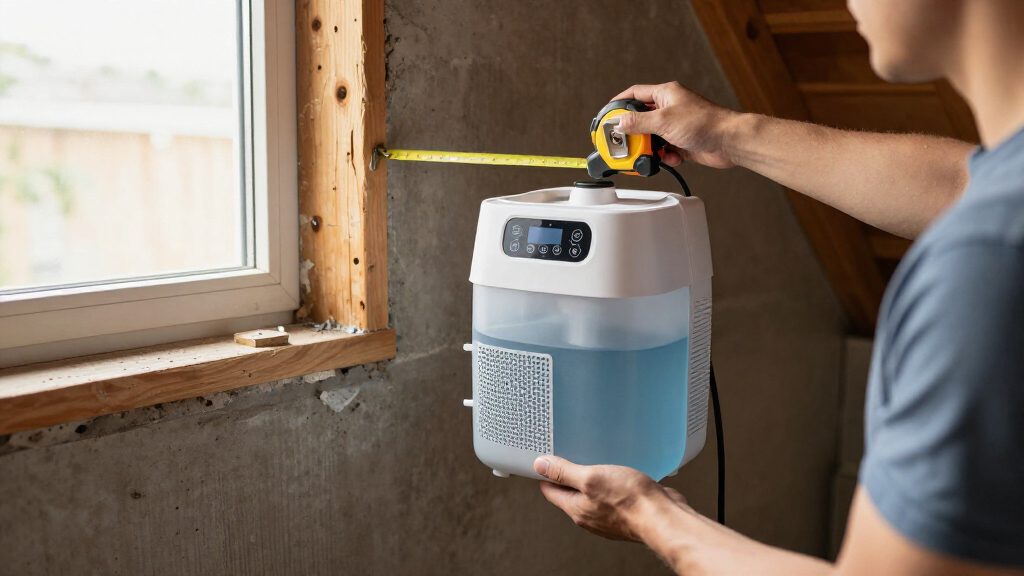
The main inputs are straightforward but crucial. Measure your room’s length, width, and ceiling height. Accurate measurements prevent sizing errors that can lead to ineffective moisture control. For example, a 15×25-foot room with a 9-foot ceiling has a volume of 3,375 cubic feet, which directly influences the capacity needed.
Assessing humidity level is equally important. Is your space damp, very damp, or wet? Do you see visible moisture, condensation, or mold? These signs indicate higher moisture loads requiring larger capacity units. For basements, outdoor climate and water intrusion risks—such as leaks or poor drainage—must be considered, as they significantly impact the moisture load.
Other factors include the number of occupants, water sources like bathrooms or laundry areas, and ventilation quality. These influence the ongoing moisture your dehumidifier must combat. For instance, a bathroom with frequent showers and poor ventilation will generate more moisture than a well-ventilated bedroom, demanding a higher capacity to maintain comfort and prevent mold growth.
Accurate data collection here isn’t just about numbers; it’s about understanding how your space behaves. Recognizing the implications of each factor helps you select a unit that not only matches your current needs but also adapts to future changes, ensuring long-term effectiveness.
Interpreting the calculator results — what do the numbers really mean?
Once you input your measurements and conditions, your calculator will recommend a pint capacity—say, 40 pints per day. This figure represents the amount of moisture the dehumidifier can remove under standard testing conditions. But understanding what this means in real life is key to making the right choice.
In practice, a 40-pint unit in a warm, humid basement will typically perform well, maintaining comfortable humidity levels. However, in cooler or less humid spaces, that same capacity might be excessive, leading to short cycling and unnecessary energy use. Conversely, a space with very high moisture levels might require a slightly larger capacity than the calculator suggests to prevent persistent dampness.
Some calculators also convert capacity to liters per day, which is useful if you’re shopping internationally. Additionally, pay attention to other outputs like coverage area—adjusted for ceiling height—and drainage recommendations. These help you plan for continuous operation and convenience. For spaces with colder winters, check if the unit has low-temperature operation features, as standard dehumidifiers may struggle in colder environments, reducing their effectiveness and risking damage.
Ultimately, these numbers serve as a guide, but understanding their implications helps you choose a unit that not only fits your current needs but also provides reliable, long-term moisture control. Proper interpretation ensures you avoid the pitfalls of oversizing or undersizing, leading to better performance and energy efficiency.
Frequently Asked Questions
How do I know if my space needs a 30, 40, or 50 pint dehumidifier?
Measure your room’s size, assess moisture severity, and use a dehumidifier size calculator. Mild dampness in small rooms needs less capacity, while basements with standing water require larger units.Can I use a smaller dehumidifier if I run it longer?
Running a smaller unit longer can help, but it’s less efficient. Undersized dehumidifiers struggle to keep humidity down and may cycle constantly, wasting energy and increasing wear.Is it better to oversize slightly or stick to the exact calculation?
Slight oversizing is usually safer—your unit will handle unexpected moisture spikes better, and it reduces the risk of inadequate drying. Just avoid overly large units that cycle on and off frequently.Do I need a professional to size my dehumidifier for a large or complex space?
For large, multi-room, or water-damaged spaces, professional load calculations ensure accuracy. For typical home rooms, your calculator and measurements are sufficient.Why does my dehumidifier seem to run all the time but not dry the air?
It might be undersized, or there could be leaks, poor airflow, or water intrusion. Check placement, filters, and moisture sources before upgrading your unit.Conclusion
Getting the right dehumidifier size isn’t magic—it’s math and measurement. Use a calculator, gather your data, and choose a unit that matches your moisture load. It’s the best way to keep your space comfortable, mold-free, and energy-efficient.
When you see your ideal size, you’ll know your space is finally dry. No more guesswork, no more wasted energy, just a cozy, damp-free home that breathes easy.
Dehumidifier Size Calculator
Estimate daily pint capacity from room size and how damp the space feels.
Your room likely starts in the 20 to 30 pint range. Compare compact dehumidifiers for smaller spaces.
See compact dehumidifier matchesYour room points to a 35 to 40 pint unit. Compare mid-size dehumidifiers and check drainage options.
See mid-size dehumidifier matchesYour conditions call for a 50 pint or larger unit. Compare larger dehumidifiers and confirm room moisture sources.
See larger dehumidifier matchesEstimate only. Check product specs, local rates, and site conditions before buying or planning around these numbers.