
TL;DR
Prime for Young Adults — start your free trial
Fast free delivery, streaming and member deals for eligible 18–24 year olds.
Try it freeAs an affiliate, we earn on qualifying purchases.
A BTU calculator estimates your ideal AC capacity based on room size, climate, and other factors. Proper sizing prevents short cycling, humidity problems, and wasted energy. Don’t guess—calculate first.
Ever crank up your AC, only to feel the room still warm or the unit constantly chattering on? That’s often a sign of wrong sizing. Choosing an air conditioner based solely on guesswork or vague room size estimates wastes energy, costs money, and leaves you sweaty or chilly. A proper BTU calculator is your secret weapon for the perfect match—fast, precise, and backed by real-world science.
In this article, you’ll learn how a BTU calculator works, what factors influence your AC needs, and how to avoid common sizing pitfalls. Whether you’re installing a small window unit or upgrading your whole-home system, understanding the basics can save you from oversized units that short cycle or undersized units that can’t keep up.
Use a BTU calculator to get a solid starting point for room size and climate factors.
Avoid oversizing—short cycling causes humidity issues and higher energy costs.
Consider ceiling height, sun exposure, and occupancy for a more accurate estimate.
Always check the standardized BTU rating, especially for portable or mini-split units.
For complex spaces or whole-home systems, hire a professional for precise load calculations.
What Exactly Is a BTU Calculator and Why Should You Use It?
A BTU calculator estimates the cooling capacity you need based on your room’s size, shape, and other factors. It’s a quick, reliable way to avoid the costly mistake of choosing an AC that’s too big or too small. Think of it as a smart filter, guiding you to the right capacity—saving energy, reducing wear and tear, and keeping your space comfortable.
Imagine you want a 10×12 foot bedroom. A simple calculator might suggest around 2,400 BTU, but add in south-facing windows or high ceilings, and that number jumps. The calculator adjusts for these details, giving you a more accurate starting point. It’s like having a tech-savvy friend who’s done all the math for you—no guesswork needed.
Understanding why these adjustments matter is crucial. For example, rooms with south-facing windows in hot climates absorb more heat, meaning your AC needs to work harder to maintain comfort. If you ignore these factors, you risk selecting an undersized unit that can’t keep up or an oversized one that cools too quickly without dehumidifying, leading to discomfort. A BTU calculator helps you weigh these tradeoffs, ensuring your system is neither wasteful nor ineffective.
window air conditioner BTU calculator
As an affiliate, we earn on qualifying purchases.
As an affiliate, we earn on qualifying purchases.
How to Use a BTU Calculator in 3 Simple Steps
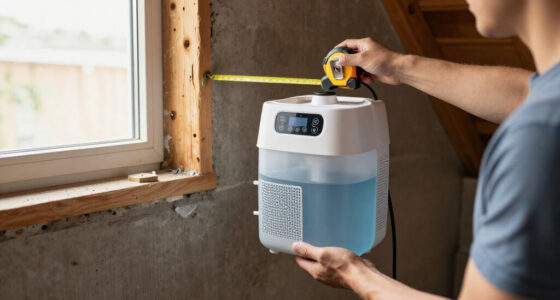
- Measure your room’s square footage. Write down length and width, then multiply for total area. For example, a 15-foot by 20-foot room equals 300 sq. ft.
- Adjust for ceiling height, sun exposure, and occupancy. If your ceilings are taller than 8 feet, add about 10% for each extra foot. Bright, south-facing windows or many occupants increase load.
- Input these factors into your BTU calculator. It then suggests the ideal capacity, say 8,000 or 12,000 BTU, based on your specifics.
Think of it like a recipe: measure, tweak, and get a cooking time that’s just right. This way, you’re not just guessing—you’re making an informed choice.
Remember, each step influences the final recommendation. For example, neglecting high sun exposure can lead you to underestimate your needs, resulting in an undersized unit that struggles during peak heat. Conversely, overestimating can lead to an oversized system that short cycles. The calculator helps you balance these factors, highlighting the importance of comprehensive measurement and consideration.
As an affiliate, we earn on qualifying purchases.
Compare Common AC Sizes and What They Cover
| BTU Rating | Room Size | Best For |
|---|---|---|
| 6,000 BTU | 100-150 sq. ft. | Small bedrooms, home offices |
| 8,000 BTU | 150-250 sq. ft. | Medium bedrooms, small living rooms |
| 12,000 BTU | 300-450 sq. ft. | Large bedrooms, small apartments |
| 18,000 BTU | 700-1,000 sq. ft. | Large living rooms, open-plan areas |
| 24,000 BTU | 1,200+ sq. ft. | Open-concept spaces, small commercial zones |
Choosing the right size isn’t just about matching square footage. Oversized units cool fast but can cause humidity issues and noise. Too small, and they run nonstop, struggling to keep up. The table above helps you match your space to the right capacity—think of it as your quick-reference cheat sheet.
Understanding the implications of these sizes is key. An oversized unit, while seemingly more powerful, can lead to rapid cooling that doesn’t dehumidify effectively, leaving your space feeling clammy and uncomfortable. Conversely, a too-small unit runs constantly, increasing wear and energy costs without achieving desired comfort. This table provides a practical guide, but always consider additional factors like room insulation, window placement, and climate for optimal results.
As an affiliate, we earn on qualifying purchases.
What Factors Can Throw Off Your BTU Calculation?
Room size isn’t the only thing that matters. Your climate, insulation, window orientation, and occupancy all influence your actual cooling needs. For example, a south-facing room in Florida with big glass doors might need 20% more capacity than a shaded, north-facing room in Oregon.
Other factors include:
- High ceilings or vaulted roofs add volume and heat load, meaning the air needs to be cooled more extensively. Ignoring this can lead to undersizing, resulting in inadequate cooling and increased energy use as the system struggles to compensate.
- Kitchen appliances and electronics produce extra heat—adding roughly 4,000 BTU for cooking. Not accounting for this can cause your AC to run constantly, reducing efficiency and comfort.
- Poor insulation or leaks can turn a small room into a mini sauna, making your initial BTU estimate too low. Properly sealing and insulating your space can significantly reduce the cooling load, so consider these factors for a more accurate calculation.
- Multiple people increase humidity and heat, so add about 600 BTU per extra person beyond two. Failing to account for occupancy can result in an undersized system that can’t handle peak loads during gatherings or hot days.
Ignoring these details can lead to an under- or over-sized AC—either it runs all day and wastes energy or it can’t keep the room cool when it’s hot outside. Recognizing and adjusting for these variables ensures your system operates efficiently and maintains consistent comfort.
energy efficient room air conditioner
As an affiliate, we earn on qualifying purchases.
As an affiliate, we earn on qualifying purchases.
Why Bigger Isn’t Always Better When Picking an AC
An oversized AC cools the air quickly but doesn’t run long enough to dehumidify properly. This leads to a damp feeling, even if the temperature reaches the set point. Short cycling causes the compressor to turn on and off rapidly, which increases wear on the system components and can lead to early failure. Additionally, frequent cycling wastes energy because the compressor consumes more power during startup. Over time, these issues translate into higher repair costs and a reduced lifespan for your unit, making the initial size choice a critical factor in long-term performance.
Conversely, a unit that’s too small will struggle to reach your desired temperature, running constantly and never achieving true comfort. This persistent operation not only raises energy bills but also accelerates component wear, leading to more frequent repairs. Moreover, undersized units often fail to dehumidify adequately, leaving the space feeling damp and muggy—an uncomfortable environment that defeats the purpose of cooling. The tradeoff here is clear: over- or under-sizing both cause inefficiency and discomfort, emphasizing the importance of accurate sizing.
The goal is a smart-sized unit that runs long enough to remove excess moisture and provide consistent cooling without wasting energy. Proper sizing based on a thorough BTU calculation ensures your system operates at peak efficiency, offering a balance between comfort, energy savings, and longevity. Think of it as finding that perfect fit—where your AC works efficiently, dehumidifies effectively, and minimizes wear and tear.
Do You Need a Special Size for Different Types of AC Units?
Yes. Window units, portable ACs, mini-splits, and central systems all have different sizing considerations. For example, a 12,000 BTU window unit is perfect for a 450 sq. ft. room, but the same capacity in a ductless mini-split might be overkill if it’s an energy-efficient model. Each type has its own design and operation characteristics that influence the ideal size—oversizing can lead to inefficiency and short cycling, while undersizing results in inadequate cooling.
Portable units tend to have ratings that don’t translate directly into real-world performance. They often have smaller compressors and different airflow designs, so their BTU ratings are more general guidelines than precise measurements. Always check the standardized BTU rating—don’t just go by the biggest number on the box—to ensure it matches your space and needs.
For whole-home systems, professionals use detailed load calculations—like manual J—to consider every room, duct leaks, and local climate. This comprehensive approach ensures your system is correctly sized, balancing energy efficiency with cooling capacity, and avoiding the pitfalls of generic sizing recommendations. Investing in professional sizing can prevent costly adjustments or replacements later, providing peace of mind in your cooling setup.
What About Efficiency and How It Affects Your Choice?
BTU ratings tell you how much cooling an AC can provide. Efficiency ratings—like SEER or EER—show how well it converts electricity into cooling power. Two units might both be 12,000 BTU, but one could use half the electricity. This difference impacts your long-term operating costs significantly, especially in climates where you run your AC frequently.
Choosing a high-efficiency model saves money in the long run, especially if you run your AC often. In hot climates, an efficient unit can cut cooling costs by 20-30%, making it a smart investment. However, high efficiency alone isn’t enough; the unit must also be properly sized. An efficient but oversized unit can still waste energy through short cycling, while an undersized but high-efficiency unit may struggle to meet your cooling demands.
Remember: size and efficiency are separate considerations. Proper sizing ensures your system runs long enough to dehumidify and cool effectively, while efficiency reduces operational costs. Combining both factors leads to optimal performance, lower bills, and greater comfort over the lifespan of your AC.
When Is It Worth Paying for a Professional Load Calculation?
If you have a large or complicated space—like a multi-room home, attic conversion, or a building with significant glass—you’ll benefit from a professional load calculation. This involves detailed analysis of insulation, window orientation, airflow, and local climate conditions. Such calculations help identify the precise capacity needed, avoiding the common pitfalls of oversizing or undersizing.
While a calculator can give you a ballpark figure for a small room, a full load calculation ensures your entire system is correctly matched to your specific environment. This detailed approach accounts for nuances like duct leaks, shading, and thermal gains, which can significantly impact cooling requirements. Investing in this process can improve comfort, reduce energy costs, and extend the lifespan of your system.
If you’re replacing an existing system and want to avoid repeating old sizing mistakes, calling in the pros is a wise choice. A professional assessment might cost a few hundred dollars but can save you from costly inefficiencies or early equipment failure, providing peace of mind and long-term savings.
Frequently Asked Questions
How many BTUs do I need per square foot?
About 20 BTU/h per square foot is a common rule of thumb for standard rooms. Adjust upward for high ceilings, sun exposure, or high occupancy to ensure your AC can handle the real heat load.What size air conditioner do I need for a 500-square-foot room?
Typically, around 12,000 BTU/h should suffice, but factors like insulation, windows, and climate can shift that number. Use a BTU calculator for more precise sizing.Is a higher-BTU air conditioner always better?
No. An oversized unit cools fast but can cause humidity problems and increased wear. Proper sizing ensures comfort and efficiency—bigger isn’t always better.How does high ceiling height affect AC size?
High ceilings increase room volume and heat gain. A calculator that considers cubic footage will recommend a larger capacity than one based on square footage alone.Should I add extra capacity for rooms with lots of sun?
Yes. Heavy sun exposure can boost your cooling load by about 10-20%. Adjust your BTU estimate accordingly to stay comfortable without overworking your system.Conclusion
Choosing the right AC size isn’t guesswork—it’s a calculated step that saves you money and frustration. A simple BTU calculator, combined with awareness of your space’s unique traits, makes all the difference. Remember: bigger isn’t always better, and precision is your best friend.
Next time you shop for an AC, picture your room, your climate, and your comfort. That’s the secret to cool, calm, and cost-effective living.
Air Conditioner BTU Calculator
Estimate a right-size cooling range from room area, ceiling height, sun exposure, and occupancy.
Your estimate fits a compact room unit. Compare 6,000 BTU air conditioners sized for smaller rooms.
See compact AC matchesYour estimate lands in the mid-size range. Compare 8,000 BTU window air conditioners for bedrooms or offices.
See mid-size AC matchesYour estimate needs a larger-capacity unit. Compare 12,000 BTU air conditioners and confirm room conditions before buying.
See larger AC matchesEstimate only. Check product specs, local rates, and site conditions before buying or planning around these numbers.
NFL season / tailgating Picks
team gear
As an affiliate, we earn on qualifying purchases.