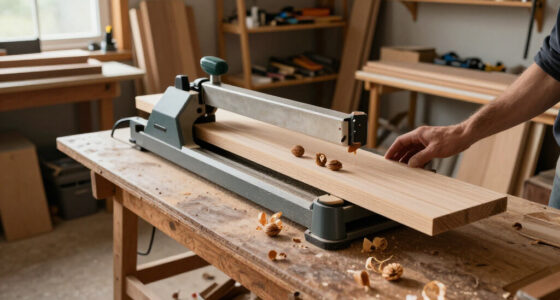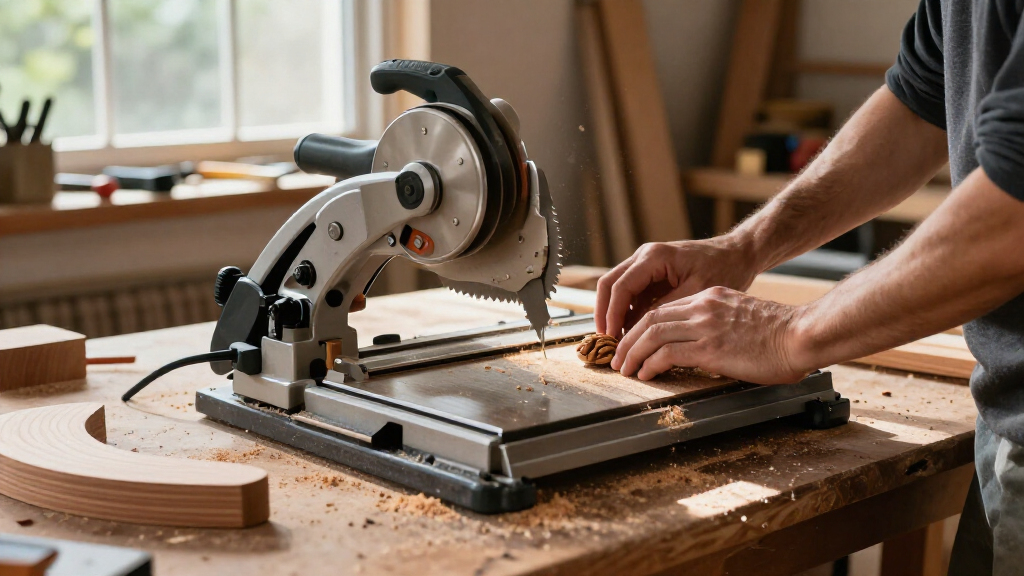
Woodworking scroll saws vary most in cutting capacity, blade-change convenience, and how steadily they support delicate work. My best overall pick is the DEWALT DW788, which pairs a 20-inch throat with variable speed for a broad range of intricate projects. The JET JWSS-22B suits buyers who want more reach and a foot switch, while the WEN 3921 is a practical value pick with two-direction blade setup. The main tradeoff is between larger capacity and a smaller, simpler saw that takes less room and may better suit occasional use. Read on for the full breakdown of all 14 options and guidance on choosing for your work.

Get business pricing on tools and workshop supplies
- Business-only prices and quantity discounts
- Tax-exempt purchasing
- Multiple users, one account, clear invoices
Complete the kit


Key Takeaways
- The DEWALT DW788 is the strongest all-around fit in this lineup for buyers who want a 20-inch throat and variable speed without stepping up to the largest models.
- The JET JWSS-22B and BUCKTOOL 22-inch model prioritize reach; that extra capacity is useful for larger patterns, but may be unnecessary for small ornaments and fretwork.
- The WEN 3921 stands apart for blade flexibility with its two-direction setup, a practical feature for interior cuts and varied project layouts.
- Most options here have 16-inch throats, including models from WEN, RYOBI, SKIL, Shop Fox, Garvee, and PioneerWorks, making footprint and setup more useful differentiators than nominal capacity.
- Included work lights, tilting tables, dust ports, and foot switches change workflow more than cut capacity; prioritize the feature that addresses your own shop habits rather than collecting extras.
| DEWALT 18-Inch Scroll Saw with Variable Speed |  | Best for Accessible Controls | Motor: 1.6 amp | Power source: Corded electric, 120 volts | Throat capacity: 18 inches | VIEW LATEST PRICE | See Our Full Breakdown |
| WEN 16-Inch Variable Speed Two-Direction Scroll Saw with Work Light (3921) |  | Best Value for Versatile Setup | Power source: Corded electric, 120 volts | Throat depth: 16 inches | Speed: 400–1,600 strokes per minute | VIEW LATEST PRICE | See Our Full Breakdown |
| JET 22-Inch Variable-Speed Scroll Saw with Foot Switch (JWSS-22B) |  | Best for Large, Detailed Work | Model: JWSS-22B | Power source: Corded electric, 120 volts | Throat capacity: 22 inches | VIEW LATEST PRICE | See Our Full Breakdown |
| JET 18-Inch Variable-Speed Scroll Saw, 120V (JWSS-18B) |  | Best Mid-Size JET for Shop Stability | Model: JWSS-18B | Power source: Corded electric, 120 volts | Throat capacity: 18 inches | VIEW LATEST PRICE | See Our Full Breakdown |
| BUCKTOOL 22-Inch Variable-Speed Scroll Saw |  | Best for Lift-Arm Access | Motor: 1/5 HP, 1.3 A | Power source: Corded electric, 120 volts | Speed: 360–1,550 RPM | VIEW LATEST PRICE | See Our Full Breakdown |
| Delta 40-694 20-Inch Variable-Speed Scroll Saw |  | Best for Large Workpieces | Power: 1.3 A | Speed: 400–1,750 SPM | Capacity: 20 in. | VIEW LATEST PRICE | See Our Full Breakdown |
| Garvee 16-Inch Variable-Speed Scroll Saw with Tilting Worktable and Dust Port |  | Best for Multi-Material Crafting | Model: SBS-16D | Throat depth: 16 in. | Speed: 500–1,600 SPM | VIEW LATEST PRICE | See Our Full Breakdown |
| RYOBI SC165VS 16-Inch Corded Scroll Saw |  | Best for Straightforward Setup | Power source: Corded electric | Voltage: 120 V | Wattage: 144 W | VIEW LATEST PRICE | See Our Full Breakdown |
| PioneerWorks 16-Inch Variable-Speed Scroll Saw with Tilting Work Table |  | Best for Safety-Focused Detail Work | Model: SBS-16D | Motor: 0.9 A | Blade length: 16 in. | VIEW LATEST PRICE | See Our Full Breakdown |
| WEN LL2156 21-Inch Variable-Speed Parallel-Arm Scroll Saw |  | Best for Low-Vibration Long Sessions | Motor: 1.6 A | Speed: 550–1,600 SPM | Table size: 25-5/8 × 16 in. | VIEW LATEST PRICE | See Our Full Breakdown |
| WEN 3922 16-Inch Variable Speed Scroll Saw |  | Best for Easy Blade Changes | Power source: Corded electric | Power: 225 watts | Speed: 550–1,600 strokes per minute | VIEW LATEST PRICE | See Our Full Breakdown |
| SKIL 1.2 Amp 16-Inch Variable-Speed Scroll Saw with LED Work Light |  | Best for Beginners | Model: SS9503-00 | Power source: Corded electric | Voltage: 120 V | VIEW LATEST PRICE | See Our Full Breakdown |
| Shop Fox W1872 16-Inch Variable-Speed Scroll Saw |  | Best Accessory Bundle | Motor: 1/6 HP, 120 V, 0.6 A | Blade speed: 550–1,600 SPM | Maximum cutting thickness: 2-1/4 inches | VIEW LATEST PRICE | See Our Full Breakdown |
| DEWALT DW788 20-Inch Variable-Speed Scroll Saw |  | Best for Larger, Low-Vibration Work | Model: DW788 | Motor: 1.3 amp | Speed: 400–1,750 strokes per minute | VIEW LATEST PRICE | See Our Full Breakdown |
| woodworking scroll saw | Warranty | Power source | Speed | Weight |
|---|---|---|---|---|
| DEWALT 18-Inch Scroll Saw with | 3-year limited warranty | Corded electric, 120 volts | — | — |
| WEN 16-Inch Variable Speed Two | Two years | Corded electric, 120 volts | 400–1,600 strokes per minute | — |
| JET 22-Inch Variable-Speed Scr | 5 years; 2 years for commercial or industrial use | Corded electric, 120 volts | — | — |
| JET 18-Inch Variable-Speed Scr | 5 years; 2 years for commercial or industrial use | Corded electric, 120 volts | — | — |
| BUCKTOOL 22-Inch Variable-Spee | Limited | Corded electric, 120 volts | 360–1,550 RPM | — |
| Delta 40-694 20-Inch Variable- | 5-year limited | — | 400–1,750 SPM | — |
| Garvee 16-Inch Variable-Speed | — | Corded electric | 500–1,600 SPM | 25.2 lb |
| RYOBI SC165VS 16-Inch Corded S | 30-day limited | Corded electric | — | 27 lb |
| PioneerWorks 16-Inch Variable- | — | Corded electric | — | — |
| WEN LL2156 21-Inch Variable-Sp | Two years | — | 550–1,600 SPM | 53.8 lb |
| WEN 3922 16-Inch Variable Spee | Two years | Corded electric | 550–1,600 strokes per minute | 24.9 pounds |
| SKIL 1.2 Amp 16-Inch Variable- | Three-year limited | Corded electric | — | 24.7 pounds |
| Shop Fox W1872 16-Inch Variabl | Two years | — | — | 26 pounds |
| DEWALT DW788 20-Inch Variable- | Three-year limited | — | 400–1,750 strokes per minute | 56 pounds |
More Details on Our Top Picks
DEWALT 18-Inch Scroll Saw with Variable Speed
The DEWALT pairs an 18-inch throat with front-mounted speed controls and a visible bevel scale, making adjustments easier to reach while a workpiece is on the table. Its 500–1,500 strokes-per-minute range covers a useful spread for detailed scrollwork, while the die-cast aluminum table gives smaller projects a steady surface. Compared with the 16-inch WEN 3921, the DEWALT offers more throat room, but the WEN includes a work light, air pump, and tool-free blade changes. The DEWALT’s angle range reaches 45° left and 15° right, a noticeably uneven spread for projects requiring bevels in both directions. It is best suited to intricate, lighter-duty work; buyers seeking a saw for larger or more demanding cutting should look at the heavier JET models instead.
Pros:- 18-inch throat accommodates larger patterns than a 16-inch saw
- Front-mounted controls are easy to access during setup and cutting
- Die-cast aluminum table provides a stable work surface
- Bevel scale supports angled-cut adjustments
Cons:- Designed for detailed, lighter-duty work rather than large-scale cutting
- Bevel range is asymmetric, reaching only 15° to the right
- No work light or air pump is listed among the included components
Best for: Woodworkers who want an 18-inch cutting capacity and controls that are easy to reach during detailed, lighter-duty work.
Not ideal for: Buyers regularly cutting large, thick stock or needing a broad bevel range to the right; this model is described as a detailed-work saw, not a large-scale cutter.
- Motor:1.6 amp
- Power source:Corded electric, 120 volts
- Throat capacity:18 inches
- Speed range:500–1,500 strokes per minute
- Table material:Die-cast aluminum
- Cutting angle:45° left to 15° right
- Dimensions and weight:30 × 14 × 15 inches; 34.2 pounds
- Blade:5-inch carbon steel
- Warranty:3-year limited warranty
Our verdict“Choose the DEWALT for accessible controls and an 18-inch throat on detailed projects, but pick a different saw for heavier stock or more balanced bevel capacity.”
WEN 16-Inch Variable Speed Two-Direction Scroll Saw with Work Light (3921)
The WEN 3921’s defining advantage is its two-direction blade orientation: turning the blade lets the saw handle ripping cuts that a conventional scroll saw may not accommodate as readily. Add variable speed, acceptance of pinned and pinless blades, and included work light, air pump, and dust port, and it arrives ready for a range of small-shop tasks. Its 16-inch throat is shorter than the DEWALT’s 18-inch capacity, and its 2-inch maximum cutting thickness sets a clear limit on stock size. The cast-iron base helps anchor this comparatively light 25.5-pound machine, though it will not have the same planted feel as the 68.2-pound JET JWSS-22B. This is a practical feature-rich choice for hobby work, not the pick for large patterns or heavy, sustained cutting.
Pros:- Blade can be oriented in two directions for expanded ripping capacity
- Variable speed spans 400–1,600 strokes per minute
- Includes a flexible work light, air pump, and dust port
- Accepts both pinned and pinless blades
Cons:- Maximum cutting thickness is 2 inches
- 16-inch throat offers less room for large patterns than the DEWALT or JET saws
- Corded operation requires access to a power outlet
Best for: Hobby woodworkers who want flexible blade orientation, useful included accessories, and compatibility with both pinned and pinless blades.
Not ideal for: Makers who routinely cut stock thicker than 2 inches or need the extra work area of an 18- or 22-inch throat saw.
- Power source:Corded electric, 120 volts
- Throat depth:16 inches
- Speed:400–1,600 strokes per minute
- Stroke length:9/16 inch
- Maximum cutting thickness:2 inches
- Table:16 × 11 inches; bevels up to 45° left
- Weight and dimensions:25.5 pounds; 26.38 × 13 × 14.75 inches
- Included accessories:Air pump, flexible work light, dust port, foot lock clamp, onboard storage, and three blades
- Warranty:Two years
Our verdict“Pick the WEN 3921 for a versatile, accessory-rich hobby saw, provided its 16-inch throat and 2-inch cutting limit suit your projects.”
JET 22-Inch Variable-Speed Scroll Saw with Foot Switch (JWSS-22B)
For patterns that need room to turn, the JET JWSS-22B leads this group with a 22-inch throat and a large cast-iron table. Its 68.2-pound weight is a real shop-space commitment, but that mass and table are suited to supporting work steadily and helping reduce vibration. The hands-free foot switch lets the operator control the saw without reaching away from the piece, while the upper blade mechanism clamps and tensions in one step. Compared with the 18-inch JET JWSS-18B, this model offers four more inches of throat and adds the foot switch, at the cost of greater weight and footprint. Its bevel range is 40° left and 45° right, so it is not the best fit for buyers who need equal 45° tilts in both directions.
Pros:- 22-inch throat provides the most pattern room among these five saws
- Cast-iron table is large and designed to help reduce vibration
- Foot switch enables hands-free operation
- Upper blade mechanism clamps and tensions in one step
Cons:- At 68.2 pounds, it is difficult to move compared with the WEN 3921
- Large footprint needs a dedicated work area
- Left bevel is limited to 40°
Best for: Experienced scroll-saw users making large, intricate patterns who have a dedicated, stable shop location and value hands-free control.
Not ideal for: Small-shop users who need to move or stow their saw often, or buyers whose projects call for a full 45° bevel to the left.
- Model:JWSS-22B
- Power source:Corded electric, 120 volts
- Throat capacity:22 inches
- Speed range:400–1,550 strokes per minute
- Table:Cast iron; 12-7/8 × 23 inches
- Cutting angle:45° right and 40° left
- Weight and dimensions:68.2 pounds; 33 × 15.5 × 17.5 inches
- Included components:Foot pedal, dust port, blade rack, two lower blade holders, four leveling feet, and five blades
- Warranty:5 years; 2 years for commercial or industrial use
Our verdict“Choose the JET JWSS-22B when large workpieces, a stable cast-iron table, and foot control matter more than portability.”
JET 18-Inch Variable-Speed Scroll Saw, 120V (JWSS-18B)
The JET JWSS-18B takes a middle path: its 18-inch throat leaves more room for patterns than the WEN 3921, while its 54-pound build and sizable table favor a stable shop setup over easy portability. Variable speed from 400 to 1,550 strokes per minute gives flexibility across different cutting tasks, and the upper blade mechanism clamps and tensions in one step to simplify blade changes. The table tilts 45° right and 30° left, but reaching 45° on the left requires removing the dust port—a workflow compromise that matters for frequent angled cuts. Compared with the larger JET JWSS-22B, the JWSS-18B takes up less space but gives up four inches of throat and the included foot switch. It suits users who want JET’s shop-oriented build without the 22-inch model’s size.
Pros:- 18-inch throat offers more pattern room than the WEN 3921
- Variable speed ranges from 400 to 1,550 strokes per minute
- Upper blade mechanism clamps and tensions in one step
- Tilting table and under-table dust port support angled work and dust collection
Cons:- Weighs 54 pounds, limiting easy transport
- Left tilt reaches 45° only when the dust port is removed
- Has less throat capacity than the JET JWSS-22B
Best for: Woodworkers seeking a stable, mid-size scroll saw for a permanent or semi-permanent shop setup and a mix of straight and angled cuts.
Not ideal for: Buyers who need a lightweight portable saw, a 22-inch throat, or frequent 45° left cuts without removing dust equipment.
- Model:JWSS-18B
- Power source:Corded electric, 120 volts
- Throat capacity:18 inches
- Speed range:400–1,550 strokes per minute
- Table dimensions:11-5/8 × 21 inches
- Table tilt:45° right, 30° left; 45° left with dust port removed
- Dust port:2-1/2 inches
- Weight and dimensions:54 pounds; 30.7 × 15.7 × 17.3 inches
- Warranty:5 years; 2 years for commercial or industrial use
Our verdict“Choose the JWSS-18B for a stable, mid-size JET setup, unless you need a larger throat or unrestricted 45° left tilting.”
BUCKTOOL 22-Inch Variable-Speed Scroll Saw
The BUCKTOOL combines a 22-inch throat with a liftable arm that locks raised, a useful pairing for interior cuts where the blade must be threaded through a workpiece. Its 27 × 13-inch table gives broad support, and the adjustable dust blower and 1.5-inch dust port address visibility and debris at the cutting area. The listed speed range is 360–1,550 RPM; unlike the JET JWSS-22B’s stated strokes-per-minute range, these figures use a different unit, so I would not treat the numbers as a direct speed comparison. Its bevel reaches 30° left and 45° right, and the included pinless blades may not cover every job: other compatible blade types may need separate purchase. Compared with the JET, it shares the 22-inch reach but lacks listed cast-iron construction and a foot switch.
Pros:- 22-inch throat accommodates larger patterns
- Arm lifts and locks for easier blade changes and interior cuts
- Adjustable dust blower and 1.5-inch dust port help clear the cut area
- Includes 5-inch pinless blades in 15 TPI and 18 TPI
Cons:- Bevel is limited to 30° left and 45° right
- Additional compatible blade types may need to be purchased separately
- No foot switch or table material is listed in the supplied product data
Best for: Scroll-saw users making interior cuts in larger pieces who want a locking raised arm and adjustable dust direction.
Not ideal for: Buyers who need a broad left bevel, want a foot switch, or expect the included blades to cover all tooth configurations and cutting tasks.
- Motor:1/5 HP, 1.3 A
- Power source:Corded electric, 120 volts
- Speed:360–1,550 RPM
- Worktable:27 × 13 inches
- Bevel capability:30° left, 45° right
- Blade compatibility:10, 20, 25, 43, and 47 TPI blades
- Included blades:5-inch high-speed steel pinless blades, 15 TPI and 18 TPI
- Dust collection:Adjustable dust blower and 1.5-inch dust port
- Warranty:Limited
Our verdict“Pick the BUCKTOOL for large-workpiece interior cuts and lift-arm access, but choose the JET JWSS-22B if you want a listed foot switch and cast-iron table.”
Delta 40-694 20-Inch Variable-Speed Scroll Saw
The Delta 40-694 pairs a 20-inch capacity with a broad cast-iron table, making it a stronger fit for larger panels and intricate interior cuts than the 16-inch Garvee or PioneerWorks. Its upper arm lifts and locks, which gives me a more accessible route for threading blades through fretwork openings; tool-free tensioning also cuts down on fuss when I change blades often. Speed ranges from 400 to 1,750 SPM, with a slower floor than the WEN LL2156 that can suit controlled work on delicate pieces.
The tradeoff is a substantial footprint and a listed weight that varies between 60 and 70 pounds, so I would verify the actual shipping or assembled weight before planning a bench setup. The 16 × 24-inch table and two-way tilt are useful, but buyers who mainly cut small projects may find the Garvee easier to place.
Pros:- 20-inch capacity accommodates larger workpieces than the 16-inch models here.
- Upper arm lifts and locks to simplify blade changes and interior cuts.
- Tool-free blade tensioning speeds up routine adjustments.
- Cast-iron 16 × 24-inch table provides a broad work surface.
Cons:- Its size and 60–70-pound listed weight make it less convenient to move or fit into a small shop.
- The product information gives conflicting assembled-weight figures.
Best for: Woodworkers making larger fretwork panels who want a generous table, 20-inch capacity, and quick blade tension adjustments.
Not ideal for: Small-shop hobbyists who need a compact saw or anyone who wants consistent weight information before arranging a fixed workstation.
- Power:1.3 A
- Speed:400–1,750 SPM
- Capacity:20 in.
- Stroke length:3/4 in.
- Table size:16 × 24 in.
- Table tilt:0°–45° left and right
- Cutting capacity at 90°:2-1/8 in.
- Warranty:5-year limited
Our verdict“Choose the Delta if your projects benefit from a larger cutting throat and sturdy work surface; choose a 16-inch saw if bench space matters more.”
Garvee 16-Inch Variable-Speed Scroll Saw with Tilting Worktable and Dust Port
The Garvee is a 16-inch general-purpose option for makers who switch between wood projects, acrylic, and model work. Its 500–1,600 SPM range offers a useful spread of cutting speeds, while the 45-degree tilting table handles bevels without requiring a larger saw such as the Delta 40-694. At 25.2 pounds, it is also a more manageable bench addition than that heavier 20-inch machine.
Its dust port is a connection point, not a self-contained collection system, so I would budget bench space for a separate vacuum and hose. The table tilts only left, which is less flexible than the Delta’s left-and-right tilt and the WEN LL2156’s dual-bevel setup. This makes the Garvee a sensible pick for straightforward craft work, but a less compelling match for frequent bevels in both directions or larger stock.
Pros:- Variable speed supports work across different materials and cut types.
- 16-inch throat suits common craft and woodworking projects.
- Table tilts up to 45 degrees for bevel cuts.
- Dust port allows connection to a separate vacuum.
Cons:- Dust extraction depends on a separately supplied vacuum.
- The table tilts left only, limiting bevel-cut flexibility.
Best for: Craft woodworkers and model makers who cut wood and acrylic on a space-conscious 16-inch saw and already have a shop vacuum.
Not ideal for: Buyers who need right-tilting bevels, built-in dust collection, or a larger throat for oversized work.
- Model:SBS-16D
- Throat depth:16 in.
- Speed:500–1,600 SPM
- Worktable tilt:0–45° left
- Power source:Corded electric
- Dimensions:24.02 × 12.6 × 9.84 in.
- Weight:25.2 lb
- Blade material:Stainless steel
Our verdict“Pick the Garvee for varied small-to-medium craft projects if left-only bevel adjustment and external vacuum hookup suit your setup.”
RYOBI SC165VS 16-Inch Corded Scroll Saw
The RYOBI SC165VS keeps its appeal focused on simple blade changes and a clear work area. Tool-free blade changes are handy for scrollwork that involves frequent internal cuts, and the integrated dust blower helps move debris away from the line you are following. That built-in convenience contrasts with the Garvee, whose dust port needs a separate vacuum, and the PioneerWorks, which adds a dust port plus a hold-down shoe and blade guard.
The RYOBI is specified for wood and supports cuts up to 45 degrees, but its listed details give less information about variable-speed range and table size than several alternatives in this group. Its 30-day limited warranty is also a notably short coverage period compared with the Delta’s five-year limited warranty or WEN LL2156’s two years. I’d choose it for basic, contained woodworking rather than for buyers seeking extensive spec detail or longer stated coverage.
Pros:- Tool-free blade changes simplify work with interior cuts.
- Integrated dust blower clears debris from the cutting area.
- Supports angled cuts up to 45 degrees.
- Includes a blade, hex wrench, and switch key.
Cons:- The listed 30-day limited warranty is shorter than the coverage stated for the Delta and WEN LL2156.
- The supplied product details do not state a variable-speed range or table dimensions.
Best for: Woodworking hobbyists who want a 16-inch corded saw with quick blade changes and an integrated blower for routine projects.
Not ideal for: Buyers prioritizing a longer stated warranty, detailed speed specifications, or a dust port for vacuum-based extraction.
- Power source:Corded electric
- Voltage:120 V
- Wattage:144 W
- Blade length:16 in.
- Cutting angle:Up to 45°
- Weight:27 lb
- Dimensions:26.57 × 12.99 × 15.15 in.
- Warranty:30-day limited
Our verdict“Choose the RYOBI for basic scrollwork where tool-free blade changes and a built-in blower matter more than longer stated warranty coverage.”
PioneerWorks 16-Inch Variable-Speed Scroll Saw with Tilting Work Table
PioneerWorks puts its emphasis on control around the workpiece: the 16-inch saw combines variable speed from 400 to 1,600 SPM with a hold-down shoe, blade guard, and integrated dust port. Those included features give it a more safety-oriented setup than the RYOBI SC165VS, whose listed package focuses on tool-free blade changes and a blower. The tilting table reaches 45 degrees, making this a flexible choice for decorative bevel work as well as intricate cuts.
The main limit is its 0.9A motor, which may be less suited to demanding stock than the Delta 40-694’s 1.3A motor or the WEN LL2156’s 1.6A motor. The dust port also does not specify an included collection system, so I would plan on connecting external extraction. I’d favor it for controlled craft and fretwork over heavy or sustained cutting.
Pros:- 400–1,600 SPM speed range supports varied cut complexity.
- Table tilts up to 45 degrees for angled work.
- Integrated dust port provides a route for external extraction.
- Includes a hold-down shoe and blade guard.
Cons:- The 0.9A motor may limit performance on demanding materials.
- Dust-port use requires a separate extraction setup.
Best for: Detail-focused hobbyists who want variable speed, a tilting table, and a hold-down shoe and blade guard for small woodworking projects.
Not ideal for: Woodworkers who regularly cut demanding materials or want a stronger stated motor rating and built-in dust collection.
- Model:SBS-16D
- Motor:0.9 A
- Blade length:16 in.
- Speed range:400–1,600 SPM
- Work table tilt:0°–45°
- Power source:Corded electric
- Dimensions:25.98 × 12.8 × 14.17 in.
- Blade material:Alloy steel
Our verdict“Choose PioneerWorks for guarded, variable-speed detail work, but opt for the higher-rated Delta or WEN if tougher stock is routine.”
WEN LL2156 21-Inch Variable-Speed Parallel-Arm Scroll Saw
The WEN LL2156 stands apart from the 16-inch saws here with a 21-inch capacity, a large 25-5/8 × 16-inch steel table, and a parallel-arm design intended to limit noise and vibration. That combination suits longer sessions and larger fretwork better than the Garvee or PioneerWorks, while its 1.6A motor is the highest stated rating among these five. Tool-free blade changes, an adjustable air pump, and a dust port help keep detailed cuts manageable.
Its table bevels 45 degrees left but only 30 degrees right, so it is less symmetrical than the Delta 40-694’s left-and-right 45-degree tilt. At 53.8 pounds, it is substantial enough to need a stable bench, though lighter than the Delta’s listed 60–70 pounds. This is the most capable large-format choice here, but not the easiest to relocate.
Pros:- 21-inch capacity and large steel table support larger projects.
- Parallel-arm design is intended to limit noise and vibration.
- Tool-free blade changes and locking upper arm support interior cuts.
- Adjustable air pump and dust port help clear the work area.
Cons:- At 53.8 pounds, it needs a stable, dedicated work surface.
- Right bevel capacity stops at 30 degrees, short of its 45-degree left tilt.
Best for: Frequent scroll-saw users who work on larger panels and value a large table, parallel-arm design, and higher stated motor rating.
Not ideal for: Occasional users with limited bench space or woodworkers who need equal bevel capacity in both directions.
- Motor:1.6 A
- Speed:550–1,600 SPM
- Table size:25-5/8 × 16 in.
- Bevel range:45° left, 30° right
- Maximum cutting thickness:2 in.
- Stroke length:3/4 in.
- Weight:53.8 lb
- Warranty:Two years
Our verdict“Choose the WEN LL2156 for larger, sustained fretwork if you can accommodate its weight and do not need more than 30 degrees of right bevel.”
WEN 3922 16-Inch Variable Speed Scroll Saw
The WEN 3922 suits woodworkers who want a 16-inch saw that makes blade changes less of a chore. Its side-access panel and tool-free adapter are practical for intricate work that calls for frequent interior cuts, while the 550–1,600 SPM range gives room to adjust pace for different projects. A cast iron base helps steady the saw, and the air pump and dust port help keep the cut line visible. Compared with the SKIL SS9503-00, the WEN emphasizes blade access and vibration control rather than an integrated LED light and longer stated warranty. Its main limit is capacity: it cuts wood up to 2 inches thick, less than the Shop Fox W1872’s stated 2-1/4-inch maximum. I’d choose it for detail work, not thicker stock.
Pros:- Side panel and tool-free adapter simplify blade changes for interior cuts
- Variable speed from 550 to 1,600 SPM supports different materials and cut demands
- Cast iron base helps limit vibration and movement
- Air pump and dust port help clear the work area
Cons:- Maximum cutting thickness is 2 inches
- Included blade selection is limited to three blades
Best for: Scroll-saw users making frequent intricate or interior cuts who want easier blade access and a stable benchtop setup.
Not ideal for: Woodworkers who routinely cut stock thicker than 2 inches or need a larger throat capacity.
- Power source:Corded electric
- Power:225 watts
- Speed:550–1,600 strokes per minute
- Throat depth:16 inches
- Maximum cutting thickness:2 inches
- Table dimensions:16.25 × 10 inches
- Maximum cutting angle:45 degrees
- Weight:24.9 pounds
- Warranty:Two years
Our verdict“Choose the WEN 3922 if convenient blade access and a steadier base matter more than cutting stock thicker than 2 inches.”
SKIL 1.2 Amp 16-Inch Variable-Speed Scroll Saw with LED Work Light
The SKIL SS9503-00 is a beginner-friendly choice for learning controlled cuts without adding a separate work light or blade-storage solution. Its LED light improves visibility near the blade, while keyless blade changes and on-tool storage help keep setup straightforward. The tilting 16 × 10-inch table supports bevel work, and electronic variable-speed control lets users adjust for different materials. Compared with the WEN 3922, the SKIL puts more emphasis on visibility and convenient storage; the WEN offers a cast iron base and specifically described air pump and dust port. The SKIL’s 24.7-pound weight suits a benchtop station but is not especially portable, and the provided specifications do not state its speed range or maximum cutting thickness. I’d favor it for a first dedicated saw, while experienced buyers wanting more documented capacity may prefer another option.
Pros:- Integrated LED work light helps illuminate the blade and cut line
- Keyless blade changes reduce setup friction
- On-tool blade storage keeps spare blades close at hand
- Table tilts from 0 to 45 degrees for bevel cuts
Cons:- At 24.7 pounds, it is better suited to a bench than frequent carrying
- Provided specifications do not list speed range or maximum cutting thickness
Best for: New scroll-saw owners setting up a benchtop workspace who value an illuminated cut line and simple blade handling.
Not ideal for: Buyers who need a clearly specified speed range or maximum cutting thickness before choosing a saw.
- Model:SS9503-00
- Power source:Corded electric
- Voltage:120 V
- Wattage:144 W
- Table size:16 × 10 inches
- Table tilt:0–45 degrees
- Weight:24.7 pounds
- Blade material:High-speed steel
- Warranty:Three-year limited
Our verdict“Pick the SKIL for an approachable benchtop setup with useful lighting and blade convenience, provided its unspecified capacity meets your needs.”
Shop Fox W1872 16-Inch Variable-Speed Scroll Saw
The Shop Fox W1872 stands apart from the simpler 16-inch saws by arriving with tools for more than straight scroll work. Its flexible-shaft rotary attachment, foot switch, LED light, dust blower, miter gauge, and pinless blade adapter give a shop more options without sourcing each accessory separately. The 550–1,600 SPM speed range matches the WEN 3922’s stated range, while the Shop Fox adds a slightly greater 2-1/4-inch maximum cutting thickness and a table that tilts from 5 degrees left to 45 degrees right. That expanded accessory set also means more controls and components to accommodate than on the SKIL SS9503-00. I’d shortlist it for a hobbyist who will use the rotary attachment and foot control; if those extras will sit unused, a more straightforward saw may be the better fit.
Pros:- Includes a flexible-shaft rotary tool attachment and pinless blade adapter
- Foot switch provides hands-free motor control
- LED work light and dust blower support visibility at the cut
- Table tilts from 5 degrees left to 45 degrees right
Cons:- Maximum cutting thickness is limited to 2-1/4 inches
- The accessory-rich setup may be unnecessary for buyers focused only on basic scroll cuts
Best for: Hobby woodworkers who want a 16-inch scroll saw with a foot switch and a flexible-shaft rotary tool for broader bench tasks.
Not ideal for: Buyers seeking a simple saw with minimal accessories or who do not need the rotary attachment and foot control.
- Motor:1/6 HP, 120 V, 0.6 A
- Blade speed:550–1,600 SPM
- Maximum cutting thickness:2-1/4 inches
- Maximum cutting width:16 inches
- Table tilt:5 degrees left to 45 degrees right
- Blade stroke:9/16 inch
- Dust port:1-1/4 inches
- Weight:26 pounds
- Warranty:Two years
Our verdict“Choose the Shop Fox W1872 if you will use its foot switch and rotary attachment, not just the saw’s cutting capacity.”
DEWALT DW788 20-Inch Variable-Speed Scroll Saw
The DEWALT DW788 is the capacity-focused choice here: its 20-inch throat gives more room for larger workpieces than the 16-inch WEN 3922, SKIL SS9503-00, and Shop Fox W1872. Its double parallel-link arm is designed to reduce vibration, a useful distinction when following detailed patterns, and the 400–1,750 SPM range offers broader speed adjustment than the WEN and Shop Fox. Tool-free blade clamps and front-mounted controls also keep adjustments accessible. The tradeoff is a much heavier saw at 56 pounds, so it makes more sense as a settled shop machine than equipment to move between work areas. Its cast-iron table bevels 45 degrees in either direction, unlike the one-direction tilt described for the Shop Fox. Included blades are not specified, so I’d plan to source suitable blades separately.
Pros:- 20-inch throat capacity accommodates larger workpieces than the 16-inch models here
- Double parallel-link arm is designed to reduce vibration
- Tool-free blade clamps simplify blade changes
- Cast-iron table bevels 45 degrees left and right
Cons:- At 56 pounds, it is cumbersome to move often
- Included blades are not specified in the provided product data
Best for: Dedicated-shop woodworkers cutting larger panels or detailed patterns who want a 20-inch throat and a design aimed at reducing vibration.
Not ideal for: Users who need to carry or store their saw frequently, or buyers who want included blades specified.
- Model:DW788
- Motor:1.3 amp
- Speed:400–1,750 strokes per minute
- Throat capacity:20 inches
- Stroke length:3/4–2 inches
- Table:Cast iron; bevels 45 degrees left and right
- Blade changes:Tool-free clamps
- Weight:56 pounds
- Warranty:Three-year limited
Our verdict“Choose the DW788 for larger, detailed work in a stationary shop; skip it if portability matters more than its 20-inch throat.”
How We Picked
I compared these woodworking scroll saws around the jobs buyers actually need them to do: making controlled curves, cutting interior openings, handling different stock, and supporting long sessions without adding avoidable setup friction. The key criteria were throat capacity, variable-speed control, blade-change flexibility, worktable support, visibility, dust handling, and shop footprint. I also separated practical workflow features from headline specs: a larger throat helps with broad patterns, while a useful blade system or foot control can matter more during repeated cuts.
The ranking favors versatility and a convincing balance of capacity and usability, then accounts for narrower strengths such as compact 16-inch formats, work lights, and specialized controls. A larger saw is not automatically a better match, and accessory features do not compensate for a poor fit with the buyer’s projects. Since the list spans different sizes and feature sets, each recommendation has a distinct role; buyers should treat those roles as a guide to fit, not as a claim that one machine suits every shop.
| woodworking scroll saw | Power source |
|---|---|
| DEWALT 18-Inch Scroll Saw with | Corded electric, 120 volts |
| WEN 16-Inch Variable Speed Two | Corded electric, 120 volts |
| JET 22-Inch Variable-Speed Scr | Corded electric, 120 volts |
| JET 18-Inch Variable-Speed Scr | Corded electric, 120 volts |
| BUCKTOOL 22-Inch Variable-Spee | Corded electric, 120 volts |
| Delta 40-694 20-Inch Variable- | — |
| Garvee 16-Inch Variable-Speed | Corded electric |
| RYOBI SC165VS 16-Inch Corded S | Corded electric |
| PioneerWorks 16-Inch Variable- | Corded electric |
| WEN LL2156 21-Inch Variable-Sp | — |
| WEN 3922 16-Inch Variable Spee | Corded electric |
| SKIL 1.2 Amp 16-Inch Variable- | Corded electric |
| Shop Fox W1872 16-Inch Variabl | — |
| DEWALT DW788 20-Inch Variable- | — |
Factors to Consider When Choosing Woodworking Scroll Saws
Choosing a scroll saw is less about chasing the longest specification list and more about matching the saw’s working envelope to the cuts you make. I would start with project size and blade workflow, then check how the machine fits your bench, lighting, and dust-control setup.
Match Throat Capacity to Your Patterns
The throat measurement describes how far the blade sits from the rear frame, which limits how much material you can rotate around the cut. A 16-inch saw can suit many small signs, ornaments, and fretwork patterns, while a 20- or 22-inch throat gives more room for larger panels. A common mistake is buying the biggest saw available even when most projects are small; the extra reach can take up bench space without improving the cuts you make. Think about the widest workpiece you expect to rotate, not just its overall length. If you regularly work on larger panels, capacity may save awkward repositioning. For detail work on modest stock, blade control and setup can matter more than throat size.
Choose Speed Control for Your Materials
Variable speed gives you room to adjust cutting pace for different materials, thicknesses, and levels of detail. Faster cutting can help move through suitable stock, while a slower pace may give you more control around tight turns or delicate patterns. Speed control does not replace the right blade or a steady feed, so it is a mistake to assume a variable-speed dial alone will prevent broken blades or rough cuts. Consider whether you expect to switch between materials and project styles often. If your work is consistent, a simpler saw may be enough; if it varies, adjustment range becomes more useful. The best setting is the one that lets you guide the work without forcing it.
Check Blade Changes Before You Buy
Blade changes affect every project with interior cutouts, since the blade must pass through a drilled opening and be secured again. A system that suits your hands and working pace can make repeated interior cuts less frustrating than a larger throat alone. Some saws offer blade orientation or threading options that can simplify particular layouts, but these features do not eliminate the need to learn proper tensioning. Before choosing, think about whether your patterns include many enclosed shapes or mostly external contours. If interior cuts are frequent, prioritize an accessible, straightforward blade setup. Buyers who make occasional simple cuts can give more weight to capacity, table support, or overall shop fit.
Plan for Bench Space and Vibration
A scroll saw needs a stable, well-positioned work surface, and its footprint matters as much as the machine’s nominal capacity. Larger models can be a better match for broad work but may crowd a small bench or require a dedicated stand. A light or unstable mounting surface can make precise feeding harder, so plan how you will secure the saw before it arrives. Do not assume a heavier or larger machine automatically solves vibration; the mounting arrangement and the saw’s own design both affect the experience. Leave room around the table for rotating workpieces and reaching controls. If space is tight, a compact model that fits your setup well may be a more practical choice than unused capacity.
Treat Lighting and Dust Control as Shop-System Choices
Work lights and dust ports can improve visibility and help manage debris, but their usefulness depends on your bench lighting and dust collection setup. A built-in light may help reveal a fine pattern line, while a port only helps if it can connect effectively to equipment you already use. Buyers sometimes overvalue an included feature without checking where it sits or how it fits their workflow. Consider whether you work in a dim corner, whether sawdust obscures your cut line, and whether a shop vacuum connection is practical. If those problems are already handled, you may prefer to focus on blade access or capacity. Accessories are most valuable when they solve a recurring issue in your workspace.
Spend More Only for a Benefit You Will Use
A higher-capacity saw or added controls make sense when they support real projects, not simply because they sound like an upgrade. Frequent pattern work may justify paying more attention to blade access, table stability, and control placement; occasional hobby cuts may call for a simpler, smaller machine. One common error is treating maximum throat depth as a measure of cut quality. Another is choosing the least expensive-looking feature set without checking whether it creates friction during the work you do most. List your usual stock size, interior-cut frequency, and available bench area before comparing models. That short exercise can prevent paying for capacity you will rarely use or missing a workflow feature you need every week.
Frequently Asked Questions
Is a 16-inch scroll saw enough for most home woodworking projects?
A 16-inch throat can handle many ornaments, small signs, toys, and decorative fretwork projects. The limit is how far you can rotate a larger workpiece around the blade, not simply the length of the board. If your patterns routinely cover broad panels, a longer throat may reduce repositioning and make the work easier to manage. For smaller pieces, a 16-inch model can leave more room in a compact shop. Base the decision on the largest pattern you expect to cut, rather than assuming bigger is always better.
Should I choose the WEN 3921 or a 20-inch saw?
The WEN 3921 makes more sense if your work is mostly within a 16-inch throat and its two-direction blade setup addresses your cutting routine. A 20-inch saw is a better fit when you regularly rotate larger panels or want extra working room for patterns. These options solve different problems: the 3921 emphasizes blade flexibility, while the larger saw emphasizes reach. Check your largest typical project and how often it includes interior cuts before deciding. If both needs matter, compare the specific blade-change process and shop space as well as throat size.
Do I need a foot switch for scroll saw work?
A foot switch can help when you want to start and stop the saw without moving a hand away from the workpiece. It may be especially useful during intricate cuts that involve frequent pauses or adjustments. It is not a requirement for accurate scroll-sawing, and buyers who make longer continuous cuts may not rely on it much. Think about your preferred control habits and whether the switch placement will work at your bench. If you have never used one, treat it as a workflow preference rather than a substitute for good blade control.
What matters more for interior cuts: throat size or blade-change access?
For interior cuts, blade-change access often has more day-to-day impact than extra throat depth, because each enclosed opening requires threading and securing the blade. Throat size still matters if the workpiece is too large to rotate comfortably around the blade. Consider the two questions separately: can the panel fit and turn, and can you change blades without excessive interruption? Buyers making lots of intricate patterns should pay close attention to the second. If interior cuts are rare, a larger working envelope may be the more useful priority.
Is a built-in work light or dust port worth prioritizing?
Either feature can help, but its value depends on what your workspace lacks. A work light is useful when shadows make pattern lines hard to follow, while a dust port matters more when you can connect it to a suitable extraction setup. Neither feature guarantees a clear cut line on its own, and a dust port without connected collection may have limited impact. Check your bench lighting and existing vacuum or dust equipment before letting these extras determine your choice. If those needs are already covered, give more weight to capacity, blade workflow, and stable mounting.
Conclusion
For the broadest mix of detailed and medium-size work, I recommend the DEWALT DW788 as best overall. The WEN 3921 is my best value-style fit for buyers who want a 16-inch machine with a two-direction blade setup, while the JET JWSS-22B is the premium choice for buyers who need a longer reach and foot-switch control. Beginners with modest projects can start by comparing the simpler 16-inch options, such as the WEN 3922 or SKIL, against their bench space and preferred workflow. For specific needs, choose the 22-inch JET or BUCKTOOL models for larger patterns, and consider light- or dust-port-equipped options if those solve a real shop problem. My final advice: match the saw to your largest recurring project and most common cut, then treat extra capacity and accessories as secondary benefits.