
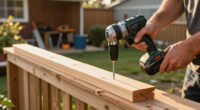
This checklist is for homeowners and DIYers who want a practical set of tools for routine repairs, installation work, and small projects. It covers a mix of powered tools and simple hand tools, with clear choices where a product is named and general guidance where the checklist calls for advice only.

Get business pricing on tools and workshop supplies
- Business-only prices and quantity discounts
- Tax-exempt purchasing
- Multiple users, one account, clear invoices
The sections follow the listed tool categories: cordless drill driver, adjustable wrench set, stud finder, laser level, caulking gun, and digital multimeter. Each pick has a short buying perspective, while the advice-only sections focus on the features and fit questions to consider. Use the look-for lists to compare options within each category.
Before buying, think through the repairs you expect to tackle, the materials you work with, and what you already own. Check that tools fit your hands and storage space, and confirm battery compatibility and included accessories where relevant. Treat this as a starting point: prioritize tools that match your next projects, then build out the kit as new needs arise.
Cordless Drill Driver
A cordless drill driver is useful for making holes and driving fasteners across a range of home tasks. The listed pick is the Milwaukee M18 FUEL 18V Brushless Hammer Drill and Impact Driver Combo, which combines a hammer drill and an impact driver. Before choosing a combo, consider whether you need both tools and whether the included batteries and charger suit your existing setup.
A common buying mistake is focusing on a long feature list without checking how the tools feel in hand or whether the kit fits the work ahead. Consider grip comfort, control placement, and the weight of each tool with a battery attached. For drilling into masonry, verify that the hammer function is appropriate for the materials and work you plan to do; for driving, consider whether an impact driver complements your usual fasteners. Check the kit contents carefully, including battery count, charger, case, and any included accessories. If you already own compatible batteries, confirm the platform before adding another kit. Match bits and driver accessories to the fasteners and materials involved, and follow the tool maker’s guidance for each task.
What to look for:
- Comfortable grip and controls you can reach easily
- Tool weight with the battery attached
- Whether both a hammer drill and impact driver fit your projects
- Battery platform compatibility and included charger
- Included case and accessories, plus bit compatibility
Milwaukee M18 FUEL 18V Brushless Hammer Drill and Impact Driver Combo Kit

This two-tool cordless kit includes a brushless hammer drill and impact driver designed for a wide range of drilling and fastening applications. It comes with two 5.0Ah lithium-ion batteries, a charger, and a tool case.
Pros:
- Brushless motors provide power for a wide range of applications
- Includes two 5.0Ah batteries
- Impact driver is described as delivering fast driving speed without sacrificing power or control
- Mechanical clutch supports consistent fastening
Cons:
- Availability can vary
Best for: DIYers who want a drill and impact driver together
Not ideal for: People who only need one of the two tools
Bottom line: Choose this combo if both tools suit your projects and its battery setup fits your kit.
Adjustable Wrench Set
An adjustable wrench set helps with fasteners when you need a tool that can accommodate different sizes. The right set should feel controlled in your hand and open wide enough for the nuts and bolts you encounter. Think about jaw range, handle length, and how often you expect to work in tight spaces before deciding what to buy.
A frequent mistake is choosing a wrench that is too large or awkward for the work area. A longer handle can provide reach, but may be difficult to maneuver around plumbing, appliances, or other obstructions. Check that the jaws adjust smoothly and sit securely against the fastener; a loose fit can slip and damage the fastener or nearby surfaces. Consider whether a set gives you useful size coverage without duplicating tools you already own. For recurring tasks, compare the wrench’s overall dimensions with the clearance available at the work site. Use the right size for each fastener, keep the jaws squarely engaged, and avoid using an adjustable wrench where a dedicated tool is required. Comfort and access matter as much as the maximum opening.
What to look for:
- Jaw range suited to common household fasteners
- Smooth adjustment and jaws that hold their position
- Handle length that fits the available clearance
- Comfortable grip for controlled turning
- Useful size coverage without unnecessary duplicates
Stud Finder
A stud finder helps locate framing behind a wall when planning where to fasten or mount something. The named pick is the Klein Tools MSF100 Magnetic Stud Finder and Level. Consider how you will use it: identifying a likely fastener location, checking alignment, or doing both as part of a mounting task.
One common mistake is treating a single indication as confirmation of the exact framing position. Wall coverings, nearby metal, and other conditions can affect what you detect, so follow the product instructions and check the area carefully before drilling. The level function may be convenient for basic alignment, but consider whether its format and visibility suit the size of your project. Check the tool’s dimensions and how easily it can be held flat against your wall. For important installations, verify the intended fastening location with appropriate methods and use fasteners suited to the wall and load. The product name identifies a magnetic finder and level; review its instructions to understand its intended use and limits. Careful confirmation helps avoid misplaced holes and supports a more secure installation.
What to look for:
- A detection method suited to your wall and task
- Clear instructions for interpreting indications
- A form factor that sits flat against the wall
- Level visibility for the alignment work you do
- A way to confirm the fastening location before drilling
Klein Tools MSF100 Magnetic Stud Finder and Level

The Klein Tools MSF100 is a compact magnetic stud finder that detects metal studs and fasteners within wooden studs using a powerful Rare-Earth magnet. It features a bubble vial, center notch, bottom opening, and felt pads to protect surfaces, making precise marking and alignment easy.
Pros:
- Compact and easy to store
- Accurate detection of metal studs and fasteners
- Protective felt pads prevent wall damage
- Durable with drop resistance up to 9.9 feet
Cons:
- Limited to metal stud detection, not wood-only
- No electronic or digital features
- Requires manual alignment for marking
Best for: DIYers who want a finder with a level
Not ideal for: People who need a different detection method for their walls
Bottom line: Use the MSF100 as directed and confirm locations before drilling or fastening.
Laser Level
A laser level can help keep lines aligned across a wall or around a room during layout and installation work. The listed pick is the DEWALT 12V/20V MAX XR Line Laser, Green, 3 x 360°, Battery and Charger. Its named configuration includes three 360-degree lines, a green laser, a battery, and a charger; consider whether those features match the spaces and tasks you work on.
A common mistake is buying a level without considering visibility, mounting, or the working area. Check the product instructions for its intended setup, and consider whether you have a stable surface or compatible mounting arrangement for the locations where you will use it. Confirm what the kit includes and whether the battery arrangement fits your existing tools. Room lighting and the distance between the tool and the work surface can affect how useful a projected line is in practice, so think about your typical conditions. Before relying on a line, set up the tool as directed and check the reference points you need. For jobs where exact alignment matters, take time to verify the setup rather than assuming placement alone guarantees accuracy. Project layout and mounting needs should guide the choice.
What to look for:
- Line coverage that fits the layout tasks you do
- Visibility suited to your work area
- Stable placement or a mounting option for your setup
- Battery compatibility and kit contents
- Clear setup and accuracy instructions
DEWALT 12V/20V MAX XR Line Laser, Green, 3 x 360°, Battery and Charger Included

This DEWALT line laser offers high precision with ±1/8 inch accuracy at 50 feet, suitable for large-area projects with visibility up to 230 feet. It features long battery life of 10 hours and versatile mounting options, compatible with both 12V and 20V MAX batteries.
Pros:
- High precision with ±1/8 inch accuracy
- Long-range visibility up to 230 feet
- Compatible with both 12V and 20V batteries
- Versatile mounting options for various setups
Cons:
- Battery and charger sold separately
- Requires familiarity with laser tools for optimal use
Best for: DIYers laying out lines across multiple surfaces
Not ideal for: People whose tasks need only a simple reference line
Bottom line: Choose this model if its three-line layout and battery setup suit your work.
Caulking Gun
A caulking gun helps apply sealant along joints and gaps during maintenance and finishing work. The named pick is the Dripless Contractor Grade Heavy Duty Caulking Gun, listed with a 10-ounce capacity and an 18-inch measurement. Before buying, confirm that the cartridge size you use fits the gun and clarify which dimension the listed 18 inches describes.
A common mistake is assuming all cartridges, nozzles, and application needs are interchangeable. Check the packaging and tool instructions for compatibility, then consider whether the gun’s size works in the spaces where you need to apply sealant. A longer or heavier tool may be harder to control in cramped locations, while a comfortable grip and predictable trigger action can help maintain an even bead. Review how the gun releases pressure and follow the maker’s loading and use instructions to reduce unwanted flow when you stop. Match the sealant to the surface and repair, and prepare the joint as directed by the sealant maker. Cartridge fit and control are practical priorities for clean application.
What to look for:
- Compatibility with the cartridge size you plan to use
- Dimensions that fit the work area and storage space
- A grip and trigger you can control comfortably
- A pressure release method explained in the instructions
- Compatibility with the sealant and application task
Dripless Contractor Grade Heavy Duty Caulking Gun – 10 oz Capacity, 18:1 Thrust

The Dripless Si300 Contractor Grade Caulking Gun is designed for heavy-duty use, capable of dispensing thick materials like silicones and adhesives with an 18:1 thrust ratio. It features a non-drip mechanism, rotating frame for smooth bead application, and built-in tools for cartridge opening, making it suitable for professional and DIY projects.
Pros:
- Prevents dripping with a reliable non-drip mechanism
- High power with an 18:1 thrust ratio for thick materials
- Rotating frame maintains bead orientation around corners
- Built-in tools for easy cartridge opening
Cons:
- Heavy-duty design may be heavier than standard caulking guns
- Requires some effort to operate with thick materials
Best for: DIYers applying sealant in recurring repair work
Not ideal for: People working mainly in very tight spaces
Bottom line: Confirm cartridge fit and tool dimensions before choosing this caulking gun.
Digital Multimeter
A digital multimeter is used to take electrical measurements, so choosing one starts with the kinds of checks you need to perform and your experience level. Consider the measurements, ranges, and functions required for your tasks, then read the tool’s instructions to understand its limits. Safety guidance should be part of the buying decision, not an afterthought.
A common mistake is selecting a meter by its display alone or assuming that every model is suitable for every electrical task. Review the meter’s stated measurement capabilities, input limits, and safety instructions, and make sure the leads and accessories are appropriate for the intended use. Check that the display is easy for you to read in the places you expect to work, and consider whether the controls are straightforward to operate. If you are unfamiliar with electrical testing, learn the correct procedure from reliable guidance before using a meter; do not work on circuits beyond your training. Inspect the meter and leads before use, follow the maker’s instructions, and stop if the setup or reading is unclear. Task fit and safe operation matter more than extra functions you will not use.
What to look for:
- Measurement types and ranges suited to your intended checks
- Clearly stated input limits and safety guidance
- Leads and accessories appropriate for the task
- A display you can read in your work setting
- Instructions and controls that match your experience
Build the kit in order of the work you expect to do soonest. Start with tools that support several planned repairs, then add layout and application tools when a project calls for them. Compare what you already own, especially batteries and accessories, and put compatibility first when choosing a new tool.
You do not need to assemble everything at once. Use the checklist to identify the gaps that matter for your home, check fit and instructions before buying, and expand the kit as your projects change. With a thoughtful starting point and careful tool use, you can make each addition count.
Halloween Picks

Pumpkin Halloween Fog Machine with 12-Color LED Lights, Bluetooth Speaker, and Remote

HOPOCO Halloween Pumpkin Fog Machine with 12 LED Colors and 4 Light Modes

Panefright Halloween Window Projector – Scary Projector for Spooky Decor
As an affiliate, we earn on qualifying purchases.