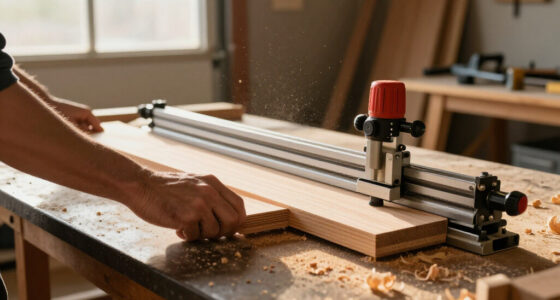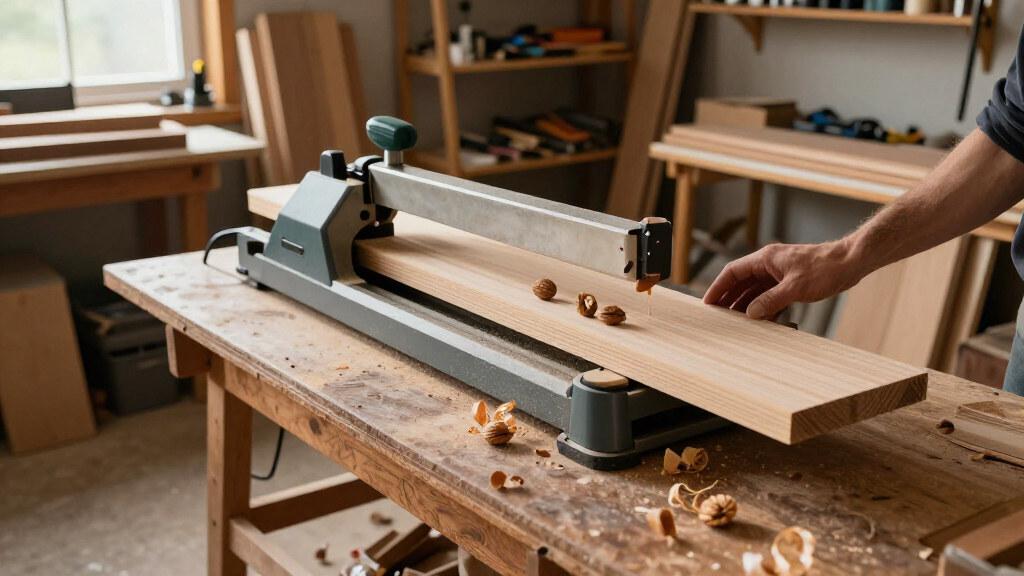

Choosing the right compact benchtop thickness planers means balancing raw power with the spatial constraints of a home workshop. My top overall pick is the DEWALT DW734, which offers industrial-grade reliability and a three-knife cutterhead that minimizes tear-out better than many budget competitors. For those prioritizing surface finish, the JET 13-Inch with Helical Cutterhead stands out by virtually eliminating snipe and leaving a smoother finish than traditional straight-knife models. The primary tradeoff in this category is between motor durability and portability; higher-powered units often require dedicated circuits and weigh more than a portable drill. Continue reading to see how these fourteen options compare on dust collection efficiency, feed rate consistency, and long-term maintenance costs.

Get business pricing on tools and workshop supplies
- Business-only prices and quantity discounts
- Tax-exempt purchasing
- Multiple users, one account, clear invoices
Complete the kit



Key Takeaways
- Helical and spiral cutterheads (found on JET, WEN, and FindBuyTool models) significantly reduce noise and tear-out compared to traditional three-knife heads, though they come with a higher upfront cost.
- DEWALT and WEN models offer the most robust dust collection ports, a critical factor for small shops where airborne particulate control is limited by ventilation.
- Two-speed feed capabilities (seen in VEVOR and WEN units) provide better control for difficult grain patterns, allowing slower feeds that reduce tear-out without requiring specialized cutterheads.
- Budget VEVOR units often lack precision in their fence alignment and bed leveling, requiring more frequent calibration than established brands like CRAFTSMAN or WOODERS.
- Motor amperage varies widely from 10A to 15A; units below 12A struggle with hardwoods like maple or oak, leading to burning or stalling during deeper passes.
| VEVOR 13-Inch Two-Speed Benchtop Thickness Planer |  | Best for Feed-Speed Control | Motor power: 2000W | Power source: Corded electric | Cutting width: 13 inches | VIEW LATEST PRICE | See Our Full Breakdown |
| CRAFTSMAN CMEW320 12.25-Inch Benchtop Thickness Planer, 15 Amp |  | Best for a Lighter Workshop Setup | Model: CMEW320 | Motor: 15 amp | Power source: Corded electric | VIEW LATEST PRICE | See Our Full Breakdown |
| WEN PL1252 15-Amp 12.5-Inch Two-Blade Benchtop Thickness Planer |  | Best for Supported Board Feeding | Motor amperage: 15 A | Power source: Corded electric | Maximum board width: 12.5 inches | VIEW LATEST PRICE | See Our Full Breakdown |
| CuisinAid 1250W Benchtop Thickness Planer |  | Best for a Portable, Small-Shop Setup | Model number: HKD-21 | Power: 1250W | Speed: 8000 RPM | VIEW LATEST PRICE | See Our Full Breakdown |
| VEVOR 13-Inch Benchtop Thickness Planer |  | Best for an Included Stand | Motor: 15 AMP; power listed as both 1800W and 2000W | Blade speed: 8000 rpm | Feeding speed: 6 m/min (236 in/min) | VIEW LATEST PRICE | See Our Full Breakdown |
| FindBuyTool 13″ Benchtop Thickness Planer with Helical Cutterhead (FB132H) |  | Best for Adjustable-Feed Finishing | Cutting width: 13 inches | Cutterhead: Helical, 40 carbide inserts | Motor: 2.5 HP, 15 A | VIEW LATEST PRICE | See Our Full Breakdown |
| DEWALT DW734 12-1/2-Inch Benchtop Planer |  | Best for Deeper Cuts | Cutting width: 12.5 inches | Cutterhead: Three knives | Motor: 15 A | VIEW LATEST PRICE | See Our Full Breakdown |
| VEVOR 13-Inch Three-Blade Two-Speed Benchtop Thickness Planer |  | Best for Long-Board Support | Planing width: 13 inches | Maximum board thickness: 6 inches | Cutterhead: Three-blade | VIEW LATEST PRICE | See Our Full Breakdown |
| JET 13-Inch Benchtop Thickness Planer with Helical Cutterhead |  | Best for Space-Conscious Helical Planing | Planing capacity: 13 inches wide x 6 inches thick | Cutterhead: Helical, 30 four-sided carbide inserts | Motor: 2 HP, 15 A, 120 V | VIEW LATEST PRICE | See Our Full Breakdown |
| VEVOR 13-Inch Spiral Benchtop Thickness Planer |  | Best Compact Spiral-Cutterhead Pick | Cutting width: 13 inches | Cutterhead: Spiral-style, 24 alloy blade inserts | Power: 2000 W | VIEW LATEST PRICE | See Our Full Breakdown |
| WOODERS 13-Inch Benchtop Thickness Planer, 15A |  | Best for Spare-Blade Readiness | Motor: 15A, 2000W all-copper | Cutterhead speed: 10,000 RPM | Planing width: 13 in (330 mm) | VIEW LATEST PRICE | See Our Full Breakdown |
| VEVOR 13-Inch Two-Blade Benchtop Thickness Planer, 15-Amp 2000W |  | Best for Supported Board Feeding | Planing width: 13 inches | Maximum board thickness: 6 inches | Motor: 15A, 2000W | VIEW LATEST PRICE | See Our Full Breakdown |
| WEN PL1326 15-Amp 13-Inch Spiral Benchtop Thickness Planer |  | Best for Spiral-Cutterhead Finishing | Motor: 15A | Cutterhead: Spiral, with 26 staggered and rotatable HSS blades | Maximum board width: 13 inches | VIEW LATEST PRICE | See Our Full Breakdown |
| VEVOR 13-Inch Two-Blade Benchtop Thickness Planer |  | Best for Flexible Dust-Hose Setups | Motor: 15A, 1800W | Maximum rotational speed: 23,500 RPM | Cutting speed: Up to 16,000 CPM | VIEW LATEST PRICE | See Our Full Breakdown |
| compact benchtop thickness planer | Motor | Cutterhead |
|---|---|---|
| VEVOR 13-Inch Two-Speed Bencht | — | — |
| CRAFTSMAN CMEW320 12.25-Inch B | 15 amp | Two-knife solid steel |
| WEN PL1252 15-Amp 12.5-Inch Tw | — | — |
| CuisinAid 1250W Benchtop Thick | — | — |
| VEVOR 13-Inch Benchtop Thickne | 15 AMP; power listed as both 1800W and 2000W | — |
| FindBuyTool 13" Benchtop Thick | 2.5 HP, 15 A | Helical, 40 carbide inserts |
| DEWALT DW734 12-1/2-Inch Bench | 15 A | Three knives |
| VEVOR 13-Inch Three-Blade Two- | — | Three-blade |
| JET 13-Inch Benchtop Thickness | 2 HP, 15 A, 120 V | Helical, 30 four-sided carbide inserts |
| VEVOR 13-Inch Spiral Benchtop | — | Spiral-style, 24 alloy blade inserts |
| WOODERS 13-Inch Benchtop Thick | 15A, 2000W all-copper | — |
| VEVOR 13-Inch Two-Blade Bencht | 15A, 2000W | Two knives |
| WEN PL1326 15-Amp 13-Inch Spir | 15A | Spiral, with 26 staggered and rotatable HSS blades |
| VEVOR 13-Inch Two-Blade Bencht | 15A, 1800W | — |
More Details on Our Top Picks
VEVOR 13-Inch Two-Speed Benchtop Thickness Planer
The two-speed feed gives this VEVOR a useful distinction from the single-feed VEVOR 13-Inch Benchtop Thickness Planer: buyers can choose a pace to suit the board and finish goals. Its three HSS blades and dual rollers are aimed at steady feeding and smooth cuts, while the 13-inch width and 6-inch height accommodate substantial stock for a benchtop machine. The 28.2-inch worktable also offers more support than a bare compact footprint suggests. Dust connections for 2-inch or 4-inch hoses add flexibility when matching an existing collector. The tradeoff is weight: at 58.4 pounds, it is less convenient to lift or stow than the lighter CRAFTSMAN CMEW320. I’d shortlist it for a fixed small-shop station, but skip it if frequent carrying matters.
Pros:- Two feed speeds give more control over work pace.
- Three HSS blades and dual rollers support steady feeding and smooth planing.
- 13-inch cutting width and 6-inch maximum board height handle sizable stock.
- Accepts both 2-inch and 4-inch dust hoses.
Cons:- At 58.4 pounds, it is awkward to move regularly.
- Its 2000W motor and 23,500 rpm maximum rotational speed do not, by themselves, establish cut quality or capacity under load.
Best for: Small-shop woodworkers who want two feed-speed choices, a 13-inch capacity, and compatibility with different dust hose sizes.
Not ideal for: Woodworkers who need to carry a planer between job sites or store it after each session; its 58.4-pound weight works against frequent moving.
- Motor power:2000W
- Power source:Corded electric
- Cutting width:13 inches
- Maximum board height:6 inches
- Worktable length:28.2 inches
- Blades:3 HSS blades
- Feed speeds:2
- Dust hose compatibility:2-inch and 4-inch
- Weight:58.4 pounds
Our verdict“Choose this VEVOR if adjustable feed pace and flexible dust hookup matter more than easy portability.”
CRAFTSMAN CMEW320 12.25-Inch Benchtop Thickness Planer, 15 Amp
The CRAFTSMAN CMEW320 is the lighter-footprint choice in this group: its listed weight is 27.71 kg, below the 55.6-pound WEN PL1252 and 58.4-pound VEVOR two-speed model. That makes it a more plausible fit for a shop where the planer must be moved occasionally, though it is not a featherweight. Its reversible double-edged knives offer another usable edge before replacement, and the solid-steel, two-knife cutterhead is specified for both hard and soft wood. The 12.25-inch width is slightly narrower than the 12.5-inch WEN and 13-inch VEVOR options, so wider boards may need another tool or a different plan. The dust port helps connect extraction, but the supplied details flag noisy operation, and this corded model is not suited to work far from power.
Pros:- Reversible, double-edged knives extend use before replacement.
- Solid-steel, two-knife cutterhead is specified for hardwood and softwood.
- Dust collection port supports connection to extraction.
- Listed weight is lower than the WEN PL1252 and VEVOR two-speed planer.
Cons:- 12.25-inch planing width is narrower than the 12.5-inch WEN and 13-inch VEVOR models.
- Corded power limits placement away from an outlet.
- Noisy operation may be disruptive in shared or residential workspaces.
Best for: Home-shop woodworkers who want reversible knives and a comparatively lighter planer for occasional repositioning.
Not ideal for: Buyers who routinely plane boards wider than 12.25 inches, need cordless portability, or prioritize quieter operation.
- Model:CMEW320
- Motor:15 amp
- Power source:Corded electric
- Planing width:12.25 inches
- Cutterhead:Two-knife solid steel
- Maximum speed:8,000 RPM
- Cutting depth:0.13 inches
- Dimensions:23.5 x 17.5 x 15.4 inches
- Weight:27.71 kg
Our verdict“Pick the CRAFTSMAN if reversible knives and a somewhat easier-to-reposition body matter more than maximum width or quiet operation.”
WEN PL1252 15-Amp 12.5-Inch Two-Blade Benchtop Thickness Planer
The WEN PL1252 earns its place through board-handling support, rather than an unusually small footprint. Height-adjustable infeed and outfeed tables help support long stock as it enters and leaves the cutter, while return rollers make repeated passes easier to manage. Those practical details set it apart from the CRAFTSMAN CMEW320, whose supplied specifications do not list adjustable tables or return rollers. The WEN also offers a 12.5-inch width, a 6-inch maximum thickness, and reversible SK5 blades. Its 26-feet-per-minute feed rate and 20,000 cuts per minute describe a brisk setup, though the two-blade design is less specialized than the three-blade VEVOR two-speed model. At 55.6 pounds, it suits a dedicated bench better than frequent transport, and the 2-inch dust port calls for a collector to handle chips.
Pros:- Adjustable infeed and outfeed tables support board handling.
- Return rollers make repeated passes more convenient.
- Reversible 12.5-inch SK5 blades and a 6-inch capacity cover common stock sizes.
- Cast iron base provides a substantial planer base.
Cons:- 55.6-pound weight makes frequent lifting and storage inconvenient.
- The 2-inch dust port requires a dust collection setup for chip removal.
- Two-blade cutterhead is less differentiated than the three-blade VEVOR two-speed option.
Best for: Small-shop builders who plane longer boards and value adjustable table support and return rollers for repeated passes.
Not ideal for: Woodworkers who need a frequently portable machine or lack dust extraction to connect to its 2-inch port.
- Motor amperage:15 A
- Power source:Corded electric
- Maximum board width:12.5 inches
- Maximum board thickness:6 inches
- Blades:Two reversible 12.5-inch SK5 blades
- Cuts per minute:20,000
- Feed rate:26 feet per minute
- Cutting depth per pass:0 to 1/8 inch
- Weight:55.6 pounds
Our verdict“Choose the WEN PL1252 for supported board feeding and repeat-pass convenience, provided you can leave it on a sturdy bench and connect dust collection.”
CuisinAid 1250W Benchtop Thickness Planer
The CuisinAid is the most portability-oriented pick in this batch by description, with a compact build intended for small workshops and job sites. Adjustable cutting depth and feed rate give the operator control over how aggressively to remove material, while the product information lists compatibility with both hard and soft wood. That flexibility is appealing beside the more fully specified WEN PL1252, which spells out its width, board height, blade type, and feed rate. Here, key capacity details and included components are not provided, making it harder to judge whether it fits a particular stock size or dust setup. The listed 1250W motor and 8000 RPM provide some reference, but do not replace missing capacity figures. I’d consider it only when compactness is the priority and its dimensions and support arrangements can be confirmed before purchase.
Pros:- Compact, portable design is described for small shops and job sites.
- Adjustable cutting depth and feed rate allow work settings to be tailored.
- Listed for both hard and soft wood.
- Low-dust and low-noise operation are stated as design features.
Cons:- Product details do not specify cutting width or maximum board thickness.
- Blade type and included components are not listed.
- Limited product information makes capacity and long-term reliability harder to evaluate.
Best for: Woodworkers with limited shop space or job-site needs who prioritize a compact, portable planer and can verify capacity before buying.
Not ideal for: Buyers who need confirmed cutting width, maximum board thickness, blade details, or clear included accessories before choosing a planer.
- Model number:HKD-21
- Power:1250W
- Speed:8000 RPM
- Material compatibility:Hard and soft wood
- Cutting depth:Adjustable; range not specified
- Feed rate:Adjustable; range not specified
- Design features:Low dust, low noise, portable
Our verdict“Consider the CuisinAid for a space-constrained setup only after confirming its board capacity and what comes in the box.”
VEVOR 13-Inch Benchtop Thickness Planer
This VEVOR stands out for packaging a detachable stand and foldable extension plates with a 13-inch planer, reducing the need to source basic support separately. Automatic feeding and return rollers also target easier board handling, making it a more ready-to-set-up choice than the CRAFTSMAN CMEW320, whose listing does not include a stand. Its stated range of 0.2 to 6.3 inches covers a useful span of board thicknesses, and the two double HSS blades are specified as replaceable cutting components. The main caution is inconsistent power information: the product details give both 1800W and 2000W. It also lists a 6 m/min feed speed but does not establish noise or cut quality. I’d favor it when the included support kit is useful, not when precise performance comparisons matter most.
Pros:- 13-inch maximum cutting width accommodates wider stock than the CRAFTSMAN CMEW320.
- Detachable stand and foldable extension plates are included.
- Automatic feeding and return rollers support board handling.
- Two double HSS blades and a dust exhaust interface are specified.
Cons:- Product information conflicts on motor power, listing both 1800W and 2000W.
- Noise level and cut quality are not described in the supplied details.
- The dust exhaust interface is specified at about 2 inches, so larger collector connections may need an adapter.
Best for: Woodworkers setting up a compact shop who want a 13-inch planer bundled with a stand and foldable extension plates.
Not ideal for: Buyers who need consistent motor specifications or detailed evidence about noise and cut quality before selecting a machine.
- Motor:15 AMP; power listed as both 1800W and 2000W
- Blade speed:8000 rpm
- Feeding speed:6 m/min (236 in/min)
- Maximum cutting width:13 inches
- Cutting thickness:0.2–6.3 inches
- Blades:2 double HSS cutter blades
- Dust exhaust interface:1.8-inch inner diameter; 2-inch outer diameter
- Included components:Planer, stand, accessories, and 2 blades
Our verdict“Choose this VEVOR when the included stand and extensions suit your setup, but verify the motor details if power specifications will guide your choice.”
FindBuyTool 13″ Benchtop Thickness Planer with Helical Cutterhead (FB132H)
The FindBuyTool’s strongest case is its combination of a 40-insert helical cutterhead and two feed rates. The slower 12 FPM setting gives a finish-focused woodworker more control than the VEVOR 13-Inch Three-Blade Two-Speed Benchtop Thickness Planer, while 21 FPM is available when speed matters more. Its 2.5 HP motor, ball-screw height adjustment, and anti-snipe feature make it a well-equipped choice for a compact shop handling varied solid-wood stock.
The tradeoff is portability: at 70 pounds, it is heavier than the 66-pound JET 13-Inch Benchtop Thickness Planer, and the 0.03-inch listed cutting depth favors light passes rather than aggressive stock removal. A 4-inch dust port also calls for suitable collection. I’d choose it for adjustable finishing, not frequent bench-to-bench moving.
Pros:- Helical cutterhead with 40 carbide inserts is designed for smooth cuts on hardwoods and softwoods.
- Two feed rates offer a choice between 21 FPM stock removal and 12 FPM finishing.
- Ball-screw height adjustment and an anti-snipe device support controlled, consistent results.
- 2.5 HP motor includes overload protection.
Cons:- At 70 pounds, it is among the less convenient options here to reposition.
- Listed cutting depth of 0.03 inches limits material removal per pass.
- A 4-inch dust port calls for a compatible dust-collection setup.
Best for: Small-shop woodworkers who regularly switch between quicker stock removal and slower, finish-oriented passes on solid wood.
Not ideal for: Woodworkers who need to move a planer often or remove substantial material in each pass; its 70-pound weight and listed 0.03-inch cutting depth are limiting.
- Cutting width:13 inches
- Cutterhead:Helical, 40 carbide inserts
- Motor:2.5 HP, 15 A
- Feed rates:12 and 21 FPM
- Listed cutting depth:0.03 inches
- Dust port:4 inches
- Weight:70 pounds
- Dimensions:22 x 24.2 x 17.7 inches
Our verdict“Choose the FindBuyTool if two feed speeds and a helical cutterhead matter more than easy portability or deep cuts.”
DEWALT DW734 12-1/2-Inch Benchtop Planer
The DW734 stands apart from the helical-head picks here by pairing a three-knife cutterhead with a listed cutting depth of 0.13 inches. That makes it the more direct choice for users who want to remove more material per pass than the FindBuyTool FB132H’s listed 0.03 inches. Its 96 cuts per inch, four-column carriage lock, and turret depth stop add practical support for repeatable work, while the long tables help steady boards up to the supported length.
The compromise is a traditional knife setup: the knives are reversible and disposable, rather than the individually replaceable carbide inserts on the JET 13-Inch Benchtop Thickness Planer. At 12.5 inches wide, it also gives up a little capacity to the 13-inch machines. I’d favor it for deeper cuts and familiar three-knife performance, not for buyers prioritizing helical inserts or maximum width.
Pros:- Three-knife cutterhead is rated for 96 cuts per inch.
- Listed cutting depth of 0.13 inches supports deeper passes than the FindBuyTool FB132H’s listed depth.
- Four-column carriage lock helps limit movement that can contribute to snipe.
- 33.5 inches of feed-table support and a turret depth stop aid longer, repeatable work.
Cons:- At 12.5 inches, its cutting width is narrower than the 13-inch options.
- Reversible knives are disposable rather than carbide inserts that can be rotated individually.
- Corded power limits where it can be operated.
Best for: Woodworkers who want a three-knife planer for deeper passes, repeatable depth settings, and support for longer boards.
Not ideal for: Buyers who want a helical cutterhead, replaceable carbide inserts, or the full 13-inch capacity offered by several alternatives.
- Cutting width:12.5 inches
- Cutterhead:Three knives
- Motor:15 A
- Maximum rotational speed:20,000 rpm
- Cutter-head speed:10,000 rpm
- Listed cutting depth:0.13 inches
- Cuts per inch:96
- Feed-table support length:33.5 inches
- Included component:Dust hood
Our verdict“Pick the DW734 if deeper listed cuts and a proven three-knife layout matter more than helical inserts or a full 13-inch width.”
VEVOR 13-Inch Three-Blade Two-Speed Benchtop Thickness Planer
For a compact planer, the VEVOR’s 35-inch worktable support is a useful differentiator: it gives longer boards more guidance than a bare benchtop setup, without relying on the FindBuyTool’s extendable tables. Its two feed speeds, 15 and 24 FPM, let a user trade throughput for a smoother pass, and the 13-inch width matches the wider capacity of the helical-head JET and FindBuyTool models. A vacuum port also gives dust collection a clear connection point.
This is the more conventional three-blade option beside those helical models, so it lacks their carbide-insert cutterheads. It handles stock up to 6 inches thick, but its over-current protector may interrupt work if current exceeds its limit. I’d pick it for supported feeding and speed choice, while buyers seeking a quieter, insert-based cutting system should look to the JET.
Pros:- Two feed speeds, 15 and 24 FPM, support different work paces.
- 35 inches of worktable support helps steady longer boards.
- 13-inch planing width accommodates wider stock than the DEWALT DW734.
- Vacuum port provides a connection for dust collection.
Cons:- Three-blade cutterhead lacks the carbide inserts found on the JET and FindBuyTool models.
- Maximum board thickness is 6 inches.
- The 20 A over-current protector can cut power if current exceeds its limit.
Best for: Home-shop woodworkers who plane longer boards and want two feed speeds, 13-inch capacity, and a vacuum connection.
Not ideal for: Buyers who prioritize a helical cutterhead or need to work with stock thicker than 6 inches.
- Planing width:13 inches
- Maximum board thickness:6 inches
- Cutterhead:Three-blade
- Feed speeds:15 or 24 FPM
- Motor power:2000 W
- Amperage:15 A
- Listed cutting depth:0.13 inches
- Worktable support length:35 inches
- Dust collection:Vacuum port
Our verdict“Choose this VEVOR if extended support and two feed speeds matter more than a helical cutterhead.”
JET 13-Inch Benchtop Thickness Planer with Helical Cutterhead
The JET is a strong fit when helical cutting and compact storage are both priorities. Its 30 four-sided carbide inserts give each insert multiple usable edges, while folding tables and upright storage help reclaim bench space after a job. Compared with the FindBuyTool FB132H, it weighs 66 pounds rather than 70 and offers a specified 1/8-inch maximum cut on boards up to 6 inches wide, though the maximum drops to 1/16 inch at full width. Its 24.6 FPM feed rate is fixed rather than adjustable.
That narrower use case matters: JET specifies solid wood and excludes plywood, painted or reclaimed lumber, and end grain. It also calls for at least 550 CFM dust collection, which can add setup demands. I’d choose it over the VEVOR three-blade planer for insert-based cutting and storage, but not for mixed-material work or variable feed speeds.
Pros:- Helical cutterhead has 30 four-sided carbide inserts, with spare inserts included.
- Folding tables and upright storage help save shop space.
- Depth stop and fine height adjustment support controlled settings.
- Two dust-port sizes provide connection options for collection systems.
Cons:- Specified for solid wood only; plywood, painted or reclaimed lumber, and end grain are excluded.
- Requires a minimum recommended dust-collection capacity of 550 CFM.
- Feed rate is fixed at 24.6 FPM rather than adjustable like the FindBuyTool FB132H.
Best for: Small-shop woodworkers who plane solid wood, want a helical cutterhead, and need folding tables for storage.
Not ideal for: Users who plane plywood, painted or reclaimed lumber, or end grain, or who need adjustable feed rates and do not have strong dust collection.
- Planing capacity:13 inches wide x 6 inches thick
- Cutterhead:Helical, 30 four-sided carbide inserts
- Motor:2 HP, 15 A, 120 V
- Cutterhead speed:9,500 RPM
- Feed rate:24.6 FPM
- Maximum cut depth:1/8 inch up to 6 inches wide; 1/16 inch at full width
- Dust ports:4 inches and 2-1/2 inches
- Weight:66 pounds
- Warranty:5-year limited warranty
Our verdict“Choose the JET for space-saving storage and helical planing of solid wood, provided its material limits and dust needs suit your shop.”
VEVOR 13-Inch Spiral Benchtop Thickness Planer
The second VEVOR takes a simpler route to spiral cutting: its 24 alloy blade inserts sit in a 13-inch planer with dual feed rollers and compatibility with both 2-inch and 4-inch dust hoses. At 61.7 pounds, it is lighter than the FindBuyTool FB132H and the JET, making it a more manageable benchtop option when repositioning matters. Its 0.13-inch listed cutting depth also exceeds the FindBuyTool’s listed 0.03 inches, though those figures do not indicate identical cutterhead designs or performance.
The key give-up is single-speed operation. Unlike the two-speed VEVOR 13-Inch Three-Blade model, this one offers no slower feed setting for finish-focused work. Its alloy inserts also differ from the JET’s four-sided carbide inserts. I’d choose it for a lighter spiral-head setup and flexible hose fit, not for users who need feed-rate control or specified carbide inserts.
Pros:- Spiral-style cutterhead uses 24 alloy blade inserts.
- Dual rollers are designed to feed boards steadily.
- Accepts both 2-inch and 4-inch dust hoses.
- At 61.7 pounds, it is lighter than the FindBuyTool FB132H and JET models listed here.
Cons:- Single-speed operation offers less control over feed pace than the two-speed VEVOR three-blade model.
- Alloy inserts differ from the JET’s four-sided carbide inserts.
- Corded operation still requires access to a suitable power outlet.
Best for: Woodworkers who want a 13-inch spiral-style planer with dual rollers, flexible dust-hose options, and a relatively lighter listed weight.
Not ideal for: Users who want adjustable feed speeds or the four-sided carbide inserts specified for the JET 13-Inch Benchtop Thickness Planer.
- Cutting width:13 inches
- Cutterhead:Spiral-style, 24 alloy blade inserts
- Power:2000 W
- Input voltage and amperage:110 V, 15 A
- Maximum rotational speed:23,500 rpm
- Listed cutting depth:0.13 inches
- Depth adjustment:1/8-inch increments
- Dust hose compatibility:2-inch and 4-inch hoses
- Weight:61.7 pounds
Our verdict“Pick this VEVOR if a lighter spiral-style planer and flexible dust-hose fit matter more than variable feed speed.”
WOODERS 13-Inch Benchtop Thickness Planer, 15A
The WOODERS PL13-15AB makes sense for a small shop that wants 13-inch capacity and replacement blades on hand. Its 15A, 2000W motor and 10,000 RPM cutterhead suit routine sizing of hardwood and softwood, while the two included spare HSS blades reduce the chance that a dull edge immediately interrupts a project. Compared with the VEVOR 13-Inch Two-Blade model, WOODERS lists a slower cutterhead speed but gives more detail about blade spares and adds a height indicator for setting repeat thicknesses. The dust port can connect to a vacuum, and overload protection adds a layer of motor protection. The tradeoff is limited performance information: noise, vibration, and snipe control are not established, so buyers focused on finish consistency may prefer the WEN PL1326’s spiral cutterhead and adjustable tables.
Pros:- 13-inch capacity accommodates wider boards than many compact planers.
- Includes two replacement dual-edge HSS blades.
- Height indicator and depth adjustment crank support repeatable setup.
- Overload protection and a vacuum-connectable dust port are included.
Cons:- Noise, vibration, and snipe performance are not specified.
- Its 10,000 RPM cutterhead speed is lower than the listed 23,500 RPM of the VEVOR 13-Inch Two-Blade model.
- The product details do not specify feed rate or table support length.
Best for: Home woodworkers who want a 13-inch planer, simple height references, and spare HSS blades included for ongoing projects.
Not ideal for: Woodworkers prioritizing quieter operation, verified snipe control, or a spiral cutterhead for smoother finishing.
- Motor:15A, 2000W all-copper
- Cutterhead speed:10,000 RPM
- Planing width:13 in (330 mm)
- Height range:1/4–6.3 in (6–160 mm)
- Blades:Dual-edge HSS; two extra replacement blades included
- Features:Overload protection, depth adjustment crank, height indicator, and dust port
- Included components:Planer, dust collector, lifting handle, and two replacement blades
Our verdict“Choose the WOODERS if spare blades and straightforward thickness adjustments matter more than documented finishing or feed-control features.”
VEVOR 13-Inch Two-Blade Benchtop Thickness Planer, 15-Amp 2000W
The strongest case for this VEVOR is its 35-inch total table support, which gives longer boards more support as they enter and leave the cutter. Its cast iron bed adds a substantial base, while the 15A, 2000W motor, overload protection, and vacuum port cover practical shop needs. Against the lighter-duty picture conveyed by the WOODERS PL13-15AB, this model supplies more explicit support and base details; compared with the WEN PL1326, however, it uses a two-knife cutterhead rather than 26 staggered spiral blades. That makes it a more straightforward choice for users who value board support over a multi-blade cutterhead design. The compromises are real for a compact shop: it weighs 54 pounds, runs at a single speed, and its 27.4 × 20.7 × 18.9-inch body needs dedicated bench space.
Pros:- 35 inches of total table support helps steady longer boards.
- Cast iron bed provides a substantial planer base.
- 15A, 2000W motor is paired with overload protection.
- Vacuum port supports dust collection.
Cons:- At 54 pounds, it is not convenient to move or store frequently.
- Single-speed operation offers no feed-speed choice.
- Two-knife cutterhead lacks the many small cutting edges of the WEN PL1326’s spiral design.
Best for: Small-shop woodworkers who regularly plane long, wide boards and have a sturdy bench plus room to leave a 54-pound machine set up.
Not ideal for: People who need a lightweight, easily stored planer or want variable feed speed or a spiral cutterhead.
- Planing width:13 inches
- Maximum board thickness:6 inches
- Motor:15A, 2000W
- Maximum rotational speed:23,500 RPM
- Cutterhead:Two knives
- Table support length:35 inches total
- Power:Corded electric, 110V
- Base material and weight:Cast iron; 54 pounds
- Dimensions:27.4 × 20.7 × 18.9 inches
Our verdict“Pick this VEVOR for extended board support and a cast iron bed if you can dedicate bench space and do not need variable speed.”
WEN PL1326 15-Amp 13-Inch Spiral Benchtop Thickness Planer
Among these four planers, the WEN PL1326 is the clear pick for buyers who put cutterhead design first. Its 26 staggered, rotatable HSS blades offer a different approach from the two-knife heads in both VEVOR models and the WOODERS: many small cutting edges can make the machine a better fit for smoothing rough hardwood and softwood. A 13-inch width and 6-inch thickness limit keep it in the same useful board-size class as the VEVOR 13-Inch Two-Blade model, while the 26 feet per minute feed rate and 10,000 RPM speed make its operating details more specific. The material removal gauge and depth stop help users manage repeat cuts, and adjustable infeed and outfeed tables can help limit snipe. The tradeoff is that the provided data gives no weight, dimensions, or listed spare blades, so portability and ongoing blade costs are harder to judge.
Pros:- Spiral cutterhead uses 26 staggered, rotatable HSS blades.
- Handles boards up to 13 inches wide and 6 inches thick.
- Material removal gauge and depth stop help manage repeat cuts.
- Height-adjustable infeed and outfeed tables help limit snipe.
Cons:- Weight and overall dimensions are not provided in the supplied specifications.
- No replacement blades are listed among the included components.
- Its 10,000 RPM cutterhead speed is lower than the listed 23,500 RPM on both two-blade VEVOR models.
Best for: Woodworkers who plane rough hardwood or softwood and prefer a spiral cutterhead with rotatable blades, plus built-in aids for repeatable passes.
Not ideal for: Buyers who need published machine dimensions or weight before planning storage, or who prefer the simpler two-blade setup of the VEVOR models.
- Motor:15A
- Cutterhead:Spiral, with 26 staggered and rotatable HSS blades
- Maximum board width:13 inches
- Maximum board thickness:6 inches
- Rotational speed:10,000 RPM
- Feed rate:26 feet per minute
- Power source:Corded electric
- Included features:Material removal gauge, depth stop, adjustable dust port, and height-adjustable infeed and outfeed tables
Our verdict“Choose the WEN PL1326 if its spiral cutterhead and setup aids matter more to you than portability details or a conventional two-blade design.”
VEVOR 13-Inch Two-Blade Benchtop Thickness Planer
This VEVOR suits a compact workshop where dust extraction connections need to match existing equipment: its port accepts 2-inch and 4-inch hoses, a useful distinction from the WOODERS listing, which names a dust port but gives no hose sizes. It retains the familiar 13-inch width and 6-inch maximum board height, with two HSS blades, dual feed rollers, and a 15A, 1800W motor. Its listed 23,500 RPM maximum speed is higher than the WOODERS’ 10,000 RPM, though the specs do not establish a direct finish-quality comparison. The 1/8-inch adjustment increments provide a defined step for setting cuts. Compared with the VEVOR 15A 2000W planer, this model specifies hose compatibility and roller details but has an aluminum base and weighs 57.8 pounds. That weight makes it a poor choice for frequent bench-to-storage moves.
Pros:- Dust port is compatible with both 2-inch and 4-inch hoses.
- Dual rollers are designed to feed boards steadily and reduce vibration.
- 13-inch cutting width accommodates wider stock.
- Two HSS blades and 1/8-inch depth adjustment increments are specified.
Cons:- At 57.8 pounds, it is heavy for frequent repositioning.
- Maximum board height is limited to 6 inches.
- Aluminum base differs from the cast iron bed on the VEVOR 2000W model.
Best for: Woodworkers with an existing 2-inch or 4-inch dust hose who want a 13-inch, two-blade planer and stated depth-adjustment increments.
Not ideal for: Users who need to move a planer often, want a cast iron base, or require a board capacity above 6 inches.
- Motor:15A, 1800W
- Maximum rotational speed:23,500 RPM
- Cutting speed:Up to 16,000 CPM
- Cutting width:13 inches
- Maximum board height:6 inches
- Depth adjustment:1/8-inch increments; 0.13-inch cutting depth
- Blades:Two HSS blades
- Dust hose compatibility:2-inch and 4-inch
- Worktable, base, and weight:28.2 × 13 × 6 inches; aluminum; 57.8 pounds
Our verdict“Choose this VEVOR when matching your dust hose and having stated adjustment increments matter more than low weight or a cast iron base.”

How We Picked
I evaluated these planers based on their ability to deliver a consistent, smooth finish on both softwoods and hardwoods, which is the primary job of any thickness planer. I prioritized models with effective dust collection systems, as compact workshops often suffer from poor airflow, making port compatibility and suction power vital for health and clean-up efficiency. Build quality was assessed by examining the rigidity of the infeed and outfeed tables, as flex in these components leads to snipe and uneven thickness, regardless of motor power.
The ranking logic favors long-term usability over initial price. A planer is a tool you will likely keep for a decade, so I weighed the availability of replacement blades and the ease of changing them heavily. Models with helical cutterheads were ranked higher for finish quality, while traditional straight-knife models were evaluated on their power delivery and feed rate consistency. I also considered the footprint, ensuring these units genuinely fit on standard workbenches without dominating the entire surface area.
Factors to Consider When Choosing Compact Benchtop Thickness Planers
Before selecting a planer, you must understand that ‘compact’ is a relative term in woodworking. A 13-inch width is standard for small shops, but the depth of the machine and the placement of the motor can make or break its fit on your bench. This guide breaks down the technical specifications that actually impact your daily workflow.Cutterhead Technology: Straight Knives vs. Helical
The cutterhead is the heart of the planer, and the type you choose dictates your finish quality and maintenance routine. Straight-knife cutterheads (common in CRAFTSMAN and basic VEVOR models) use long, continuous blades that are cheaper to replace but louder and more prone to causing tear-out on irregular grain. In contrast, helical or spiral cutterheads (found in JET and WEN PL1326) use many small carbide inserts arranged in a spiral pattern. While the initial cost is higher, these inserts are cheaper to rotate or replace individually, and they shear the wood rather than chipping it, resulting in a near-sanded finish. If you plan to plane exotic woods or figured lumber frequently, the investment in a helical head pays off in reduced sanding time.
Motor Power and Circuit Requirements
Most compact planers claim 15-amp motors, but the actual performance depends on sustained torque under load. A 15-amp motor (like the WEN PL1252 or CRAFTSMAN CMEW320) can handle a 1/8-inch pass in oak without stalling, whereas a 10-amp or 12-amp motor may struggle, requiring you to take tiny 1/32-inch passes. This slows down production significantly. You must also verify your workshop’s electrical capacity. Running a 15-amp planer on a shared 20-amp circuit with a dust collector and table saw will trip breakers. If your shop has limited circuits, consider a lower-amperage model with a high-efficiency motor or plan to run the planer only when other tools are off.
Dust Collection Compatibility
Planers produce more dust than almost any other tool in the shop, including table saws. Dust port design matters more than the port size. A smooth, 4-inch port with minimal internal ridges allows air to move freely, whereas a corrugated or narrow port chokes your dust collector’s efficiency. Look for models with a dedicated chip breaker or baffle system that directs chips toward the port rather than letting them settle in the cabinet. Poor dust collection not only creates a mess but also obscures your view of the wood, leading to mistakes. If your current dust collector is underpowered, prioritize a planer with a wide-open, straight-through port design to maximize whatever CFM you have available.
Feed Rate Control and Depth of Cut
Not all wood is the same, and a single feed speed cannot handle both pine and birdseye maple effectively. Two-speed feed rollers, available on select VEVOR and WEN models, allow you to slow the feed rate for difficult grain, giving the cutterhead more time to shear the wood cleanly. This feature is a massive advantage for hobbyists who work with a wide variety of materials. Additionally, look for a machine with a clear, easy-to-read depth scale. Digital displays are nice, but mechanical scales with detents at 1/8-inch increments are often more reliable and easier to read in a dusty environment. Precision in your depth adjustment directly correlates to the thickness consistency of your final boards.
Snipe Control and Table Rigidity
Snipe—a deeper cut at the very beginning or end of a board—is the most common complaint with benchtop planers. It happens when the wood isn’t perfectly supported as it enters or exits the cutterhead. High-end models combat this with longer infeed and outfeed tables and robust extension arms. Cheaper models often have short tables that require you to use separate roller stands, which adds clutter to a compact shop. Check the rigidity of the tables; if they flex when you press down, your cuts will be uneven. A rigid, extended table system is a better investment than a slightly more powerful motor, as snipe ruins more projects than underpowered motors do.
Frequently Asked Questions
Is a 13-inch planer too large for a small apartment workshop?
A 13-inch width is the industry standard for benchtop planers and is generally manageable even in tight spaces. The ‘compact’ designation usually refers to the depth and the ability to fold the infeed/outfeed tables or detach them. However, you must account for the clearance needed to feed 8-foot boards through the machine. If you lack the floor space to roll a board through, the width of the planer itself is not the bottleneck; the workflow space is. Consider a model with foldable extension wings to save bench space when the tool is not in use.Why do some planers require a dedicated 20-amp circuit?
While the nameplate may say 15 amps, the inrush current (the surge of power needed to start the motor) can spike significantly higher. If you run a 15-amp planer on a circuit shared with a dust collector, the combined load will likely trip the breaker. A dedicated 20-amp circuit ensures the motor runs at full torque without voltage drop, which is essential for maintaining blade sharpness and cutting efficiency. If you cannot install a dedicated circuit, you must choose a lower-amperage model or strictly manage your power usage by running one major tool at a time.How often do I need to change the blades in a benchtop planer?
For traditional straight-knife planers, you will likely need to sharpen or replace blades every 50 to 100 board feet, depending on the wood species and whether you have planed over nails or grit. Helical cutterheads last much longer because they use multiple small carbide inserts; you can rotate each insert to a fresh edge before replacing it. This makes helical heads more cost-effective over time, despite the higher upfront price. Always keep a set of spare blades on hand, as finding specific replacements for obscure budget brands can take weeks.Can I use a shop vacuum instead of a dedicated dust collector?
You can, but it is rarely effective for prolonged use. Planers generate fine dust and heavy chips simultaneously, which quickly clogs standard shop vac filters and reduces suction power. A dedicated 1.5 HP or larger dust collector with a cyclone separator is recommended to maintain airflow. If you must use a shop vac, ensure it has a large capacity (15+ gallons) and use a pre-separator to catch chips before they hit the filter. Expect to stop frequently to empty the bin, which interrupts your workflow and reduces productivity.What is the biggest mistake people make when buying a used benchtop planer?
The most common error is ignoring the condition of the feed rollers and the internal cabinet. Hardened or cracked rubber rollers will slip, causing inconsistent thickness and potential kickbacks. Additionally, many used planers suffer from rust inside the cabinet, which can contaminate your wood and clog the dust port. Always inspect the rollers for elasticity and check the underside of the tables for rust. Cleaning a rusted planer is time-consuming and may not fully restore its performance, so it is often better to buy a new budget model than a poorly maintained premium one.Conclusion
Selecting the right compact benchtop thickness planers depends on your specific workflow and shop constraints. If you need a workhorse that balances power, reliability, and finish quality, the DEWALT DW734 remains the best overall choice for its robust build and proven track record. For those who demand the smoothest possible finish and are willing to pay a premium, the JET 13-Inch with Helical Cutterhead is the superior option, drastically reducing sanding time. If you are on a tight budget but still need decent performance for occasional use, the WEN PL1252 offers the best value, providing two-speed control and a 15-amp motor at a price point that undercuts most competitors. Beginners should start with the CRAFTSMAN CMEW320 for its straightforward operation and wide availability of parts, while woodworkers with limited electrical capacity should look at the lower-draw VEVOR models, accepting the need for more frequent calibration in exchange for portability.
Fall yard work Picks

Halloween Inflatable Haunted House Maze – 20×20 ft with Removable Roof and Blower
As an affiliate, we earn on qualifying purchases.