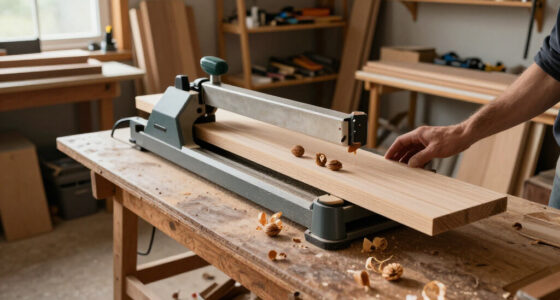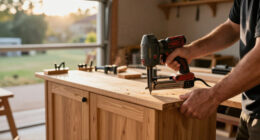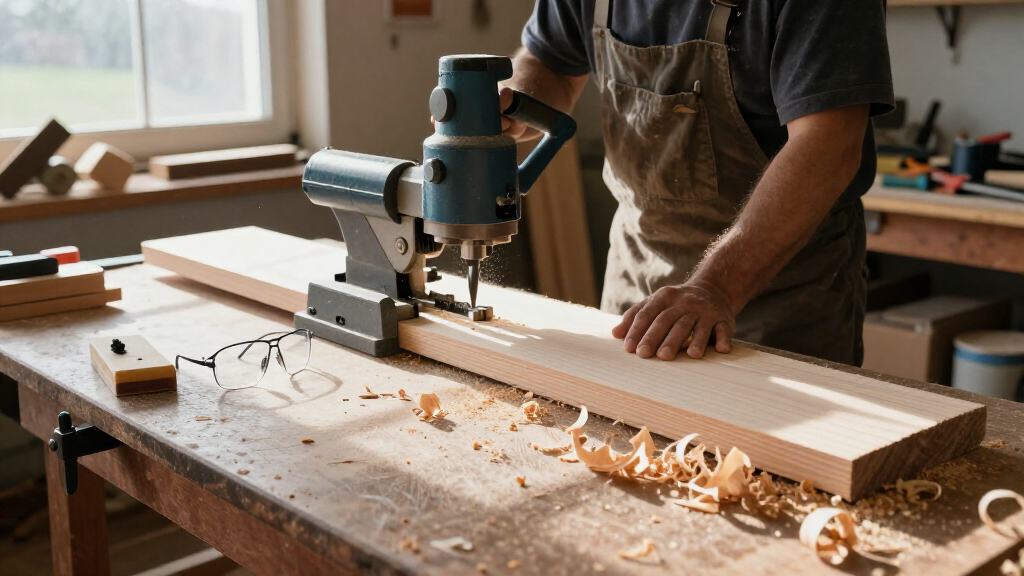

Helical cutterhead benchtop jointers pair compact footprints with replaceable carbide cutters, but table size, working width, and fence support vary widely. My best overall pick is the Cutech 40180HI 8-inch, which balances useful capacity with cast-iron tables. The Cutech 401100HI 10-inch stands out for wider stock, while the WEN JT630H is a straightforward choice for smaller boards and tighter shops. The main tradeoff is between portability and table support: wider or longer machines handle more demanding work but take up more room. Read on for the full comparison, selection criteria, and advice on matching a jointer to your projects.

Get business pricing on tools and workshop supplies
- Business-only prices and quantity discounts
- Tax-exempt purchasing
- Multiple users, one account, clear invoices
Complete the kit



Key Takeaways
- The Cutech 40180HI is the strongest all-around fit in this group: its 8-inch width and cast-iron tables offer a useful balance of capacity and support without moving to a wider machine.
- Wider models solve a specific problem, not every problem. The 10-inch Cutech 401100HI and 12-inch Cutech suit wide stock, but buyers should check whether their boards and workspace justify the larger footprint.
- Table material separates portability from mass. The Cutech 40160HB and RIKON 8-inch model use aluminum tables, while several Cutech options use cast iron; the lighter approach can help with moving and storage, but buyers should weigh that against their preferred work support.
- Six-inch models are the compact end of the lineup. The WEN JT630H, Rikon 6-inch, and JET 6-inch options suit narrower stock, while JET’s long-bed model prioritizes added support over the smallest footprint.
- Do not choose by cutterhead wording alone. The lineup includes different widths, table designs, motor specifications, and fence or table arrangements, so those factors may affect day-to-day use more than the shared helical or spiral cutterhead concept.


| helical cutterhead benchtop jointer | Cutting width | Cutterhead | Weight | Motor |
|---|---|---|---|---|
| Rikon 6 Inch Benchtop Jointer | 6 inches | Helical-style head with 12 two-sided inserts | 36 pounds | — |
| Cutech 40180HI 8-Inch Spiral C | 8 inches | Six rows of tungsten carbide inserts | 82.8 pounds | 10 amps |
| Cutech 12-Inch Spiral Cutterhe | 12 inches | Spiral cutterhead with tungsten carbide inserts | 111.8 pounds | 12 amps |
| Cutech 401100HI 10-Inch Spiral | 10 inches | Six rows of two-sided tungsten carbide inserts | 97.8 pounds | 12 amps |
| Cutech 40160HB 6-Inch Spiral C | 6 inches | Six rows of staggered inserts | 44.2 pounds | 10 amps |
| WEN JT833H 10-Amp 8-Inch Spira | 8 inches | Spiral cutterhead with 16 staggered HSS blades | — | 10 A |
| JET 6-Inch Benchtop Jointer wi | 6 inches | Helical cutterhead with 14 carbide-tipped blades | 71 pounds | 1 HP |
| WEN JT630H 10-Amp 6-Inch Spira | 6 inches | Spiral cutterhead with 12 staggered HSS blades | 36.8 pounds | 10 A |
| RIKON Power Tools 8" Benchtop | 8 inches | Helical head with 16 carbide inserts | 49 pounds | — |
| JET 6-Inch Long Bed Jointer wi | 6 inches | Helical cutterhead with 27 carbide inserts | — | 1 HP |
More Details on Our Top Picks
Rikon 6 Inch Benchtop Jointer with Helical Cutter Head
For a buyer prioritizing a 6-inch footprint and straightforward insert changes, this Rikon offers a simpler, lighter-duty alternative to the larger Cutech models. Its 12 two-sided inserts are designed to make edge replacement less involved than changing conventional knives, while the coated machined aluminum tables aim to reduce friction as stock moves across them. The fence tilts from 90° to 45°, giving it more angle flexibility than the Cutech 40160HB’s listed 90° and 135° quick stops, though those stops suit repeatable preset work. At 36 pounds, it is lighter than that Cutech but still not especially easy to move frequently. The supplied product data also flags low customer satisfaction with performance, a serious caution beside the feature list. I’d choose it for compact capacity, not as the safest bet for demanding work.
Pros:- 12 two-sided inserts simplify individual insert changes
- Coated machined aluminum tables are designed to reduce friction
- Fence adjusts from 90° to 45°
- Spring-loaded guard and front on/off switch provide stated safety features
Cons:- Product data reports low customer satisfaction with performance
- 6-inch cutting width limits the size of stock it can joint
- At 36 pounds, it is less convenient to carry than its compact size may suggest
Best for: Woodworkers with a small shop who need a 6-inch jointer, value coated aluminum tables, and expect to joint modest stock rather than make frequent aggressive cuts.
Not ideal for: Buyers who need dependable performance for demanding production work or want an 8-inch-plus capacity; the reported low satisfaction and 6-inch width make this a cautious choice.
- Model number:20-600HSP
- Cutting width:6 inches
- Cutterhead:Helical-style head with 12 two-sided inserts
- Table material:Machined aluminum with synthetic polymer coating
- Fence adjustment:Adjustable from 90° to 45°
- Dust port:2-1/2 inches
- Weight:36 pounds
- Power source:Corded electric
Our verdict“Choose the Rikon for compact 6-inch work and easy insert changes, but look to a larger Cutech if wider capacity or heavier-duty use matters more.”
Cutech 40180HI 8-Inch Spiral Cutterhead Benchtop Jointer with Cast Iron Tables and 10-Amp Motor
The 40180HI makes the strongest case here for an 8-inch working width without stepping up to the 10- or 12-inch Cutech machines. Its 10-amp motor and cast iron tables pair useful capacity with a stable platform, while six rows of tungsten carbide inserts are intended to leave a smooth cut and allow insert-by-insert maintenance. The 24-inch fence has quick stops at 90° and 135°, a practical advantage over the Rikon 6-inch model’s narrower capacity when jointing wider boards. The tradeoff is real: at 82.8 pounds, this is a benchtop jointer in name more than a tool to shift around casually. It also lacks the extra width of the 401100HI and 401120HI. I’d favor it for a fixed or semi-permanent shop seeking a middle ground in capacity.
Pros:- 8-inch cutting capacity exceeds the 6-inch Rikon and Cutech 40160HB
- Six-row tungsten carbide insert cutterhead is designed for smooth cuts
- Cast iron tables provide a substantial working platform
- 24-inch fence includes quick stops at 90° and 135°
Cons:- 82.8-pound weight makes moving and setup difficult
- Less capacity than the Cutech 401100HI and 401120HI
- May be more machine than occasional 6-inch-width jointing requires
Best for: Hobbyist and small-shop woodworkers who regularly joint boards wider than 6 inches and can leave an 8-inch machine set up on a sturdy bench.
Not ideal for: Mobile woodworkers, casual users with limited storage, or buyers who routinely need more than 8 inches of jointing width.
- Cutting width:8 inches
- Cutterhead:Six rows of tungsten carbide inserts
- Motor:10 amps
- Voltage:120 volts
- Wattage:1200 watts
- Table material:Cast iron
- Fence:24-inch aluminum fence with quick stops at 90° and 135°
- Weight:82.8 pounds
Our verdict“Pick the 40180HI if 8-inch capacity is enough and you want cast iron stability without moving up to Cutech’s wider, heavier models.”
Cutech 12-Inch Spiral Cutterhead Benchtop Jointer with Cast Iron Tables and 12-Amp Motor
This is the lineup’s capacity-first choice: a 12-inch cutterhead can handle wider stock than the Cutech 401100HI’s 10-inch width or the 40180HI’s 8-inch capacity. Its 12-amp motor, tungsten carbide spiral inserts, cast iron construction, and heavy-duty support system are aimed at keeping wider work controlled through a cut. The cast iron fence has quick stops at 90° and 135°, bringing repeatable angle settings to a machine built for larger boards. That extra reach comes with a shop-layout commitment: at 111.8 pounds, it is the heaviest option in this batch, and its 34-inch length calls for ample bench space. I’d reserve it for woodworkers who genuinely process wide stock. For narrower boards, the 10-inch 401100HI gives up some capacity while being lighter and less bulky.
Pros:- 12-inch capacity is the widest among these five products
- 12-amp motor is suited to demanding cutting tasks
- Cast iron fence includes quick stops at 90° and 135°
- Heavy-duty support system is designed to stabilize larger work
Cons:- 111.8-pound weight makes relocation and setup difficult
- Large footprint requires a dedicated, spacious work area
- Excess capacity may be unnecessary for buyers who rarely joint wide boards
Best for: Furniture makers and serious shop woodworkers who frequently flatten or edge-joint boards wider than 10 inches and can dedicate space to a heavy machine.
Not ideal for: Small-shop owners, mobile users, and woodworkers whose usual stock fits the 8- or 10-inch Cutech models; its weight and footprint are hard to justify for narrower work.
- Model number:401120HI-IF
- Cutting width:12 inches
- Cutterhead:Spiral cutterhead with tungsten carbide inserts
- Motor:12 amps
- Wattage:1440 watts
- Power:AC, 120 volts
- Material:Cast iron
- Weight:111.8 pounds
Our verdict“Choose the 401120HI when wide-board capacity is a regular requirement; otherwise, the lighter Cutech 401100HI is a more manageable fit.”
Cutech 401100HI 10-Inch Spiral Cutterhead Benchtop Jointer with Cast Iron Tables and 12-Amp Motor
The 401100HI sits between the lineup’s 8-inch and 12-inch Cutech machines, giving buyers 10 inches of capacity without committing to the largest model. Its 12-amp, 1440-watt motor matches the 12-inch 401120HI on listed power, while its six rows of tungsten carbide inserts and cast iron tables support a substantial benchtop setup. A 24-inch aluminum fence with 90° and 135° quick stops helps repeatable angle work, and the additional support rod system adds support beyond what the 40180HI listing specifies. That package weighs 97.8 pounds, so this is not a practical pick for frequent repositioning. The 8-inch 40180HI is lighter and should suit narrower stock; the 12-inch version is the one to choose when width is the priority. This model makes sense as the middle-capacity workhorse.
Pros:- 10-inch capacity bridges the gap between the 8- and 12-inch Cutech models
- 12-amp motor rated at 1440 watts
- Six rows of tungsten carbide inserts are designed for smooth cutting
- Cast iron tables, support rods, and a 24-inch fence provide a substantial setup
Cons:- 97.8-pound weight makes it difficult to move or store between jobs
- Requires more setup space than the 8-inch Cutech 40180HI
- Offers less width than the 12-inch Cutech 401120HI for wide-board work
Best for: Small-shop furniture makers who often work with boards wider than 8 inches but do not need the 12-inch reach of the 401120HI.
Not ideal for: Woodworkers who need a portable benchtop tool or mostly joint narrow boards; the weight and capacity may be unnecessary beside the smaller Cutech 40180HI.
- Model number:401100HI
- Cutting width:10 inches
- Cutterhead:Six rows of two-sided tungsten carbide inserts
- Motor:12 amps
- Wattage:1440 watts
- Voltage:120 volts
- Fence:24-inch aluminum fence with quick stops at 90° and 135°
- Weight:97.8 pounds
Our verdict“Choose the 401100HI if you need more than 8 inches of capacity but want to avoid the 12-inch model’s extra size and weight.”
Cutech 40160HB 6-Inch Spiral Cutterhead Benchtop Jointer with Aluminum Tables, 12 TC Inserts, 19-5/8” Aluminum Fence, and 10-amp Motor
Among the two 6-inch options here, the Cutech 40160HB is the more feature-detailed pick: it combines a 10-amp motor, 12 tungsten carbide inserts arranged in six rows, and an adjustable 19-5/8-inch fence with 90° and 135° quick stops. Its Teflon-coated aluminum tables are intended to ease stock movement, while the staggered insert layout is designed to produce a smooth finish. Compared with the Rikon 6-inch jointer, the Cutech supplies specific fence-stop positions and a longer listed fence, but it is heavier at 44.2 pounds and its fence does not list the Rikon’s 45° setting. Capacity remains the limit: both are restricted to 6-inch stock. I’d favor this Cutech for users who want repeatable preset angles, but not for buyers seeking a portable or wide-capacity machine.
Pros:- Six rows of staggered tungsten carbide inserts
- Teflon-coated aluminum tables are designed to ease stock movement
- Adjustable fence has quick stops at 90° and 135°
- 10-amp motor and two-sided inserts suit routine small-shop work
Cons:- 6-inch capacity limits use with wider boards
- 44.2-pound weight is cumbersome for frequent carrying
- Fence settings listed do not include the Rikon’s 45° adjustment
Best for: Beginning and intermediate woodworkers who mainly joint stock up to 6 inches wide and want carbide inserts, coated tables, and repeatable fence stops.
Not ideal for: Woodworkers who regularly handle boards wider than 6 inches, need frequent portability, or want the Rikon’s listed 45° fence adjustment.
- Model number:40160HB
- Cutting width:6 inches
- Cutterhead:Six rows of staggered inserts
- Insert type:12 tungsten carbide inserts
- Motor:10 amps
- Table surface:Teflon-coated aluminum, 6H hardness
- Fence:19-5/8-inch aluminum fence with 90° and 135° quick stops
- Weight:44.2 pounds
Our verdict“Choose the 40160HB for a feature-rich 6-inch setup with repeatable fence stops, but move to an 8-inch model if wider stock is part of your regular work.”
WEN JT833H 10-Amp 8-Inch Spiral Benchtop Jointer with Extendable Table
The WEN JT833H combines an 8-inch cutting width with support arms that extend its table to 51 inches, giving longer boards more support than the compact WEN JT630H. Its 16-blade HSS spiral cutterhead is designed to leave a fine surface, while the fence tilts up to 45 degrees for angled edge work. Those capabilities make it a flexible choice for a benchtop machine, especially when occasional wide-stock work matters more than a small footprint. The tradeoff is its weight and bulk: compared with the 49-pound RIKON 8-inch model, it may be less convenient to move or stow. It still cannot joint boards wider than eight inches, so buyers handling larger slabs will need a different class of machine.
Pros:- Eight-inch capacity accommodates wider stock than the 6-inch WEN JT630H.
- Support arms extend the work surface to 51 inches for longer boards.
- Sixteen staggered HSS blades are designed to produce a fine finish.
- Fence bevels to 45 degrees, with a spring-loaded guard and push blocks included.
Cons:- Heavy, bulky format can be difficult to move or store.
- Eight-inch cutting capacity still limits work on wider boards.
- HSS blades are not carbide inserts like those on the RIKON 8-inch model.
Best for: Woodworkers who regularly joint boards up to eight inches wide and need extra support for long stock without moving to a floor-standing jointer.
Not ideal for: Small-shop owners who need a light, easy-to-store machine, or woodworkers whose projects require jointing boards wider than eight inches.
- Motor:10 A
- Cutting width:8 inches
- Table size:33 x 8 inches
- Support arm extension:Up to 51 inches
- Cutterhead:Spiral cutterhead with 16 staggered HSS blades
- Fence bevel range:0 to 45 degrees
- Dust ports:2-1/2 and 4 inches
Our verdict“Choose the JT833H if you want an extendable benchtop setup for long boards and value eight-inch capacity over easy portability.”
JET 6-Inch Benchtop Jointer with Helical Cutterhead, 1 HP, 115V
The JET’s case rests on its cast-iron tables and a 1 HP motor, a sturdier benchtop approach than the lighter WEN JT630H. Its helical head uses 14 carbide-tipped blades, and the built-in dust collection helps manage chips without relying solely on an external setup. At 71 pounds, it is substantial for a benchtop jointer, which can suit a shop where the machine stays mounted and alignment matters more than frequent relocation. The main compromise is capacity: its 6-inch width matches the JT630H but falls short of the 8-inch WEN JT833H and RIKON. The supplied data also gives a 0.13-inch cutting depth, so buyers seeking deeper passes should compare machine limits before choosing it.
Pros:- Cast-iron tables provide a substantial platform for controlled stock handling.
- Fourteen carbide-tipped blades form a helical cutterhead.
- 1 HP motor and 15 A rating are specified for this 115-volt model.
- Built-in dust collection and adjustable fence support a tidier, more controlled setup.
Cons:- Six-inch cutting width is narrower than the WEN JT833H and RIKON 8-inch jointer.
- At 71 pounds, it is cumbersome to move or put away.
- Listed cutting depth is 0.13 inches, limiting the stated pass depth.
Best for: Woodworkers who want a 6-inch jointer with cast-iron tables and a carbide helical head for a stationary, carefully set-up shop.
Not ideal for: Mobile hobbyists or anyone regularly flattening boards wider than six inches; its 71-pound weight and narrow capacity work against those needs.
- Motor:1 HP
- Voltage:115 V
- Amperage:15 A
- Cutting width:6 inches
- Cutting depth:0.13 inches
- Cutterhead:Helical cutterhead with 14 carbide-tipped blades
- Maximum rotational speed:10,000 rpm
- Dimensions:32.75 x 15 x 11.5 inches
- Weight:71 pounds
Our verdict“Pick this JET if a stable cast-iron 6-inch benchtop machine matters more than portability or wider-board capacity.”
WEN JT630H 10-Amp 6-Inch Spiral Benchtop Jointer
The WEN JT630H is the straightforward compact pick in this group: a 6-inch capacity, 10-amp motor, and spiral cutterhead with 12 staggered HSS blades. Its 30-inch table gives more working length than its compact format might suggest, and the tilting fence supports bevel cuts up to 45 degrees. Compared with the JET 6-inch benchtop model, the WEN weighs considerably less at 36.8 pounds, making it easier to reposition, though it gives up the JET’s cast-iron table construction and carbide-tipped blades. The 6-inch limit is the defining tradeoff; buyers working wider stock should step up to the WEN JT833H or RIKON 8-inch. Its supplied safety features are basic, so careful setup and workholding remain part of the job.
Pros:- 36.8-pound weight is easier to reposition than the 71-pound JET 6-inch benchtop jointer.
- Ten-amp motor and 12 staggered HSS blades provide a spiral cutterhead setup.
- Thirty-inch table offers useful support for a compact 6-inch machine.
- Fence bevels up to 45 degrees, and replacement blades are included.
Cons:- Six-inch cutting width rules out wider boards without another milling method.
- HSS blades are not carbide-tipped like the JET’s inserts.
- Basic safety provisions call for careful workholding and additional shop precautions.
Best for: Hobbyist woodworkers who need a relatively movable 6-inch jointer for boards within that width and want a tilting fence for occasional bevel work.
Not ideal for: Woodworkers flattening wide panels or seeking a heavier cast-iron platform and carbide inserts like those on the JET 6-inch model.
- Motor:10 A
- Cutting width:6 inches
- Cutting depth:0.13 inches
- Table size:30 x 6 inches
- Cutterhead:Spiral cutterhead with 12 staggered HSS blades
- Fence bevel range:Up to 45 degrees
- Dimensions:30 x 12.5 x 17.5 inches
- Weight:36.8 pounds
Our verdict“Choose the JT630H for a more movable 6-inch spiral-head jointer, but step up to an 8-inch model if wider stock is routine.”
RIKON Power Tools 8″ Benchtop Jointer with Helical Cutter Head & Coated Aluminum Table
The RIKON stands out for combining 8-inch capacity with a listed weight of 49 pounds, making it a more portable wide-board alternative to the bulkier WEN JT833H. Its head uses 16 carbide inserts, and the polymer-coated aluminum tables are intended to reduce friction and surface scratching as stock moves across them. Table extensions reach 51-1/2 inches, slightly longer than the WEN’s stated 51-inch support, while the fence tilts from 90 to 45 degrees. The tradeoff is the table material: buyers who favor the heft of cast iron, as on the JET benchtop model, may prefer a heavier machine. The product data also omits motor and power details, so I would not choose it without confirming the power setup fits the shop.
Pros:- Eight-inch cutting width handles broader stock than either 6-inch model in this batch.
- Sixteen carbide inserts form the helical cutterhead.
- Table extensions reach 51-1/2 inches for longer workpieces.
- At 49 pounds, it is lighter than the WEN JT833H’s described bulky format.
Cons:- Coated aluminum tables may not suit buyers who prefer cast-iron construction.
- Motor and power supply details are not provided in the supplied product data.
- Eight-inch width still cannot joint boards wider than its stated capacity.
Best for: Woodworkers who need 8-inch capacity and long-board support but expect to move the jointer between work areas or store it between jobs.
Not ideal for: Buyers who want a cast-iron table platform or need confirmed motor and voltage information before selecting equipment.
- Cutting width:8 inches
- Table size:30-1/2 x 8-3/16 inches
- Extended table size:51-1/2 x 8-3/16 inches
- Cutterhead:Helical head with 16 carbide inserts
- Fence tilt range:90 to 45 degrees
- Table material:Aluminum with synthetic polymer coating
- Weight:49 pounds
- Dust ports:4 and 2-1/2 inches
Our verdict“Choose the RIKON if you want an 8-inch helical-head jointer that is easier to move than the WEN JT833H and can confirm its power requirements before buying.”
JET 6-Inch Long Bed Jointer with Helical Cutterhead, 1 HP, 115/230V
The JET JJ-6HHDX is the long-bed choice for buyers who prioritize support and adjustment over a benchtop machine that can be tucked away. Its long infeed and outfeed tables are better suited to keeping longer boards controlled than the compact WEN JT630H, while the helical cutterhead’s 27 carbide inserts are designed for smooth, quiet cutting. A two-way tilting fence and precise table adjustments add flexibility for square stock and angled work. Its 6-inch capacity, however, is no wider than the WEN, so this larger machine does not solve the wide-board limitation. It also needs substantial floor space and is described as a higher-cost professional-grade option. For occasional small-shop jointing, the benchtop WEN is the more practical fit.
Pros:- Long infeed and outfeed tables support longer boards better than compact benchtop models.
- Twenty-seven carbide inserts make up the helical cutterhead.
- Two-way tilting fence and precise table adjustments support controlled setup.
- Built-in dust chute and 115/230 V power specification suit a dedicated shop installation.
Cons:- Large, heavy format requires significant dedicated space.
- Six-inch cutting width matches the WEN JT630H and is narrower than both 8-inch options.
- Professional-grade positioning brings a higher-cost tradeoff.
Best for: Serious woodworkers who routinely joint longer boards, have dedicated shop space, and value long-bed support and fine adjustment over benchtop portability.
Not ideal for: Small-shop users who need a machine they can store away, or anyone whose regular work exceeds a six-inch board width.
- Motor:1 HP
- Voltage:115/230 V
- Cutting width:6 inches
- Maximum rotational speed:6,000 rpm
- Cutterhead:Helical cutterhead with 27 carbide inserts
- Fence:Two-way tilting
- Base material:Cast iron
- Style:Long-bed helical-head jointer
Our verdict“Pick the JET JJ-6HHDX if long-board support and accurate adjustment matter more than a compact footprint or 8-inch capacity.”

How We Picked
I ranked these jointers around the decisions that matter at a benchtop: usable width and table support, cutterhead configuration, fence and table design, motor specification, and the practical demands of setup and storage. A wider cutterhead can handle broader stock, but it does not automatically make a machine the better choice for a small shop. I also separated models with cast-iron tables from those using aluminum, since buyers may value mass and support differently from easier handling.
The ranking favors machines that appear to serve a broad range of home-shop work without asking buyers to accept more capacity or bulk than they need. The Cutech 40180HI leads for its balanced 8-inch format and cast-iron tables; wider Cutech machines rank as targeted choices for stock that exceeds a typical 6-inch jointer’s capacity. The compact WEN and 6-inch models remain sensible picks for narrower boards, while the JET long-bed model earns a distinct place for buyers who prioritize added support. Model details and included features can vary by version, so I would confirm the exact specification before purchase.
Factors to Consider When Choosing Helical Cutterhead Benchtop Jointers
Choosing among helical cutterhead benchtop jointers is less about finding the biggest machine and more about matching capacity and support to the boards you actually flatten. These factors can help prevent paying for unused width or buying a compact model that forces awkward workarounds.
Match Cutter Width to Your Typical Stock
Start with the widest boards you expect to joint regularly, not the widest board you might handle once. A 6-inch machine can suit furniture parts and narrow boards, while the 8-, 10-, and 12-inch options in this roundup leave more room for wider stock. Extra width can save time when flattening broad faces, but it also tends to come with a larger machine and a greater demand for bench space. A common mistake is buying maximum capacity without checking the width of the lumber you can source and store. If wide boards are occasional, ripping them into narrower sections may be more practical than dedicating a larger benchtop machine to rare jobs.
Think About Table Support, Not Just Table Length
Table support affects how confidently a board can be guided into and out of the cutterhead, especially when working with longer stock. A longer bed can help control a long board, but it cannot remove the need for good infeed and outfeed support when the workpiece extends well beyond the machine. Consider your available stands, bench depth, and whether you can position auxiliary supports at a consistent height. Buyers sometimes focus on the cutter width and overlook how awkward long boards can be on a short benchtop setup. The JET long-bed model is a distinct option in this lineup, but every benchtop jointer may need a thoughtful support plan for lengthy material.
Choose Table Material for Your Shop Routine
Cast-iron and aluminum tables involve a practical tradeoff between a more substantial machine and easier handling. Cast iron may appeal to buyers who want a heavier base of support during work, while aluminum tables can be attractive when a jointer must be moved or stored between sessions. Neither material removes the need to check table alignment and keep the surfaces clean. Think about whether the machine will live on a dedicated bench or be carried out when needed; a portable tool that stays accessible can be more useful than a heavier one that is difficult to reposition. Compare the Cutech cast-iron-table models with the aluminum-table choices in this roundup through that lens rather than treating one material as an automatic upgrade.
Plan for Cutter Maintenance and Replacement
Helical and spiral cutterheads use multiple small cutting inserts rather than one long straight knife, but the exact insert arrangement and replacement parts depend on the model. Before buying, check how replacement inserts are identified, how they are held in place, and whether the manufacturer supplies clear service instructions. It is useful to know whether a damaged or dull insert can be rotated or replaced individually, rather than assuming every cutterhead works the same way. Keep track of the correct fasteners and use the specified method when servicing the head; improvised changes can affect cutting quality and safety. A buyer focused on long-term ownership should compare parts availability and maintenance guidance alongside the machine’s headline specifications.
Treat Fence Setup as Part of the Purchase
A jointer’s fence helps keep an edge square, so its size, adjustability, and locking arrangement matter even when the cutterhead draws most of the attention. Check whether the fence offers the range and support your work requires, and leave room for it to move without colliding with walls or other tools. A longer fence can be helpful with broader or longer pieces, but it cannot compensate for a poorly supported board or an out-of-square setup. Buyers who mainly flatten faces may give the fence less weight than those who regularly prepare edges for glue-ups. Before choosing, map the machine’s full operating envelope on your bench, including fence movement and dust collection connections.
Pay for Capacity You Will Use
Moving up in width or motor specification makes sense when it solves a repeated limitation in your work, not just because a larger number sounds reassuring. If your projects mostly use narrow stock, a 6-inch option may leave more room and budget for other shop needs. If you routinely flatten wide boards, an 8-inch or wider model may reduce the need to divide workpieces before jointing. Also account for electrical requirements, dust collection, storage, and the weight you can manage during setup. Comparing the Cutech 8-, 10-, and 12-inch choices by your actual material flow is a better way to decide than treating the largest model as the natural next step.
Frequently Asked Questions
Is an 8-inch benchtop jointer a better choice than a 6-inch model for most home shops?
It depends on the width of the boards you regularly flatten and the room available for the machine. An 8-inch model such as the Cutech 40180HI gives more capacity than the 6-inch choices, which can reduce the need to rip wider boards before jointing. A 6-inch jointer may be the more practical fit if your work is mostly narrow parts or your bench space is limited. Wider capacity does not replace long-board support, so include stands or other support in your plan. Choose the narrower machine if its capacity matches your normal projects rather than buying extra width for occasional use.
Should I choose cast-iron tables or aluminum tables?
Base the choice on how the jointer will be installed and used rather than assuming one table material suits every buyer. Cast-iron tables may appeal if the machine will stay on a dedicated bench and you value a more substantial setup. Aluminum tables can make more sense when moving or storing the tool is part of your routine. In either case, table flatness, alignment, and support for your workpiece matter to the result. Compare the machine’s full weight and footprint with your storage plan before deciding.
Does a helical or spiral cutterhead eliminate tear-out on difficult wood?
No cutterhead design can guarantee a tear-out-free surface on every species, grain pattern, or cutting direction. Small carbide inserts can produce a different cutting action from straight knives, but technique, depth of cut, grain direction, and material condition still influence the finish. If you work with figured or difficult grain, take light cuts and make a test pass on scrap before committing to a final face. Keep inserts clean and follow the manufacturer’s guidance if a cutter becomes damaged or dull. Choose this cutterhead style for its maintenance and cutting characteristics, not as a promise that setup and technique no longer matter.
Can a benchtop jointer flatten long boards without extra support?
Long boards often extend well beyond a benchtop jointer’s tables, so auxiliary support may be needed to keep the workpiece level as it enters and exits the cutterhead. A long-bed design can provide more built-in support than a compact model, but it does not make every long board self-supporting. Uneven support can affect control and the accuracy of the jointed face. Set support surfaces to the table height and position them so they guide the board without lifting it. If long stock is common in your shop, account for support equipment and floor space when comparing models.
When is it worth choosing a 10- or 12-inch model over an 8-inch jointer?
Move to a 10- or 12-inch machine when wider boards are a regular part of your projects and you want to joint their faces without first ripping them narrower. The Cutech 401100HI and 12-inch Cutech offer more width than the 8-inch 40180HI, but that added capacity can require more space and a larger work area. Check your bench, storage, material-handling routine, and electrical setup before stepping up. If wide stock is rare, an 8-inch model may provide a more balanced fit. Let recurring project needs, not a single unusual board, drive the decision.
Conclusion
For the broadest mix of home-shop work, I recommend the Cutech 40180HI as best overall: its 8-inch capacity and cast-iron tables make it a balanced choice within this lineup. For best value, look first at the WEN JT630H if your projects use narrower boards and you want a compact 6-inch format; it gives up capacity compared with the Cutech 8-inch, so it is not the right fit for frequent wide stock. The Cutech 401100HI is my best premium-style pick for wider work, while the 12-inch Cutech is aimed at buyers whose projects genuinely demand still more width. For beginners, I would favor a 6-inch or 8-inch model that matches current projects rather than paying for unused capacity; the WEN JT630H is a simple compact starting point. For specific needs, choose the JET long-bed model when added table support is the priority, or compare the aluminum-table options if moving and storage matter most. Before ordering, verify the exact model’s dimensions, electrical details, fence range, and replacement-insert information.
Fall yard work Picks

Halloween Inflatable Haunted House Maze – 20×20 ft with Removable Roof and Blower
As an affiliate, we earn on qualifying purchases.