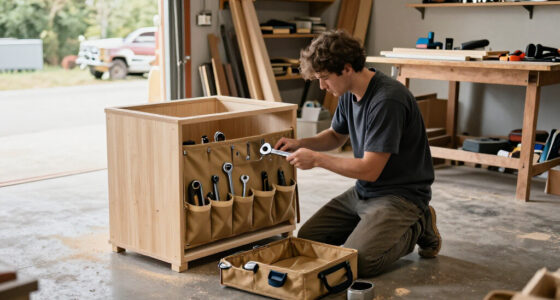
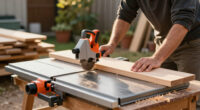
For most woodworking shops, I would start with the JET JBOS-5 as the best overall benchtop pick, while the RIDGID EB4424 stands out for combining spindle and edge-belt sanding. If variable speed and portability matter most, the WEN HA5932 offers a different kind of flexibility. The main choice is whether you want a focused spindle sander, a portable model, or a combination machine—and whether stronger capacity is worth giving up bench space. Read on for the full comparison of all 12 spindle sanders for woodworking and how I’d match them to different shops.

Get business pricing on tools and workshop supplies
- Business-only prices and quantity discounts
- Tax-exempt purchasing
- Multiple users, one account, clear invoices
Complete the kit


Key Takeaways
Dedicated machines suit repeated spindle work. The JET JBOS-5 and JET JOSS-S are the dedicated JET options here, while combination models add belt sanding at the cost of a broader machine footprint and a more varied setup.
Variable speed is a differentiator, not a universal need. Woodskil’s variable-speed spindle model and the portable WEN HA5932 offer speed adjustment; fixed-speed choices may suit buyers who prefer a simpler setup.
Combination machines change what one tool can do. The RIDGID EB4424 and both Woodskil and VEVOR belt-and-spindle models can handle edge-belt tasks as well as spindle work, but buyers should check how often they will use both functions.
Portability and benchtop stability pull in opposite directions. The WEN HA5932 is explicitly portable, while benchtop and larger dedicated machines are better suited to a regular workstation.
Do not compare machines by motor figures alone. This lineup spans different formats and stated power ratings; workpiece support, sanding sleeve options, speed control, and available bench space matter just as much to day-to-day fit.
| Woodskil Variable-Speed Oscillating Spindle Sander |  | Best for Variable-Speed Control | Motor: 2/3 HP, 4 A | Power source: Corded electric | Speed range: 1,000–1,800 RPM | VIEW LATEST PRICE | See Our Full Breakdown |
| WEN HA5932 5-Amp Variable-Speed Portable Oscillating Spindle Sander |  | Best Portable Option | Motor: 5 A | Rotational speed: 1,800–3,200 RPM | Oscillation rate: 50–90 oscillations per minute | VIEW LATEST PRICE | See Our Full Breakdown |
| RIKON 50-300 Oscillating Spindle Sander |  | Best for a Dedicated Shop Station | Motor: 1/2 HP, 2.5 A | Power source: Corded electric | Spindle diameters: 1/2–2 inches | VIEW LATEST PRICE | See Our Full Breakdown |
| WEN AT6535 3.5-Amp Oscillating Spindle Sander |  | Best for Angled Work | Motor: 3.5 A | Power source: Electric | Maximum rotational speed: 2,000 RPM | VIEW LATEST PRICE | See Our Full Breakdown |
| VEVOR Oscillating Benchtop Spindle Sander, 2000 RPM, with 6 Sanding Sleeves |  | Best Lightweight Sleeve Range | Power source: Corded electric | Amperage: 3.75 A | Maximum rotational speed: 2,000 RPM | VIEW LATEST PRICE | See Our Full Breakdown |
| JET JBOS-5 Benchtop Oscillating Spindle Sander, 1/2 HP, 115V |  | Best for Bevel Sanding | Motor: 1/2 HP induction motor | Power: 115V, single phase | Table size: 14-1/2 × 14-1/2 inches | VIEW LATEST PRICE | See Our Full Breakdown |
| Woodskil Variable-Speed Oscillating Belt and Spindle Sander |  | Best for Belt-and-Spindle Versatility | Model: OSM-2V | Motor power: 2/3 HP | Speed: 1000–1800 RPM | VIEW LATEST PRICE | See Our Full Breakdown |
| WEN 6510T 3.5-Amp Oscillating Spindle Sander |  | Best for Beginners | Model: 6510T | Motor: 1/2 HP, 3.5A | Voltage: 120V AC | VIEW LATEST PRICE | See Our Full Breakdown |
| Triton TSPS450 Oscillating Spindle Sander |  | Best for Irregular Contours | Model: TSPS450 | Motor: 3.5A, 450W | Voltage: 110 volts | VIEW LATEST PRICE | See Our Full Breakdown |
| JET JOSS-S Oscillating Spindle Sander, 1 HP, 115V |  | Best Floor-Standing Upgrade | Model: JOSS-S | Motor power: 1 HP | Power: 115V, single phase, 15A | VIEW LATEST PRICE | See Our Full Breakdown |
| RIDGID EB4424 Oscillating Edge Belt and Spindle Sander |  | Best for Combined Edge and Contour Sanding | Motor power: 3/8 HP | Maximum rotational speed: 1,725 rpm | Oscillation: 60 oscillations/min; 3/4-inch stroke | VIEW LATEST PRICE | See Our Full Breakdown |
| VEVOR Oscillating Belt and Spindle Sander, 2400 RPM |  | Best for Accessory-Ready Belt and Spindle Work | Model: BOSS200A | Maximum speed: 2,400 rpm | Oscillation stroke: 5/8 in. (16 mm) | VIEW LATEST PRICE | See Our Full Breakdown |
| spindle sanders for woodworking | Weight | Motor | Dust port |
|---|---|---|---|
| Woodskil Variable-Speed Oscill | 26 lbs | 2/3 HP, 4 A | — |
| WEN HA5932 5-Amp Variable-Spee | 3.04 kg | 5 A | 1-1/2 inches |
| RIKON 50-300 Oscillating Spind | 76 lbs in description; 80 lbs in item specifications | 1/2 HP, 2.5 A | — |
| WEN AT6535 3.5-Amp Oscillating | 33.2 pounds | 3.5 A | 1-1/2 inches |
| VEVOR Oscillating Benchtop Spi | 19.8 pounds | — | 1.38-inch ID, 1.54-inch OD |
| JET JBOS-5 Benchtop Oscillatin | 82 pounds | 1/2 HP induction motor | 2 inches |
| Woodskil Variable-Speed Oscill | — | — | — |
| WEN 6510T 3.5-Amp Oscillating | 30.2 pounds | 1/2 HP, 3.5A | — |
| Triton TSPS450 Oscillating Spi | — | 3.5A, 450W | — |
| JET JOSS-S Oscillating Spindle | 216 pounds | — | 4 inches |
| RIDGID EB4424 Oscillating Edge | 40 lb | — | — |
| VEVOR Oscillating Belt and Spi | 37.5 lb | — | 1.38 in. ID, 1.52 in. OD |
More Details on Our Top Picks
Woodskil Variable-Speed Oscillating Spindle Sander
Adjustable speed is the main reason I’d choose this Woodskil: its 1,000–1,800 RPM range gives woodworkers more room to tune sanding pace than the WEN AT6535, which runs at a stated maximum of 2,000 RPM without a listed variable-speed range. That control can help when working through different curves and contours, while the six sleeves from 1/2 to 3 inches cover a useful range of shapes. At 26 pounds, it is also easier to reposition than the 76–80-pound RIKON 50-300. The tradeoff is a corded, 2/3 HP setup that still needs a nearby outlet, and the included sleeves are specified as 80 grit, with no other grits identified. I’d pick it for adjustable sanding and sleeve range, not for a particularly heavy shop machine.
Pros:- Variable speed from 1,000 to 1,800 RPM allows sanding pace adjustments.
- Six sleeve sizes, from 1/2 to 3 inches, handle varied curves and openings.
- A 26-pound weight makes it easier to move than the RIKON 50-300.
- Dust port can connect to a shop vacuum.
Cons:- Corded power limits use away from an outlet.
- The available product details identify 80-grit sleeves but do not specify other included grits.
- Its 2/3 HP motor is less suited to buyers seeking a heavier-duty shop machine.
Best for: Woodworkers who want variable speed and a broad sleeve range in a moderately portable benchtop sander.
Not ideal for: Shops needing a heavy cast-iron machine for frequent stationary work, or buyers who need multiple sleeve grits included.
- Motor:2/3 HP, 4 A
- Power source:Corded electric
- Speed range:1,000–1,800 RPM
- Sanding sleeves:6 sizes, 1/2–3 inches
- Grit:80
- Dust collection:Dust port for vacuum connection
- Weight:26 lbs
Our verdict“Choose the Woodskil if adjustable speed and six sleeve sizes matter more to you than heavy-duty construction or cordless mobility.”
WEN HA5932 5-Amp Variable-Speed Portable Oscillating Spindle Sander
The WEN HA5932 is the lineup’s most flexible choice for woodworkers who can’t dedicate bench space to a stationary sander: it works as a handheld tool or clamped to a workbench. That dual setup is a meaningful difference from the Woodskil OSM-1 and WEN AT6535, which are benchtop machines. Its 5-amp motor, variable speed, and oscillation let you adapt the tool to curves, contours, and edges, while the four spindle diameters and straight-edge guide add useful setup options. The portability comes with a compromise: a 1/4-inch stroke and a lightweight build are a different proposition from the stable cast-iron-table RIKON 50-300. I’d choose this for occasional work at varied locations, but not as my first pick for a permanently set-up sanding station. The included sleeves are all 80 grit.
Pros:- Portable design can be used handheld or clamped for stationary sanding.
- Variable speed and oscillation rate allow adjustments for different tasks.
- Four spindle diameters and a straight-edge guide support varied work.
- Dust port allows connection to a collection system.
Cons:- All four included sanding sleeves are 80 grit.
- Its portable format is less suited to buyers who prioritize a heavy, stable worktable.
- The 1/4-inch stroke is shorter than the 0.59-inch stroke listed for the VEVOR OSM-1.
Best for: Small-shop woodworkers and makers who need a spindle sander they can use handheld or clamp to a bench.
Not ideal for: Woodworkers seeking a heavy, dedicated benchtop machine or a selection of sanding grits out of the box.
- Motor:5 A
- Rotational speed:1,800–3,200 RPM
- Oscillation rate:50–90 oscillations per minute
- Stroke:1/4 inch
- Spindle diameters:1/2, 3/4, 1, and 1-1/2 inches
- Included sleeves:Four 80-grit sleeves
- Dust port:1-1/2 inches
- Weight:3.04 kg
- Warranty:Two years
Our verdict“Pick the WEN HA5932 if you need a portable sander that can switch between handheld and clamped use, rather than a fixed shop machine.”
RIKON 50-300 Oscillating Spindle Sander
The RIKON 50-300 is the most shop-station-oriented pick here. Its cast-iron tilting table, all-steel construction, and steel gearing favor a stable setup for repeat sanding of curved board edges, unlike the lighter Woodskil OSM-1 or VEVOR OSM-1. Five spindle diameters, six table inserts, and a 15/16-inch oscillation stroke give it a practical range for shaping and supporting workpieces. The tradeoff is substantial: at a listed 76 or 80 pounds, it is far less convenient to move, and its 1/2 HP motor is not the highest-power option in this group. Its listed oscillation rate is 29 times per minute, so I’d favor it for controlled, stationary shop work rather than buyers focused on higher stated speeds. The product information also gives two different weights, a detail buyers should verify before planning a bench setup.
Pros:- Cast-iron tilting table supports stable work and angled sanding.
- All-steel construction and steel gearing suit a dedicated shop setup.
- Five spindle diameters and six table inserts provide useful workpiece support options.
- Five-year warranty is specified.
Cons:- At 76–80 pounds, it is considerably less portable than the Woodskil OSM-1.
- The product data lists two different weights.
- The 1/2 HP motor and fixed listed operating details offer less flexibility than variable-speed options.
Best for: Woodworkers with a permanent shop station who value a cast-iron tilting table and sturdy construction for curved-edge work.
Not ideal for: Small-shop users who need to move their sander often, or buyers who prioritize variable speed and a lighter machine.
- Motor:1/2 HP, 2.5 A
- Power source:Corded electric
- Spindle diameters:1/2–2 inches
- Spindle oscillation:15/16-inch stroke, 29 times per minute
- Abrasive length:4-1/2 inches
- Table:Cast iron, tilting
- Table inserts:6
- Dimensions:23.5 × 17.25 × 19 inches
- Weight:76 lbs in description; 80 lbs in item specifications
Our verdict“Choose the RIKON 50-300 for a permanent woodworking station where a cast-iron tilting table matters more than portability.”
WEN AT6535 3.5-Amp Oscillating Spindle Sander
The WEN AT6535 earns its place for beveled workpieces: its table tilts from 0 to 45 degrees, giving woodworkers a direct way to sand angled edges without changing the machine’s basic setup. That makes it a more targeted choice than the Woodskil OSM-1, whose standout feature is variable speed rather than a listed beveling table. Five sleeve sizes and a 14-1/2-inch-square table give this WEN a useful benchtop working area, while onboard storage keeps the included accessories close at hand. It runs at a stated maximum of 2,000 RPM with a 3.5-amp motor, so it lacks the listed speed adjustment of the Woodskil and WEN HA5932. I’d choose it for repeat angled sanding and organized storage, but skip it if speed control or a smaller footprint is the priority.
Pros:- Table bevels from 0 to 45 degrees for angled workpieces.
- Five sleeve sizes cover common curve and contour tasks.
- Onboard accessory storage keeps sanding components organized.
- Dust port supports connection to a collection system.
Cons:- No variable-speed range is listed, unlike the Woodskil OSM-1 and WEN HA5932.
- The 33.2-pound weight makes it less portable than the Woodskil OSM-1.
- The listed included sleeves are all 80 grit.
Best for: Woodworkers who regularly sand angled edges and want a tilting-table benchtop machine with onboard accessory storage.
Not ideal for: Buyers who need variable speed, a portable handheld format, or a particularly compact machine.
- Motor:3.5 A
- Power source:Electric
- Maximum rotational speed:2,000 RPM
- Oscillation rate:58 times per minute
- Oscillation stroke:5/8 inch
- Sanding sleeve sizes:1/2, 3/4, 1, 1-1/2, and 2 inches
- Table:14-1/2 × 14-1/2 inches; bevels 0–45 degrees
- Dust port:1-1/2 inches
- Weight:33.2 pounds
Our verdict“Choose the WEN AT6535 if bevel sanding is a regular task and you can trade variable speed for a tilting worktable.”
VEVOR Oscillating Benchtop Spindle Sander, 2000 RPM, with 6 Sanding Sleeves
The VEVOR OSM-1 pairs a 19.8-pound body with six sleeve sizes, including a 3-inch sleeve that goes wider than the listed range on the WEN AT6535. That combination makes it a practical choice for woodworkers who want varied curve sizes without committing to a heavy machine like the RIKON 50-300. Its cast-aluminum table, six inserts, and built-in storage give the setup useful support and help keep accessories together; the 0.59-inch stroke is also specified. The tradeoff is a relatively compact 12.5 × 11.5-inch table, which gives less work surface than the WEN AT6535’s 14-1/2-inch-square table. It is corded, and a vacuum hose is not listed among the included components, so dust collection requires separate equipment. I’d pick it for sleeve variety and easier repositioning, not for maximum table area.
Pros:- Six sleeve sizes cover 1/2 to 3 inches, including a larger option than the WEN AT6535 lists.
- At 19.8 pounds, it is easier to reposition than the RIKON 50-300.
- Six table inserts and built-in storage help organize and support sanding accessories.
- Dust port can connect to a vacuum system.
Cons:- The 12.5 × 11.5-inch worktable is smaller than the WEN AT6535 table.
- Corded operation limits placement to locations near an outlet.
- A vacuum hose is not listed among the included components.
Best for: Small-shop woodworkers who want six sleeve sizes, including a 3-inch option, in a lighter benchtop sander.
Not ideal for: Buyers who need a large worktable, variable-speed control, or a vacuum hose included with the sander.
- Power source:Corded electric
- Amperage:3.75 A
- Maximum rotational speed:2,000 RPM
- Stroke length:0.59 inch (15 mm)
- Worktable:12.5 × 11.5 inches, cast aluminum
- Sanding sleeve sizes:1/2, 3/4, 1, 1-1/2, 2, and 3 inches
- Dust port:1.38-inch ID, 1.54-inch OD
- Grit:80
- Weight:19.8 pounds
Our verdict“Choose the VEVOR OSM-1 if you want six sleeve sizes and a lighter benchtop machine, and can work with its smaller table.”
JET JBOS-5 Benchtop Oscillating Spindle Sander, 1/2 HP, 115V
The JBOS-5 is the strongest fit here for woodworkers who need to sand angled edges as well as curves. Its cast iron table tilts up to 45 degrees, a capability the WEN 6510T does not list, while the one-inch oscillation helps limit heat and sleeve wear during repeated passes. The five included spindle sizes cover a useful range of curves, and four inserts help support the work around the drum. Built-in storage keeps those parts close at hand. The tradeoff is its 82-pound weight: it is much less convenient to move than the 30.2-pound WEN. I’d choose it for a settled workshop with room for a dedicated benchtop tool, not for a small space where the sander needs to be put away after each job.
Pros:- Tilting cast iron table supports bevel sanding up to 45 degrees
- One-inch oscillation helps reduce friction heat and sleeve wear
- Includes five spindle sizes and four table inserts
- Built-in storage and a 2-inch dust port support an organized setup
Cons:- At 82 pounds, it is cumbersome to move or store between jobs
- Requires a 115V single-phase power supply
Best for: Woodworkers who regularly sand bevels and want a stable, cast-iron benchtop machine with several spindle sizes ready to use.
Not ideal for: Makers who need a lightweight, frequently moved sander or whose workspace cannot accommodate an 82-pound machine.
- Motor:1/2 HP induction motor
- Power:115V, single phase
- Table size:14-1/2 × 14-1/2 inches
- Table tilt:Up to 45 degrees
- Oscillation:1 inch
- Dust port:2 inches
- Included spindles:1/4, 1/2, 5/8, 1-1/2, and 2 inches
- Weight:82 pounds
Our verdict“Choose the JBOS-5 if bevel capacity and a substantial cast-iron table matter more than portability.”
Woodskil Variable-Speed Oscillating Belt and Spindle Sander
The Woodskil earns its place by combining spindle sanding and a 4 × 24-inch belt, letting one machine handle curved edges and flatter surfaces. That makes it more versatile than the dedicated WEN 6510T, which focuses on spindle work. Its adjustable 1000–1800 RPM speed gives woodworkers some control over the sanding pace, while the five sleeve sizes cover drums from 1/2 to 2 inches. The belt adds useful reach, but it also means this is not the simplest choice for someone who only needs to smooth interior curves. Dust collection and onboard storage are listed, though the supplied details do not specify the dust-port size or collection performance. I’d favor this model for a small shop that wants both sanding formats in one corded machine, with the understanding that its configuration is more involved than a spindle-only sander.
Pros:- Combines spindle sanding with a 4 × 24-inch sanding belt
- Variable speed from 1000 to 1800 RPM offers control over sanding pace
- Includes five drum sleeves ranging from 1/2 to 2 inches
- Integrated storage and a dust collection system are included
Cons:- The belt function adds complexity for buyers who only need spindle sanding
- Corded operation limits placement and mobility
- Dust-port dimensions are not specified in the supplied product data
Best for: Small-shop woodworkers who want one corded machine for curved spindle work and sanding flatter surfaces with a belt.
Not ideal for: Buyers who only need a straightforward spindle sander, or who need cordless operation or clearly specified dust-port compatibility.
- Model:OSM-2V
- Motor power:2/3 HP
- Speed:1000–1800 RPM
- Oscillation speed:29–58 OPM
- Sanding belt:4 × 24 inches
- Drum sleeve sizes:1/2–2 inches
- Power:120V, 5A, corded electric
- Dimensions:13.8 × 17.3 × 18.5 inches
Our verdict“Pick the Woodskil if belt and spindle sanding in one machine is more useful to you than a simpler dedicated sander.”
WEN 6510T 3.5-Amp Oscillating Spindle Sander
The WEN 6510T is a straightforward entry point for woodworkers learning to sand curves and contours. Its six sleeve sizes, from 1/2 to 3 inches, offer more size range than the JET JBOS-5’s listed spindle assortment, including a larger drum for broad curves. The spindle rotates at up to 2000 RPM and oscillates at 58 OPM; together, those motions help produce a more even sanding path than a stationary drum. Onboard storage also keeps the sleeves and rubber drums organized, while the dust port allows connection to an extractor that must be supplied separately. At 30.2 pounds, it is far easier to reposition than the 82-pound JET, though it is still a benchtop machine rather than a hand-held option. I’d pick it for general-purpose curve work, not for bevel sanding, since no tilting table is specified.
Pros:- Six sleeve sizes cover 1/2- to 3-inch sanding drums
- Rotating and oscillating action suits curves, contours, and rounded edges
- Onboard storage keeps sleeves and drums together
- Dust port supports connection to a separate extractor
Cons:- Dust extractor is not included
- At 30.2 pounds, it is less portable than a hand-held tool
- No tilting table is specified for bevel sanding
Best for: Beginning and hobbyist woodworkers who want a dedicated benchtop sander with a broad sleeve range for curves and rounded edges.
Not ideal for: Woodworkers who need a tilting table for bevels or expect dust extraction equipment to come with the sander.
- Model:6510T
- Motor:1/2 HP, 3.5A
- Voltage:120V AC
- Oscillation speed:58 OPM
- Maximum rotational speed:2000 RPM
- Spindle stroke:5/8 inch
- Sanding sleeve sizes:1/2, 3/4, 1, 1-1/2, 2, and 3 inches
- Weight:30.2 pounds
Our verdict“Choose the WEN 6510T for accessible, general curve sanding and a wider sleeve range than the JET JBOS-5.”
Triton TSPS450 Oscillating Spindle Sander
The Triton TSPS450 is aimed at woodworkers who spend more time refining arcs and uneven contours than sanding bevels. Its rotating, oscillating drum is designed to help reduce burning and band marks, and the six included sleeves span 1/2 to 3 inches. That matches the WEN 6510T’s sleeve range, but Triton specifies a cast iron table, which provides a stable surface for guiding awkward workpieces. The listed table measures 11 1/2 × 14 1/2 inches, so it offers a different support footprint from the larger square table on the JET JBOS-5. Onboard accessory storage keeps the included parts close by. This is a corded, 110-volt machine, and the supplied data does not list a tilting table; buyers focused on angled sanding should look instead at the JET JBOS-5.
Pros:- Rotating and oscillating action is designed to reduce burning and band marks
- Cast iron table provides a stable surface for guiding work
- Six sleeves cover sizes from 1/2 to 3 inches
- Onboard accessory storage keeps sanding parts organized
Cons:- Corded operation limits mobility around the shop
- The listed supply voltage is 110 volts
- No tilting-table capability is specified
Best for: Woodworkers who frequently sand arcs, curves, and irregular shapes and want a cast-iron work surface with several sleeve sizes.
Not ideal for: Buyers who need a specified tilting table for bevel work or want a cordless sander for moving between work areas.
- Model:TSPS450
- Motor:3.5A, 450W
- Voltage:110 volts
- No-load speed:2000 RPM
- Oscillation speed:58 OPM
- Table size:11 1/2 × 14 1/2 inches
- Sleeve range:1/2–3 inches
- Included accessories:Six sanding sleeves, matching rubber drums, and table inserts
Our verdict“Choose the Triton TSPS450 for contour work and a cast-iron table, but select the JET JBOS-5 if bevel sanding is a priority.”
JET JOSS-S Oscillating Spindle Sander, 1 HP, 115V
The JOSS-S is the lineup’s dedicated floor-standing choice for a shop that needs more table area and a more substantial machine than a benchtop sander. Its 24.5 × 24.5-inch table gives larger or awkward workpieces more support than the JET JBOS-5’s 14-1/2-inch-square table. A 1 HP motor and 1-1/2-inch oscillating action set it apart from the smaller benchtop options, while the table tilts 45 degrees forward and 15 degrees back for angled sanding. A 4-inch dust port supports connection to a larger collection system. Those capabilities come with a clear cost in shop space: the machine weighs 216 pounds and stands 44.25 inches tall. I’d choose it for a fixed workshop with regular sanding demands, not for a shared or compact workspace where a benchtop tool is easier to store.
Pros:- Large 24.5 × 24.5-inch table supports broader or awkward workpieces
- One-inch-and-a-half oscillating action and 1 HP motor distinguish it from benchtop models
- Table tilts 45 degrees forward and 15 degrees back
- 4-inch dust port suits connection to a larger dust collection setup
Cons:- At 216 pounds, it is difficult to relocate
- Floor-standing size requires dedicated shop space
- Requires a 115V corded, single-phase power supply
Best for: Woodworkers with a dedicated shop who sand larger workpieces and want a floor-standing machine with a large tilting table.
Not ideal for: Hobbyists with limited floor space or anyone who needs a sander that can be moved or stored easily.
- Model:JOSS-S
- Motor power:1 HP
- Power:115V, single phase, 15A
- Maximum rotational speed:1720 RPM
- Oscillating action:1-1/2 inches
- Table size:24.5 × 24.5 inches
- Table tilt:45 degrees forward, 15 degrees back
- Dust port:4 inches
- Weight:216 pounds
Our verdict“Choose the JOSS-S if you have permanent shop space and need a larger table and floor-standing build beyond what the JBOS-5 offers.”
RIDGID EB4424 Oscillating Edge Belt and Spindle Sander
The RIDGID EB4424 earns its place for woodworkers who want both a long edge-sanding belt and spindle sanding in one benchtop tool. Its 4 × 24-inch belt handles straight edges and broader faces, while the oscillating spindle setup reaches curves and contours that a belt cannot follow as easily. Tool-free conversion makes switching between those jobs less of a chore than managing separate machines. Compared with the VEVOR BOSS200A, the RIDGID offers a wider belt and a greater stated table-tilt range, but it weighs more and runs at a lower listed maximum speed. At 40 pounds, it is better suited to a fixed workshop spot than frequent repositioning. Choose it for its two-mode flexibility; skip it if spindle sanding alone is all your shop needs.
Pros:- Combines a 4 × 24-inch edge belt with spindle sanding in one machine.
- Oscillating and rotary action supports sanding curves and contours.
- Tool-free conversion simplifies switching between belt and spindle modes.
- Includes multiple sanding drums and sleeves.
Cons:- At 40 pounds, it is cumbersome to move between work areas.
- Corded operation limits placement to a location with power.
- Its combination design may take up more bench space than a spindle-only tool.
Best for: Woodworkers with a dedicated bench who regularly sand both straight edges and curved or contoured parts and want belt and spindle functions in one machine.
Not ideal for: Small-shop users who need to move their sander often, or buyers who only need a spindle sander and would not use the edge-belt function.
- Motor power:3/8 HP
- Maximum rotational speed:1,725 rpm
- Oscillation:60 oscillations/min; 3/4-inch stroke
- Belt size:4 × 24 in.
- Belt speed:1,350 FPM
- Table tilt:0–48 degrees
- Weight:40 lb
- Power source:Corded electric
Our verdict“Choose the RIDGID if edge-belt work and spindle sanding both matter in your woodworking; pass if you need a lighter, spindle-only machine.”
VEVOR Oscillating Belt and Spindle Sander, 2400 RPM
The VEVOR BOSS200A is a practical pick for woodworkers who want belt and spindle sanding plus a supplied set of inserts and sleeves for varied contours. Its five sleeve sizes cover several common curve radii, while the tilting table supports angled work and the dust port offers a place to connect a vacuum. Compared with the RIDGID EB4424, VEVOR lists a higher maximum speed and a slightly lighter machine, but its belt is narrower and its table tilt tops out at 45 degrees rather than 48. The included accessories make it ready for a range of shaping tasks, though the supplied abrasive is listed as 80 grit, so finer finishing calls for other sleeves or abrasives. Its 37.5-pound weight and cord still favor a semi-permanent bench location.
Pros:- Combines oscillating spindle sanding with belt sanding for different workpiece shapes.
- Includes five sanding sleeve sizes and five table inserts.
- Tilting worktable supports angled sanding.
- Dust port can connect to a vacuum, with built-in accessory storage.
Cons:- At 37.5 pounds, it is not convenient for frequent relocation.
- Corded operation restricts where it can be used.
- The listed 80-grit abrasive may not suit finer finishing without additional abrasives.
Best for: Woodworkers seeking a combination belt-and-spindle sander with several sleeve sizes and table inserts included for varied curved and angled work.
Not ideal for: Buyers who need a lightweight portable sander, a wider belt for edge work, or a machine dedicated solely to spindle sanding.
- Model:BOSS200A
- Maximum speed:2,400 rpm
- Oscillation stroke:5/8 in. (16 mm)
- Worktable tilt:0–45 degrees
- Belt size:24 × 3.86 in.
- Sanding sleeves:Five sizes: 1/2, 3/4, 1, 1-1/2, and 2 in.
- Weight:37.5 lb
- Dust port:1.38 in. ID, 1.52 in. OD
Our verdict“Pick the VEVOR for a combination sander with a useful range of included spindle accessories, but choose a different format if portability or a wider belt is your priority.”

How We Picked
I compared these 12 spindle sanders around the choices that shape woodworking use: dedicated spindle versus belt-and-spindle capability, fixed versus variable speed, portability, stated motor rating, and the supplied or supported sanding accessories. I also considered whether a machine appears aimed at occasional shaping, general bench work, or a more substantial fixed shop setup. Product claims and listed specifications guided the comparison; I do not present these rankings as hands-on test results.
The ranking favors useful fit over a single headline specification. A dedicated benchtop machine earns priority for focused spindle work, while combination tools rank well for buyers who need more than one sanding format. Portable and simpler machines can be stronger choices for limited spaces or entry-level work, but they do not replace a larger, more specialized setup for every task. Where product details are not supplied in the listing, I avoid assuming capacity or performance that cannot be established.
Factors to Consider When Choosing Spindle Sanders For Woodworking
Before choosing a spindle sander, I would match the machine to the shapes you make, how often you sand them, and the space you can give the tool. These broader tradeoffs can matter more than the model name or a single specification.
Choose a Dedicated Spindle Sander or a Combination Machine
A dedicated spindle sander focuses the machine’s layout around sanding curved edges and inside contours. A belt-and-spindle combination can cover straight edges and curves with one tool, which may make sense in a compact shop. The tradeoff is that combination machines ask you to manage two sanding setups and may occupy a different amount of bench space. Before buying, list the jobs you expect to do each month rather than choosing the most versatile-looking format by default. If belt sanding is occasional, a dedicated spindle machine may keep routine work simpler. If both functions are regular needs, compare how each machine changes between modes and where it will live.
Match Speed Control to Your Workpieces
Variable speed gives you room to adapt the sanding rate to the wood, abrasive, and task. That flexibility can help when you work with delicate parts or want more control over material removal, but it adds a setting you must use thoughtfully. A fixed-speed model can be a straightforward fit for repeat work where one operating pace is acceptable. Avoid assuming that variable speed automatically makes a machine better for every project; it cannot compensate for an unsuitable sleeve, excessive pressure, or poor workpiece support. Think about whether your projects vary enough to use the adjustment. If they do not, simplicity may be the more useful feature.
Plan Around Sleeve Sizes and Abrasive Availability
The range of spindle diameters and sleeve grits a machine can accept affects which curves you can sand and how easily you can replenish consumables. A sleeve that is too large for an inside curve will not reach the shape cleanly, while one that is too small can require more passes on a broad curve. Check the included sleeve sizes, the compatible spindle options, and whether replacement abrasives are easy for you to source. Buyers sometimes focus on the machine and only later discover that their preferred projects call for a size they cannot use. Match sleeve range to your smallest inside radius and the typical thickness of your stock. A few suitable sizes are more useful than a large accessory count that does not fit your work.
Treat Table Support and Workholding as Part of the Purchase
A stable table and sensible workholding help you keep a piece flat and controlled as you guide it past the sleeve. This matters especially on small parts, narrow edges, and work that needs consistent contact along a curve. Do not judge a machine’s usefulness by power alone; a strong motor does not solve awkward access or an unsupported workpiece. Check whether the working surface suits the size of the parts you make and whether your shop can accommodate any extra support or clamps. For repeated production, setup consistency can save more effort than a higher headline rating. For occasional small projects, safe control should take precedence over raw capacity.
Balance Portability Against a Permanent Shop Setup
A portable sander can be easier to store or move between work areas, which helps when the bench is shared with other tools. A heavier or more fixed benchtop setup may be more convenient for frequent sanding because it can stay arranged and ready. Moving a machine often can add setup time and make dust collection and support less consistent. On the other hand, dedicating a permanent spot to a tool used only occasionally can waste valuable shop space. Consider where the machine will sit during use, not just where it will be stored. Leave enough room to guide long or awkward pieces without crowding the work area.
Decide When More Capacity Is Worth the Space
A more substantial machine may make sense when spindle sanding is a regular part of your workflow or when you routinely work with larger, tougher stock. It is less compelling for occasional trim work if a compact model already handles your typical pieces. Before paying for added capacity, identify the limitation you are trying to solve: motor demands, working area, duty cycle, or a need for another sanding format. Larger equipment also asks more of the shop through floor or bench space, storage, and dust management. Do not buy beyond your likely workload solely for future possibilities. Choose the next step up only when your current work gives you a clear reason.
Frequently Asked Questions
Should I choose a dedicated spindle sander or a belt-and-spindle combination?
I would choose a dedicated model if curved edges and inside contours make up most of your sanding work. A combination machine fits better when you regularly need both spindle and edge-belt sanding and want those functions in one tool. The combined format is not automatically a space saver, so check its footprint and the room needed to switch modes. Also consider whether you will use the belt often enough to justify the extra setup. If one function would sit idle, a focused machine may be the more practical choice.
Is variable speed worth prioritizing for woodworking?
Variable speed is most useful when your projects call for different sanding approaches, such as delicate parts alongside more routine shaping. It gives you an adjustment to work with, but it does not remove the need to choose the right sleeve and feed the workpiece carefully. For repeated jobs that suit one steady pace, a fixed-speed machine can be easier to operate. Compare speed control with table support, spindle options, and your actual workload rather than treating it as a must-have. In this lineup, the variable-speed Woodskil spindle sander and WEN HA5932 are clear choices for buyers seeking that control.
Can a portable spindle sander serve as my only sander?
It can cover spindle-sanding tasks if the jobs and pieces you make suit its working capacity, but portability alone does not make it a replacement for every sanding tool. Think about whether your work also needs straight-edge sanding, broad surface work, or a stable fixed setup. The WEN HA5932 is the explicitly portable option in this lineup, while belt-and-spindle machines add a separate edge-sanding function. Check the machine’s supported accessories and working surface against your parts before deciding. If your projects vary widely, one portable tool may leave gaps that another machine must fill.
How should I choose sanding sleeves for tight inside curves?
Start by measuring the smallest inside radius you expect to sand and compare it with the spindle sizes the machine supports. A sleeve that is too large cannot follow a tight curve cleanly, while a very small sleeve may take longer on broad shapes. Sleeve grit also changes the result: coarse abrasive removes material faster, while finer abrasive is more suited to smoothing after shaping. Check that replacement sleeves in the sizes you need are available before choosing a machine. Do not rely on the number of included sleeves alone; the useful question is whether their sizes and grits match your projects.
When does a heavier-duty spindle sander make sense?
A heavier-duty choice makes more sense when spindle sanding is frequent, your parts place regular demands on the machine, or you want a dedicated fixture in a permanent shop position. It may be unnecessary if you sand only occasional curves or work mainly with small pieces. Compare the machine’s stated power and format with the demands of your work, but also account for space, support, and dust collection. A larger rating by itself does not guarantee a better fit for your shop. Buy more capacity when you can name the repeated task that requires it, not just as a hedge against an unspecified future project.
Conclusion
For a focused benchtop setup, I would make the JET JBOS-5 my best overall pick from the information available, while the JET JOSS-S is the best premium direction for buyers seeking a larger stated power rating in a dedicated format. For broader sanding duties, I would choose the RIDGID EB4424 as the best fit for someone who needs both spindle and edge-belt work. The WEN 6510T is my straightforward beginner-oriented option among the listed compact, dedicated models, while the WEN HA5932 makes more sense when portability and variable speed lead the decision. I would treat Woodskil, VEVOR, and the other WEN or Triton options as alternatives to compare against your needed format, speed control, and sleeve support rather than assuming one feature settles the choice. Match the machine to the jobs you repeat, then confirm its accessories, work support, and shop footprint before committing.
Halloween Picks

Pumpkin Halloween Fog Machine with 12-Color LED Lights, Bluetooth Speaker, and Remote

Kalolary 11 ft Halloween Inflatable Archway Ghost House Tunnel

10 ft Halloween Inflatable Archway with Built-in LEDs
As an affiliate, we earn on qualifying purchases.