
TL;DR

Get business pricing on tools and workshop supplies
- Business-only prices and quantity discounts
- Tax-exempt purchasing
- Multiple users, one account, clear invoices
A Hunker report features DIYer Sharon L. Traylor’s front-door wreath, made by attaching tin cans to a wire form with their bottoms facing outward. The project offers an alternative use for empty cans, but the report warns that sharp edges and the wreath’s combined weight require care.
DIYer Sharon L. Traylor made a front-door wreath from tin cans attached to a wire form, according to a report by Hunker. The design turns a common household container into an unconventional piece of porch decor, while also raising practical questions about sharp metal edges, assembly and the finished wreath’s weight.
In the design described by Hunker, the cans sit around a wire frame with their bottoms facing outward in alternating directions. That arrangement creates a circular pattern resembling a floral wreath. The report says the metal can contrast with the grain of a wooden door, giving the decoration a rustic look without relying on conventional foliage or flowers.
Hunker says Traylor used doubled fence wire threaded through holes in the cans to connect them. Making a similar version could require collecting cans over several meals, depending on the size of the wreath and how many containers are available. The source does not provide an exact can count, finished dimensions or weight.
The report describes flattening one end of each can with a hammer and drilling a hole to attach it to the frame. It also discusses alternatives, including a metal wreath form or box wire wreath form, with the flattened ends secured using glue intended for metal. Hunker cautions that adhesive or tape may not hold as reliably under the combined weight of multiple cans.
A Second Use for Empty Cans
The project offers readers a way to reuse cans as seasonal or year-round door decor rather than sending them directly into household waste. That is an individual craft reuse, not evidence of a measurable environmental benefit: the report gives no estimate of the materials diverted or the wreath’s lifespan.
Its practical appeal is also its main constraint. A collection of metal cans can become heavy and difficult to secure, and cut or drilled edges can cause injuries. Anyone adapting the idea needs to account for the door, hanger and frame, not just the appearance of the finished wreath.
The design can be changed with paint, according to Hunker. The report suggests using colors that match a porch or holiday theme, including orange and purple for Halloween or green, red and gold for Christmas. Those are decorating options, not colors used in a confirmed version of Traylor’s wreath.
Popular right now

Ninja Hot & Iced XL Coffee Maker with Rapid Cold Brew, Black, CM371

Vitamix Propel Series 750 Professional-Grade Blender, 4 Programs, Black

Ninja CREAMi Scoop & Swirl 13-in-1 Ice Cream and Soft Serve Maker, NC701
As an affiliate, we earn on qualifying purchases.
How the Can Wreath Is Built
The Hunker article presents the wreath as a DIY alternative to traditional wreath materials, not as a product announcement or a documented commercial trend. Its account centers on a project Traylor shared on Facebook. The supplied report does not give the date of her post or say whether she made multiple wreaths.
For an aged appearance, the article says Traylor reported using sandpaper, peroxide, sunlight and salt to weather the cans before connecting them. Hunker also suggests paint as an option for people who do not want to wait for a rust-like finish. A leather paint in dark beige or brown is mentioned as one way to imitate rust; the source does not offer testing or durability information for that method.
““With the bottom of the cans facing out in alternating directions, it mimics circular floral designs.””
— Hunker, describing the wreath
Details the Report Does Not Give
The source does not specify the wreath’s dimensions, number of cans, total weight or cost, so readers cannot use it to estimate the exact materials needed or determine whether a particular door hanger will be adequate. It also does not say how the wreath performed outdoors or how well its finish held up over time.
Hunker discusses drilling and adhesive as possible assembly methods, but does not report a tested comparison of their strength. The article likewise does not say what specific wire gauge, drill bit, glue brand or protective finish Traylor used. These details matter because can shapes, metal thickness and exposure to weather can vary.
Plan for Safe Assembly
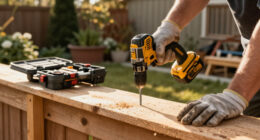
Anyone making a similar wreath should first gather enough cans and choose a frame and hanging method suited to the finished piece’s weight. Hunker recommends strong gloves and protective eyewear, and says to work in a clear space without other people in the way. Cans can have sharp edges; holes should be made and metal handled with care.
After assembly, check that each can is securely attached and that the wreath hangs safely from the intended door or hanger. The source does not report a scheduled follow-up or further development from Traylor. For readers, the next steps are practical decisions: whether to leave the cans metallic, create a weathered finish or paint them to suit a season or porch.
Key Questions
How are the cans attached in the wreath described by Hunker?
Hunker says Traylor threaded doubled fence wire through holes in the cans. The article also discusses using a metal wreath form and an adhesive intended for metal as possible approaches, but does not provide test results for those alternatives.
What safety precautions does the report recommend?
Hunker recommends strong gloves, protective eyewear and a clear work area. It warns that cans can cut skin and describes using a hammer and drill, which should be handled carefully.
Can the cans be decorated instead of rusted?
Yes. The report suggests painting the cans to match porch decor, holidays or other color schemes. It mentions dark beige or brown paint as a way to imitate a rusty appearance, but does not provide durability testing.
Will a regular wreath hanger hold the finished decoration?
That is not known from the report. Hunker cautions that the cans may make the wreath heavy and suggests that a stronger option, such as an over-the-door hanger, may be needed. The finished weight and the capacity of any hanger are not provided.
Source: rss