
TL;DR

Get business pricing on tools and workshop supplies
- Business-only prices and quantity discounts
- Tax-exempt purchasing
- Multiple users, one account, clear invoices
A Hunker report describes 16 ways to reuse concrete blocks around the home and garden, including planters, tables, privacy walls, stairs and water features. Many ideas are decorative or simple furniture projects, but stairs, walls, pools and fountains require careful attention to stability, waterproofing and local rules.
Hunker has outlined 16 ways to reuse concrete blocks around a home or garden, ranging from planters and tables to stairs, privacy walls and water features. In the supplied excerpt, Hunker presents the blocks as durable, regularly shaped materials that can be adapted for practical or decorative projects, while noting that structural and water-holding uses need more careful planning.
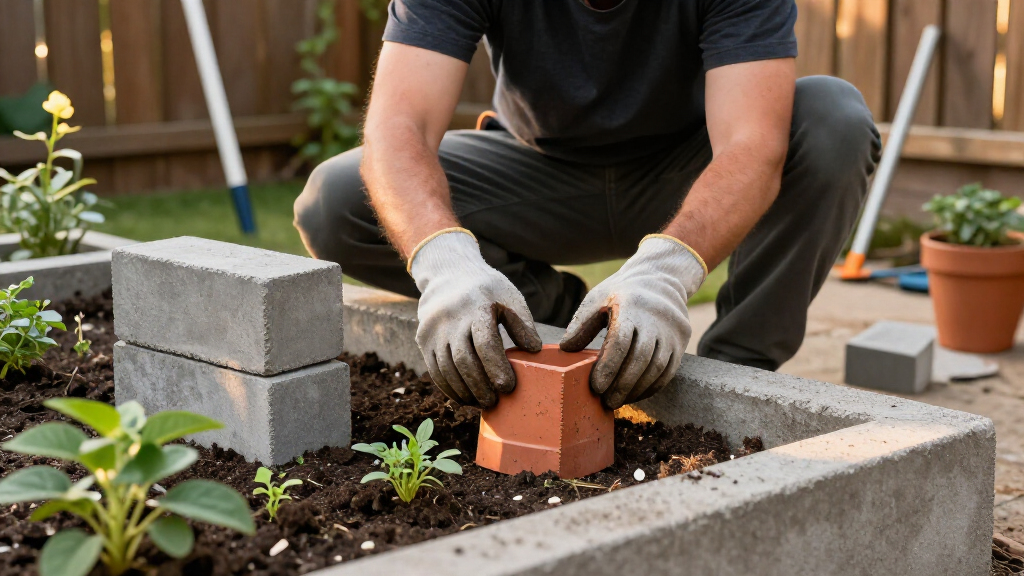
Hunker’s roundup includes using blocks to make planters, a TV stand, tables and a nightstand, as well as arranging them into benches and other furniture. The article says hollow cores can hold small plants or accommodate shelves, and suggests placing mesh or landscape fabric beneath soil-filled openings to keep soil from escaping. Hunker also proposes using wood, stone, paint or fabric to change the appearance of plain blocks.
For gardens, Hunker proposes decorative walls, murals, sculptural arrangements and fountains. The roundup also describes using blocks as the basis of a small pool or pond. Hunker says a pool wall would require rebar reinforcement and a waterproof coating, and advises checking local rules for permits before beginning. The supplied source material does not provide construction plans, engineering specifications or cost estimates for these projects.
Some suggestions in Hunker’s roundup involve more than decoration. For temporary steps, the article describes arranging blocks in descending layers and covering the openings with a solid surface. For permanent outdoor stairs, it recommends a firmer base and filling gaps with sand or cement. For tables, Hunker stresses stable, aligned supports and securing the top so it cannot slide. These are general suggestions in the roundup, not a substitute for project-specific safety or building guidance.
From Leftover Blocks to Useful Features
Hunker’s roundup is aimed at homeowners and gardeners who have leftover or reclaimed building materials and want to put them to use. The article presents concrete blocks’ regular shape as useful for stacking and rearranging in some small projects, and notes that their plain finish can suit an industrial-style look or be changed with paint and other finishes.
The ideas in Hunker’s roundup vary considerably in complexity. A small planter or simple side table is not equivalent to a permanent staircase, retaining-style wall or pool. Those more demanding projects can involve stability, drainage, reinforcement, waterproofing and permit requirements. Hunker presents the list as project ideas, not complete plans; readers should establish requirements for their specific site and intended use before construction.
Popular right now

KitchenAid Classic Series 4.5 Quart Tilt-Head Stand Mixer K45SS, Onyx Black

Bose QuietComfort Wireless Bluetooth Headphones with Active Noise Cancellation, Mic, USB‑C Charging, Deep Bass, 24‑Hour Battery – White Smok

Ninja Hot & Iced XL Coffee Maker with Rapid Cold Brew, Black, CM371
As an affiliate, we earn on qualifying purchases.
Why Concrete Blocks Suit Reuse
Hunker describes concrete blocks as durable, relatively inexpensive and regularly shaped, qualities it says make them candidates for reuse. The article notes that people may already have blocks left over from another job or may find reclaimed ones. Hunker also says the terms concrete block and cinder block are sometimes used loosely: according to the article, most cinder blocks are concrete blocks, while readers should watch for damage because the materials can differ.
The supplied Hunker excerpt lists 16 project ideas but ends partway through its discussion of nightstands. It therefore does not include all 16 entries in the material provided, and it does not name a publication date. The headline and project ideas described above come from the supplied Hunker text; the suitability of any individual block or design depends on conditions the roundup does not detail.
Project Details Still Matter
The supplied Hunker source does not identify the publication date or provide complete descriptions for all 16 projects; the excerpt cuts off during the nightstand section. It also gives no engineering calculations, load limits, detailed pool construction instructions or cost comparisons. The roundup alone does not establish whether a particular stack of blocks is safe for a given load, site or climate.
Hunker does not specify local permit requirements, which can vary by location and project. The article advises checking local rules before building a pool, but the supplied material does not address all possible requirements for stairs, walls or other permanent structures. The condition and type of reclaimed blocks also need to be assessed before reuse.
Check Plans Before Building
Hunker’s suggestions are a starting point for readers considering a project. They should first decide whether it is decorative, temporary or structural, then check the blocks’ condition and plan for a stable base and secure assembly. For permanent stairs, walls, pools or other structures, readers should confirm local building and permit requirements and seek qualified construction advice where appropriate. Water features also need suitable waterproofing and a plan for circulation or drainage.
The supplied Hunker material does not announce a follow-up, product launch or scheduled next step. The practical next step for readers is to adapt an idea to their site and use, rather than assume the roundup’s general suggestions amount to a complete build guide.
Key Questions
What are some ways to reuse concrete blocks at home?
Hunker’s list includes planters, tables, a TV stand, a nightstand, stairs, privacy walls, art and fountains. The supplied source excerpt does not show the full description of all 16 ideas.
Can concrete blocks be used as planters?
Hunker suggests putting small plants in block openings, either using blocks individually or stacking them into a tower or wall. The article recommends adding mesh or landscape fabric at the bottom of openings to hold soil in place.
Can concrete blocks form part of a pool?
Hunker says block walls can form the basis of a small pool when properly assembled with rebar reinforcement and waterproof coating. It also advises checking local rules for permits. The roundup is not a detailed engineering or construction plan.
Are concrete blocks and cinder blocks the same?
Hunker says most cinder blocks are actually concrete blocks, but also notes that differences exist and advises checking blocks for damage. The names should not be treated as a guarantee that every block is interchangeable.
Does the report provide full instructions for all 16 projects?
No. The supplied Hunker source text ends during its discussion of a nightstand and does not include all 16 project descriptions. It also does not provide detailed structural specifications or cost estimates.
Source: rss