
TL;DR

Get business pricing on tools and workshop supplies
- Business-only prices and quantity discounts
- Tax-exempt purchasing
- Multiple users, one account, clear invoices
A Hunker report describes a DIY project shared by the @OurUpcycledLife channel: coat an old vase with glue, then sprinkle Epsom salt over it for a frosted look. The finish can be customized with glitter or color, but the report advises using battery-powered lights rather than real candles.
A DIY project shared by the @OurUpcycledLife channel uses glue and Epsom salt to give an old vase a frosted, winter-style finish, according to a report by Hunker. The craft offers a way to reuse a vase with basic supplies, although the source does not provide testing or durability claims for the finished decoration.
The process begins with cleaning the vase using warm water and mild dish soap, removing any labels, and letting the glass dry completely. The report says a clean, dry surface helps the adhesive stick. Newspaper can be placed over the work area to catch excess salt.
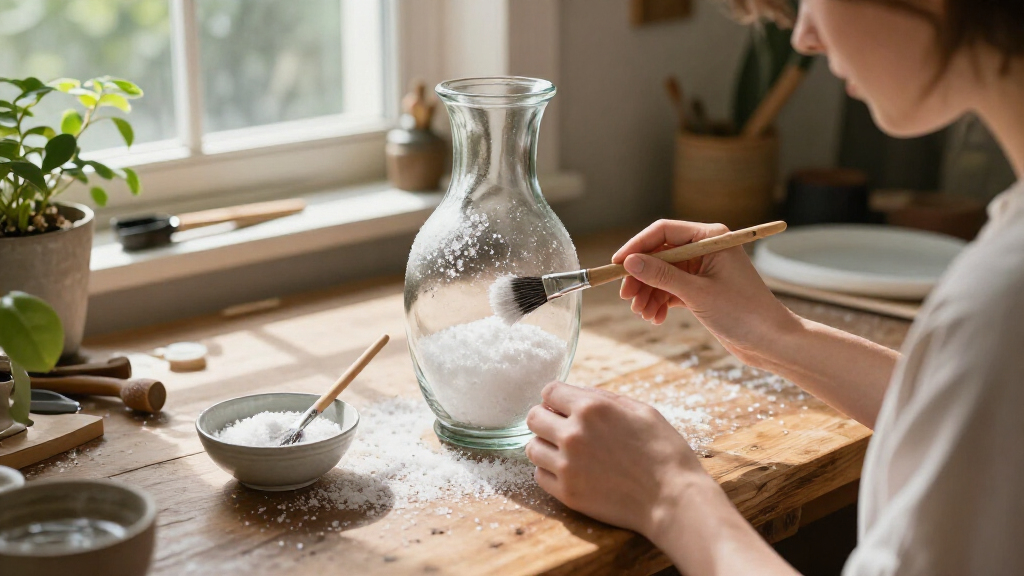
For the coating, the vase’s exterior is covered with a thin layer of PVA glue or Mod Podge, then Epsom salt is sprinkled over the wet adhesive. Working in small sections may help if the glue begins to dry before the salt is applied. An alternative method is to spread the salt on a paper plate and press the glued vase lightly into it.
Hunker says the salt can be mixed with white glitter for added sparkle or with food coloring or colored glitter for a tinted effect. After the coating has had a few hours to cure, crafters can add another layer or apply a product such as Mod Podge Clear Acrylic Sealer Spray. The report does not specify a tested curing time or how well the finish holds up with regular handling.
A Low-Cost Way to Reuse Vases
The project is presented as a budget-conscious decor update that can give an unused vase a new purpose instead of sending it to the trash. It uses a small set of craft materials, and the report says the vase’s shape and size do not need to match a particular template. That flexibility may make the idea accessible to people using supplies they already have.
The result is also adaptable: a simple salt coating can be made more decorative with glitter, color, ribbon, artificial greenery or lights. Those are styling options described in the Hunker report, not evidence that the finish is suitable for every vase or use. The main practical caveat is that the coating is decorative; the source does not establish that it is waterproof, food-safe or suitable for frequent washing.
Popular right now

Bose QuietComfort Wireless Bluetooth Headphones with Active Noise Cancellation, Mic, USB‑C Charging, Deep Bass, 24‑Hour Battery – White Smok

Sony BRAVIA 5 85-Inch Mini LED 4K HDR Smart TV (K-85XR50)

KitchenAid Artisan 5-Quart Tilt-Head Stand Mixer, Almond Cream
As an affiliate, we earn on qualifying purchases.
How the Frosted Finish Is Made
The report frames the craft as a seasonal project for people looking to change their home decor without buying new pieces. Its central technique is straightforward: adhesive holds Epsom salt against the outside of the glass, creating a textured, frost-like appearance. The supplied source identifies the project as an idea from @OurUpcycledLife and says Hunker reported on it.
For display, the report suggests placing LED tealights or battery-powered string lights inside the vase. It also lists faux flowers, pine cones, holly, berries and lightly salt-coated twigs as possible additions. These suggestions are optional styling choices rather than necessary steps in making the vase.
““The shape and size of your vases don’t matter.””
— Hunker’s report on the @OurUpcycledLife project
Durability and Use Limits
The source does not say how long the salt coating lasts, whether it can withstand moisture, or how it responds to cleaning and repeated handling. It also gives no product-specific safety guidance for the adhesives or sealer beyond naming examples. Readers should treat the vase as decorative rather than functional unless product labels indicate otherwise, and should follow the manufacturers’ directions for any craft materials.
Hunker advises against real candles because heat may melt the salt or change its color, while soot could darken the glass. The report does not describe independent testing of those effects. It recommends battery-operated lights as an alternative; the precise display conditions and performance of the finished piece are not covered.
Optional Finishing and Display
After the adhesive and salt have had several hours to cure, the crafter can decide whether to add another layer or apply a clear acrylic sealer, as described in the report. Any sealer should be used according to its label, including its ventilation and drying instructions. The source does not state that sealing makes the vase waterproof or safe for food or drink.
For display, the report suggests LED tealights, remote-controlled string lights, ribbon or artificial seasonal decorations. It advises avoiding open flames and recommends gathering loose salt from the covered work surface for storage. The supplied material does not identify a follow-up demonstration, product test or additional update.
Key Questions
What materials are used to frost an old vase?
The report lists an old vase, Epsom salt, PVA glue or Mod Podge, and a brush for applying the adhesive. Newspaper can protect the work surface. Glitter or food coloring is optional.
How is the salt attached to the vase?
Apply a thin layer of glue to the clean, dry exterior and sprinkle Epsom salt over it while the adhesive is wet. The report also describes pressing the glued vase into salt spread on a paper plate.
Can the frosted vase be used with a real candle?
Hunker advises against real candles because heat may affect the salt coating and soot may blacken the inside of the glass. It suggests LED tealights or battery-powered string lights instead.
Is the finished vase waterproof or durable?
The source does not provide durability testing or confirm that the finish is waterproof. It describes the vase as a decor project and does not establish that the coated surface is suitable for washing, food or drink.
Source: hunker.com