
A compact dust collection system has to balance two things that usually fight each other: enough airflow to actually capture dust at the source, and a footprint small enough for a garage or basement shop. After comparing 15 options, the VEVOR Wall Mount Dust Collector 1 HP stands out as the best overall pick — its 560 CFM output and wall-hugging design free up floor space entirely while handling most bench tool dust. If raw capacity matters more, the WEN DC1300 brings 1,300 CFM and a mobile base to the fight, while the POWERTEC Low Profile Dust Separator is the budget-friendly entry point for shop-vac-based setups. The main tradeoff in this category is between ambient air filtration units (which clean the air already in the room) and source-capture collectors (which pull dust off the tool before it spreads) — a distinction many buyers miss before purchasing. Keep reading for the full breakdown of which type fits your workflow.

Get business pricing on tools and workshop supplies
- Business-only prices and quantity discounts
- Tax-exempt purchasing
- Multiple users, one account, clear invoices
Complete the kit


Key Takeaways
- Wall-mounted collectors like the VEVOR and POWERTEC 1 HP units dominated the value rankings because they cost roughly half of what comparable floor-standing 1-1/2 HP units do while freeing up 100% of floor space.
- This roundup revealed a category confusion trap: air filtration systems (AlorAir, Abestorm) and dust collectors are different tools — filtration units clean airborne dust but cannot capture at the tool, so buyers needing chip collection should skip them.
- Filtration fineness varied more than price suggested — from 5-micron bags on the WEN DC1300 to 1-micron bags on the POWERTEC wall mount — and the difference matters for anyone sanding fine particles.
- Separator lids (POWERTEC, Shop-Vac) delivered the lowest cost of ownership overall, but only make sense for buyers who already own a shop vacuum and work with lower-volume tools.
- Remote controls appeared mainly on mid-range units (BUCKTOOL, AlorAir 270°, Abestorm 1080) and proved to be one of the most-used convenience features once installed, worth prioritizing for ceiling or wall-mounted installs.
| AlorAir 360 Degree Intake Air Filtration System (1050/1350 CFM) |  | Best for Large Workshops | Airflow: 1050/1350 CFM | Coverage Area: Up to 1700 sq.ft | Dimensions: 20.5″L x 20.5″W x 9.8″H | VIEW LATEST PRICE | See Our Full Breakdown |
| 1100 CFM Dust Collector, 1-1/2 HP, 2-Micron Filtration |  | Best Overall for Serious Dust Removal | Airflow: 1100 CFM | Motor Power: 1-1/2 HP | Filtration: 2-micron | VIEW LATEST PRICE | See Our Full Breakdown |
| Portable 2-Stage Intake Air Filtration System, 850-1250 CFM |  | Best Filtration Quality | Airflow: 850-1250 CFM, adjustable | Filter Type: HEPA with carbon deodorization | Filtration Efficiency: 99.5% of 0.3μm particles | VIEW LATEST PRICE | See Our Full Breakdown |
| VEVOR Wall Mount Dust Collector 1 HP, 560 CFM |  | Best Compact Footprint Saver | Airflow: 560 CFM | Motor: 1 HP induction, 120V | Filtration: 2.5-micron | VIEW LATEST PRICE | See Our Full Breakdown |
| Abestorm Tabletop Dust Collector with Timer |  | Best for Beginners and Small Shops | Airflow: 580 / 780 CFM (2 speeds) | Filter: MERV-13, up to 6-month life | Timer: Up to 120 minutes | VIEW LATEST PRICE | See Our Full Breakdown |
| Rockler Dust Right 650 CFM Wall Mount Dust Collector |  | Best for Multi-Tool Small Shops | Flow Rate: 650 CFM | Motor: 3/4 HP, 12 amps, 110V | Static Pressure: 5.00 inches of water | VIEW LATEST PRICE | See Our Full Breakdown |
| WEN Woodworking Dust Collector with 5.7-Amp Motor and 12-Gallon Bag |  | Best Value Compact Collector | Motor Power: 5.7 amps | Air Flow: 660 CFM | Impeller Size: 6 inches | VIEW LATEST PRICE | See Our Full Breakdown |
| POWERTEC 1 HP Wall Mount Dust Collector with 560 CFM and 1 Micron Filter Bags |  | Best Fine-Dust Filtration | Motor Power: 1 HP | Airflow Capacity: 560 CFM | Motor Speed: 3450 RPM | VIEW LATEST PRICE | See Our Full Breakdown |
| BUCKTOOL 1HP 6.5AMP Wall-Mount Dust Collector with Remote Control and 2-Micron Dust Filter Bag |  | Best Convenience Features | Motor Power: 1 HP induction | Current: 6.5 amps | Airflow: 550 CFM | VIEW LATEST PRICE | See Our Full Breakdown |
| Shop-Vac Dust Collector for 5 Gallon Buckets |  | Best Separator Add-On | Type: Bucket-top dust separator | Fits Bucket Size: 5 gallons (sold separately) | Hose Diameter: 2-1/2 inches | VIEW LATEST PRICE | See Our Full Breakdown |
| WEN DC1300 1,300 CFM 14-Amp 5-Micron Woodworking Dust Collector with 50-Gallon Collection Bag and Mobile Base |  | Best High-Capacity Workhorse | Airflow: 1,300 CFM | Motor Power: 14 amps | Filtration: 5-micron bag | VIEW LATEST PRICE | See Our Full Breakdown |
| 1.6-HP Dust Collector Media Reclaimer with 1.8 Gallon Capacity – Universal Fit for Sandblaster Cabinets and Media Blasters | 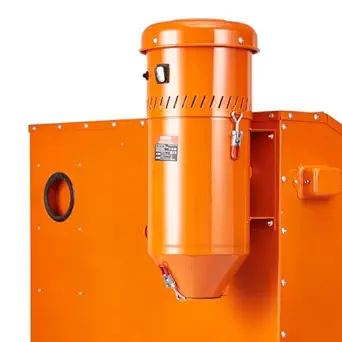 | Best for Sandblasting Setups | Motor Power: 1.6 HP | Dust Capacity: 1.8 gallons | Inlet Size: 2 inches (universal fit) | VIEW LATEST PRICE | See Our Full Breakdown |
| POWERTEC Low Profile Dust Separator for Shop Vac & Dust Collectors, Fits 5 Gallon Buckets, for 2-1/4″ Shop Vacuum Port, 2-1/2″ & 4″ Dust Collection System | 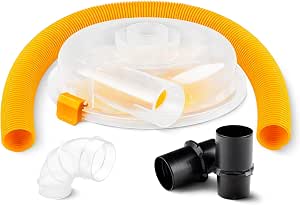 | Best Budget Upgrade | Compatibility: 5-gallon buckets; 2-1/4″ shop vacuum port; 2-1/2″ and 4″ dust collection systems | Separation Efficiency: Up to 99.9% of dry dust | Material: Impact-resistant PP and ABS | VIEW LATEST PRICE | See Our Full Breakdown |
| ALORAIR 270° Intake Woodworking Air Filtration System with Remote Control and Vortex Fan |  | Best for Air Quality and Odor Control | Coverage Area: Up to 1,100 sq.ft. | Filtration Efficiency: 90% of 3-10 micron particles; 85% of 1 micron particles | Intake Design: 270° intake with vortex fan | VIEW LATEST PRICE | See Our Full Breakdown |
| Abestorm 1080 CFM Intake Air Filtration System with Remote Control |  | Best Quiet Ceiling-Mount Filtration | Airflow: 780-1080 CFM (two-speed) | Coverage Area: Up to 1,100 sq.ft. | Intake Design: 270° three-sided | VIEW LATEST PRICE | See Our Full Breakdown |
| compact dust collection system | Airflow | Dimensions |
|---|---|---|
| AlorAir 360 Degree Intake Air | 1050/1350 CFM | 20.5"L x 20.5"W x 9.8"H |
| 1100 CFM Dust Collector | 1100 CFM | — |
| Portable 2-Stage Intake Air Fi | 850-1250 CFM, adjustable | 16.1" L x 9.4" W x 12.7" H |
| VEVOR Wall Mount Dust Collecto | 560 CFM | 40.94 x 13.78 x 15.75 inches |
| Abestorm Tabletop Dust Collect | 580 / 780 CFM (2 speeds) | 14.57" x 9.45" x 11.81" |
| Rockler Dust Right 650 CFM Wal | — | — |
| WEN Woodworking Dust Collector | — | 34.25 x 13 x 14.2 inches |
| POWERTEC 1 HP Wall Mount Dust | — | — |
| BUCKTOOL 1HP 6.5AMP Wall-Mount | 550 CFM | — |
| Shop-Vac Dust Collector for 5 | — | — |
| WEN DC1300 1,300 CFM 14-Amp 5- | 1,300 CFM | — |
| 1.6-HP Dust Collector Media Re | — | 10.8 x 10.6 x 22.8 inches |
| POWERTEC Low Profile Dust Sepa | — | — |
| ALORAIR 270° Intake Woodworkin | — | 19.4"L x 19.4"W x 9.6"H |
| Abestorm 1080 CFM Intake Air F | 780-1080 CFM (two-speed) | 19.4"L x 19.4"W x 9.6"H |
More Details on Our Top Picks
AlorAir 360 Degree Intake Air Filtration System (1050/1350 CFM)
This AlorAir unit is the highest-capacity air scrubber in this lineup, moving up to 1350 CFM across spaces as large as 1700 sq.ft. Unlike the point-of-source machines here, it’s an ambient air filtration system — its job is to polish the air in the room after your tools have made the mess. Compared with the Portable 2-Stage unit, it trades fine-particle capture (90% at 3-10μm versus 99.5% at 0.3μm) for raw volume and coverage. The built-in ionizer and remote control add convenience, and the hook-and-chain mounting keeps floor space clear. The real drawbacks: 60-69 dB noise is noticeable in a small garage, the ionizer makes it non-compliant with California air quality rules, and it captures nothing at the tool itself.
Pros:- Highest airflow in the roundup at 1350 CFM
- Covers up to 1700 sq.ft — full-shop air polishing
- Remote control and adjustable speed
- Flexible mounting with hook and chain keeps it off the floor
Cons:- Not legal for sale or use in California due to the ionizer
- Louder than tabletop alternatives at 60-69 dB
- Ambient-only design captures no dust at the source
Best for: Woodworkers with large standalone shops (1000+ sq.ft) who need whole-room air turnover rather than tool-side collection
Not ideal for: California residents due to ionizer regulations, and anyone in a small garage shop where 69 dB and 20.5-inch footprint dominate the space
- Airflow:1050/1350 CFM
- Coverage Area:Up to 1700 sq.ft
- Dimensions:20.5″L x 20.5″W x 9.8″H
- Electrical Requirements:115V, 60Hz, 1.5A
- Noise Level:60-69 dB
- Filter Efficiency:90% of 3-10μm particles, 85% of 1μm particles
- Special Features:Built-in ionizer, remote control, 360° intake
Our verdict“Buy this if you run a big shop and want air quality handled shop-wide; skip it if you’re in California or need a machine connected to your tools.”
1100 CFM Dust Collector, 1-1/2 HP, 2-Micron Filtration
This is the most traditional dust collection option in the batch — a 1-1/2 HP, 1100 CFM workhorse that connects directly to your machines through dual 4-inch ports. Where the AlorAir cleans air after the fact, this unit stops dust at the tool, which is what actually protects your lungs during sanding or planing. The 2-micron bag filtration beats the VEVOR’s 2.5-micron rating, and the transparent quick-release bags make emptying far less of a chore. Tradeoffs are real: it’s the bulkiest thing here despite the mobile base, and you’ll need to plan ducting to get full performance — it’s a shop infrastructure purchase, not a grab-and-go gadget. Compared with the WEN DC1300’s 5-micron filtration, its finer bags do a meaningfully better job on fine sanding dust.
Pros:- 1100 CFM handles simultaneous chip-heavy operations like planing
- 2-micron filtration outperforms the 2.5 and 5-micron alternatives
- Quick-release transparent bags simplify maintenance
- Mobile base and dual 4-inch ports support flexible machine layouts
Cons:- Bulky footprint dominates small workshops
- Requires deliberate ducting setup to reach rated airflow
Best for: Woodworkers with multiple stationary machines who can run ducting and want source-level collection
Not ideal for: Anyone in a shared garage or basement corner — the footprint and ducting demands overwhelm small spaces
- Airflow:1100 CFM
- Motor Power:1-1/2 HP
- Filtration:2-micron
- Bag System:Quick-release with transparent viewing window
- Ducting:Dual 4-inch ports, 6-inch main inlet
- Portability:Mobile base with casters
Our verdict“The pick if you have the floor space and multiple machines — nothing else here moves this much air at the tool itself.”
Portable 2-Stage Intake Air Filtration System, 850-1250 CFM
If fine-particle capture is the priority, this benchtop unit is the standout: a HEPA and carbon filter stage catches 99.5% of particles down to 0.3μm — far finer than the MERV-13 filter in the Abestorm tabletop or the 2.5-micron bags on the VEVOR. The carbon layer also tackles odors, which no bag-style collector here addresses. At 16.1 inches long with a leather carry handle, it moves between bench, shelf, or job site without effort, and running under 55 dB makes it quieter than the AlorAir by a wide margin. The catch is ongoing cost: filters need replacing roughly every four months, faster than the Abestorm’s six-month MERV-13, and like all ambient units it won’t capture chips at your saw blade — pair it with a source collector if you do heavy milling.
Pros:- Best-in-roundup filtration: 99.5% of 0.3μm particles
- Carbon stage removes odors, not just dust
- Quietest option at under 55 dB
- Genuinely portable at 16.1 inches with carry handle
Cons:- Filter replacement every ~4 months is an ongoing expense
- Ambient design means no capture at the tool
Best for: Small-shop woodworkers and finishers who care most about lung-hazardous fine dust and finish-sanding residue
Not ideal for: Anyone doing heavy planing or ripping — it’s an air polisher, not a chip collector, and filter costs add up fast
- Airflow:850-1250 CFM, adjustable
- Filter Type:HEPA with carbon deodorization
- Filtration Efficiency:99.5% of 0.3μm particles
- Dimensions:16.1″ L x 9.4″ W x 12.7″ H
- Power:115V, 60Hz, 1.5A
- Noise Level:<55 dB
- Power Cord:5.9 ft
Our verdict“The right choice when fine dust and finish work are the enemy and quiet, portable HEPA-grade cleaning matters more than raw chip volume.”
VEVOR Wall Mount Dust Collector 1 HP, 560 CFM
The VEVOR’s pitch is simple: wall mounting frees your floor entirely, and at 24 pounds it’s an easy install for one person. Its 21-gallon collection bag is the largest capacity in this batch by a wide margin, so you’ll empty it rarely — a genuine quality-of-life difference versus smaller units. With 560 CFM and 2.5-micron filtration, it sits between the 1100 CFM floor model and the smaller wall units like the POWERTEC 1 HP, which offers finer 1-micron bags at the same airflow. Be honest about its limits: 560 CFM is medium-duty airflow, fine for one machine at a time but strained by a planer, and the up-to-90 dB noise rating is loud for a wall inside an attached garage. Mounting hardware also isn’t confirmed in the box, so budget a trip to the hardware store.
Pros:- Zero floor footprint — the only true space-saver with source collection
- 21-gallon bag means infrequent emptying
- Light 24-pound one-person install
- Effective on both coarse and fine dust
Cons:- 560 CFM limits it to one machine at a time
- Up to 90 dB noise is loud for a wall-mounted unit in shared spaces
- Mounting hardware may not be included
Best for: Garage woodworkers who can’t spare floor space and mostly run one mid-size machine at a time
Not ideal for: Detached-shop users running multiple machines simultaneously — 560 CFM won’t keep up, and the noise carries
- Airflow:560 CFM
- Motor:1 HP induction, 120V
- Filtration:2.5-micron
- Collection Capacity:21 gallons (80L)
- Noise Level:≤90 dB
- Weight:24 pounds
- Dimensions:40.94 x 13.78 x 15.75 inches
- Mounting:Wall mount
Our verdict“The smart buy when floor space is the constraint and your dust load comes from one machine at a time.”
Abestorm Tabletop Dust Collector with Timer
The Abestorm is the easiest entry point in the roundup: set it on a bench, press the piano-key switch, and let the 120-minute timer shut it off while you clean up. That timer is genuinely useful — it keeps air circulating after you power down tools, when fine dust is still hanging around, and nothing else at this size offers it. Compared with the Portable 2-Stage unit, its MERV-13 filter is coarser than true HEPA, but it lasts six months instead of four, keeping costs down. The auxiliary outlet is a clever touch — plug in a tool and filtration starts with it. The honest limits: 580-780 CFM is the lowest airflow here, best for a single-bay workshop, and the undisclosed noise level means you’re buying without that data point.
Pros:- 120-minute timer runs air cleanup after you’ve finished cutting
- Auxiliary outlet auto-starts filtration with your tool
- Built-in circuit breaker adds safety
- Compact 14.6-inch footprint with carry handle stores anywhere
Cons:- Lowest airflow in the roundup at 580-780 CFM
- MERV-13 filtration is coarser than HEPA alternatives
- Noise level not specified before purchase
Best for: Beginners and hobbyists in compact home workshops who want simple setup and hands-off operation
Not ideal for: Active woodworkers producing heavy chip loads — the modest CFM and tabletop size won’t clear a real shop quickly
- Airflow:580 / 780 CFM (2 speeds)
- Filter:MERV-13, up to 6-month life
- Timer:Up to 120 minutes
- Electrical Requirements:115V, 0.9A
- Dimensions:14.57″ x 9.45″ x 11.81″
- Additional Features:Auxiliary outlet, circuit breaker, piano key switch, carry handle
Our verdict“A low-commitment first dust solution for a small hobby shop — just don’t expect it to run a real production space.”
Rockler Dust Right 650 CFM Wall Mount Dust Collector
Among wall-mounted units, this Rockler model stands out for raw airflow: 650 CFM is enough to serve a tablesaw or jointer through a short hose run, which most compact units simply cannot do. Compared with the POWERTEC 1 HP at 560 CFM, the extra capacity translates into better capture at machines that generate heavy chips. The clear 30-micron bag makes empting straightforward, though buyers should know that 30 microns is coarse filtration — fine dust passes through unless you buy the optional canister or finer bag separately. That add-on cost is the real tradeoff here. It’s also louder than the BUCKTOOL at 80–85 dB, and Rockler explicitly advises against using it in plumbed, multi-branch ductwork, so this pick makes the most sense for a single-tool-at-a-time workshop rather than a ducted system.
Pros:- 650 CFM easily handles chip-heavy machines like planers and jointers
- Wall mount keeps 15 gallons of collection capacity off the floor
- Clear zippered bag shows fill level at a glance
- Optional canister upgrade path for finer filtration
Cons:- Optional finer filters and canisters are sold separately, adding to real cost
- 80–85 dB is loud for a small attached-garage shop
- Not designed for multi-branch ducted systems
Best for: Woodworkers in small shops who connect one machine at a time and want maximum suction from a wall-mounted unit
Not ideal for: Anyone planning hard-plumbed multi-branch ducting — the manufacturer advises against it, and a floorstanding collector like the WEN DC1300 suits that job better
- Flow Rate:650 CFM
- Motor:3/4 HP, 12 amps, 110V
- Static Pressure:5.00 inches of water
- Bag Capacity:15 gallons
- Filter Type:30-micron bag (upgrades sold separately)
- Noise:80–85 dB at 3m
- Height:48 inches
- Weight:50 lbs
Our verdict“Buy this if you want the strongest single-tool suction available in a wall-hung format and are willing to pay extra for fine filtration.”
WEN Woodworking Dust Collector with 5.7-Amp Motor and 12-Gallon Bag
At 17 pounds with lockable swivel casters and an onboard handle, this WEN is the most affordable way to get true 660 CFM machine-grade collection — airflow that actually edges out the Rockler Dust Right at a lower price. The tradeoff is capacity and durability: a 5.7-amp motor and 12-gallon bag suit a hobbyist pace, not a production schedule, and the filter bag needs regular cleaning to maintain suction. Compared with the wall-mounted BUCKTOOL, this unit offers flexibility instead — roll it between machines today, bolt it to the wall tomorrow with the optional mount. For a garage woodworker with two or three benchtop and mid-size machines, this portable format solves the real problem: moving collection to wherever the dust is being made.
Pros:- 660 CFM rivals more expensive wall units at a lower price
- 17-pound build with casters and handle rolls easily between machines
- Optional wall mount adds flexibility for tight shops
- Two-year warranty is generous for the price class
Cons:- 12-gallon bag means frequent emptying under heavy use
- Bag filtration requires ongoing cleaning to maintain airflow
- Underpowered for large or multi-machine ducted layouts
Best for: Budget-minded hobbyists with multiple machines who want to wheel a collector between tools rather than duct anything
Not ideal for: Shops running stationary machines simultaneously or generating planer-volume shavings — the 12-gallon bag fills fast
- Motor Power:5.7 amps
- Air Flow:660 CFM
- Impeller Size:6 inches
- Dust Port Size:4 inches
- Collection Bag Capacity:12 gallons
- Dimensions:34.25 x 13 x 14.2 inches
- Weight:17 lbs
- Warranty:2 years
Our verdict“The smartest pick if you want genuine dust-collector performance on a starter budget and value portability over raw capacity.”
POWERTEC 1 HP Wall Mount Dust Collector with 560 CFM and 1 Micron Filter Bags
This POWERTEC earns its place on filtration alone. The included reusable 1-micron bag captures the fine particles that escape the Rockler’s stock 30-micron bag and the BUCKTOOL’s 2-micron filter — a real health difference if you sand a lot in a closed garage. The vortex design spins heavier chips into the bag before they load the filter, and the viewing window spares you the guesswork of when to empty. Airflow is a modest 560 CFM, so it trails the WEN 5.7-amp unit when collecting from chip-heavy machines, but for a sanding station or single tablesaw it’s ample. The main maintenance reality is the port grate clogging over time; a monthly brush-out is part of ownership. Dual voltage wiring gives it flexibility if your shop power changes down the road.
Pros:- 1-micron reusable bag filters finer than most compact rivals out of the box
- Vortex design separates chips before they load the filter
- Viewing window shows bag fill level without opening anything
- Dual voltage 120V/240V motor adds installation flexibility
Cons:- Port grate clogs over time and needs routine cleaning
- 560 CFM is on the low end for chip-producing machines
- Wall mounting means the unit is fixed to one location
Best for: Sanding-heavy woodworkers concerned about fine airborne dust and lung health in a small shop
Not ideal for: Planer or jointer owners pushing large chip volumes — 560 CFM and a clog-prone port grate fight against that workload
- Motor Power:1 HP
- Airflow Capacity:560 CFM
- Motor Speed:3450 RPM
- Voltage:120V/240V
- Inlet Port:4 inches
- Filter:Reusable 1-micron bag with viewing window
Our verdict“Choose this when fine-dust capture at the source matters more to you than maximum chip-moving airflow.”
BUCKTOOL 1HP 6.5AMP Wall-Mount Dust Collector with Remote Control and 2-Micron Dust Filter Bag
The 49-foot remote control is the feature that separates this BUCKTOOL from every other compact unit here — you can start collection from anywhere in the shop instead of walking to the wall, which matters more in daily use than most spec sheets suggest. Filtration sits in the middle of the pack: its 2-micron bag is finer than the Rockler’s stock bag but coarser than the POWERTEC’s 1-micron setup. What’s unusual is the mounting flexibility — most wall units are permanently fixed, while this one adds wheels with brakes, letting it work as a semi-portable hybrid like the WEN 5.7-amp model. The 1 HP induction motor is built for longevity. Drawbacks are real though: it’s louder than its 550 CFM output would suggest, and a 1 HP unit is arguably more machine than a benchtop-only workshop needs.
Pros:- 49-ft remote control enables start/stop from anywhere in the shop
- Wall-mount or wheeled operation offers rare flexibility for this class
- Induction motor is durable for long-term hobby use
- 2-micron bag balances fine-dust capture with airflow
Cons:- Louder than comparable 560 CFM units during operation
- Requires clear wall space plus storage room if used on wheels
- 550 CFM trails both the Rockler and WEN units
Best for: Woodworkers who move between machines and want push-button start/stop without walking to a wall switch
Not ideal for: Tiny benchtop-only setups — the 1 HP motor and mounting requirements are more hardware than light-duty work demands
- Motor Power:1 HP induction
- Current:6.5 amps
- Airflow:550 CFM
- Dust Filter:2-micron bag
- Control:Remote control, 49 ft range
- Mounting:Wall mount with optional wheeled base
Our verdict“Pick this if remote operation and mounting flexibility would genuinely change how you work in your shop.”
Shop-Vac Dust Collector for 5 Gallon Buckets
This isn’t a dust collector at all — it’s a separator lid that turns a 5-gallon bucket into a pre-collection stage, and it belongs in this roundup for anyone whose real machine is a shop vac. Compared with everything else here, it costs a fraction of the price and solves a different problem: the metal filter and cyclone-style fittings drop sawdust into the bucket before it reaches your vacuum, dramatically cutting filter clogs. Paired with a shop vac, it handles sanders, track saws, and biscuit joiners well — the same niche the Abestorm tabletop unit targets, but at a much lower entry cost. The tradeoffs are structural: no motor means you’re limited to your vac’s suction, the bucket is sold separately, and 2-1/2-inch hose fittings won’t adapt to 4-inch machine ports without extra hardware. For chip-heavy machines, step up to the WEN collector instead.
Pros:- Extends shop vac filter life by capturing dust before the vacuum
- Works with any standard 5-gallon bucket
- Included metal filter, elbows, and 2-foot hose cover the basics
- Cheapest way to add collection capacity to an existing setup
Cons:- Bucket sold separately, so the true cost is higher than the sticker
- Depends entirely on your shop vac’s suction — no standalone capability
- Requires additional adapters to integrate with 4-inch dust collection systems
Best for: Handheld-power-tool users who already own a shop vac and want cleaner, longer filter life for cheap
Not ideal for: Anyone collecting from stationary machines with 4-inch ports — the 2-1/2-inch hose restricts airflow too much for that role
- Type:Bucket-top dust separator
- Fits Bucket Size:5 gallons (sold separately)
- Hose Diameter:2-1/2 inches
- Included Accessories:Metal filter, 2 elbows, 2-foot hose
- Power Source:External shop vacuum (not included)
Our verdict“An inexpensive, sensible upgrade for shop-vac-based dust extraction — just don’t mistake it for a machine-grade collector.”
WEN DC1300 1,300 CFM 14-Amp 5-Micron Woodworking Dust Collector with 50-Gallon Collection Bag and Mobile Base
Most options in this roundup trade power for a smaller footprint, but the WEN DC1300 refuses that compromise — and that is both its appeal and its limitation. With 1,300 CFM of airflow and dual 4-inch inlets, it can run two machines at once, something none of the wall-mount units like the VEVOR 560 CFM or the Rockler Dust Right can manage. The 50-gallon bag means weekend woodworkers can go weeks between emptying, compared to the constant bag-swapping a WEN 12-gallon model demands. The catch for a compact-focused roundup is obvious: this is the least compact option here. It eats floor space, the swivel-caster base is a necessity rather than a perk, and the 5-micron filtration lets the finest, most dangerous dust pass through — pair it with an air filtration unit like the ALORAIR if lung protection matters to you.
Pros:- 1,300 CFM airflow handles multiple stationary machines simultaneously
- 50-gallon collection bag dramatically reduces emptying frequency
- Dual 4-inch inlets let two tools stay connected at once
- Mobile base with swivel casters makes repositioning manageable
Cons:- Footprint is large for a compact-focused shop and demands real floor space
- 5-micron filtration passes fine airborne dust that hazard-conscious woodworkers should capture
- Single-speed motor offers no way to dial back airflow or noise
Best for: Serious hobbyists with two-car-garage shops who run multiple stationary machines and hate constant bag emptying
Not ideal for: Small basement or shared-space shops — the 50-gallon bag and floor-standing footprint will dominate a tight workspace
- Airflow:1,300 CFM
- Motor Power:14 amps
- Filtration:5-micron bag
- Collection Capacity:50 gallons
- Inlet Size:Dual 4-inch inlets
- Impeller Speed:3,450 RPM
- Mobility:4 swivel casters
- Power Source:Electric (corded)
Our verdict“Buy this if raw collection capacity and dual-machine hookups matter more than saving floor space; skip it if your shop is tight or you need fine-dust filtration.”
1.6-HP Dust Collector Media Reclaimer with 1.8 Gallon Capacity – Universal Fit for Sandblaster Cabinets and Media Blasters
This one plays a different sport than everything else here. While the WEN DC1300 and the wall-mount collectors chase woodworking shavings, this media reclaimer exists to pull spent blasting media and dust out of sandblast cabinets and recycle it. The 1.6 HP motor delivers aggressive suction through a universal 2-inch inlet, and the powder-coated steel body is built to shrug off abrasive grit that would shred a fabric collection bag. Compared with general-purpose units like the BUCKTOOL 1HP wall mount, it is more specialized and less versatile — hooking it to a table saw would be awkward at best. The 1.8-gallon capacity is adequate for cabinet work but small relative to its power, so heavy blasting sessions mean more frequent dumping than the capacity figure suggests.
Pros:- 1.6 HP motor delivers strong suction tuned for dense blasting media
- Universal 2-inch inlet fits most sandblast cabinets and media blasters
- Cold-rolled steel construction withstands abrasive wear
- Reclaims media, cutting consumable costs over time
Cons:- 1.8-gallon capacity fills quickly during sustained blasting sessions
- Highly specialized — nearly useless as a general dust collector
Best for: Metalworkers and restorers who run a sandblast cabinet and need dedicated media recovery and visibility inside the cabinet
Not ideal for: General woodworking shops — its 2-inch inlet and abrasive-focused design make it a poor fit for sawdust and planer chips
- Motor Power:1.6 HP
- Dust Capacity:1.8 gallons
- Inlet Size:2 inches (universal fit)
- Material:Cold-rolled steel, powder-coated
- Dimensions:10.8 x 10.6 x 22.8 inches
- Weight:13.23 lbs
- Primary Use:Sandblaster cabinets and media blasters
Our verdict“This makes sense only if a sandblast cabinet is central to your work; woodworkers should spend the same money on a broader-purpose collector.”
POWERTEC Low Profile Dust Separator for Shop Vac & Dust Collectors, Fits 5 Gallon Buckets, for 2-1/4″ Shop Vacuum Port, 2-1/2″ & 4″ Dust Collection System
The cheapest way to upgrade an existing setup rather than buy a new machine. This POWERTEC separator lid turns any 5-gallon bucket into a cyclone pre-separator, claiming to capture 99.9% of dry dust before it ever reaches your vacuum — which means longer filter life and less clogging. Where the Shop-Vac 5-gallon collector in this roundup works fine on its own, pairing either it or a shop vac with this lid multiplies its usefulness for under the cost of a dedicated collector. Its low-profile design also tucks under a workbench more easily than taller separator drums. The tradeoffs are real, though: performance depends heavily on the vacuum powering it, a weak shop vac means weak separation, and the grounding wire is not included, a genuine concern when routing fine dust through plastic at high velocity.
Pros:- Captures up to 99.9% of dry dust before it reaches the vacuum filter
- Fits standard 5-gallon buckets and multiple hose sizes (2-1/4″, 2-1/2″, 4″)
- Low-profile design saves vertical space under benches
- Includes hoses, elbow, gasket, and latches for a complete setup
Cons:- Separation performance varies with the vacuum or collector powering it
- Grounding wire not included, a static-discharge concern with fine dust
Best for: Budget-minded makers who already own a shop vac and want cyclone-style separation without buying a full dust collector
Not ideal for: Woodworkers running stationary machines — a shop vac plus separator cannot move the CFM a tablesaw or planer demands
- Compatibility:5-gallon buckets; 2-1/4″ shop vacuum port; 2-1/2″ and 4″ dust collection systems
- Separation Efficiency:Up to 99.9% of dry dust
- Material:Impact-resistant PP and ABS
- Included Components:Separator lid, foam gasket, dual latches, 90° elbow, hoses, adapters, grounding hardware
- Port Diameter:2.25 inches
- Item Length:3 feet
Our verdict“The smartest small-money upgrade in the roundup if you already own a vacuum; it is a component, not a replacement for a real dust collector.”
ALORAIR 270° Intake Woodworking Air Filtration System with Remote Control and Vortex Fan
An ambient air filter solves a problem machines like the WEN DC1300 cannot: the fine dust that stays suspended after your tools shut off. The ALORAIR covers up to 1,100 sq.ft. using a 270° intake and vortex fan to scrub the whole room, and its built-in ionizer goes after odors as well as particles — something the similar Abestorm 1080 CFM does not offer. Filtration is respectable at 90% of 3-10 micron particles, though the 85% capture rate at 1 micron means the finest dust partially escapes, so this supplements rather than replaces at-source collection. The remote and timer make set-and-forget operation easy. Drawbacks: it cannot ship to California due to regulatory issues, fan noise creeps up at higher speeds, and filters need regular replacement to keep those efficiency numbers honest.
Pros:- Covers spaces up to 1,100 sq.ft. with 270° intake coverage
- Built-in ionizer tackles odors and pollutants, not just dust
- Remote control and timer enable automated operation
- Tool-free filter replacement keeps maintenance simple
Cons:- Not compliant with California regulations and cannot ship there
- Noise rises noticeably at higher fan speeds
- Filters require ongoing replacement cost and effort
Best for: Woodworkers in larger garages or basement shops who want continuous whole-room air scrubbing plus odor reduction after tool-based collection
Not ideal for: California residents and anyone expecting at-source dust capture — this cleans the air, it does not connect to tools
- Coverage Area:Up to 1,100 sq.ft.
- Filtration Efficiency:90% of 3-10 micron particles; 85% of 1 micron particles
- Intake Design:270° intake with vortex fan
- Special Features:Built-in ionizer, remote control, timer
- Noise Level:Below 60 dBA
- Dimensions:19.4″L x 19.4″W x 9.6″H
- Electrical Requirements:115V, 60Hz, 1.5A
Our verdict“The strongest choice for whole-shop air quality and odor control, especially paired with a source collector — provided you do not live in California.”
Abestorm 1080 CFM Intake Air Filtration System with Remote Control
Directly comparable to the ALORAIR above, and the differences come down to control and filtration. The Abestorm offers two-speed adjustment plus both a remote (26ft range) and touch panel, giving more operational flexibility than the ALORAIR’s setup, and its MERV-11 filters slide out for replacement without tools. Its ceiling-mount design with hanging chains keeps it entirely out of the way — a genuine compact-shop advantage over floor-standing units like the WEN DC1300, since it consumes zero floor space. Running under 60 dBA, it stays quiet enough for conversation. On the downside, the same California shipping restriction applies, filters need replacing every 4-6 months, and coverage caps at 1,100 sq.ft., so very large shops will want the higher-CFM AlorAir 360 Degree model instead.
Pros:- 270° three-sided intake maximizes airflow capture across the room
- Dual-speed operation with remote and touch panel for flexible control
- Tool-free slide-out MERV-11 filters simplify maintenance
- Ceiling or wall mounting frees up all floor space
Cons:- Cannot be shipped to California due to regulations
- Filters require replacement every 4-6 months
- Coverage limited to 1,100 sq.ft., undersized for large shops
Best for: Small-to-mid shop owners who want set-and-forget ceiling-mounted air filtration that stays out of sight and earshot
Not ideal for: Shops over 1,100 sq.ft. or buyers in California — look to higher-CFM or compliant alternatives
- Airflow:780-1080 CFM (two-speed)
- Coverage Area:Up to 1,100 sq.ft.
- Intake Design:270° three-sided
- Filter Type:MERV-11 micron filters
- Filter Efficiency:Traps 90% of 3-10 micron particles
- Noise Level:<60 dBA
- Control:Remote (26ft range) and touch panel
- Mounting:Ceiling or wall mount with hanging chains
- Dimensions:19.4″L x 19.4″W x 9.6″H
Our verdict“The best pick for quiet, overhead air cleaning in a compact shop — just verify it can ship to your state before ordering.”

How We Picked
My ranking logic starts with a question most buyers skip: what kind of dust problem are you actually solving? Source-capture collectors, ambient air filtration units, and separator-based vacuum systems all get marketed as “dust collection,” but they perform different jobs. I grouped the 15 products by type first, then judged each against peers within its group so the rankings reflect genuine head-to-head comparisons rather than apples-to-oranges matchups.
Within each group, I weighed airflow-to-footprint ratio as the defining metric for a compact system — a 1,300 CFM collector on a mobile base can be more “compact” in practice than a weak unit that still hogs floor space. From there, I evaluated filtration fineness (1-micron beats 5-micron for fine sanding dust), daily usability factors like remote controls and timer functions, bag or canister capacity relative to maintenance frequency, and total cost of ownership including filter replacements. Units that combined strong specs with realistic workshop ergonomics ranked highest; bargain units with real tradeoffs were flagged honestly rather than eliminated.
Factors to Consider When Choosing Compact Dust Collection System
Before clicking buy on any of these 15 systems, it helps to understand the broader forces at play in compact dust collection — because the most common regret in this category isn’t buying a bad machine, it’s buying the right machine for the wrong job.Collector vs. Filtration: The Category Mistake That Wastes Money
The single most expensive mistake in this category is buying an ambient air filtration unit when you need a dust collector, or vice versa. Air filtration systems like the AlorAir and Abestorm units hang from the ceiling and slowly scrub dust that is already floating in the room — they are phenomenal for finishing work and general air quality, but they will do almost nothing to capture chips flying off a table saw. Collectors like the WEN DC1300 or the wall-mounted VEVOR attach directly to your tool’s port and stop dust at the source. Many serious small shops eventually own both, but if you can only buy one and you run woodworking machinery, the collector comes first. A useful rule of thumb: if your dust problem involves visible chips and shavings, you need collection; if it involves haze in the air hours after cutting, you need filtration. Ignoring this distinction is why so many garages have a $300 air filter running while a table saw pumps fine dust directly into the room.
CFM Ratings Are Honest — But Only Per Port Size
Manufacturers quote CFM figures measured at a wide-open 4-inch or larger inlet, and those numbers drop fast once you connect real ducting and a tool. A 560 CFM wall-mount unit may deliver under 300 CFM at the end of a 10-foot hose with a 2-1/2-inch adapter — enough for a miter saw, marginal for a planer. That is not dishonesty; it is physics, and it means you should size generously. For a compact shop running one machine at a time through short duct runs, 600-800 CFM of rated airflow covers almost everything except heavy planing and jointing. Buyers running a 13-inch planer or resawing on a bandsaw should not be shopping in the compact category at all — a 1,300 CFM unit like the WEN DC1300 is the floor, not the ceiling, for that workload. Match the rating to your dustiest single tool, not to your average tool.
Filtration Micron Ratings and Lung Health
The dust that damages your lungs is not the sawdust you can see — it is sub-micron and fine particles under 2.5 microns that pass straight through cheap bags. A 5-micron bag, like the one on the WEN DC1300, catches chips and coarse dust well but lets the finest particles recirculate into your shop air. A 1-micron filter bag, like the POWERTEC wall mount ships with, or a 2-micron setup like the BUCKTOOL, captures the fraction that actually matters for long-term health. If you buy a collector with a coarser bag, upgrading to a finer aftermarket bag is usually inexpensive and one of the highest-value modifications you can make. One caveat: finer filters load up faster and choke airflow if you never clean them, so factor in a cleaning routine. A canister filter with a cleaning paddle costs more upfront but pays for itself in maintained airflow over years of use.
The Separator Strategy: Cheapest Path to Real Collection
One pattern from this roundup worth expanding on: separator lids are the highest-leverage budget buy in dust collection. A device like the POWERTEC Low Profile Dust Separator or the Shop-Vac bucket kit turns a $100 shop vacuum into a two-stage system by spinning heavy chips into a 5-gallon bucket before they ever reach the vacuum. This extends filter life dramatically, maintains suction longer, and makes emptying far less messy. The tradeoff is honest: you are still limited by shop vacuum airflow, so this path suits sanders, routers, track saws, and handheld tools — not table saws or planers. But for the huge population of woodworkers whose dustiest tools are hand-held, spending $40 on a separator beats spending $400 on a collector you do not fully utilize. It is also the best first step for beginners who want to learn their dust profile before committing serious money.
Mounting, Noise, and the Reality of Daily Use
Spec sheets ignore the factors that determine whether a machine gets used or abandoned. Wall and ceiling mounts save floor space but demand proper blocking — screwing a vibrating collector into drywall anchors guarantees a rattle and eventual failure. Check whether joist spacing in your shop accommodates the mount before buying. Noise matters more than buyers expect: collector motors in the 70-80 dB range make hearing protection mandatory and annoy anyone inside the house. Remote controls, present on the BUCKTOOL, AlorAir, and Abestorm units, sound like a gimmick until you have climbed a stepladder to switch off a ceiling-hung unit for the tenth time. Timers, included on the Abestorm tabletop, let air filtration units run after you leave the shop to capture settled dust. These convenience features rarely appear on the cheapest units and partly justify the price gap between tiers.
When to Pay More — and When Not To
Spending more in this category buys three things: higher sustained airflow, finer filtration, and quieter operation — roughly in that order of importance. If your current setup loses suction mid-session or your tools throw more dust than the machine can swallow, moving up a tier pays off immediately. But do not pay premium prices for capacity you cannot duct to; a 1,300 CFM collector feeding one short hose to a miter saw is wasted money compared to a wall-mount at half the price. The 1-1/2 HP floor-standing units hit a sweet spot for shops running multiple machines with planned ductwork, while two-stage designs command a premium mainly worth paying if you handle planer and jointer volumes. A final hidden cost to price in: filter bags and canisters are consumables, and replacement cost varies widely by brand. Check replacement availability before buying, because an orphaned collector with no filter supply becomes scrap regardless of how good the motor is.
Frequently Asked Questions
Can an air filtration system like the AlorAir units replace a dust collector in a small shop?
Not for most woodworkers. Air filtration units and dust collectors solve different halves of the dust problem. A filtration system cycles the room’s air through a filter over several minutes, which is excellent for removing airborne haze from sanding and for cleaning air after work ends — but it cannot stop chips and dust at the tool, so fine particles get generated and inhaled before the filter ever reaches them. A dust collector connected to your tool’s port captures dust at the moment of creation, which is where health protection actually happens. The ideal compact shop runs both: a collector at the machine and a filtration unit overhead. If budget forces a choice and you operate any stationary power tool, buy the collector first and add filtration later — a pattern reflected in how I ranked these 15 products.
Is a 560 CFM wall-mounted collector enough for my workshop?
It depends on your dustiest tool and hose length, not on shop size. Most tool ports restrict airflow to 350-400 CFM regardless of what the collector can pull, so a 560 CFM wall-mount unit like the VEVOR or POWERTEC comfortably serves a miter saw, bandsaw, router table, or jointer running one at a time through a short hose. Where 560 CFM falls short is with thickness planers and resawing bandsaws, which eject such high chip volumes that anything under roughly 800-1000 CFM at the port clogs or overwhelms the bag. Hose length and diameter also erode real airflow — every additional foot and every reduction to a 2-1/2-inch port costs you CFM. If your work centers on handheld tools and one or two bench machines, 560 CFM is a genuine sweet spot; if you plane lumber regularly, step up to the WEN DC1300 or a 1-1/2 HP unit.
Do I need a two-stage system, or is a single-stage collector fine?
Single-stage collectors pull everything — chips and fine dust — straight through the impeller and into one filter bag. That design is simpler and cheaper, which is why most compact units in this roundup are single-stage, and it works well for moderate chip volumes. The downsides appear with heavy use: large chips load the filter quickly, choking airflow and forcing frequent cleaning, and coarse debris hitting the impeller gradually wears it. A two-stage system, whether a true two-stage machine or a shop vacuum paired with a separator lid like the POWERTEC unit, drops heavy chips into a container first so only fine dust reaches the filter. For a weekend woodworker, single-stage is usually fine and dramatically cheaper. If you plane, joint, or rip large volumes of lumber weekly, two-stage will save you money on filters and frustration over the machine’s life.
What micron rating should my filter bag have?
Aim for 2 microns or finer, and treat 1 micron as the health-conscious target. The distinction matters because the particles most dangerous to your lungs are the smallest ones — anything under about 10 microns reaches deep into your respiratory system, and visible sawdust is mostly 30 microns and up. A 5-micron bag, like the one included with the WEN DC1300, does a respectable job on coarse dust but passes a meaningful share of the fine fraction back into your shop air. If your collector ships with a coarser bag, swapping to a 1-micron aftermarket bag typically costs $30-60 and is one of the cheapest lung-protecting upgrades available. The tradeoff is that finer media clogs faster, so plan on shaking out or washing the bag on a schedule. Whatever rating you choose, a leaking or torn bag defeats everything, so inspect seals whenever you empty the collection container.
Are separator lids worth it if I already own a shop vacuum?
For most small-shop woodworkers, yes — they are probably the best value-per-dollar purchase in this entire roundup. A separator lid mounted on a 5-gallon bucket spins incoming air so that chips and dust fall into the bucket, and only the finest particles continue to the vacuum. The practical benefits are immediate: vacuum filters stay clean far longer, suction stays consistent through long sessions, and emptying a bucket is far faster and cleaner than opening a clogged vacuum canister. This setup handles sanders, routers, biscuit joiners, and track saws without breaking a sweat. The honest limit is airflow — a shop vacuum moves perhaps 100-150 CFM, nowhere near enough for a table saw or planer, so a separator does not replace a true collector for stationary machinery. If your tools are mostly handheld, though, a $40 separator gets you 80% of what a $400 collector delivers for your actual workflow.
Conclusion
Mapping these 15 systems to real buyers, the recommendations sort cleanly. For the best overall compact system, the VEVOR Wall Mount Dust Collector delivers proven 560 CFM performance, a 2.5-micron bag, and total floor-space savings at a mid-pack price — the most balanced package for a typical one-or-two-machine shop. The best value pick is the POWERTEC Low Profile Dust Separator paired with a shop vacuum you already own; nothing else in this lineup delivers as much collection capability per dollar for handheld-tool work. For best premium, the WEN DC1300 with its 1,300 CFM output, 50-gallon bag, and mobile base is the compact-category ceiling — serious capacity that still rolls into a corner. Beginners should start with the Shop-Vac 5-gallon bucket kit, which teaches dust collection basics for under $100 before you commit to bigger spending. For specific needs: the POWERTEC 1 HP wall mount suits health-focused buyers with its 1-micron filtration, the AlorAir 270° and Abestorm 1080 cover ambient air quality for finishing work, and the BUCKTOOL is the pick for anyone who wants remote-control convenience on a wall-mounted collector. Whichever direction fits your shop, matching the tool type to your actual dust problem — collection for chips, filtration for haze — will do more for your air quality than any single spec on the box.
Fall yard work Picks
leaf blowers
As an affiliate, we earn on qualifying purchases.