
TL;DR

Get business pricing on tools and workshop supplies
- Business-only prices and quantity discounts
- Tax-exempt purchasing
- Multiple users, one account, clear invoices
A Hunker report says painting a mower deck with a suitable coating may make dried grass easier to remove than relying on repeated sprays of oil or WD-40. Product claims vary: one paint maker advertises grass resistance, while another coating’s maker does not make that claim. The report gives preparation and safety steps, but does not cite comparative testing or quantify how long coatings last.
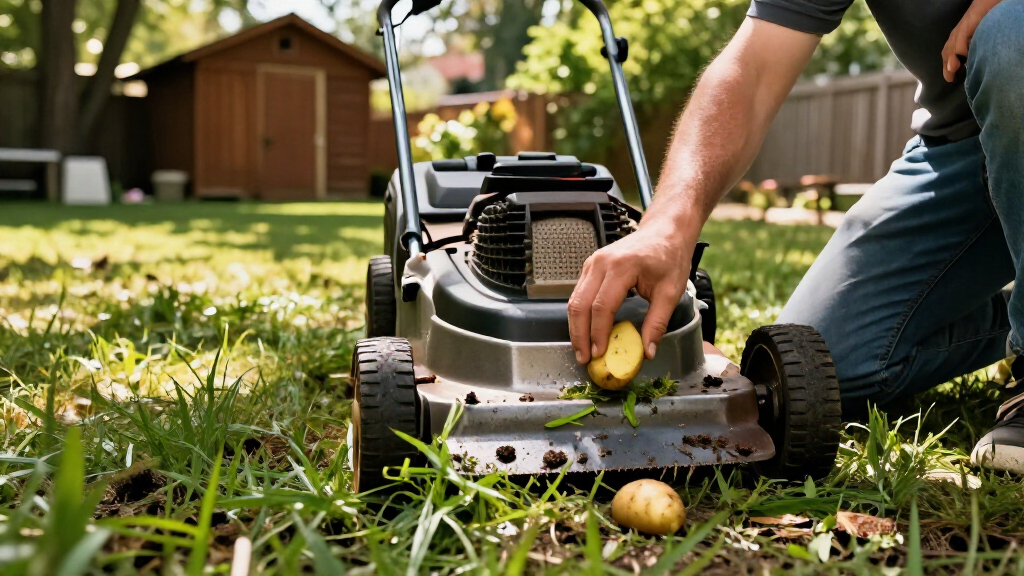
A Hunker report describes painting a lawn mower’s underside as a possible alternative to repeatedly spraying it with oil or WD-40 to loosen grass buildup. The approach uses a hard, slick coating that may make grass easier to clean off, but product claims differ and the report does not provide comparative test results.
Grass clippings stuck beneath a mower can interfere with blade rotation and hold moisture against the deck, Hunker reports. Over time, those conditions may contribute to extra strain and rust, both of which can shorten equipment life. The report says oil and WD-40 are commonly used to make cleanup easier, but describes them as temporary solutions that need frequent reapplication.
Instead, the report discusses several coating types, including enamel, urethane and alkyd-based paint. It names RustSeal, a moisture-curing urethane from KBS Coatings, as a product that can be brushed or sprayed and is intended to treat rust. Hunker says the manufacturer does not claim that RustSeal prevents grass from sticking. Its proposed benefit is a hard, smoother surface compared with metal that is pitted or porous.
The report also names Majic Black Matte Non-Stick Mower Spray Paint, an alkyd-based aerosol containing graphite. According to Hunker, the manufacturer says the paint prevents grass from sticking. That is a manufacturer claim, not evidence in the report of an independently measured effect. Hunker recommends choosing a coating partly according to the deck’s condition: rust treatment may be a priority on a badly corroded mower, while a newer deck may be suited to a coating with a non-stick additive.
A Coating Could Reduce Cleanup
The practical appeal is reducing the repeated work of clearing clippings and reapplying spray. A smoother, sound coating may make residue easier to remove, and keeping grass and its moisture from sitting against the underside could help limit one contributor to corrosion. Those are plausible maintenance benefits described in the report, but they are not a guarantee that a mower will last longer.
For owners deciding whether to try the method, the trade-off is more preparation up front in exchange for a coating that may not need the same frequent reapplication as a spray. The report does not say how long any named coating lasts under regular mowing, or how its performance compares with oil, WD-40 or other deck treatments. Results can also depend on existing rust, surface preparation, application and the product’s directions.
Popular right now

Shark Rocket Corded Stick Vacuum (HV301) – Gray/Orange

Ninja Foodi DualZone 10-Qt Air Fryer, 6-in-1, Black (DZ302)

KitchenAid Classic Series 4.5-Quart Tilt-Head Stand Mixer, Onyx Black
As an affiliate, we earn on qualifying purchases.
Why Mower Decks Collect Clippings
The report’s concern is the mower deck’s underside, where wet or cut grass can accumulate around moving parts and on exposed metal. Its account links buildup to two maintenance issues: possible interference with blade rotation and moisture held against the deck. It presents coatings as one way to change the surface, rather than as a replacement for cleaning or routine inspection.
Hunker’s suggested preparation follows general metal-painting steps: remove loose grass and flaking paint, clean and degrease the surface, treat existing rust where appropriate, and allow the metal to dry. The report says to remove the blade safely and cover the rotor and parts that should not be painted. It also cautions that some products may require a hardener or thinner, so the label’s instructions matter. Paint may feel dry before it has fully hardened.
“Oil and WD-40 are described as a temporary fix that has to be repeated often.”
— Hunker report
How Well Coatings Perform
The source does not report controlled tests, measured reductions in grass buildup, or a comparison of painted decks with decks treated using oil or WD-40. It also gives no expected service life for a coating, application frequency, or cost comparison. The degree of benefit is therefore not quantified and may vary by mower condition and use.
It is also unclear whether every paint or coating discussed is compatible with every mower deck. Readers should check the product label and mower manufacturer’s maintenance guidance before applying a coating. The report’s discussion does not establish that painting eliminates rust, prevents all buildup or removes the need to clean the deck.
Check Labels Before Applying
Anyone considering the method should identify whether rust control or a grass-resistant additive is the main goal, then confirm that the chosen product is suitable for the mower and its metal surface. Preparation and curing instructions vary. Hunker advises following product directions, including any requirements for mixing, drying and waiting before mowing.
Because the work involves a mower blade and paint fumes, the report calls for safe blade removal, masking parts that should not be coated, good ventilation and a respirator during application. The mower should be made safe against accidental starting before work begins; owners should follow the manufacturer’s instructions for disconnecting power or disabling the engine and handling the blade. The next meaningful evidence would be product-specific testing or longer-term use reports that compare coating performance and durability. Until then, the approach remains a maintenance option, not a proven universal fix.
Key Questions
What does the report suggest using instead of oil or WD-40?
It describes applying a suitable paint or coating to the mower deck’s underside. Options discussed include enamel, urethane and alkyd-based products; the right choice may depend on rust and the product’s stated purpose.
Does RustSeal claim to stop grass from sticking?
According to Hunker, KBS Coatings does not make that claim. The report says the hard surface may be easier to clean than pitted or porous metal, while describing RustSeal primarily as a rust-treatment coating.
Which product is advertised as preventing grass buildup?
Hunker says the maker of Majic Black Matte Non-Stick Mower Spray Paint claims it prevents grass from sticking. The report does not provide independent performance tests for that claim.
What safety steps are needed before painting a mower deck?
Make the mower safe against accidental starting and follow its manual when removing the blade. Mask components that should not be painted, work in a well-ventilated area, wear a respirator when directed, and follow the coating label’s preparation and curing instructions.
Will a painted deck eliminate cleaning or rust?
No such guarantee is established by the report. A coating may make grass easier to remove, but its performance and durability are not quantified, and the source does not say that paint eliminates buildup or rust.
Source: rss