
TL;DR

Get business pricing on tools and workshop supplies
- Business-only prices and quantity discounts
- Tax-exempt purchasing
- Multiple users, one account, clear invoices
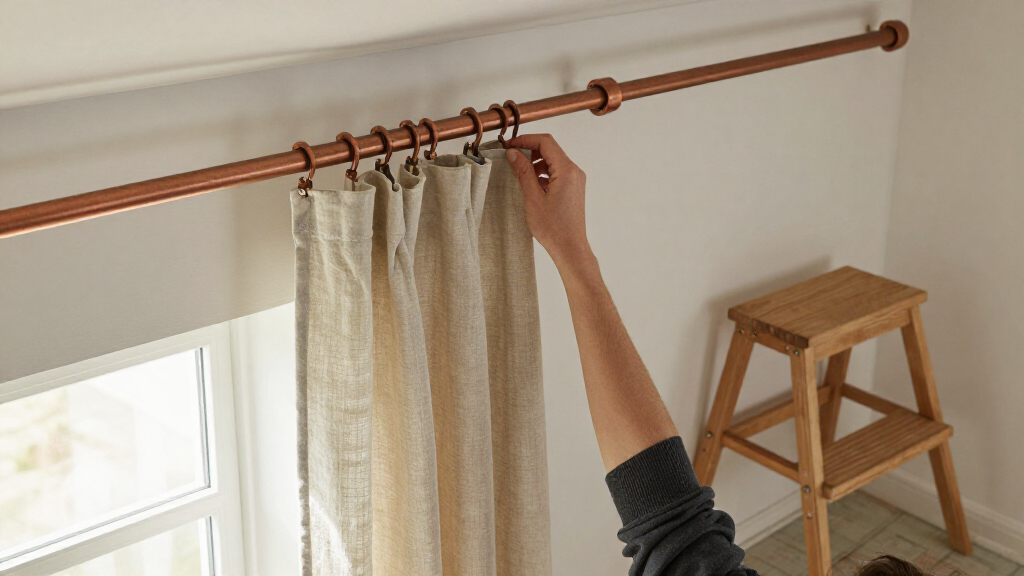
A Hunker report describes using copper pipe and plumbing fittings as a decorative alternative to a standard curtain rod. It lists materials and steps, while noting that pipe is not adjustable, prices vary and the installed rod must support the curtain load.
Hunker has outlined a do-it-yourself curtain rod made from copper plumbing pipe and standard fittings, offering homeowners a way to create a custom-looking window fixture rather than use a conventional rod. The project’s cost and appearance depend on local prices, the window dimensions and the fittings needed, and the pipe must be securely supported once curtains are hung.
The guide suggests a ½-inch copper Type M pipe as the central rod, along with two flanges, two copper male adapters and two elbows. A copper tee can be added at the center if the span needs additional support. Hunker says buyers may also want copper spray paint for the flanges, curtain rings if their panels require them, and tools including a tape measure, level, pencil, drill and tubing cutter.
As a price example, the report says Home Depot listed a Cerro five-foot pipe for $16.54. That is the pipe price, not a complete project estimate: fittings, paint, rings and tools may add to the total. Hunker cautions that prices can differ by store or region, so the example does not establish that the finished setup will cost less than every store-bought rod.
For installation, the guide calls for measuring the window and planned layout before cutting, leaving room for the supports and curtains. After cutting, the pipe ends should be smoothed with a deburring tool or sandpaper to reduce the chance of snagging fabric. The flanges are painted and allowed to dry, then attached to the wall with adapters. The pipe and elbows can be positioned to mark the second support location before that flange is installed. The final assembly should be checked for adequate support under the weight of both the pipe and curtains.
A Custom Rod With Load Limits
The idea turns an ordinary plumbing material into visible room hardware, making the rod part of the decor rather than a fixture designed to disappear. Hunker points to possible pairings such as copper with white curtains and weathered wood for a farmhouse-style room, or exposed brick for an industrial look. Those are styling suggestions, not guaranteed results; the finish and surrounding materials determine the effect.
The practical trade-off is that copper pipe is cut to a chosen length and does not adjust like a telescoping curtain rod. A measurement error can leave the rod too short, while a long span or heavy curtains can put extra demands on the supports. The guide’s mention of a center tee highlights that support needs vary with the installation. Readers should treat weight capacity and secure wall attachment as functional requirements, not just finishing details.
Maintenance is another factor. Hunker says copper can tarnish over time and describes rubbing affected areas with lemon and kosher salt, then wiping the surface with a damp cloth and drying it thoroughly. That gives owners a basic cleaning option, but the source does not provide durability testing or address how different finishes may respond.
Popular right now

De'Longhi 15-Bar Pump Espresso Machine with Milk Frother & Temperature Control

Sony BRAVIA 5 85-Inch Mini LED 4K HDR Smart TV (K-85XR50)

KitchenAid Artisan 5-Quart Tilt-Head Stand Mixer, Almond Cream
As an affiliate, we earn on qualifying purchases.
From Plumbing Aisle to Window
The report presents copper pipe as an alternative for people who have not found a conventional curtain rod that suits their room. Its central appeal is the exposed warm-metal finish, which can be left to complement other materials or matched with painted fittings and coordinating rings. The project is not a new product launch or a reported change in the home-improvement market; it is a practical decor suggestion published as a DIY guide.
The materials list matters because pipe alone does not form a ready-to-hang rod. Flanges connect the assembly to the wall, adapters join the fittings, and elbows shape the ends. Depending on the panels, curtain rings may also be needed. The report advises checking the layout before cutting because, unlike an adjustable rod, a cut length cannot be extended to correct a short measurement.
Hunker’s article also includes a disclosure that it may receive a commission from purchases made through links. The listed pipe price is a single retail example from Home Depot, rather than a current nationwide quote or a full bill of materials. Readers should check local availability and prices before starting.
Costs and Support Depend on Setup
The source does not give a full project total, compare the completed DIY assembly with specific commercial rods, or provide a tested weight limit. It also does not specify a maximum span, the type of wall anchors required, or how to adapt the method for different wall materials. Those details affect whether a particular setup is suitable and cannot be inferred from the pipe’s listed price.
It is also unclear how the proposed fittings and finish will perform over time in different rooms, or whether the cleaning method is appropriate for every coating. Hunker’s instructions are a general DIY guide, not a product certification or a site-specific assessment. The source does not report reader results or independent testing of the assembled rod.
Measure Before Buying Materials
For anyone considering the project, the next step is to measure the window and mark where the supports would sit before buying or cutting pipe. Check the full span, account for curtain clearance, identify the fittings needed, and compare local prices for all parts rather than relying on the pipe-only example. If the assembly will carry heavy curtains or cross a wide opening, plan support accordingly and confirm that the flanges can be securely attached to the wall.
After installation, check that the rod and supports remain firm when the curtains are moved. The source offers no follow-up testing or announced updates, so there is no further milestone to report. The project’s suitability and final cost remain dependent on each window, its wall construction and the materials available locally.
Key Questions
What materials does the copper-pipe curtain rod require?
Hunker lists ½-inch copper pipe, two flanges, two male adapters and two elbows. A center tee may be useful for added support. Spray paint, curtain rings and cutting or measuring tools may also be needed, depending on the layout and panels.
How much does the project cost?
The report gives one example: a five-foot Cerro Type M pipe listed at Home Depot for $16.54. That is not the complete project cost. Fittings, paint, rings and tools are additional, and prices vary by store or region.
Can copper pipe adjust to fit a window?
No. The guide says the pipe must be measured and cut to the planned length; unlike an adjustable rod, it cannot extend to make up for a short measurement. Check the layout before cutting.
Does a copper pipe rod need center support?
It may. Hunker suggests adding a copper tee in the center if more support is needed, but the report does not give a tested weight limit or maximum span. The required support depends on the installation and the weight of the curtains.
How does the guide recommend cleaning tarnished copper?
It describes gently rubbing tarnished areas with a cut lemon dipped in kosher salt, wiping away the residue with a damp cloth and drying the copper thoroughly. The report does not discuss how that method may affect every coating or finish.
Source: rss