TL;DR

Get business pricing on tools and workshop supplies
- Business-only prices and quantity discounts
- Tax-exempt purchasing
- Multiple users, one account, clear invoices
A Nature Yardlife YouTube tutorial featured in Hunker shows how to make a small mason bee house from an untreated cedar fence board and removable nesting tubes. The project provides nesting cavities for solitary bees, but the report does not establish that a particular garden saw more bees or improved pollination.
A Nature Yardlife YouTube tutorial shows how to turn an untreated cedar fence board into a small, roofed nesting house for solitary mason bees, offering backyard gardeners a way to provide nesting cavities alongside flowers. The project uses removable nesting tubes and basic woodworking tools; the report describes the design, not a measured increase in bee numbers or pollination.
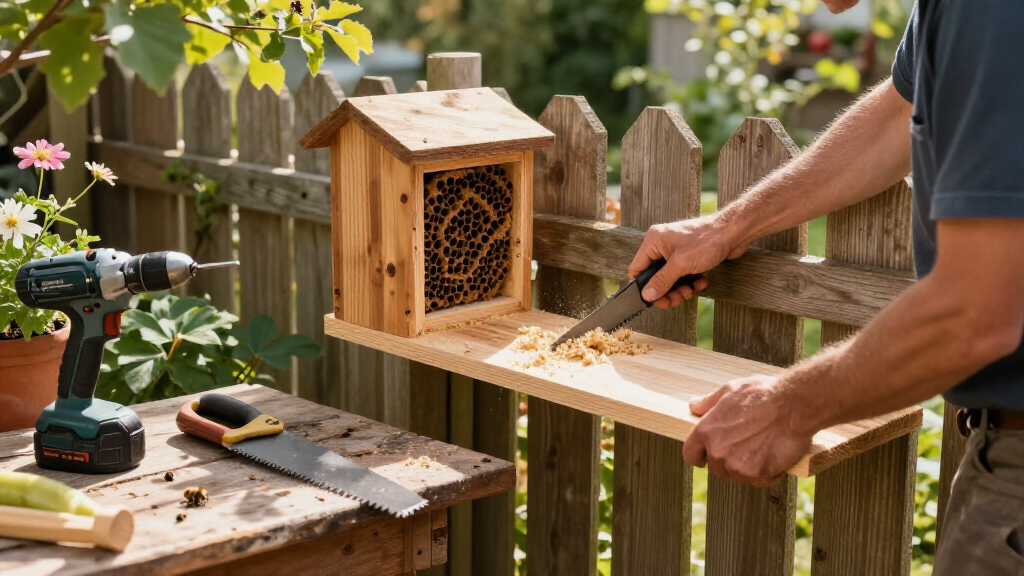
The house is built from cut sections of one cedar board, with side panels, a back, a floor and an overhanging roof. The sides are cut at slightly different heights so the roof can slope toward the front. The tutorial also describes an optional divider that creates a small lower compartment. In the video, the DIYer uses that space for cocoons.
Materials listed include a tape measure, pencil, saw and sandpaper, plus screws and a drill or a brad nailer with suitable fasteners. The builder also needs mounting hardware and removable mason-bee nesting tubes; paper liners are optional. The report advises choosing the tubes before cutting, so the house can be made deep enough to shelter them.
After assembly, a scrap-wood strip can be attached to the back for mounting the house on a tree or post. The tutorial recommends fixing it firmly beneath cover and facing it east to catch morning sunlight. The report says this can help bees become active after a cool night. No independent test results or observations from a specific garden are included.
A Nesting Site Beside Garden Flowers
The project focuses on a need that planting alone does not address: nesting space. The Hunker report says solitary mason bees use existing cavities to raise their young rather than living in a shared honeybee-style hive. Tubes in a small shelter offer a substitute for hollow stems and other small spaces they may seek out.
For readers, the practical point is that a bee-friendly garden involves more than adding flowers. The house is a relatively small woodworking project, but it is not presented as a guarantee that bees will move in or that garden yields will rise. The source gives no data on occupancy, pollination outcomes or the number of bees attracted.
Popular right now

Samsung 85-Inch QN70H Neo QLED 4K Smart TV (2026)

De'Longhi 15-Bar Pump Espresso Machine with Milk Frother & Temperature Control

Sony BRAVIA 5 85-Inch Mini LED 4K HDR Smart TV (K-85XR50)
As an affiliate, we earn on qualifying purchases.
How the Cedar Board Design Works
The report frames the house as one part of backyard habitat: bees need food from flowers as well as places to nest and shelter from the elements. Its featured design puts removable tubes in an upper compartment beneath an overhanging roof, combining a simple wooden frame with nesting materials that can be taken out for upkeep.
The source identifies mason bees as solitary. That distinction matters to the design: the tubes provide individual nesting cavities, not a communal hive. The report recommends pairing the structure with bee-friendly plants and landscaping so the insects have flowers to visit as well as somewhere to nest. It does not identify a specific species, location, building dimensions or seasonal schedule for the pictured project.
“The report recommends choosing the nesting tubes before cutting so the housing can be made deep enough to shelter them.”
— Hunker report
Bee Use and Maintenance Details
The supplied report does not say whether the finished house was occupied, how many bees used it or whether it changed pollination in the garden. It also does not give a location, specific dimensions, a build date or details about the garden’s existing plants and bee population. Claims about improved activity should not be read as a measured outcome from this project.
Long-term care depends on the nesting materials. The report warns that parasites and diseases can build up if nesting materials are reused without proper cleaning or replacement. It recommends removable tubes for seasonal maintenance, but does not provide a detailed cleaning protocol or a region-specific schedule. Gardeners should follow guidance suited to local bee species and conditions.
Pair the House With Flowering Plants
The tutorial’s next practical step is to mount the completed shelter securely beneath cover, with its entrance facing east, then provide nearby flowers for visiting bees. The report also points to seasonal care: removable tubes can be taken out and cleaned or replaced, rather than reused without maintenance.
No launch, follow-up study or later milestone is reported. Whether bees use a particular house will depend on local conditions, and the source gives no occupancy results. Anyone following the design can assess the site over time and consult local pollinator guidance for appropriate tube care and planting.
Key Questions
What is the bee house made from?
The reported design uses an untreated cedar fence board, cut into panels for the sides, back, floor and roof. It also needs mounting hardware and removable nesting tubes.
Which bees is the house intended for?
The tutorial is aimed at solitary mason bees, which nest in cavities rather than sharing a honeybee-style hive, according to the Hunker report.
Where does the tutorial recommend mounting it?
The report recommends a firm mount beneath cover, facing east for morning sunlight. It suggests a tree or post as possible mounting locations.
Does the report show that the house attracted bees?
No. The supplied report describes the tutorial and its design but gives no occupancy count or measured pollination result for a specific garden.
Can the nesting tubes be reused?
The report recommends removable tubes for seasonal maintenance and warns that parasites and diseases can build up when nesting materials are reused without proper cleaning or replacement. It does not provide a detailed cleaning schedule.
Source: rss