TL;DR

Get business pricing on tools and workshop supplies
- Business-only prices and quantity discounts
- Tax-exempt purchasing
- Multiple users, one account, clear invoices
Recent studies uncover the vital role of skilled craftsmen in building ancient Egypt’s iconic monuments. Their expertise has long been underappreciated, but new findings are changing this view. The research emphasizes the importance of these artisans in Egypt’s historical achievements.
Recent archaeological research has confirmed that skilled craftspeople, often overlooked in historical accounts, played a crucial role in constructing Egypt’s ancient monuments. This development shifts the traditional narrative that primarily credits pharaohs and architects, highlighting the essential contributions of artisans and laborers. The findings matter because they deepen understanding of Egypt’s complex society and technological achievements.
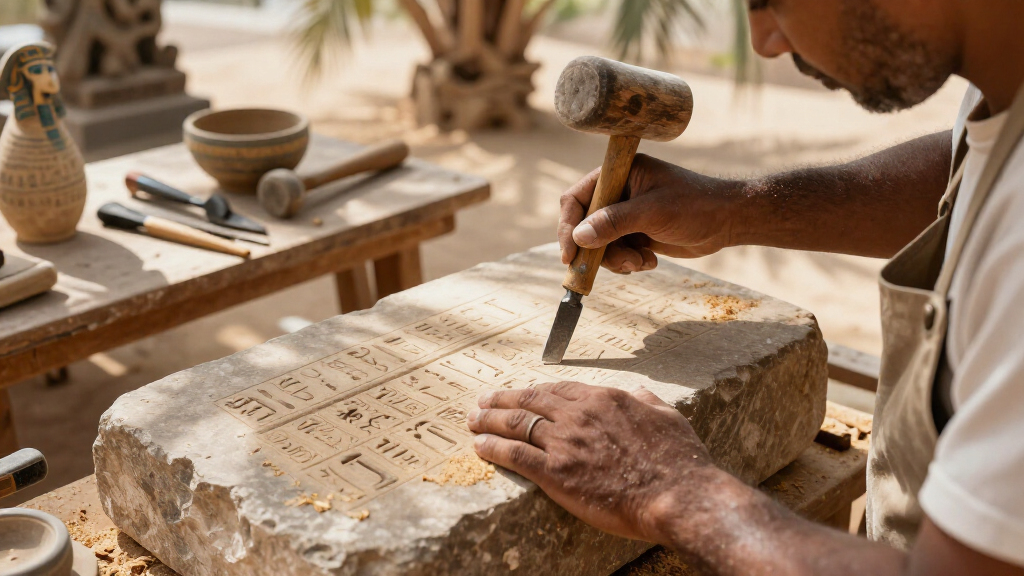
New evidence from recent excavations and analyses indicates that a diverse group of craftsmen—stone carvers, metalworkers, painters, and laborers—were integral to Egypt’s monumental architecture. These artisans possessed specialized skills, often passed down through generations, and worked under the supervision of master builders and architects. The research, based on newly discovered tools, workshop remains, and inscriptions, suggests that their expertise was vital for the precision and durability of structures such as temples, tombs, and pyramids.
Historically, the focus has been on the pharaohs and their architects, with little attention paid to the artisans behind the scenes. However, recent scholarship, including analyses of workshop sites near major monuments, indicates that these craftspeople had sophisticated techniques and knowledge. Their work involved not only construction but also intricate decorative arts, which have survived millennia and are now being studied more thoroughly.
Why Recognizing Egypt’s Craftspeople Changes Our View of History
This recognition of the artisans’ vital role alters the traditional narrative of ancient Egypt’s history, emphasizing the collective effort behind monumental achievements. It underscores the importance of skilled labor and specialized craftsmanship in enabling Egypt’s architectural feats. For modern archaeology and history, this shift highlights the need to study workshop remains and craft traditions to fully understand ancient Egyptian society. It also elevates the status of these craftsmen, who were previously seen as mere laborers, to the level of skilled artisans central to Egypt’s cultural legacy.
ancient Egyptian stone carving tools
As an affiliate, we earn on qualifying purchases.
As an affiliate, we earn on qualifying purchases.
Historical Focus on Pharaohs and Architects Overshadowing Craftsmen
For decades, the dominant narrative of ancient Egypt’s construction projects has centered on the pharaohs and their chief architects, such as Imhotep. While these figures are documented in inscriptions and historical texts, the contributions of the numerous craftspeople involved have often been marginalized or overlooked. Recent discoveries of workshop debris, tools, and inscriptions are beginning to paint a fuller picture of the society behind the stones. This trend of uncovering the artisans’ role has gained momentum in the last few years, driven by advances in archaeological techniques and renewed scholarly interest.
Historically, Egyptology has prioritized monumental architecture and royal inscriptions, leaving the labor force, especially the skilled craftsmen, in the shadows. Now, with more detailed excavations near major sites like Giza and Karnak, researchers are uncovering evidence of the complex networks of workshops and the specialized skills of individual artisans.
As an affiliate, we earn on qualifying purchases.
While recent findings confirm the involvement of skilled artisans, many details remain unclear. It is not yet confirmed how widespread their recognition was during ancient times, or how their social status compared to that of scribes or officials. Additionally, the full scope of their training, the organization of workshops, and the extent of their influence on design choices are still under investigation. Further excavations and analyses are needed to clarify these aspects.
ancient Egyptian craftsmanship kits
As an affiliate, we earn on qualifying purchases.
As an affiliate, we earn on qualifying purchases.
Future Research to Uncover More About Egypt’s Artisans
Archaeologists plan to continue excavating workshop sites near major monuments, aiming to recover more tools, inscriptions, and workshop layouts. Advances in material analysis and digital reconstruction will help to understand the techniques used by these craftsmen. Scholars also intend to explore the social and economic status of artisans, potentially rewriting parts of Egypt’s social history. These efforts will deepen the understanding of the collective effort behind Egypt’s architectural marvels.
As an affiliate, we earn on qualifying purchases.
Key Questions
Why were these craftsmen historically overlooked?
Historically, the focus has been on the pharaohs and their architects, with less emphasis on the labor force. Many artifacts and inscriptions highlight royal figures, leading to the marginalization of artisans in the historical record.
What kinds of tools have been found that indicate skilled craftsmanship?
Recent excavations have uncovered chisels, polishing stones, metalworking tools, and paintbrushes, which suggest advanced techniques and specialized skills among Egyptian craftsmen.
How might this new focus change our understanding of ancient Egyptian society?
It could lead to a broader appreciation of the collective effort involved in monumental construction and elevate the social status of skilled workers, recognizing them as key contributors to Egypt’s cultural achievements.
Are there any surviving records of craftsmen’s training or guilds?
Currently, there are limited direct records, but ongoing research into inscriptions and workshop debris may eventually shed light on training practices and organizational structures of craftsmen.
Will this discovery influence the way Egyptology is taught or studied?
Yes, it is likely to encourage a more inclusive approach that values the contributions of artisans and laborers, leading to a more comprehensive understanding of ancient Egyptian society.
Source: rss
Fall yard work Picks
leaf blowers
As an affiliate, we earn on qualifying purchases.