
TL;DR

Get business pricing on tools and workshop supplies
- Business-only prices and quantity discounts
- Tax-exempt purchasing
- Multiple users, one account, clear invoices
Ring’s upcoming Smart Lock has a built-in hand crank that the company says can generate enough electricity to operate the lock for about 30 seconds if its battery runs out. Ring plans to sell it for $249 in the first few months of 2027, but has not announced a precise release date.
Ring has announced a Smart Lock with a built-in hand crank that can generate emergency power if the lock’s battery runs out, giving users a short window to unlock the door. The planned $249 device is expected to go on sale in the first few months of 2027, although Ring has not set a precise launch date.
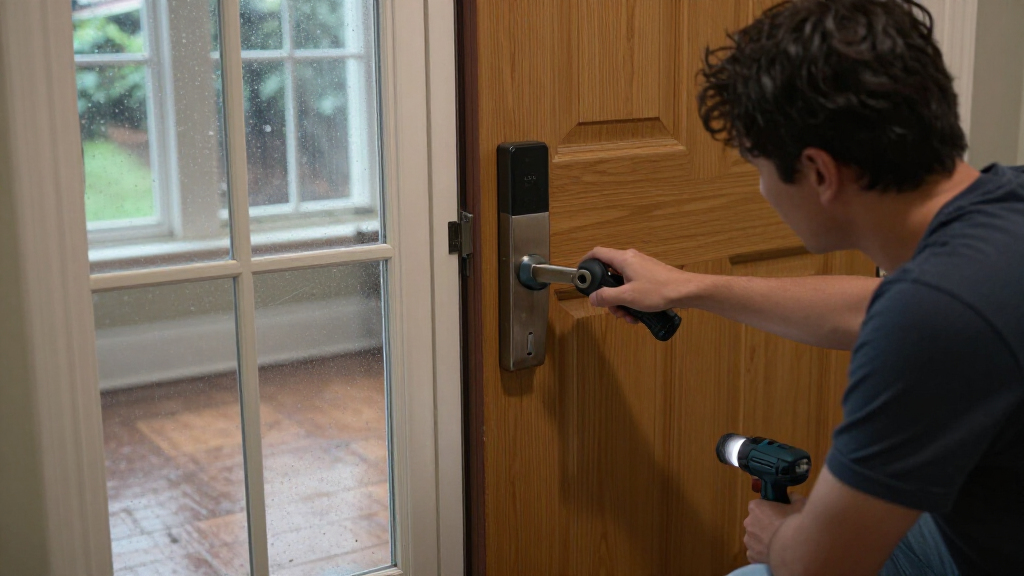
The crank is a small wheel on the front of the lock. According to Ring founder Jamie Siminoff, turning it back and forth three or four times generates enough electricity to run the device for about 30 seconds. That brief period is intended to let someone unlock the door using the fingerprint reader, keypad, Ring app or Alexa.
The mechanism uses a small motor and a supercapacitor. The Ambient reported that a few firm turns produce around three volts, allowing the lock to operate normally for the short emergency interval rather than entering a limited low-power mode. Ring says the lock’s built-in battery should last up to a year on a single charge; that is the company’s stated estimate, not a guarantee for every household or usage pattern.
The Smart Lock uses a single-cylinder deadbolt and does not require additional wiring, according to the report. It is planned in Black, Silver and Brass finishes. Ring has opened interest registration, but has not confirmed the final release date or further availability details.
Backup Power Without a Spare Battery
The hand crank addresses a practical concern with connected locks: a depleted battery can leave users unable to rely on their usual electronic entry methods. Ring’s approach is designed to provide a temporary power source without a spare battery, USB cable or external supply. That could be useful if someone reaches the door without having prepared another way to power the lock.
The feature may also appeal to people who worry about replacing a conventional lock with a connected device. Siminoff has pointed to remote cabins and other infrequently visited places as settings where a manual backup could be helpful. How convenient the crank is in real-world conditions, and whether it changes purchasing decisions, remain untested until the product is available.
The mechanism is an emergency fallback, not a replacement for routine battery maintenance. Ring’s stated battery life suggests most owners may rarely need the crank, but the company has not provided detailed conditions behind its one-year estimate.
Popular right now

Sony BRAVIA 5 85-Inch Mini LED 4K HDR Smart TV (K-85XR50)

Bose QuietComfort Wireless Bluetooth Headphones with Active Noise Cancellation, Mic, USB‑C Charging, Deep Bass, 24‑Hour Battery – White Smok

De'Longhi Magnifica Evo Fully Automatic Espresso Machine with Manual Milk Frother, Silver
As an affiliate, we earn on qualifying purchases.
How Ring Plans the Emergency Unlock
Smart locks generally depend on electrical power for features such as keypads, biometric readers and app-connected controls. Ring’s announced design adds a manual power-generation option to those electronic entry methods: users turn the exterior wheel, then have roughly half a minute to operate the lock.
The hand-crank lock was part of a broader set of hardware announced by Ring. The company is also preparing four 4K cameras—the Outdoor Cam 4K Plus, Spotlight Cam 4K Plus, Floodlight Cam 4K Plus and Indoor Cam 4K—and a Pan-Tilt Indoor Cam 2K. The lock’s emergency power feature stands out in the report because it targets the risk of losing access when a smart lock’s battery is exhausted.
Ring’s current timing is the first few months of 2027. Siminoff reportedly hopes for a release closer to January than March, but that preference is not a confirmed shipping date.
“Concerns about losing access when a smart lock runs out of power can put people off buying one.”
— Jamie Siminoff, Ring founder, as reported by The Ambient
Release Date and Battery Details
Ring has not confirmed an exact launch date, and its early-2027 window could still change. The reported $249 price is the planned price; final pricing, sales regions and ordering details have not been established in the source material.
It is also unclear how the lock performs in independent testing, how many crank turns are needed in different conditions, or whether the roughly 30-second operating window varies with use. Ring has not detailed the assumptions behind its up-to-one-year battery estimate, including how usage patterns affect that figure.
Ring’s Early-2027 Launch Window
Ring’s stated plan is to release the Smart Lock during the first few months of 2027, with interest registration already available. The company has not announced a firm date. Further product specifications, availability and independent hands-on testing may clarify how the crank works outside the reported demonstration and what buyers can expect from the battery.
Key Questions
How does the Ring Smart Lock hand crank work?
Ring says turning the wheel on the front of the lock back and forth three or four times generates electricity for about 30 seconds of operation.
What can users do during the emergency power window?
The reported options include the fingerprint reader, keypad, Ring app or Alexa. The crank provides temporary power so users can operate one of those methods.
When will Ring’s Smart Lock be available?
Ring’s planned launch window is the first few months of 2027. The company has not confirmed a specific date.
How much will the Ring Smart Lock cost?
The planned price is $249, according to The Ambient’s report. Final pricing and availability details have not been confirmed.
How long does the lock’s battery last?
Ring says the built-in battery should last up to a year on one charge. Actual battery life may vary, and the report does not give the usage conditions behind the estimate.
Source: rss