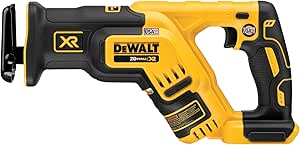
The best cordless reciprocating saws pair useful cutting power with control, battery life, and a design suited to the work. My best overall pick is the DEWALT 20V MAX XR Brushless Cordless Reciprocating Saw, a strong all-around choice for demanding cuts and frequent use. For tight spaces, the DEWALT ATOMIC DCS369B and Makita XRJ08Z stand out for compact, one-handed handling, while the RYOBI ONE+ PCL515B is a practical option for buyers already using that battery platform. The main tradeoffs are reach and cutting speed versus compact control, plus bare-tool flexibility versus the convenience of a complete kit. Read on for the full comparison and guidance on choosing the right saw for your projects.

Get business pricing on tools and workshop supplies
- Business-only prices and quantity discounts
- Tax-exempt purchasing
- Multiple users, one account, clear invoices
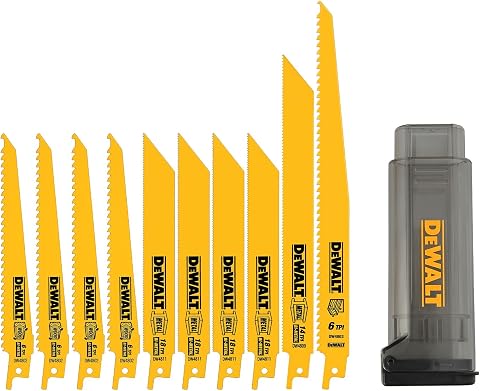
Complete the kit


Key Takeaways
- Brushless models lead for repeated, demanding work: the DEWALT XR and Makita XRJ05Z are the stronger candidates when efficiency and sustained use matter more than a lower-complexity setup.
- Compact saws solve access problems, not every cutting problem: the DEWALT ATOMIC DCS369B, DEWALT DCS367B, Makita XRJ08Z, and Milwaukee Hackzall suit tight spaces, but their form factor is not a substitute for a full-size saw on larger jobs.
- Battery-platform fit can matter more than the tool-only label: DEWALT, Makita, RYOBI, and Milwaukee bare tools make the most sense for buyers who already own compatible batteries and chargers.
- Complete kits lower the barrier to entry: the DEWALT DCS380P1 and BLACK+DECKER BDCR20C include a battery and charger, which can be more useful to a new cordless-tool buyer than a bare tool with a more advanced feature set.
- Included blades and batteries do not tell the whole value story: bundled options from Olmlmo, SEESII, and CORANEX arrive with accessories, but buyers should weigh platform support, serviceability, and long-term battery availability alongside the initial bundle.



| cordless reciprocating saw | Voltage | Weight | Stroke length | Model |
|---|---|---|---|---|
| DEWALT ATOMIC 20V MAX* Cordles | 20V MAX* | 3.13 lbs | — | DCS369B |
| DEWALT 20V MAX Brushless Cordl | 20V | — | 1-1/8 in. | DCS382B |
| RYOBI ONE+ 18V Cordless Recipr | 18V | 3.8 lbs | 1 in. | PCL515B |
| Olmlmo 21V Cordless Reciprocat | 21V | 3 lbs | 1.1 in. (28 mm) | RS03 |
| DEWALT 20V MAX Cordless Recipr | 20V | 11 lbs | 1-1/8 in. | DCS380P1 |
| Makita XRJ05Z 18V LXT Lithium- | 18V | 8.2 lbs with battery | 1-1/4 inches | — |
| BLACK+DECKER 20V MAX Cordless | 20V | 4.5 lbs | — | BDCR20C |
| DEWALT 20V MAX Cordless Recipr | 20V | 2.41 kg | 1-1/8 inches | — |
| SEESII Cordless Reciprocating | 21V | 3.48 kg listed; description also claims 2.0 lbs | 15 mm | — |
| BLACK+DECKER 20V MAX Brushless | 20V | 5.9 lbs | 1 inch | BLRS78E1 |
| DEWALT 20V MAX* XR Brushless C | 20V | 4.5 lbs | 1-1/8 in. | DCS384B |
| Makita XRJ08Z 18V LXT Brushles | 18V | 5.5 lbs with battery | 7/8 in. | XRJ08Z |
| CORANEX Cordless Reciprocating | — | — | — | — |
| DEWALT 20V MAX XR Brushless Co | 20V | 5.4 lbs | 1-1/8 in. | DCS367B |
| Milwaukee 2625-20 M18 18-Volt | 18V | 4 lbs | 3/4 in. | 2625-20 |
More Details on Our Top Picks
DEWALT ATOMIC 20V MAX* Cordless Reciprocating Saw (DCS369B)
The 3.13-pound, one-handed design makes the ATOMIC a strong fit for overhead work, pruning, and cuts in cramped spaces where a full-size saw is awkward. Its brushless motor, variable-speed trigger, LED, and tool-free blade release give it useful control without adding much bulk. Compared with the two-handed DEWALT DCS382B, this model is easier to position and lighter to carry, but the compact grip offers less support when pushing through demanding demolition cuts. It also reaches 2,800 SPM, below the RYOBI PCL515B’s stated 3,400 SPM, so buyers focused on maximum listed speed may prefer that alternative. The tool-only package includes two blades and a belt hook, but requires a separate 20V MAX battery and charger.
Pros:- Light 3.13-pound body is easier to maneuver overhead and in confined areas.
- Brushless motor supports efficient cordless operation.
- LED helps illuminate dim work areas.
- Tool-free blade release speeds up blade changes.
Cons:- One-handed form can feel less stable during demanding cuts.
- Battery and charger are sold separately.
- Maximum speed is lower than the stated 3,400 SPM of the RYOBI PCL515B.
Best for: DEWALT 20V MAX owners who need a lightweight saw for overhead cuts, pruning, or work in tight spaces.
Not ideal for: Buyers doing frequent heavy demolition or long, forceful cuts who want the steadier two-handed control of a full-size saw.
- Model:DCS369B
- Voltage:20V MAX*
- Weight:3.13 lbs
- Dimensions:12.5 × 2.7 × 4.8 in.
- Motor:Brushless
- Maximum speed:2,800 SPM
- Included:Tool, 2 blades, belt hook
- Battery and charger:Not included
Our verdict“Choose the ATOMIC if low weight and one-handed access matter more than full-size cutting stability.”
DEWALT 20V MAX Brushless Cordless Reciprocating Saw (DCS382B, Tool Only)
The DCS382B is a two-handed, brushless 20V saw for buyers who want a conventional grip and already own compatible DEWALT batteries. Its 1-1/8-inch stroke is a useful detail for general cutting: each cycle moves the blade farther than the RYOBI PCL515B’s 1-inch stroke, though the provided data does not give the DCS382B’s maximum speed for a direct speed comparison. A keyless blade clamp makes blade swaps simpler, while the LED and two-finger variable trigger support visibility and speed control. Compared with the one-handed DEWALT ATOMIC DCS369B, this is the more natural choice for braced, two-handed cutting, but it is longer and less suited to very tight access. The listed weight of 0.27 g appears erroneous, so I would not use it to judge portability.
Pros:- Brushless motor is suited to repeated light construction and demolition work.
- 1-1/8-inch stroke supports a longer blade travel than the RYOBI PCL515B’s stated 1-inch stroke.
- Keyless blade clamp simplifies blade changes.
- Compatible with DEWALT 20V MAX and FLEXVOLT batteries.
Cons:- Battery and charger are sold separately.
- Listed weight of 0.27 g appears to be a data error, making weight comparisons unreliable.
- Longer two-handed form is less convenient than the ATOMIC DCS369B in tight spaces.
Best for: DEWALT 20V MAX or FLEXVOLT owners seeking a brushless, two-handed saw for light construction and demolition.
Not ideal for: Shoppers without compatible batteries, or anyone choosing primarily by verified weight or compact dimensions.
- Model:DCS382B
- Voltage:20V
- Motor:Brushless
- Stroke length:1-1/8 in.
- Dimensions:16 × 7 × 4 in.
- Battery compatibility:DEWALT 20V MAX and FLEXVOLT
- Included:Saw, 1 blade
- Battery and charger:Not included
Our verdict“Pick the DCS382B if you already own DEWALT batteries and want a brushless, full-size saw with a 1-1/8-inch stroke.”
RYOBI ONE+ 18V Cordless Reciprocating Saw, Tool Only (PCL515B)
The RYOBI PCL515B offers a variable-speed range up to 3,400 SPM, the highest listed maximum in this group, which gives ONE+ owners flexibility across lighter cutting jobs. Its 1-inch stroke is shorter than the 1-1/8-inch stroke on the DEWALT DCS382B and DCS380P1, so the spec sheet favors RYOBI on maximum speed, not stroke length. At 3.8 pounds, it is a manageable tool-only option for household repairs and occasional pruning, and a 6-inch high-speed steel blade is included. Unlike the Olmlmo RS03 kit, it does not arrive with batteries, a charger, or a blade assortment; that makes it a more sensible fit for buyers already invested in RYOBI ONE+ rather than someone starting from scratch. The listed 30-day limited warranty is also brief.
Pros:- Variable speed reaches a listed maximum of 3,400 SPM.
- 3.8-pound weight keeps the bare tool manageable for general tasks.
- Includes a 6-inch high-speed steel blade.
- Runs on the RYOBI ONE+ 18V battery platform.
Cons:- Battery and charger are not included.
- Its 1-inch stroke is shorter than the 1-1/8-inch stroke listed for the DEWALT DCS382B.
- Product data lists a 30-day limited warranty.
Best for: RYOBI ONE+ users who want a variable-speed saw for household repairs, occasional pruning, and general cutting.
Not ideal for: New cordless-tool buyers who need batteries and a charger included, or those prioritizing a longer stroke or a longer listed warranty.
- Model:PCL515B
- Voltage:18V
- Maximum speed:3,400 SPM
- Stroke length:1 in.
- Weight:3.8 lbs
- Blade included:6-in. high-speed steel
- Included components:Bare tool
- Warranty:30-day limited warranty
Our verdict“Choose the PCL515B if you own RYOBI ONE+ batteries and value variable speed for everyday cutting over a longer stroke.”
Olmlmo 21V Cordless Reciprocating Saw with 8 Blades and 2 Batteries
The Olmlmo RS03 stands out as a ready-to-work package: two 4.0Ah batteries, a charger, a case, and eight blades come with the saw. That is a more complete start than the tool-only DEWALT DCS382B or RYOBI PCL515B, which require batteries and chargers from their respective platforms. The listed 3-pound weight and tool-free blade changes also suit buyers who want a portable kit for mixed household cutting in wood, PVC, or metal. I would be cautious about comparing its performance claims with established platform tools, though: the product information gives conflicting motor outputs of 500W and 200W, and lists runtime at 30 minutes. Its speed is stated in RPM rather than SPM, so it cannot be directly ranked against the other saws’ SPM figures. The bundled convenience comes with less certainty about the power specifications.
Pros:- Includes two 4.0Ah batteries and a charger.
- Eight included blades and a carrying case provide a useful starter setup.
- Listed 3-pound weight supports portable use.
- Tool-free blade changes and a safety button are included.
Cons:- Motor output is inconsistent in the product data: 500W in one place and 200W in another.
- Listed runtime is 30 minutes, which may not suit extended cutting sessions.
- Speed is listed in RPM, preventing a direct comparison with SPM figures for the other saws.
Best for: DIY buyers who need a complete cordless saw kit with batteries, charger, blades, and case included.
Not ideal for: Frequent users who need dependable runtime estimates or clear, comparable motor-performance specifications.
- Model:RS03
- Voltage:21V
- Motor:Brushless; output listed as both 500W and 200W
- Maximum speed:3,200 RPM
- Stroke length:1.1 in. (28 mm)
- Weight:3 lbs
- Batteries:2 × 4.0Ah lithium-ion
- Included:Charger, 8 blades, carrying case, manual
- Listed runtime:30 minutes
Our verdict“Choose the Olmlmo if included batteries, charger, and blades matter more than confidence in detailed performance specifications.”
DEWALT 20V MAX Cordless Reciprocating Saw Kit with Battery and Charger (DCS380P1)
The DCS380P1 is the clearest choice here for buyers who want a battery-and-charger kit from an established cordless platform, rather than a bare tool. Its four-position blade clamp lets the blade face different directions, which can help when reaching around obstacles or making flush cuts. The 1-1/8-inch stroke is longer than the RYOBI PCL515B’s 1-inch stroke, while the variable-speed trigger gives the operator control over the cut. Compared with the Olmlmo RS03, this kit includes one 5.0Ah battery rather than two 4.0Ah batteries and eight blades, but its DEWALT 20V platform may suit existing owners better. The tradeoff is substantial listed weight: at 11 pounds, it is much less appealing for overhead work than the 3.13-pound DEWALT ATOMIC DCS369B.
Pros:- Four-position blade clamp supports varied cutting angles and flush cuts.
- Variable-speed trigger gives control over cutting pace.
- Includes a 5.0Ah lithium-ion battery, charger, and kit box.
- 1-1/8-inch stroke is longer than the RYOBI PCL515B’s stated 1-inch stroke.
Cons:- Listed weight of 11 pounds makes it a poor fit for prolonged overhead work.
- Includes one battery rather than the two supplied with the Olmlmo RS03 kit.
- Full-size design is less maneuverable than the one-handed DEWALT ATOMIC DCS369B.
Best for: DEWALT buyers who want a complete kit and need flexible blade positioning for flush cuts or awkward access.
Not ideal for: Users who prioritize low weight for overhead work or want a compact one-handed saw.
- Model:DCS380P1
- Voltage:20V
- Maximum speed:3,000 SPM
- Stroke length:1-1/8 in.
- Blade clamp:Tool-free, four-position
- Weight:11 lbs
- Battery:One 5.0Ah lithium-ion battery included
- Included components:Saw, battery, charger, kit box
- Warranty:3-year limited warranty
Our verdict“Pick the DCS380P1 if you want a complete DEWALT kit and value four-position blade placement more than low weight.”
Makita XRJ05Z 18V LXT Lithium-Ion Brushless Cordless Reciprocating Saw (Tool Only)
The Makita XRJ05Z is a strong fit for buyers who already own LXT batteries and want a brushless saw with useful speed control. Its two settings reach 3,000 SPM, while the 1-1/4-inch stroke gives it a longer cutting action than the DEWALT DCS380B’s 1-1/8-inch stroke. That can help when moving through routine demolition cuts, and the tool-less clamp and LED make blade swaps and dim work areas easier to handle.
The tradeoff is that this is a bare tool, so newcomers must add a compatible battery and charger. At 8.2 pounds with a battery, it is also heavier than the BLACK+DECKER BDCR20C, making it less appealing for extended overhead work. I’d choose it for LXT-platform users who value brushless efficiency and a longer stroke, not for buyers prioritizing a complete, lightweight starter kit.
Pros:- Brushless motor and two speed settings support efficient cutting and speed selection.
- 1-1/4-inch stroke is longer than the DEWALT DCS380B’s 1-1/8-inch stroke.
- Tool-less blade changes reduce interruptions when switching blade types.
- Integrated LED helps illuminate the cut line.
Cons:- Battery and charger are sold separately.
- At 8.2 pounds with a battery, it is heavier than the BLACK+DECKER BDCR20C.
- The listed higher cost than corded alternatives may not suit occasional users.
Best for: Makita LXT tool owners who want a brushless reciprocating saw for regular repair and demolition cuts.
Not ideal for: First-time cordless tool buyers or users who need a lighter saw for frequent overhead cutting; the battery and charger are not included, and the listed weight is 8.2 pounds with a battery.
- Voltage:18V
- Motor:Brushless
- Speed:0–2,300 SPM (low) / 0–3,000 SPM (high)
- Stroke length:1-1/4 inches
- Weight:8.2 lbs with battery
- Included blade:One 6-inch, 6 TPI reciprocating saw blade
- Power source:Battery powered
- Warranty:3-year limited
Our verdict“Choose the XRJ05Z if you already own Makita LXT batteries and want brushless power with a longer stroke, but skip it if you need a lightweight complete kit.”
BLACK+DECKER 20V MAX Cordless Reciprocating Saw Kit (BDCR20C)
The BLACK+DECKER BDCR20C makes cordless cutting approachable by including the battery, charger, and blade rather than asking a new buyer to build a kit separately. At 4.5 pounds, it is substantially lighter than the Makita XRJ05Z’s listed 8.2 pounds with battery, which can make short overhead or awkward-position cuts less tiring. A variable-speed trigger, electric brake, and pivoting shoe give beginners useful control without a complicated feature set.
Its 3,000 SPM maximum speed matches the DEWALT DCS380B, but the supplied package is the clearer advantage for someone starting from scratch. The compromise is the single included battery; longer jobs may require a pause for charging, and the product data does not list a stroke length. I’d favor this for household repairs and occasional pruning, while frequent demolition users may prefer a brushless model such as the Makita XRJ05Z.
Pros:- Battery, charger, and blade are included for a ready-to-use starter package.
- Listed weight of 4.5 pounds is lower than the Makita XRJ05Z’s 8.2 pounds with battery.
- Variable-speed trigger and electric brake help manage starts and stops.
- Pivoting shoe supports contact with the workpiece as the blade moves.
Cons:- Only one battery is included, limiting continuous work when it needs recharging.
- Product data does not specify stroke length, making cutting action harder to compare.
- It lacks the brushless motor listed for the Makita XRJ05Z.
Best for: New cordless-tool buyers and homeowners who need a manageable saw for occasional repairs, pruning, and light demolition.
Not ideal for: Contractors or users planning long cutting sessions who need spare batteries or a specified longer stroke for sustained work.
- Model:BDCR20C
- Voltage:20V
- Motor speed:Up to 3,000 SPM
- Weight:4.5 lbs
- Battery included:One lithium-ion battery
- Included components:Saw, blade, battery, and charger
- Blade change:Tool-free
- Warranty:2-year limited
Our verdict“Pick the BDCR20C for a lightweight, ready-to-use saw for household jobs, but choose a platform with spare batteries for extended work.”
DEWALT 20V MAX Cordless Reciprocating Saw, 3,000 SPM, Tool Only (DCS380B)
The DEWALT DCS380B earns its place for a specific advantage: its four-position blade clamp lets users orient the blade for flush cuts and other awkward approaches without relying on a standard blade position. Paired with the pivoting shoe, that flexibility helps when trimming close to a surface or managing contact during a cut. Its variable-speed trigger reaches 3,000 SPM, matching the BLACK+DECKER BDCR20C’s stated maximum while offering more blade-position options.
The 1-1/8-inch stroke is shorter than the Makita XRJ05Z’s 1-1/4-inch stroke, and this DEWALT is a tool-only purchase, so it makes the most sense for owners already on the 20V MAX battery platform. The supplied data lists its weight as 2.41 kg, which may be less attractive for prolonged overhead work than the lighter BDCR20C. I’d choose it for adaptable cut positioning, not for a complete starter kit.
Pros:- Four-position tool-free blade clamp supports flush cuts and varied blade orientation.
- Pivoting shoe helps manage blade contact and cutting depth.
- Variable-speed trigger provides control up to 3,000 SPM.
- Rubber overmolded grip supports a more secure hold.
Cons:- Battery and charger are sold separately.
- Its 1-1/8-inch stroke is shorter than the Makita XRJ05Z’s 1-1/4-inch stroke.
- Listed weight is 2.41 kg, heavier than the BLACK+DECKER BDCR20C’s 4.5 pounds.
Best for: DEWALT 20V MAX owners who often need flush cuts or varied blade positions during remodeling and repair work.
Not ideal for: Buyers without compatible batteries or users seeking a complete kit; those prioritizing the longest stroke should compare it with the Makita XRJ05Z.
- Voltage:20V
- Maximum speed:3,000 SPM
- Stroke length:1-1/8 inches
- Blade clamp:Tool-free, four-position
- Weight:2.41 kg
- Power source:Battery powered
- Included components:Tool only; battery and charger sold separately
- Warranty:3-year limited
Our verdict“Choose the DCS380B if four-position blade setup and flush-cut flexibility matter more to you than a bundled battery or a longer stroke.”
SEESII Cordless Reciprocating Saw with Two 4.0Ah Batteries and Six Blades
The SEESII cordless reciprocating saw stands apart from the tool-only Makita XRJ05Z and DEWALT DCS380B by arriving with two 4.0Ah batteries, six blades, a fast charger, and a case. That bundle can keep a project moving through battery changes and gives buyers blades for different materials without assembling a separate kit. The 200W brushless motor, variable speed up to 3,500 RPM, LED work light, and safety lock add useful controls for mixed cuts in wood, plastic, and metal.
There is a meaningful uncertainty: the product data lists the weight as 3.48 kg, while the description also claims 2.0 pounds. That discrepancy makes it difficult to judge comfort and handling against the lighter BLACK+DECKER BDCR20C. Runtime and charging time are also unspecified. I’d consider it for buyers who value included batteries and accessories, but not for anyone who needs dependable weight and endurance figures before choosing.
Pros:- Includes two 4.0Ah batteries, reducing downtime compared with a one-battery kit like the BLACK+DECKER BDCR20C.
- Six blades, fast charger, and storage case provide a broad set of included accessories.
- Brushless motor with variable speed up to 3,500 RPM.
- LED work light and safety lock add visibility and help prevent accidental activation.
Cons:- Listed weight is 3.48 kg, while the description also claims 2.0 pounds.
- Battery runtime and charging time are not specified.
- Battery-platform compatibility beyond the included batteries is not stated.
Best for: DIY users who want a bundled saw kit with spare batteries and blades for varied household materials.
Not ideal for: Buyers who need verified weight, runtime, or charging-time information, or who prefer established battery-platform compatibility.
- Motor:200W brushless
- Voltage:21V
- Maximum speed:Up to 3,500 RPM
- Stroke length:15 mm
- Batteries:Two 4.0Ah batteries included
- Included blades:Six
- Weight:3.48 kg listed; description also claims 2.0 lbs
- Included accessories:Fast charger, storage case, gloves, safety glasses, and user manual
Our verdict“Choose the SEESII if a two-battery accessory bundle is your priority, but skip it if conflicting weight data or missing runtime details are deal-breakers.”
BLACK+DECKER 20V MAX Brushless Cordless Reciprocating Saw Kit
The BLACK+DECKER BLRS78E1 is a practical middle ground for buyers who want brushless technology without purchasing a bare tool. Its kit includes a 2.5Ah battery, charger, and three blades, while the variable-speed trigger and two speed settings let users tailor the cut across wood, pipes, and steel. An LED work light and battery charge indicator are helpful on repair jobs where visibility and knowing when to swap batteries matter.
Unlike the Makita XRJ05Z and DEWALT DCS380B, this model comes ready to use, and its 5.9-pound listed weight is lighter than the Makita’s stated 8.2 pounds with battery. The tradeoff is a 1-inch stroke, shorter than both of those alternatives, plus only one included battery. The stated maximum of 33 cuts per charge is tied to a particular battery and material, so it should not be read as a universal runtime figure.
Pros:- Brushless motor comes in a kit with a 2.5Ah battery and charger.
- Three included blades support cutting different materials.
- Two speed settings and a variable-speed trigger offer control across repair tasks.
- LED work light and battery charge indicator provide useful job feedback.
Cons:- The 1-inch stroke is shorter than the Makita XRJ05Z’s 1-1/4-inch and the DEWALT DCS380B’s 1-1/8-inch strokes.
- Only one 2.5Ah battery is included.
- The stated 33 cuts per charge depends on the specified battery and cutting material.
Best for: Homeowners who want a brushless cordless saw kit for mixed repair tasks and do not already own compatible batteries.
Not ideal for: Frequent demolition users seeking a longer stroke or uninterrupted work with multiple batteries included.
- Model:BLRS78E1
- Voltage:20V
- Motor:Brushless
- Stroke length:1 inch
- Battery:One 2.5Ah battery included
- Included components:Saw, battery, charger, and three blades
- Weight:5.9 lbs
- Warranty:2-year limited; additional 3 years with registration within 30 days
Our verdict“Pick the BLRS78E1 for a ready-to-use brushless kit for varied home repairs, but look elsewhere for a longer stroke or a spare battery in the box.”
DEWALT 20V MAX* XR Brushless Cordless Reciprocating Saw (Tool Only)
The DEWALT DCS384B is the strongest fit here for buyers who prioritize brisk cutting over a compact body. Its 1-1/8-inch stroke and variable-speed trigger suit demolition work where longer, forceful strokes can help move through material quickly. DEWALT cites up to 102 cuts per charge, though actual runtime depends on the battery and material. Compared with the compact DEWALT DCS367B, this model is aimed more at demanding cuts than squeezing between studs. A counterbalance mechanism helps manage vibration, while the pivoting shoe supports control as the blade meets the work. The tradeoff is that it is a longer tool, and this bare-tool package includes neither battery nor charger. I’d choose it for tougher cutting, not as my first pick for confined spaces.
Pros:- Brushless motor and 1-1/8-inch stroke suit fast, demanding cuts
- Counterbalance mechanism helps reduce vibration during operation
- Keyless lever-action clamp makes blade changes straightforward
- Variable-speed trigger and pivoting shoe support cutting control
Cons:- Battery and charger are sold separately
- Its 19.3-inch length is less suited to cramped work than the DEWALT DCS367B
- TOOL CONNECT chip for asset management is sold separately
Best for: DEWALT 20V MAX owners who regularly handle demolition and want a brushless saw with a full-length stroke.
Not ideal for: Buyers cutting between studs or seeking a ready-to-use kit, since this model is relatively long and ships without a battery or charger.
- Brand:DEWALT
- Model:DCS384B
- Voltage:20V
- Motor:Brushless
- Stroke length:1-1/8 in.
- Maximum speed:3,000 SPM
- Weight:4.5 lbs
- Dimensions:19.3 × 4.19 × 7.38 in.
- Battery and charger:Not included
Our verdict“Choose the DCS384B if heavy cutting matters more than compact reach and you already have compatible DEWALT batteries.”
Makita XRJ08Z 18V LXT Brushless Cordless Compact One-Handed Reciprocating Saw (Tool Only)
The Makita XRJ08Z is built for work where a full-size recip saw is awkward: overhead cuts, tight access, and jobs that call for one-handed positioning. Its compact body, loop-shaped handle, and counterweight are intended to make controlled cutting less tiring, while the tool-less blade change and LED help keep small jobs moving. The 7/8-inch stroke is shorter than the 1-1/8-inch stroke on the DEWALT DCS384B, so I’d favor the Makita for reach and handling rather than the fastest aggressive cuts. It reaches up to 3,100 SPM, but the listed 5.5-pound weight is with a battery, so it is not featherweight once equipped. Like the other bare tools here, it requires a separate battery and charger, and it makes most sense for buyers already invested in Makita 18V LXT.
Pros:- Compact one-handed layout suits confined and overhead cutting
- Counterweight mechanism is designed to reduce vibration
- Tool-less blade change and built-in LED add practical convenience
- Variable speed reaches up to 3,100 SPM
Cons:- Its 7/8-inch stroke is shorter than the DEWALT DCS384B’s 1-1/8-inch stroke
- Battery and charger are sold separately
- Listed weight is 5.5 lbs with a battery, which may feel substantial for prolonged one-handed use
Best for: Makita 18V LXT users who need a compact saw for overhead work, pruning, or cuts in tight access areas.
Not ideal for: Buyers focused on fast, heavy demolition or those without Makita batteries, since its shorter stroke and tool-only package are less convenient for those needs.
- Model:XRJ08Z
- Voltage:18V
- Motor:Brushless
- Speed range:0–3,100 SPM
- Stroke length:7/8 in.
- Weight:5.5 lbs with battery
- Length:14-3/8 in.
- Blade change:Tool-less
- Lighting:Built-in LED
Our verdict“Pick the XRJ08Z for compact, controlled cuts on the Makita 18V LXT platform, not for maximum demolition pace.”
CORANEX Cordless Reciprocating Saw with Two 4.0Ah Batteries, 11 Blades, and Case
The CORANEX stands apart from the bare-tool choices in this group by including two 4.0Ah batteries, 11 blades, and a case. That makes it appealing to a buyer starting without a compatible battery system, or anyone who wants spares and blades ready for mixed jobs around wood, metal, PVC, and branches. Its brushless motor offers variable speed up to 3,500 SPM, the highest stated maximum in this batch, and the tool-free clamp and LED cover useful day-to-day needs. But a high speed figure alone does not establish cutting performance against the longer-stroke DEWALT DCS384B; CORANEX does not provide a stroke length or weight here. The listed dimensions of 1 × 1 × 1 inch also appear unreliable. I’d pick it for the included kit, while buyers needing well-documented fit and specifications may prefer a major-platform model.
Pros:- Includes two 4.0Ah batteries, reducing interruptions for charging
- Eleven blades and a carrying case provide a broad starter setup
- Variable speed up to 3,500 SPM supports different cutting tasks
- Tool-free blade changes and an LED are included
Cons:- Stroke length and tool weight are not provided in the supplied specifications
- Listed dimensions of 1 × 1 × 1 inch appear unreliable
- The battery platform and long-term compatibility are less established than DEWALT, Makita, or Milwaukee systems
Best for: First-time buyers who want a cordless saw package with batteries, assorted blades, and a case for varied home and yard cutting.
Not ideal for: Professionals who need clearly documented dimensions, weight, and stroke length to choose a saw for repeated or demanding work.
- Brand:CORANEX
- Power source:Battery powered
- Motor:Brushless
- Variable speed:0–3,500 SPM
- Batteries included:2 × 4.0Ah
- Included blades:11
- Included accessories:Carrying case
- Special features:Tool-free blade change and LED light
- Suitable materials:Wood, metal, PVC, and branches
Our verdict“Choose CORANEX for its ready-to-start bundle, but favor the DEWALT DCS384B if documented cutting specifications matter more.”
DEWALT 20V MAX XR Brushless Compact Cordless Reciprocating Saw (DCS367B), Tool Only
The DEWALT DCS367B is the more practical choice than the longer DCS384B when cuts happen between studs, around pipes, or inside other cramped spaces. Its 14.5-inch body keeps the tool easier to position, while the four-position keyless clamp lets the blade face different directions without repositioning the whole saw. A 1-1/8-inch stroke gives it the same stated stroke length as the DCS384B, although its maximum speed is lower at 2,900 SPM. The LED and variable-speed trigger help with visibility and control, but its listed weight of 5.4 pounds makes it heavier than the DCS384B’s stated 4.5 pounds. This is a compact-work pick, not a lightweight one. It also arrives without a battery or charger, so existing DEWALT 20V MAX owners get the clearest fit.
Pros:- 14.5-inch body is suited to cuts in confined spaces
- Four-position keyless blade clamp helps adapt blade orientation
- 1-1/8-inch stroke matches the DCS384B’s stated stroke length
- Variable-speed trigger and LED aid control and visibility
Cons:- Listed weight of 5.4 pounds is heavier than the DCS384B’s stated 4.5 pounds
- Maximum speed of 2,900 SPM is lower than the Makita XRJ08Z’s 3,100 SPM
- Battery and charger are sold separately
Best for: DEWALT 20V MAX users who cut between framing members, near plumbing, or in other restricted-access areas.
Not ideal for: Buyers seeking the lightest tool or a complete kit, since the listed weight is 5.4 pounds and no battery or charger is included.
- Model:DCS367B
- Voltage:20V
- Motor:Brushless
- Maximum speed:2,900 SPM
- Stroke length:1-1/8 in.
- Tool length:14.5 in.
- Weight:5.4 lbs
- Blade clamp:Keyless, 4-position
- Battery and charger:Sold separately
Our verdict“Choose the DCS367B if access matters more than weight or included batteries, especially within the DEWALT 20V MAX system.”
Milwaukee 2625-20 M18 18-Volt Lithium-Ion Cordless Hackzall Reciprocating Saw (Bare Tool)
The Milwaukee 2625-20 Hackzall makes sense for buyers who value a light, one-handed tool for overhead work and small cuts more than maximum cutting reach. At a listed 4 lbs and 13.39 inches long, it is lighter and shorter than the 5.5-pound, 14-3/8-inch Makita XRJ08Z as supplied, which can matter when holding a saw away from the body. Its anti-vibration handle, LED, and QUIK-LOK clamp add useful control and convenience. The tradeoff is a 3/4-inch stroke, shorter than the Makita’s 7/8 inch and the DEWALT DCS367B’s 1-1/8 inches, so I’d reserve it for lighter, more maneuverable cutting rather than demanding demolition. The supplied data describes the motor as brushless, but battery and charger are not included; this is a better fit for existing M18 owners.
Pros:- Listed 4-pound weight and short body suit overhead, one-handed work
- Anti-vibration handle is designed to reduce fatigue
- QUIK-LOK clamp allows tool-free blade changes
- Built-in LED helps illuminate the cut area
Cons:- 3/4-inch stroke is shorter than the Makita XRJ08Z and DEWALT DCS367B
- Battery and charger are not included
- Plastic handle material may feel less durable than sturdier handle constructions
Best for: Milwaukee M18 owners who want a lightweight one-handed saw for overhead tasks, pruning, and cuts in tight areas.
Not ideal for: Buyers tackling frequent heavy demolition or seeking a longer stroke, since the 3/4-inch stroke prioritizes maneuverability over aggressive cutting.
- Model:2625-20
- Voltage:18V
- Motor type:Brushless, as listed
- Stroke rate:0–3,000 SPM
- Stroke length:3/4 in.
- Weight:4 lbs
- Dimensions:13.39 × 3.23 × 7.2 in.
- Battery compatibility:M18 XC and M18 Compact Lithium-Ion
- Included:Bare tool; no battery or charger
Our verdict“Pick the Hackzall for lightweight M18 one-handed work, but choose a longer-stroke saw for heavier cutting.”

How We Picked
I compared these 15 saws by the jobs they are equipped to handle: cutting performance, control, form factor, and how well each design fits repeated work versus occasional home projects. Brushless motors and established tool platforms can be useful advantages for frequent users, while compact and one-handed models earn their place when access and maneuverability matter more than full-size reach. I also looked at practical ownership details, including whether a saw is sold as a bare tool or as a kit, and whether included batteries and blades reduce setup needs.
The ranking reflects those differences rather than treating every saw as interchangeable. The strongest all-round options rank ahead because they offer a more balanced mix of capability, usability, and platform support. Compact tools rank highly for their specific role, not as universal replacements for full-size models. Kit and accessory bundles can suit beginners, but they rank lower when long-term battery support or a clear performance advantage is less established; buyers should check the exact specifications and compatibility for their intended use.
Factors to Consider When Choosing Best Cordless Reciprocating Saws
Before choosing a saw, I would match its shape, power source, and battery setup to the cuts you actually make. A demolition saw for regular remodeling has different priorities from a compact tool used to prune branches or reach between studs.
Full-Size or Compact: Start With Access
A full-size reciprocating saw gives you a longer grip and generally more room to use both hands, which can help when cutting bulky material or working through demanding demolition tasks. Compact and one-handed designs trade some leverage for easier access between framing, around plumbing, or overhead. Buyers often choose a smaller tool because it feels convenient, then discover that its reach and handling are less comfortable for long cuts. Think about the most awkward location you regularly cut in, not only the easiest job. If your projects include both open demolition and tight repair work, a full-size saw may be the more versatile first purchase, with a compact model as a later complement.
Match the Saw to the Material and Workload
Cutting clean wood, pruning branches, and removing mixed construction material place different demands on a saw and its blade. For occasional light cuts, a basic model may be adequate; repeated work through dense stock or mixed materials makes sustained performance and a suitable blade more important. A high strokes-per-minute figure alone does not show how a saw will feel under load or how easily you can keep the cut steady. Common mistakes include judging a saw by its motor label alone and using a blade meant for a different material. Pick blades for the material first, then choose the tool around the frequency and difficulty of the work.
Choose a Battery Platform Before Buying a Bare Tool
A tool-only saw can be a sensible purchase when you already own compatible batteries and a charger, since it avoids duplicating gear. If you are starting from scratch, the complete kit may be more convenient even when another bare tool looks more appealing on paper. Check that the battery platform has the tools you expect to buy later and that replacement batteries are easy for you to source. Battery size also affects balance and weight, especially on compact saws used one-handed or overhead. Avoid assuming that similar voltage labels mean batteries can be shared across brands or tool lines; confirm compatibility before ordering.
Brushless Versus Brushed: Pay for Your Use Pattern
Brushless designs are often a stronger fit for frequent users who value efficiency and sustained work, but the motor type alone does not guarantee the best saw for every buyer. For a homeowner making occasional cuts, a simpler model may offer enough capability without paying for features that rarely affect the job. Compare the full setup, including handling, battery platform, and service support, rather than treating brushless as an automatic upgrade. A common misstep is paying extra for a motor feature while overlooking the cost of batteries, blades, or a charger. Spend more when the saw will see regular use or when the rest of the tool platform supports your projects.
Treat Blade Changes and Blade Choice as Part of the Purchase
Blade selection has a direct effect on cut speed, control, and the finish left behind, so an included blade bundle should be judged by usefulness rather than count. Check how the saw accepts blades and whether changing one is straightforward for the way you work. A large assortment can help a new owner get started, but it may include blades that do not match the materials in a particular project. Keep appropriate blades for wood, metal, or pruning work rather than forcing one blade through every task. Also plan for replacement blades in your ongoing tool budget, since dull or mismatched blades can make a capable saw feel ineffective.
Account for Balance, Vibration, and Reach
Reciprocating saws can feel tiring because the tool moves through each stroke, and poor balance can make that fatigue more noticeable. Handle shape, battery placement, and the option to use two hands affect how securely you can guide a cut. A compact tool may be easier to position but less comfortable to control against a stubborn material; a full-size saw may provide more leverage but feel cumbersome in a confined area. If possible, hold the saw with the battery size you expect to use, since a larger pack can change its balance. For overhead or extended work, prioritize controlled handling over the assumption that more power alone will make the job easier.
Frequently Asked Questions
Should I buy a bare-tool saw or a kit with a battery and charger?
A bare tool usually makes more sense when you already own compatible batteries and a charger from the same platform. If you do not, a kit can save setup effort and give you a matched starting point. Compare what the kit actually includes, since batteries vary in capacity and some listings may bundle fewer useful accessories than expected. Also check whether you plan to add other tools on that platform, because a shared battery system can make future purchases simpler. Do not assume that a battery from another brand or voltage family will fit.
Is a compact one-handed reciprocating saw enough for home renovation?
It can handle many trimming and access-limited cuts, but it may not be the most comfortable choice for sustained demolition or large material. Compact models are easier to position around pipes and between framing, while full-size saws generally give you more room for a two-handed grip and leverage. Consider the amount of cutting you expect, not just whether the tool can physically make the cut. If renovation work is occasional and varied, a full-size model is usually the safer first choice. A compact saw is most useful when awkward access is a recurring problem.
Does brushless matter if I only use a reciprocating saw occasionally?
For occasional household tasks, brushless may not change your decision as much as battery compatibility, comfort, and whether the tool comes with a battery. Frequent users are more likely to value the efficiency and performance characteristics associated with brushless designs. A brushless label does not make a tool immune to the limits of its blade, battery, or form factor. Compare the actual saw and kit rather than paying extra for one feature in isolation. If you already own a platform, that compatibility may be the more practical deciding factor.
Are bundled batteries and blades from lesser-known brands a good way to start?
A bundle can be convenient if you need a working setup immediately, and included batteries or blades may reduce separate purchases. The tradeoff is that the bundle’s long-term usefulness depends on battery availability, replacement options, and support for the tool platform. Check whether the battery system has other tools you might want and whether replacement packs can be sourced later. Also verify the blade types and sizes included rather than assuming a larger bundle covers your material needs. For frequent use, established battery compatibility may matter more than receiving several accessories in one package.
How should I choose between a saw for demolition and one for pruning?
Start with the material and the places you need to reach. Demolition often calls for a saw that is comfortable to control through repeated cuts, plus blades suited to wood, metal, or mixed materials. Pruning favors manageable handling and a blade designed for branches; a compact tool can help when working among limbs, though the right blade remains necessary. Avoid using a general-purpose blade for every task, since it may cut slowly or bind. If both jobs are regular parts of your routine, choose the saw form factor that handles your more demanding work and keep task-specific blades on hand.
Conclusion
For the broadest mix of demanding work and everyday capability, I would choose the DEWALT 20V MAX XR Brushless as the best overall pick. Buyers already on the RYOBI ONE+ platform can look to the RYOBI PCL515B as a practical value choice, while beginners who need a battery and charger should compare complete kits such as the DEWALT DCS380P1 and BLACK+DECKER BDCR20C. For a premium brushless option, the Makita XRJ05Z is the better fit for users invested in Makita’s 18V LXT system. If tight access is the main challenge, choose a compact saw such as the DEWALT ATOMIC DCS369B or Makita XRJ08Z; if you need a specific kit or accessory bundle, weigh the included gear against battery support and replacement availability. The right choice depends less on a single headline feature than on matching the saw to your workload and the cordless tools you already own.