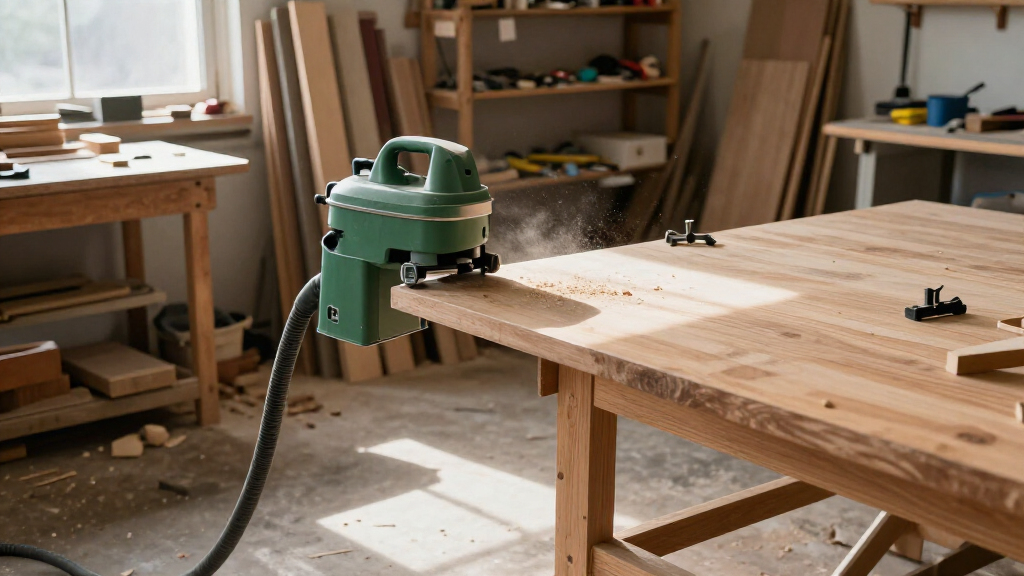
For most woodworking shops, I’d start with the Festool CT 15 HEPA Mobile Dust Extractor as the best overall pick, while the Bosch VAC090AH stands out for automatic filter cleaning and the WEN DC1300 for moving more air around stationary machines. The main choice is between a portable extractor for capturing dust at a tool and a larger dust collector built for higher-volume airflow. HEPA filtration and automatic cleaning can improve day-to-day use, but capacity, hose and port fit, and available floor space matter just as much. I compare all 12 options by how well their designs match different woodworking setups, so read on for the full breakdown.

Get business pricing on tools and workshop supplies
- Business-only prices and quantity discounts
- Tax-exempt purchasing
- Multiple users, one account, clear invoices
Complete the kit



Key Takeaways
- Portable extractors and shop dust collectors solve different problems: HEPA models such as the Festool, Bosch, and DEWALT are suited to tool-connected collection, while the WEN DC1300 is built around higher airflow for stationary machines.
- Automatic filter cleaning is most useful during sustained fine-dust work: the Bosch VAC090AH, DEWALT DWV010, and YOWMOFT make this feature a central part of their design, while buyers doing short, intermittent tasks may not need it.
- Capacity alone does not predict how well a collector fits a shop: an 8- or 9-gallon portable unit may suit a compact workspace better than a larger collector if mobility and tool connection are the priorities.
- The two Festool models serve different portability needs: the CT 15 is the stronger all-around starting point, while the CT MIDI I is the more compact option for buyers who want a smaller extractor.
- WEN’s collector lineup favors fixed-machine collection over fine-dust portability: the DC1300 emphasizes airflow and a large bag, while the 15-gallon and DC3401 models offer different compromises in footprint and setup.
| Festool CT 15 HEPA Mobile Dust Extractor |  | Best Compact Extractor for Fine-Dust Cleanup | Model: CT 15 HEPA US (578441) | Filter: HEPA | Container capacity: 15 liters (3.96 gallons) | VIEW LATEST PRICE | See Our Full Breakdown |
| DYNAVEX 12-Gallon Woodworking Dust Extractor with HEPA Filter |  | Best Large-Tank HEPA Extractor | Model: DC10003 | Motor: 1.5 HP, 10 amps | Airflow: 142 CFM | VIEW LATEST PRICE | See Our Full Breakdown |
| WEN DC1300 1,300 CFM 14-Amp 5-Micron Dust Collector with 50-Gallon Bag and Mobile Base |  | Best for Central Workshop Collection | Model: DC1300 | Airflow: Up to 1,300 CFM | Motor: 14 amps | VIEW LATEST PRICE | See Our Full Breakdown |
| ECOMAX 8-Gallon HEPA Shop Vacuum and Dust Extractor |  | Best Versatile Shop Vacuum for Tool Extraction | Model: EM18412PE-8AA | Capacity: 8 gallons | Motor power: 6.5 HP | VIEW LATEST PRICE | See Our Full Breakdown |
| DEWALT DWV010 8-Gallon HEPA Dust Extractor with Automatic Filter Cleaning |  | Best for Continuous Jobsite Extraction | Model: DWV010 | Capacity: 8 gallons | Filter: HEPA | VIEW LATEST PRICE | See Our Full Breakdown |
| ECOMAX 8-Gallon Stainless Steel Wet/Dry Shop Vacuum with HEPA Filter |  | Best Wet/Dry Workshop Utility | Capacity: 8 gallons | Motor power: 6.5 HP | Filter: HEPA | VIEW LATEST PRICE | See Our Full Breakdown |
| Festool 578512 CT MIDI I HEPA Dust Extractor |  | Best Compact Extractor for Indoor Woodworking | Model: 578512 | Filter: HEPA | Power source: Corded electric | VIEW LATEST PRICE | See Our Full Breakdown |
| YOWMOFT 8-Gallon Dust Extractor with Automatic HEPA Filter Cleaning |  | Best for Frequent Fine-Dust Extraction | Capacity: 8 gallons | Motor power: 1200 watts | Airflow: 150 CFM | VIEW LATEST PRICE | See Our Full Breakdown |
| Ecawei 9-Gallon Woodworking Dust Extractor with Auto-Start Outlet |  | Best for Wood Chips and Coarse Debris | Capacity: 9 gallons | Power: 1400 watts | Speeds: 3 | VIEW LATEST PRICE | See Our Full Breakdown |
| WEN 15-Gallon Woodworking Dust Collector, 7.4-Amp Motor, 4-Inch Port, Mobile Base and Wall Mount |  | Best for Stationary Machines and High-Volume Chips | Motor: 7.4-amp induction motor | Impeller: 9 inches | Airflow: Up to 600 CFM | VIEW LATEST PRICE | See Our Full Breakdown |
| Bosch VAC090AH 9-Gallon Dust Extractor with Automatic Filter Cleaning |  | Best for Fine-Dust Tool Extraction | Capacity: 9 gallons | Filter: HEPA | Particle capture: 99.97% of particles 0.3 microns or larger | VIEW LATEST PRICE | See Our Full Breakdown |
| WEN DC3401 12-Gallon Woodworking Dust Collector |  | Best Compact Collector for Stationary Machines | Airflow: Up to 660 CFM | Motor: 5.7-amp brushed | Impeller: 6-inch nylon | VIEW LATEST PRICE | See Our Full Breakdown |
| dust extractors for woodworking | Model | Filter | Airflow | Weight |
|---|---|---|---|---|
| Festool CT 15 HEPA Mobile Dust | CT 15 HEPA US (578441) | HEPA | — | — |
| DYNAVEX 12-Gallon Woodworking | DC10003 | 0.5-micron HEPA | 142 CFM | 29.5 pounds |
| WEN DC1300 1,300 CFM 14-Amp 5- | DC1300 | — | Up to 1,300 CFM | — |
| ECOMAX 8-Gallon HEPA Shop Vacu | EM18412PE-8AA | HEPA | — | — |
| DEWALT DWV010 8-Gallon HEPA Du | DWV010 | HEPA | 150 CFM (also listed as 155 CFM) | About 22 pounds (also listed as 21 pounds) |
| ECOMAX 8-Gallon Stainless Stee | EM18412E-8AA | HEPA | — | — |
| Festool 578512 CT MIDI I HEPA | 578512 | HEPA | — | — |
| YOWMOFT 8-Gallon Dust Extracto | — | — | 150 CFM | 35.2 pounds |
| Ecawei 9-Gallon Woodworking Du | — | — | — | — |
| WEN 15-Gallon Woodworking Dust | — | — | Up to 600 CFM | 41.1 pounds |
| Bosch VAC090AH 9-Gallon Dust E | — | HEPA | — | 28 pounds |
| WEN DC3401 12-Gallon Woodworki | — | — | Up to 660 CFM | 17 pounds |
More Details on Our Top Picks
Festool CT 15 HEPA Mobile Dust Extractor
The Festool CT 15 is the compact, cleanup-oriented choice here: its HEPA filtration, automatic tool start, and AutoClean system suit woodworkers who want a portable extractor for tool-connected work and fine-dust pickup around the shop or home. Its 15-liter container is smaller than the DYNAVEX’s 12-gallon tank, so it asks for more frequent emptying on larger jobs, but the compact footprint and stored accessories make it easier to keep close at hand. Compared with the WEN DC1300, this is built for hose-based extraction and cleanup rather than moving high volumes of air through large ductwork. The tradeoffs are a single power level and corded operation, which limits adjustment and reach. I’d choose it for a smaller woodworking setup where portability and filtration matter more than capacity.
Pros:- HEPA filtration supports fine-dust collection.
- Automatic tool start links extraction to a connected tool.
- AutoClean system helps manage filter buildup.
- Compact canister includes stored accessories and a flat top for tool storage.
Cons:- The 15-liter container fills sooner than the DYNAVEX’s 12-gallon tank during extended work.
- Corded power limits reach when outlets are not nearby.
- Only one power level is listed.
Best for: Woodworkers in a compact shop who need HEPA-filtered tool extraction and convenient cleanup without a large collector.
Not ideal for: Shops running larger machines through 4-inch ducting or anyone who wants a large collection capacity and adjustable suction.
- Model:CT 15 HEPA US (578441)
- Filter:HEPA
- Container capacity:15 liters (3.96 gallons)
- Power source:Corded electric
- Form factor:Canister
- Hose:27/32 × 3.5 m
- Tool control and filter cleaning:Automatic tool start; AutoClean system
- Included cleaning tools:Crevice nozzle and upholstery brush
Our verdict“Choose the CT 15 for compact, HEPA-filtered woodworking cleanup; choose a larger-capacity model for longer collection runs.”
DYNAVEX 12-Gallon Woodworking Dust Extractor with HEPA Filter
The DYNAVEX DC10003 pairs a 12-gallon steel tank with 142 CFM airflow and a 0.5-micron HEPA filter, giving it a useful middle ground between compact tool extractors and a large bag-style collector. The tank offers substantially more room than the Festool CT 15’s 15-liter container, which can mean fewer interruptions when collecting debris across a work session. Its auto-start outlet is convenient, but the 550-watt tool limit rules out many higher-powered tools, and automatic operation is limited to one hour continuously. Unlike the WEN DC1300, this is a tank-style extractor with HEPA filtration rather than a high-volume collector for two 4-inch connections. The included adaptors and clamps help with setup, though wheel fittings may require assembly. I’d shortlist it for a smaller shop that values tank capacity and fine filtration but can work within the outlet limits.
Pros:- 12-gallon steel tank reduces emptying frequency compared with compact extractors.
- 0.5-micron HEPA filter is specified for fine-particle capture.
- Auto-start outlet coordinates extraction with compatible tools.
- Includes hose, adaptors, clamps, and replacement paper filters.
Cons:- Connected tools must stay within the 550-watt outlet limit.
- Continuous auto-start operation is limited to one hour.
- Wheel fittings may need setup before moving it around the shop.
Best for: Small-shop woodworkers who want a large tank, HEPA filtration, and tool-triggered extraction for compatible lower-wattage tools.
Not ideal for: Users connecting tools above 550 watts, needing auto-start for longer than one hour, or extracting from large machines through a duct system.
- Model:DC10003
- Motor:1.5 HP, 10 amps
- Airflow:142 CFM
- Tank capacity:12 gallons
- Filter:0.5-micron HEPA
- Tank material:Steel
- Auto-start outlet limit:550 watts; continuous use up to one hour
- Weight:29.5 pounds
Our verdict“Pick the DYNAVEX when a large HEPA-filtered tank matters more than unrestricted tool-outlet compatibility.”
WEN DC1300 1,300 CFM 14-Amp 5-Micron Dust Collector with 50-Gallon Bag and Mobile Base
The WEN DC1300 serves a different woodworking job from the HEPA extractors: it moves up to 1,300 CFM through two 4-inch inlets, making it better suited to collecting chips and dust from stationary machines than following a portable sander or saw. Its 50-gallon bag and quick-release clasp support longer runs before emptying, while four swivel casters make repositioning around a workshop easier. Compared with the DYNAVEX, the WEN prioritizes airflow and high-capacity bag collection, not HEPA filtration; its stated filtration is 5 microns. The dual inlets can connect up to two tools, but compatible hoses or adaptors may be needed, and the single-speed design offers no airflow adjustment. I’d rank it for a shop with larger machines and room for a dedicated collector, not for fine-dust extraction at a handheld tool.
Pros:- Moves up to 1,300 CFM for high-volume workshop collection.
- Dual 4-inch inlets allow connection to as many as two tools.
- 50-gallon bag reduces how often collection needs emptying.
- Mobile base with four swivel casters aids shop repositioning.
Cons:- 5-micron filtration is less fine than the HEPA options in this roundup.
- 4-inch inlets may require compatible hoses or adaptors.
- Single-speed operation offers no airflow adjustment.
Best for: Woodworkers with stationary machines and compatible 4-inch ports who need high airflow and a large collection bag.
Not ideal for: Small-shop users seeking a portable HEPA extractor for handheld tools or fine-dust cleanup.
- Model:DC1300
- Airflow:Up to 1,300 CFM
- Motor:14 amps
- Filtration:5 microns
- Collection bag capacity:50 gallons
- Air inlets:Two 4-inch inlets
- Impeller:10-inch steel; maximum 3,450 RPM
- Mobility:Four swivel casters
Our verdict“Choose the DC1300 for stationary woodworking machines and high-volume chip collection, not as a fine-dust HEPA extractor.”
ECOMAX 8-Gallon HEPA Shop Vacuum and Dust Extractor
The ECOMAX EM18412PE-8AA is the flexible pick for a woodworking space that also needs general shop cleanup. It switches between standard vacuuming and connected-tool extraction, with automatic tool activation, a HEPA filter, and semi-automatic filter cleaning. The anti-static hose is a useful inclusion for workshop dust collection, while the built-in drain port and broad accessory set make floor and garage cleanup less of a separate task. Compared with the DEWALT DWV010, the ECOMAX gives buyers a stated dust-full indicator and a larger 10-foot hose than a short utility setup, but the DEWALT lists a longer 15-foot anti-static hose and automatic filter pulsing every 30 seconds. The ECOMAX’s 8-gallon tank can need frequent emptying on bigger jobs, and it remains corded. I’d choose it when versatility matters more than maximum hose reach or longer collection capacity.
Pros:- Switches between standard vacuuming and connected-tool extraction.
- Automatic tool activation starts extraction with a compatible power tool.
- HEPA filter, semi-automatic cleaning, and dust-full indicator support maintenance.
- Anti-static hose, built-in drain, and varied accessories broaden cleanup use.
Cons:- The 8-gallon tank may need frequent emptying during larger woodworking jobs.
- Corded operation limits where it can be used without an outlet.
- Its 10-foot hose is shorter than the DEWALT DWV010’s listed 15-foot hose.
Best for: Woodworkers who want one HEPA-filtered machine for power-tool extraction, floor cleanup, and general garage vacuuming.
Not ideal for: Users doing long, continuous collection runs or needing the longer hose reach and automatic pulsing listed for the DEWALT DWV010.
- Model:EM18412PE-8AA
- Capacity:8 gallons
- Motor power:6.5 HP
- Filter:HEPA
- Hose:10 feet; anti-static
- Noise level:75 dB
- Tank material:Polymer
- Special features:Tool activation, semi-automatic filter cleaning, dust-full indicator, built-in drain port
Our verdict“Choose the ECOMAX if you want one adaptable HEPA shop vacuum for tool extraction and everyday cleanup.”
DEWALT DWV010 8-Gallon HEPA Dust Extractor with Automatic Filter Cleaning
The DEWALT DWV010 is the jobsite-focused option for woodworkers who want tool-actuated extraction and less interruption from filter maintenance. Its automatic filter pulse every 30 seconds is designed to keep dust from building up on the filter during operation, and the 15-foot anti-static hose offers more reach than the ECOMAX’s 10-foot hose. Heavy-duty wheels and casters also suit moving between work areas. Both extractors have 8-gallon capacity and HEPA filtration, but the DEWALT’s listed airflow varies between 150 and 155 CFM, and the product information gives slightly different weights. Its 80 dB noise listing is also higher than the ECOMAX’s 75 dB. For EPA RRP rule compliance, the provided details specify use with DWV9330 filters, so I would not treat that status as automatic with any filter. I’d pick it for mobile, tool-triggered work where hose reach and filter pulsing take priority.
Pros:- Automatic filter pulsing every 30 seconds supports ongoing extraction.
- Tool-actuated controls coordinate vacuum operation with connected tools.
- 15-foot anti-static hose provides more reach than the ECOMAX’s 10-foot hose.
- Heavy-duty wheels and casters help with jobsite movement.
Cons:- EPA RRP rule compliance requires DWV9330 filters according to the product details.
- Listed airflow differs between sections: 150 CFM and 155 CFM.
- The 80 dB noise listing is higher than the ECOMAX’s 75 dB.
Best for: Mobile woodworkers and remodelers who need tool-actuated HEPA extraction, a longer anti-static hose, and automatic filter pulsing.
Not ideal for: Buyers prioritizing lower listed noise, a larger tank, or EPA RRP compliance without confirming the specified DWV9330 filter.
- Model:DWV010
- Capacity:8 gallons
- Filter:HEPA
- Motor:15 amps
- Airflow:150 CFM (also listed as 155 CFM)
- Filter cleaning:Automatic pulse every 30 seconds
- Hose:15 feet long, 1.25-inch diameter, anti-static
- Weight:About 22 pounds (also listed as 21 pounds)
- Noise level:80 dB
Our verdict“Choose the DWV010 for mobile tool extraction with automatic filter pulsing, provided its filter requirements and listed specifications fit your needs.”
ECOMAX 8-Gallon Stainless Steel Wet/Dry Shop Vacuum with HEPA Filter
The ECOMAX is the most versatile cleanup pick here: it can collect dust from a connected power tool, then handle ordinary shop debris or liquid spills. Automatic tool start means extraction runs with the tool, while its HEPA filter and semi-automatic cleaning help manage fine particles and maintain airflow. Compared with the YOWMOFT CVLA30, it offers a stainless steel tank and a drain port, but the YOWMOFT specifies airflow and maximum suction figures that make its extraction capacity easier to judge on paper. The ECOMAX’s 8-gallon capacity is manageable in a small shop, though larger cleanup jobs may mean more frequent emptying. I’d choose it for mixed-purpose use rather than as a dedicated high-volume dust collector.
Pros:- Automatic start links extraction to a connected power tool
- HEPA filter and semi-automatic filter cleaning support fine-dust collection
- Stainless steel tank includes a drain port for liquids and debris
- Includes a universal adapter, anti-static hose, and disposable filter bags
Cons:- Eight-gallon capacity can require frequent emptying during larger jobs
- Corded power limits use to areas with an outlet
- The product data does not specify airflow for comparing extraction performance
Best for: Woodworkers who want one corded machine for power-tool dust pickup, general shop cleanup, and occasional liquid spills
Not ideal for: Large-shop users collecting heavy volumes of chips, or anyone needing an extractor with published airflow figures for sizing a fine-dust setup
- Capacity:8 gallons
- Motor power:6.5 HP
- Filter:HEPA
- Tank material:Stainless steel
- Hose:10 ft anti-static hose
- Power:Corded electric, 120 volts
- Dimensions:15.6 × 15.2 × 24.8 inches
- Model:EM18412E-8AA
Our verdict“Choose the ECOMAX if you want a single wet/dry vacuum for tool-connected cleanup and general workshop messes.”
Festool 578512 CT MIDI I HEPA Dust Extractor
For indoor woodworking where mobility and tidy hose storage matter, the Festool CT MIDI I puts a compact format ahead of high-volume collection. Its four-wheel chassis, smooth 3.5 m hose, and internal hose garage make it easier to move between a bench and a work area without leaving the hose loose between tasks. Automatic tool start and Bluetooth remote control add convenience when the extractor is paired with compatible equipment. Unlike the WEN DC3474, which is built around a 4-inch port and a large collection bag for stationary dust-producing machines, this Festool is a canister-style extractor suited to portable tools and indoor cleanup. The tradeoff is a single power level and no listed airflow or tank capacity, so buyers needing straightforward capacity comparisons may prefer a model with more published performance data.
Pros:- Compact four-wheel chassis supports movement around an indoor workshop
- Automatic tool start and integrated Bluetooth remote offer hands-free control
- Internal hose garage keeps the hose stored with the canister
- HEPA filtration and tool-free filter changes simplify routine upkeep
Cons:- Single power level offers no listed suction adjustment
- Corded operation requires access to an outlet
- Product data does not list capacity or airflow for comparison with larger collectors
Best for: Indoor woodworkers who move a compact extractor between portable tools and value a stored hose and tool-linked start
Not ideal for: Shops that need high-volume collection from larger machines or adjustable power levels for different tools
- Model:578512
- Filter:HEPA
- Power source:Corded electric
- Power levels:1
- Wheels:4
- Hose:Smooth suction hose, 27/32 × 3.5 m
- Included filter bag:SELFCLEAN SC-FIS-CT MINI/MIDI-2
- Form factor:Canister
Our verdict“Pick the Festool for compact, mobile indoor extraction with convenient tool controls rather than high-volume chip collection.”
YOWMOFT 8-Gallon Dust Extractor with Automatic HEPA Filter Cleaning
The YOWMOFT makes its case with performance details that many compact extractors leave unspecified: 150 CFM airflow, a stated maximum suction of 96 in. H2O, and automatic HEPA filter cleaning every 20 seconds. That frequent cleaning cycle is aimed at keeping suction steadier during extended tool use, rather than waiting for a manual maintenance break. Its remote controls and tool-linked outlet also let users manage extraction without walking back to the canister. Compared with the ECOMAX 8-Gallon Stainless Steel Wet/Dry Shop Vacuum, the YOWMOFT provides more explicit airflow data and a longer 11.5-foot hose, while the ECOMAX adds a stainless tank and drain port. The key limit is the 5 A tool connector, which rules out pairing it with tools that exceed that draw; it is also specified for indoor use.
Pros:- 150 CFM airflow and 96 in. H2O maximum suction are specified
- Automatic HEPA filter cleaning runs every 20 seconds
- Remote controls adjust power and suction from a distance
- 11.5-foot hose and wet/dry design support varied indoor cleanup
Cons:- Power tool connector is limited to 5 A
- Indoor-use design does not suit outdoor extraction
- At 35.2 pounds, it is not the lightest option for frequent carrying
Best for: Indoor woodworkers who run compatible portable tools for extended sessions and want automatic filter cleaning with stated airflow
Not ideal for: Users whose connected tools draw more than 5 A, or those needing an outdoor-rated extractor
- Capacity:8 gallons
- Motor power:1200 watts
- Airflow:150 CFM
- Maximum suction:96 in. H2O
- Filter and cleaning:HEPA; automatic cleaning every 20 seconds
- Tool connector limit:5 A maximum
- Hose length:11.5 feet
- Weight:35.2 pounds
- Power:Corded electric, 110 volts
Our verdict“Choose the YOWMOFT for indoor, tool-connected extraction when its 5 A outlet limit matches your tools.”
Ecawei 9-Gallon Woodworking Dust Extractor with Auto-Start Outlet
The Ecawei is the clear coarse-debris specialist in this group. Its dual-cyclone pre-separation is intended to divert larger chips and shavings before they load the filters, while the 9-gallon capacity gives it more room than the 8-gallon ECOMAX and YOWMOFT. A three-speed control lets the user vary suction, and the auto-start outlet synchronizes collection with a compatible tool. That makes it a plausible fit for chip-producing woodworking tasks, but the manufacturer explicitly excludes sanding, grinding, drywall, and concrete dust. This is a meaningful boundary: despite the listed HEPA and cartridge filters, the extractor is not the choice for fine-dust work. Compared with the WEN DC3474, it is a canister-style tool extractor with auto-start rather than a 4-inch-port collector intended for larger stationary machines.
Pros:- Dual-cyclone pre-separation helps keep larger debris away from the main filter
- Nine-gallon capacity exceeds the 8-gallon ECOMAX and YOWMOFT
- Three speeds provide variable suction for different cleanup tasks
- Auto-start outlet synchronizes collection with a compatible power tool
Cons:- Not suitable for fine dust from sanding, grinding, drywall, or concrete
- Seven-foot hose may limit reach around a bench or larger workpiece
- Corded operation requires an electrical outlet
Best for: Woodworkers collecting chips, shavings, and larger debris from compatible tools rather than fine sanding dust
Not ideal for: Anyone extracting fine dust from sanding, grinding, drywall, or concrete, or needing a longer hose than 7 feet
- Capacity:9 gallons
- Power:1400 watts
- Speeds:3
- Filtration:Cartridge, HEPA, and pre-motor filters
- Separation:Dual-cyclone pre-separation
- Hose length:7 feet
- Maximum suction:214 centimeters
- Noise level:80 dB
- Power:Corded electric, 110 volts, 12 A
Our verdict“Choose the Ecawei for chip and shaving collection, but skip it if fine-dust extraction is part of your woodworking routine.”
WEN 15-Gallon Woodworking Dust Collector, 7.4-Amp Motor, 4-Inch Port, Mobile Base and Wall Mount
Unlike the canister-style extractors in this batch, the WEN DC3474 is designed around a 4-inch dust port and a 9-inch impeller, making it a better match for stationary woodworking machines with compatible dust outlets. Its stated airflow of up to 600 CFM and 15-gallon bag favor collecting a larger volume of chips before emptying. Swivel casters and a carrying handle help move it around the shop, while the option to mount it on a wall can free floor space. Compared with the Ecawei, this WEN is less suited to portable-tool extraction because it lacks a listed auto-start outlet and uses a larger port; the Ecawei is easier to pair with a compatible handheld tool. The 5-micron bag also makes this a coarse-collection choice, not the HEPA-filtered option for fine dust.
Pros:- Up to 600 CFM airflow is suited to higher-volume chip collection
- 15-gallon collection bag reduces the need for frequent emptying
- Swivel casters and a carrying handle support shop repositioning
- Can be wall mounted to free floor space
Cons:- Four-inch port may require adapters or compatible machine connections
- Five-micron bag is not a HEPA fine-dust filtration setup
- Wall mounting requires removing the wheels
Best for: Woodworkers with a stationary machine that has a compatible 4-inch dust outlet and produces substantial chips
Not ideal for: Users seeking HEPA fine-dust extraction, automatic tool start, or a compact vacuum for portable power tools
- Motor:7.4-amp induction motor
- Impeller:9 inches
- Airflow:Up to 600 CFM
- Dust port:4 inches
- Collection bag:15-gallon, 5-micron zippered bag
- Weight:41.1 pounds
- Dimensions:43.3 × 17.7 × 20.1 inches
- Warranty:Two years
Our verdict“Pick the WEN DC3474 for a stationary woodworking machine and chip-heavy work, not for portable-tool fine-dust extraction.”
Bosch VAC090AH 9-Gallon Dust Extractor with Automatic Filter Cleaning
The Bosch VAC090AH is the stronger fit for woodworking done at a connected power tool: its tool-activated outlet starts extraction with the tool, while the adjustable suction helps match draw to the task. Its HEPA filter captures 99.97% of particles 0.3 microns or larger, and automatic cleaning every 15 seconds helps limit filter loading during dusty work. That makes it more suited to fine dust at a sander or saw than the WEN DC3401, which moves more air for larger machines but uses a 5-micron collection bag. The Bosch’s 150 CFM and 9-gallon capacity are aimed at tool-level extraction, not whole-shop collection. The tradeoffs are its corded operation and 28-pound weight; it is also less suited to a fixed machine with a 4-inch port than a dedicated dust collector.
Pros:- HEPA filtration captures 99.97% of particles 0.3 microns or larger.
- Automatic filter cleaning every 15 seconds helps maintain airflow during dusty tasks.
- Power-tool activation starts and stops extraction alongside a connected tool.
- Adjustable suction supports different tools and work materials.
Cons:- Corded operation limits use to areas with a suitable power outlet.
- At 28 pounds, it is heavier to carry between work areas than the 17-pound WEN DC3401.
Best for: Woodworkers who connect a sander or other power tool and want HEPA filtration, automatic filter cleaning, and tool-triggered operation.
Not ideal for: Shop owners seeking high-volume collection from stationary machines with 4-inch ports, or anyone who needs a cordless extractor.
- Capacity:9 gallons
- Filter:HEPA
- Particle capture:99.97% of particles 0.3 microns or larger
- Maximum airflow:150 CFM
- Automatic filter cleaning:Every 15 seconds
- Maximum static water lift:97 inches
- Weight:28 pounds
- Power source:Corded electric, 120 volts
Our verdict“Choose the Bosch for HEPA-filtered extraction at connected woodworking tools, but pick a higher-airflow collector for stationary machines.”
WEN DC3401 12-Gallon Woodworking Dust Collector
The WEN DC3401 takes a different approach from the Bosch VAC090AH: instead of HEPA-filtered extraction at a connected hand tool, it offers up to 660 CFM through a 4-inch dust port for a compatible stationary machine. Its 12-gallon bag provides more collection capacity than the Bosch’s 9-gallon tank, while the 17-pound body and lockable casters make it easier to reposition in a small shop. The bag is rated at 5 microns, though, so it is not the pick here for fine-dust capture comparable to the Bosch’s HEPA filtration. One speed also means less control over airflow, and connecting it calls for a standard 4-inch hose rather than the smaller tool hoses used with extractors. The optional wall mount saves floor space, but fitting it requires removing the wheels.
Pros:- Up to 660 CFM suits dust collection from compatible stationary machines.
- A 12-gallon collection bag holds more debris than the Bosch VAC090AH’s 9-gallon capacity.
- At 17 pounds, the compact unit is easier to move and store than heavier extractors.
- Lockable swivel casters and an optional wall mount offer flexible shop placement.
Cons:- The 5-micron bag does not provide the Bosch VAC090AH’s HEPA filtration for fine dust.
- Requires a standard 4-inch dust hose, which may not fit smaller power-tool outlets.
- Wall mounting requires removing the wheels, so the unit cannot retain both setups at once.
Best for: Woodworkers with a small shop and a compatible benchtop or stationary machine fitted with a 4-inch dust port.
Not ideal for: Users who need HEPA-level fine-dust filtration at handheld power tools or want a collector that connects directly to a tool’s power switch.
- Airflow:Up to 660 CFM
- Motor:5.7-amp brushed
- Impeller:6-inch nylon
- Dust port:4 inches
- Collection bag:12 gallons, 5-micron zippered
- Weight:17 pounds
- Casters:Four 1-3/4-inch lockable swivel casters
- Mounting:Optional built-in wall mount
Our verdict“Choose the WEN DC3401 for mobile, high-airflow collection at a 4-inch stationary-machine port, not for HEPA-filtered tool extraction.”
How We Picked
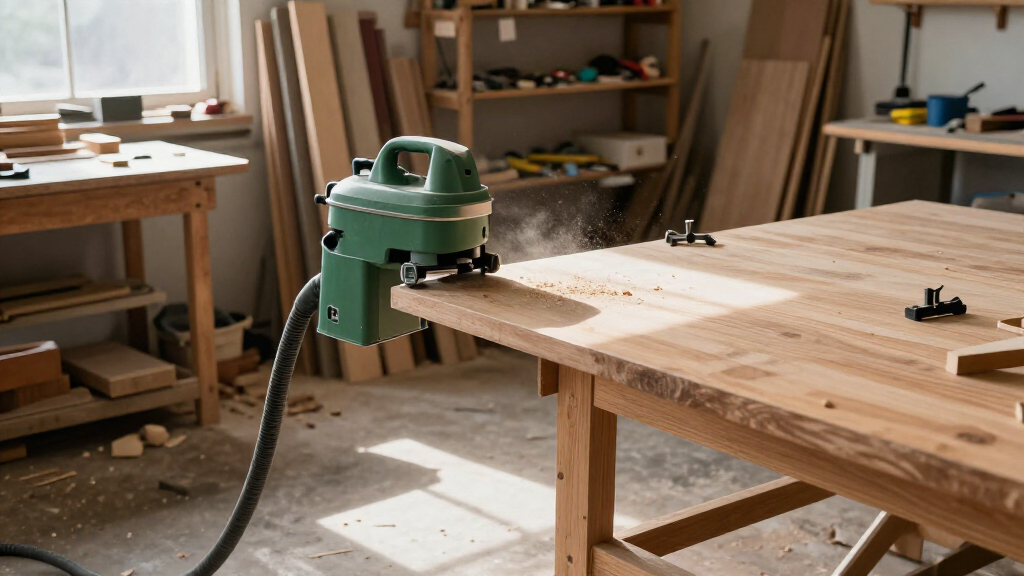
I ranked these dust extractors for woodworking by matching their design to the jobs woodworkers actually need them to do: capture dust at portable tools, collect chips and dust from stationary machines, or serve a mixed-use shop. I weighed filtration claims, automatic filter cleaning, airflow or capacity where stated, tool-connection features, mobility, and the likely demands of maintenance. A HEPA label or a large gallon figure could not by itself make a model a better choice; the whole setup had to make sense for its intended use.
The order favors versatile, tool-friendly extractors for the broadest range of small-shop work, then gives specialized machines credit when their design better suits a particular need. The Festool CT 15 leads for its mobile HEPA-focused format, while the Bosch and DEWALT rank highly for automatic cleaning. The WEN DC1300 earns a distinct role for stationary-machine airflow, but its collector format makes it less suited to buyers seeking a compact tool extractor. Models with overlapping formats are separated by capacity, mobility, and features rather than treated as interchangeable.
Factors to Consider When Choosing Dust Extractors For Woodworking
Before choosing a machine, I’d match it to the dust source and how the shop is used. A collector can have an impressive capacity yet be a poor fit for a sander, while a portable extractor may not move enough air for a large machine’s dust port. These checks help prevent buying around one headline specification instead of the whole setup.
Match the Collector to the Tool and Dust Port
Start by listing the machines you want to connect, including their port sizes and whether you will use them one at a time. Portable tools such as sanders and track saws generally call for a hose-connected extractor that can sit nearby, while many stationary machines need higher-volume airflow through larger ducting. A common mistake is to choose by motor power or tank size without checking the machine’s port and the extractor’s intended connection. Narrow hoses, reducers, and long runs can restrict airflow, so a capable unit may perform poorly in an unsuitable layout. If your tools span both types, decide which job needs the stronger solution and whether a second collector or a shared system is practical.
Read Filtration Claims in the Context of Your Work
Filtration matters most when fine dust is created close to the operator, especially during sanding or indoor work. A HEPA designation can help narrow the field, but it does not tell you how well the full system seals, how the filter performs as it loads, or whether the dust bag and disposal process suit your routine. Check that consumables and replacement filters are available and that the design supports contained cleanup. Buyers often focus on the filter label and overlook leaks at connections or a poorly fitted hose. For coarse chips from a planer or jointer, airflow and duct layout may matter more than choosing the highest filtration claim alone.
Decide Whether Automatic Filter Cleaning Is Worth It
Automatic filter cleaning can help maintain suction during long sessions that generate fine dust, reducing interruptions for manual filter care. It may be less useful for brief tasks or occasional home-shop use, where a simpler model can meet the need with fewer features to manage. Ask how often you expect to work with sanding dust, whether the cleaning cycle affects your tolerance for noise, and how filter maintenance is handled when the unit is not running. Do not assume automatic cleaning eliminates the need to inspect or replace filters. Paying for it makes the most sense when sustained fine-dust work is part of your normal routine.
Balance Capacity Against Footprint and Mobility
A larger tank or bag means fewer stops to empty, but it also takes up more room and can make a unit harder to move through a crowded shop. Capacity should be judged against the material you collect: fine sanding dust can fill a container differently from chips and shavings. If the extractor must follow you between tools, check the base, handle, hose storage, and where it can be parked between jobs. In a small shop, a compact model may be easier to use consistently even if it needs more frequent emptying. For a fixed machine, a larger collector may be a better trade if it reduces interruptions and fits the duct arrangement.
Check Power, Controls, and Shop Compatibility
Some extractors offer an auto-start outlet that switches on with a connected tool, which can simplify cleanup and reduce the chance of forgetting to run collection. Before choosing one, confirm that the outlet and controls suit the tools you plan to use and that the unit can operate on your shop’s electrical circuit. If several machines share a circuit, simultaneous startup can trip it even when each machine works alone. Also check the hose length, adapter needs, and whether the machine’s controls are easy to reach from your normal work position. These practical details can determine whether an extractor becomes part of the workflow or stays parked.
Plan for Bags, Filters, and Dust Disposal
Ongoing maintenance includes more than emptying a bin: bags, filter cleaning, and safe disposal all affect how convenient a collector is to own. Look up the correct consumables before purchase and check whether the system supports a bag or another method that keeps fine dust contained during emptying. A low-maintenance-looking machine may still require regular filter attention when used for sanding. Avoid waiting until the collector is full to learn that a replacement bag or filter is difficult to source. For frequent woodworking, easy access to routine parts can matter more over time than an extra feature you rarely use.
Frequently Asked Questions
Should I choose a HEPA extractor or a high-airflow dust collector?
I’d base this on the tool, not on a single filtration or airflow claim. For portable sanders and other tools that create fine dust near you, a sealed, tool-connected extractor with HEPA filtration may suit the job better. For stationary machines that produce larger volumes of chips and dust, a higher-airflow collector is often the better match. If you use both types of equipment, one machine may not handle every task well; plan around the dust ports and hose or duct sizes. The Festool and Bosch options lean toward portable extraction, while the WEN DC1300 is aimed at stationary-machine collection.
Is automatic filter cleaning worth paying for in a small woodworking shop?
It is most useful if you regularly sand or run other fine-dust-producing tools for extended sessions. Keeping a filter from loading as quickly can reduce interruptions, but it does not remove the need for filter inspection and routine maintenance. For occasional cuts or short jobs, a simpler extractor may be easier to justify and manage. Compare the cleaning feature with the dust volume and duration of your usual work rather than treating it as a must-have. Among this lineup, Bosch VAC090AH, DEWALT DWV010, and YOWMOFT make automatic cleaning a clear point of difference.
Can one dust extractor handle both a sander and a table saw?
Sometimes, but the answer depends on the tools’ ports, the extractor’s airflow, and how the machines are used. A portable HEPA extractor can be a convenient match for a sander, yet a table saw may need more airflow than a compact tool extractor can provide, particularly with a larger or poorly sealed shroud. Check the saw’s dust-port requirements and avoid assuming that an adapter alone solves an airflow mismatch. If the saw is your main dust source, a dedicated collector may be the better choice. A mixed shop may need separate solutions for fine dust at portable tools and higher-volume collection at stationary machines.
How much capacity do I need if I mostly make fine sanding dust?
Capacity depends on how often you work and how much downtime you can accept, but a larger container is not automatically better for fine dust. Fine material can load a filter or bag quickly, so filtration and filter maintenance may shape your experience more than the listed gallon capacity. For frequent sanding, consider a model with a suitable filtration system and convenient dust containment, then choose capacity based on session length and storage space. For occasional work, a smaller portable unit can be easier to place near the tool and empty when needed. Check the manufacturer’s guidance for bags and filter care before settling on a size.
Do I need a separate collector for a planer or jointer?
A planer or jointer can produce a large volume of chips, so it often benefits from a collector designed for higher airflow and a compatible, wider connection. A compact extractor intended for portable power tools may fill quickly or struggle with a restrictive hose and port. Check the machine’s port size and collection requirements, then consider how long the duct run will be and whether other gates or branches will be open. A dedicated collector can make sense if these machines are used often, while occasional use may call for a practical, compatible shared setup. In this roundup, the WEN DC1300 is the clearest fit for buyers prioritizing stationary-machine collection.
Conclusion
For the broadest mix of portable woodworking tasks, I’d choose the Festool CT 15 HEPA as the best overall. The WEN DC1300 is my value-oriented choice for buyers who need a larger collector for stationary machines, while the Bosch VAC090AH is the premium pick for a portable extractor with automatic filter cleaning. Beginners setting up a compact shop should look first at the Festool CT MIDI I for its smaller format, then confirm that its capacity and connections suit their tools. For specific needs, choose the DEWALT DWV010 or YOWMOFT if automatic cleaning is a priority, and consider the WEN 15-gallon collector or DC3401 for a stationary setup that better matches your space and machine ports. My final advice is to buy for your most demanding dust-producing tool, then verify the connection and maintenance requirements before committing.