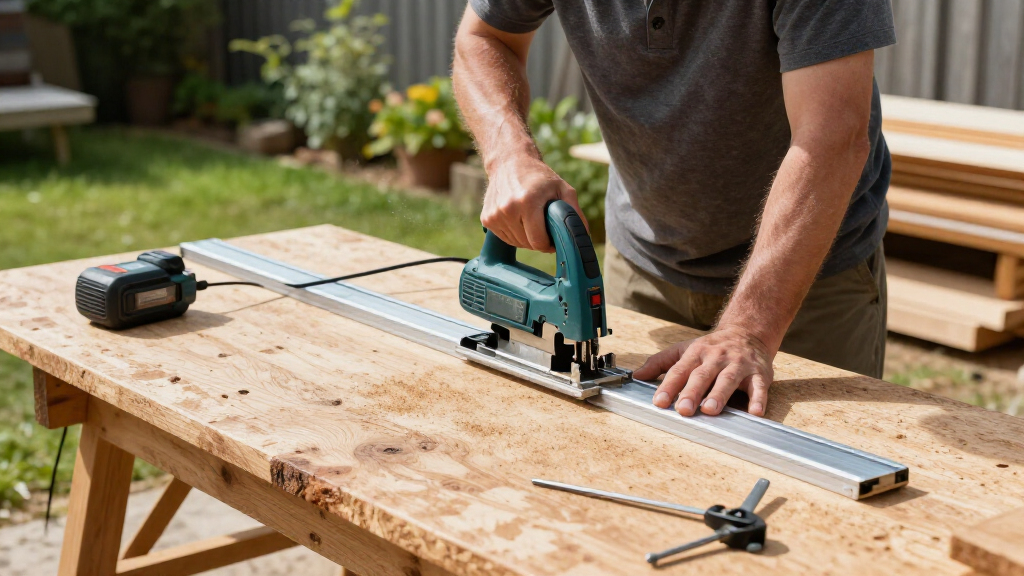

A good cordless track saw kit turns sheet goods into furniture-grade panels without a table saw, and the difference between kits comes down to cut quality, battery platform, and what’s actually in the box. The Makita XPS01PTJ stands out as my best overall pick because it bundles two 5.0Ah batteries, a 55-inch guide rail, and a padded bag — everything needed to start cutting on day one. For tighter budgets, the WEN 20691 delivers genuine brushless track-saw performance with batteries and charger included, while the Festool TSC 55 K represents the premium ceiling for splinter-free finishes. The main tradeoff you’ll face is between complete kits and bare tools that quietly assume you already own batteries and rails. Keep reading for the full breakdown, including which corded models slipped in and whether they deserve a spot on your shortlist.

Get business pricing on tools and workshop supplies
- Business-only prices and quantity discounts
- Tax-exempt purchasing
- Multiple users, one account, clear invoices
Complete the kit


Key Takeaways
- Kit completeness varied wildly: the Makita XPS01PTJ and WEN 20691 arrive ready to cut with batteries, chargers, and rails, while the DEWALT DCS525B, Festool TSC 55 K, and Milwaukee M18 FUEL ship bare — adding a rail and batteries can change the real cost picture dramatically.
- Battery platform lock-in was the biggest hidden decision: Makita, DEWALT, Milwaukee, Bosch, Kreg, and RIDGID kits each tie you to a proprietary 18V–36V ecosystem, so your existing tool collection should drive the ranking as much as the saw itself.
- Three corded models (the Makita SP6000J1, WEN CT1274, and DEWALT DWS520K) made the list because they undercut cordless equivalents on sustained power and price — but they fail the core cordless brief and rank lower for anyone who works away from outlets.
- The Evolution R185CCSX was the only multi-material option, able to cut aluminum, plastic, and mild steel on a track, making it the clear pick for mixed-material builders and the wrong pick for fine woodworking purists.
- Bosch’s CORE18V 8Ah battery and Kreg‘s Ionic Drive system showed that newer platforms are closing the power gap with twin-battery 36V setups like Makita’s, though accessory availability still favors the established brands.


| cordless track saw kit | Motor | Blade Size |
|---|---|---|
| Makita XPS01PTJ 36V | Brushless (BL) | 6-1/2 inches |
| Evolution Power Tools R185CCSX | 15 Amp hi-torque, 1800 watts | — |
| Makita XPS01PTJ 18V X2 LXT | Brushless BL | 6-1/2 inches |
| WEN 20691 Cordless 6.5-Inch Br | Brushless, variable speed | — |
| DEWALT 20V MAX XR 6-1/2 in. Co | — | 6-1/2 inches |
| Makita SP6000J1 6-1/2" Plunge | 12 AMP | 6-1/2 inches |
| Bosch GKT18V-20GCL14 PROFACTOR | BITURBO Brushless | 5-1/2 inches |
| WEN CT1274 7.25-Inch Corded El | — | 7.25 inches |
| Kreg 20V Ionic Drive 6 1/2" Pl | — | 6-1/2 inches |
| Kreg 20V Ionic Drive 6 1/2" Pl | — | — |
| VEVOR 6-1/2-Inch Track Saw | — | 6-1/2 inches |
| Festool 577991 TSC 55 K Basic | Brushless EC-TEC | — |
| Milwaukee M18 FUEL 6-1/2 Inch | POWERSTATE Brushless | — |
| RIDGID 18V Brushless Cordless | — | — |
| DEWALT DWS520K 6-1/2-Inch Cord | 12A, 1300W | 6-1/2 inches |
More Details on Our Top Picks
Makita XPS01PTJ 36V (18V X2) LXT Brushless 6-1/2″ Plunge Circular Saw Kit with 5.0Ah Batteries, 55″ Guide Rail & Padded Bag
This is the most complete cordless track saw package in the roundup, and that completeness is exactly why it earns the top spot. Unlike the Makita B01IVTAO8Y, which sells the guide rail separately, this kit arrives with a 55-inch rail, two 5.0Ah batteries, and a padded bag — everything needed to make accurate cuts on day one. The brushless motor spinning at 6,300 RPM translates into cleaner cuts in dense hardwoods, and the dual-battery 36V platform delivers power that genuinely rivals corded tools like the Makita SP6000J1. Compared with the DEWALT DCS525B, a bare tool requiring separate purchases of batteries, tracks, and a vacuum, this kit removes the hidden-cost problem entirely. The tradeoff is weight and price: two batteries add heft, and the upfront cost reflects Makita’s pro-grade positioning.
Pros:- Complete kit with 55″ guide rail, two 5.0Ah batteries, and padded bag included
- 6,300 RPM brushless motor with 50% longer runtime per charge
- 36V dual-battery power approaching corded plunge saw performance
- Water-repellent 1680D bag protects the rail during jobsite transport
Cons:- Two batteries add noticeable weight during long sessions
- Premium price point typical of Makita professional tools
Best for: Contractors and serious woodworkers already on (or starting) the Makita 18V LXT platform who want a turnkey track saw setup
Not ideal for: Budget-conscious hobbyists or occasional DIYers — the premium kit price is hard to justify for infrequent panel-cutting work
- Voltage:36V (18V X2 LXT)
- Motor:Brushless (BL)
- No-load Speed:6,300 RPM
- Blade Size:6-1/2 inches
- Battery:2x 5.0Ah LXT
- Guide Rail:55 inches (included)
- Bag:1680D tear-resistant, water-repellent polyester
Our verdict“If you want the closest thing to a corded track saw experience with zero accessory-hunting, this kit is the one to buy.”
Evolution Power Tools R185CCSX 7-1/4″ Multi-Material Circular Track Saw Kit with 40″ Track
Full disclosure up front: this is the one corded entry in an otherwise cordless lineup, and it earns its place through sheer versatility at an accessible price. Its defining trait is the multi-material TCT blade that cuts wood, plastic, and even mild steel without blade changes — something no other saw here, including the WEN 20691, can match. The included 40-inch track is shorter than the Makita XPS01PTJ’s 55-inch rail, limiting full-sheet rips, but it suits smaller panels and trim work. At 18.1 pounds, it’s heavier than most cordless rivals, and the cord restricts jobsite mobility. For buyers who prioritize cutting flexibility over cordless convenience — and who don’t want to buy a rail separately like the DEWALT DCS525B requires — this is the pragmatic pick.
Pros:- Single TCT blade cuts wood, plastic, and metal without changing blades
- 40-inch track included for accurate straight cuts out of the box
- Powerful 15 Amp high-torque motor with 2-1/2 inch depth capacity
- Dust extraction port with adaptor and ergonomic soft-grip handles
Cons:- Corded electric design limits mobility compared with every cordless rival
- 40-inch track is too short for full-sheet plywood rips
Best for: Homeowners and mixed-material fabricators who cut wood, plastic, and metal and want one affordable tracked saw for everything
Not ideal for: Cordless-only buyers or anyone working on sites without reliable power access — the cord and 18.1 lb weight work against portability
- Power Source:Corded Electric (120V)
- Motor:15 Amp hi-torque, 1800 watts
- Speed:3,700 RPM
- Blade:7-1/4 inch, 40-tooth TCT
- Max Cutting Depth:2-1/2 inches
- Bevel Capacity:0–45°
- Track Length:40 inches
- Weight:18.1 lbs
Our verdict“A sensible budget entry for multi-material cutting, as long as you can live with the cord.”
Makita XPS01PTJ 18V X2 LXT (36V) Brushless Cordless 6-1/2″ Plunge Circular Saw Kit (5.0Ah)
Same saw family as the Makita B0B1MYW4HT, but a different buying proposition: this version omits the 55-inch rail, so it makes sense for existing Makita rail owners or those upgrading from an SP6000J1 who already have tracks. What sets it apart in this lineup is the variable speed dial (2,500–6,300 RPM) with automatic speed change, letting you slow the blade for melamine and veneered panels where the fixed-speed Evolution R185CCSX would risk chipping. The 11/16-inch close-to-wall cutting capacity is a genuine jobsite advantage for trimming door bottoms and scribing against existing finishes. The catch is obvious: buy the rail separately and the total cost creeps past the complete kit. It also carries the same dual-battery weight penalty as its sibling.
Pros:- Variable speed dial from 2,500 to 6,300 RPM with automatic speed change
- Brushless motor with 50% longer runtime per charge
- 11/16″ close-to-wall cutting for scribing and flush work
- 36V dual-battery power comparable to corded plunge saws
Cons:- 39-inch guide rail sold separately, adding cost for new buyers
- Two-battery requirement adds weight and expense
Best for: Makita platform owners who already own guide rails and want variable-speed precision for delicate materials
Not ideal for: First-time track saw buyers — buying the saw and rail separately costs more than the complete B0B1MYW4HT kit
- Voltage:18V X2 (36V)
- Battery:Two 5.0Ah LXT lithium-ion
- Motor:Brushless BL
- No-load Speed:2,500–6,300 RPM
- Blade Size:6-1/2 inches
- Close-to-wall Cut:11/16 inches
- Guide Rail:39 inch 199140-0 (sold separately)
Our verdict“The smart choice for Makita loyalists with rails already on the shelf — skip it if you’re starting from zero.”
WEN 20691 Cordless 6.5-Inch Brushless Track Saw with Two 20V Max 4.0Ah Batteries and Charger
This is the most budget-friendly path into genuine cordless track cutting, and it undercuts the Makita XPS01PTJ by including batteries and a charger while leaving only the track to buy separately. The 2000–5500 RPM variable-speed brushless motor handles a 2.25-inch rip depth — respectable for a 6.5-inch blade — and the generous -1 to 47-degree bevel range offers more tilt flexibility than most rivals. Like the Makita B01IVTAO8Y, the track is a separate purchase, but WEN’s CT9502 and CT9110 rails cost far less than name-brand equivalents. Compared with the DEWALT DCS525B, you give up the 1/32-inch cut accuracy claim and the kickback brake, and the 5,500 RPM ceiling trails Makita’s 6,300. For hobbyists breaking down sheet goods in a home shop, those gaps rarely matter.
Pros:- Includes two 4.0Ah batteries with LED gauges, charger, and 48-tooth carbide blade
- Variable-speed brushless motor from 2000 to 5500 RPM
- Wide -1 to 47 degree bevel range with 2.25 inch max cut depth
- Functions as a standalone plunge saw without a track
Cons:- Track and clamps sold separately
- No advanced safety features like DEWALT’s kickback brake
Best for: Hobbyist woodworkers and DIYers who want table-saw-quality sheet goods cuts without pro-tool pricing
Not ideal for: Daily-use professionals who need the tighter tolerances, higher RPM, and safety systems of the DEWALT or Makita platforms
- Blade:6.5 inches, 48-tooth carbide-tipped, 20 mm arbor
- Motor:Brushless, variable speed
- Speed:2000–5500 RPM
- Bevel Range:-1 to 47 degrees
- Max Cut Depth:2.25 inches
- Battery:Two 20V Max 4.0Ah lithium-ion
- Track Compatibility:WEN CT9502 / CT9110 (sold separately)
- Warranty:2 years
Our verdict“The best entry point for budget-minded makers — just budget for a WEN rail to unlock full track functionality.”
DEWALT 20V MAX XR 6-1/2 in. Cordless Plunge Track Saw (DCS525B)
This saw’s selling points are the ones that matter most after the cut is straight: safety and dust. The KICKBACK BRAKE system shuts the blade down on pinch, stall, or bind-up — a genuine confidence-builder on wet or tensioned lumber that neither Makita kit here offers. Its 94% dust extraction with Wireless Tool Control means the saw starts a compatible DEWALT vacuum automatically, keeping indoor air clean in a way the Evolution R185CCSX’s passive dust port can’t match. Cut accuracy is rated within 1/32 inch, placing it at the precision end of this lineup alongside the Festool TSC 55 K. The honest drawback: this is a bare tool. Battery, charger, track, connecting rods, and vacuum are all extra, so the real cost lands well above the WEN 20691’s complete package. For existing 20V MAX owners, that math works.
Pros:- Cut accuracy within 1/32 inch for repeatable precision work
- KICKBACK BRAKE shuts the saw off on pinch, stall, or bind-up
- Up to 94% dust extraction with wireless vacuum activation
- Variable speed from 2,500 to 5,400 RPM with included 48T fine finish blade
Cons:- Bare tool — battery, charger, track, and vacuum sold separately
- Track connecting rods and extra blades require separate purchase
Best for: DEWALT 20V MAX platform owners who prioritize jobsite safety, dust management, and fine-finish accuracy
Not ideal for: Buyers starting from no batteries or tools — the bare-tool cost balloons once track, batteries, and vacuum are added
- Battery Platform:DEWALT 20V MAX
- Blade Size:6-1/2 inches
- No-load Speed:2,500–5,400 RPM
- Cut Accuracy:Within 1/32 inch
- Run Capacity:Up to 70 cuts / 280 linear feet of 3/4 in. MDF
- Dust Collection:Up to 94% with Wireless Tool Control (vacuum sold separately)
- Included Blade:DWA261248TS 48T fine finish
- Safety:KICKBACK BRAKE system
Our verdict“The safest, cleanest cordless track saw here — a smart buy only if you already own DEWALT batteries and rails.”
Makita SP6000J1 6-1/2″ Plunge Circular Saw Kit with 55″ Guide Rail and Stackable Tool Case
Yes, this roundup is about cordless track saw kits, but the SP6000J1 earns a place as the pick for buyers whose cutting happens where outlets are always within reach. Its 12 AMP motor with electronic speed control holds RPM under load in a way no 18V or 20V platform in this lineup can quite match — the Bosch GKT18V-20GCL14 gets close, but the Makita never asks you to think about battery state of charge mid-sheet. The bundled 55-inch guide rail is a real advantage here: the WEN CT1274 and both Kreg cordless models make you buy the track separately, which quietly inflates their true cost. Magnesium construction keeps weight reasonable despite the corded drivetrain. The tradeoff is obvious — you’re tethered to a cord and paying a premium over basic circular saws — but for a shop-based woodworker, that tether is barely a limitation.
Pros:- Powerful 12 AMP motor with electronic speed control maintains constant speed under load
- Splinter-free, mirror-finish cuts when paired with the included 55-inch guide rail
- Wide bevel range (-1° to 48°) with positive stops at 22.5° and 45°
- Torque limiter, electric brake, and soft start improve safety and productivity
Cons:- Corded design limits mobility compared to the cordless options in this roundup
- Premium price point compared to standard circular saws
Best for: Shop-based cabinetmakers and finish carpenters who cut mostly near power and want maximum sustained cutting power with a rail included
Not ideal for: Jobsite users who move constantly between locations or work in unfinished spaces without reliable power access
- Motor:12 AMP
- Speed Range:2,000 – 5,200 RPM
- Cutting Capacity at 90°:2-3/16 inches
- Cutting Capacity at 45°:1-9/16 inches
- Bevel Capability:-1° to 48° (positive stops at 22.5° and 45°)
- Blade Size:6-1/2 inches
- Guide Rail:55 inches, included
- Power Type:Corded
Our verdict“Buy this if your cutting happens in a powered workshop and you want corded-grade sustained performance with the rail already in the box.”
Bosch GKT18V-20GCL14 PROFACTOR 18V Connected-Ready 5-1/2 In. Track Saw Kit with CORE18V 8 Ah Battery
This is the closest a battery-powered track saw gets to eliminating the corded-versus-cordless debate. The BITURBO brushless motor is engineered specifically to exploit the included CORE18V 8 Ah High Power battery, and the pairing delivers roughly double the runtime of Bosch’s standard 4 Ah packs — a meaningful gap compared to the Kreg kit’s modest 2Ah battery, which will have most users swapping packs mid-project. The precise plunge mechanism and single bevel pivot point keep depth settings repeatable across a sheet of ply. Compared with the Festool TSC 55 K, the Bosch undercuts it on price while offering app-based customization (though the connectivity module is a separate purchase). The 5-1/2-inch blade is smaller than the 6-1/2-inch Makita and Kreg offerings, which slightly limits max cut depth, and track attachments are add-ons that raise the total investment.
Pros:- Cordless design with genuinely corded-like performance for sheet goods
- BITURBO brushless motor maximizes output from the high-power battery
- CORE18V 8 Ah battery delivers up to 2x the runtime of standard 4 Ah packs
- Eco Mode extends battery runtime by up to 30% on lighter cuts
Cons:- Connectivity module sold separately, so app features cost extra
- Track attachments are optional add-ons that increase total cost
- Smaller 5-1/2-inch blade reduces maximum cutting depth versus 6-1/2-inch rivals
Best for: Bosch 18V platform owners and pro contractors who want jobsite mobility without sacrificing corded-level cutting performance
Not ideal for: Buyers on a strict all-in budget, since the connectivity module and track attachments are separate purchases that stack up quickly
- Model:GKT18V-20GCL14
- Voltage:18V
- Blade Size:5-1/2 inches
- Battery:CORE18V 8 Ah High Power
- Motor:BITURBO Brushless
- Runtime:2x more than GBA18V40
- Eco Mode:Up to 30% extended battery runtime
- Connectivity:Connected-ready (module sold separately)
Our verdict“This pick makes the most sense for pros already on Bosch’s 18V platform who refuse to compromise on runtime and cutting power away from an outlet.”
WEN CT1274 7.25-Inch Corded Electric Track Saw with Variable Speed
For anyone curious about track saws without wanting to mortgage the workshop, the CT1274 is the lowest-friction way in. The 7-1/4-inch blade is the largest in this batch — bigger than the Bosch’s 5-1/2 or the Makita SP6000J1’s 6-1/2 — which translates to a 2.6-inch maximum cut depth that handles thick stock the others can’t. Because it accepts standard 7-1/4-inch blades with 5/8-inch arbors, replacement blades cost a fraction of proprietary sizes. The 2,000-6,000 RPM variable speed range is genuinely wide, wider than the Makita’s ceiling. The catch: the track and clamps are sold separately, so this isn’t quite as cheap as the sticker suggests, and fit-and-finish won’t rival the Makita or Festool. Compared with the WEN 20691 cordless model, this corded version trades portability for uninterrupted power at a lower price.
Pros:- Wide 2,000-6,000 RPM variable speed range for diverse materials
- Accepts inexpensive standard 7-1/4-inch blades with 5/8-inch arbors
- Deep 2.6-inch cutting capacity exceeds most 6-1/2-inch track saws
- Includes 40-tooth carbide blade, 360-degree dust port adapter, and two-year warranty
Cons:- Track and track saw clamps sold separately, adding to the real cost
- Corded design limits portability
- Overall build refinement trails premium brands
Best for: Budget-conscious DIYers and hobbyists who want to try track-saw precision with cheap, replaceable blades and mostly work near an outlet
Not ideal for: Professionals who need all-day cordless mobility or the refined plunge feel of premium saws like the Makita SP6000J1
- Blade Size:7.25 inches
- Max Cut Thickness:2.6 inches
- Max Bevel Cut at 45°:1.85 inches
- Speed Range:2,000-6,000 RPM
- Arbor Size:5/8 inch
- Power Source:Corded Electric
- Included Blade:40-tooth carbide-tipped
- Warranty:2 years
Our verdict“An approachable, low-commitment entry into track cutting for DIYers who value blade affordability and cut depth over cordless convenience.”
Kreg 20V Ionic Drive 6 1/2″ Plunge-Cut Track Saw (KPTPS100A), Tool Only
Sold bare on purpose, the KPTPS100A exists for one buyer: someone already invested in Kreg’s 20V Ionic Drive ecosystem with batteries and a charger sitting in the truck. For that person, skipping redundant accessories means getting a capable cordless track saw for less upfront outlay than the full KPTPS100A kit version or the DEWALT DCS525B — both of which occupy the same bare-tool niche. The standout feature is the blade-left design, which puts the cutline directly in view for right-handed users — most competitors, including the Makita corded model, mount the blade right. Anti-kickback protection and a blade brake add genuine safety value on a tool designed for plunge starts. The obvious downside: with no battery, charger, or guide track in the box, a first-time Kreg buyer would need to acquire all three before making a single tracked cut.
Pros:- Lower entry cost when you already own Kreg 20V batteries and charger
- Blade-left design gives right-handed users a clear view of the cutline
- Anti-kickback protection and blade brake provide real plunge-cut safety
- Cordless freedom for job site and workshop mobility
Cons:- Tool only — battery, charger, and guide track all sold separately
- Guide track is required for track functionality but not included
- No value over the kit version if you don’t already own Kreg batteries
Best for: Woodworkers already owning Kreg 20V batteries and charger who want to add track-saw capability at the lowest entry cost
Not ideal for: Anyone starting from zero tools — the missing battery, charger, and required guide track make the total cost far higher than the bare tool suggests
- Model:KPTPS100A
- Power:20V cordless (Ionic Drive)
- Blade Size:6-1/2 inches
- Type:Plunge-cut track saw
- Safety Features:Anti-kickback protection, blade brake
- Guide Track Compatibility:Kreg 62-inch Guide Track (sold separately)
- Included:Tool only (no battery or charger)
Our verdict“A smart add-on purchase for existing Kreg 20V owners, and a money pit for everyone else who’d need to buy the full ecosystem anyway.”
Kreg 20V Ionic Drive 6 1/2″ Plunge-Cut Track Saw Kit (KPTBPS100A)
This is the complete-package version of the Kreg platform, and it’s aimed squarely at the buyer who wants to open a box and start cutting. With a 20V Blue Ion 2Ah battery and charger included, it removes the acquisition friction of the bare KPTPS100A — though you still need to buy the 62-inch guide track separately, a gap the corded Makita SP6000J1 doesn’t have since its rail ships in the case. The -1° to 47° bevel range covers nearly every angle the Makita offers, and the same blade-left configuration gives right-handed users better cutline visibility than most rivals. The real weakness is that 2Ah battery: it’s fine for trim work and occasional plywood breaks, but anyone ripping full sheets all day will want a second, larger pack — the Bosch kit’s 8Ah battery shows what a runtime-first approach looks like. For weekend woodworkers and Kreg newcomers, though, the balance of completeness and cost hits the mark.
Pros:- Complete kit with 2Ah battery and charger included out of the box
- Wide -1° to 47° bevel capacity handles most project angles
- Blade-left design improves visibility and control for right-handed users
- 2-1/8-inch depth at 90° handles typical plywood and solid stock
Cons:- Guide track sold separately despite being required for tracked cuts
- 2Ah battery capacity limits runtime during extended work sessions
Best for: DIY woodworkers and weekend carpenters wanting a truly ready-to-run cordless track saw without sourcing batteries separately
Not ideal for: Full-day production cutters — the 2Ah battery won’t sustain extended sheet-good work without frequent recharging
- Model:KPTBPS100A
- Power Source:20V battery (cordless)
- Battery:20V Blue Ion 2Ah battery pack
- Charger:20V Blue Ion Charger
- Blade Diameter:6-1/2 inches
- Bevel Capacity:-1° to 47°
- Cutting Depth at 90°:2-1/8 inches
- Cutting Depth at 45°:1-1/2 inches
- Guide Track:Kreg 62-inch Guide Track (sold separately)
Our verdict“The right choice for hobbyists who want everything (except the track) in one box and don’t cut enough volume to be hamstrung by a small battery.”
VEVOR 6-1/2-Inch Track Saw, Plunge-Cut Circular Saw Kit with 48-Tooth Carbide-Tipped Blade
Budget-conscious buyers get a real plunge-cut platform here without the premium pricing of a Festool TSC 55 K or Milwaukee M18 FUEL. The 1200W motor spinning at 5500 RPM produces comparable output to the Milwaukee’s 1200-watt rating, so cutting power isn’t the sacrifice you might expect at this price. Where the money is saved is in refinement: there’s no brushless motor, no electronic kickback protection, and no guide rail in the box, which is the tool’s defining feature. Compared with the WEN 20691, which includes batteries and a charger, this VEVOR also demands a separate rail purchase before it can make its signature straight cut. For a hobbyist building out a first workshop, that tradeoff can make sense. For anyone cutting daily, the 2.16-inch depth ceiling and lack of ecosystem support will feel limiting fast.
Pros:- 1200W / 5500 RPM motor handles hardwoods without bogging down
- 0-45° bevel with lockable 45° setting for repeatable angled cuts
- Aluminum blade guard and dust port keep the cutting line visible and the shop cleaner
- Cuts directly on the workpiece, so breaking down sheet goods doesn’t require lifting heavy boards
Cons:- Guide rail sold separately — the core accessory for straight, splinter-free cuts isn’t included
- Maximum 2.16-inch cut depth limits use with thicker stock
Best for: Hobbyists and occasional DIYers who want plunge-cut capability on a tight budget and already own or can cheaply source a guide rail
Not ideal for: Daily-use professionals — the corded power, absent rail, and lack of safety electronics don’t hold up against jobsite-grade cordless options
- Brand:VEVOR
- Blade Size:6-1/2 inches
- Blade:48-tooth carbide-tipped
- Motor Power:1200W
- No-Load Speed:5500 RPM
- Cut Depth at 90°:2.16 in (55 mm)
- Cut Depth at 45°:1.65 in (42 mm)
- Bevel Capacity:0-45°
- Guide Rail:Not included
Our verdict“A sensible low-cost entry into plunge cutting for weekend woodworkers, provided you budget for a separate guide rail.”
Festool 577991 TSC 55 K Basic Cordless Track Saw (Bare Tool)
This is the pick where cut quality and safety technology justify a premium spend. The sensor-based KickbackStop halts the blade in milliseconds if the saw binds — something no other saw in this lineup offers, including the Milwaukee M18 FUEL. The 1/16-inch thin-kerf blade removes less material per pass, which means faster cuts, longer battery runtime, and cleaner edges on veneered ply than the standard-kerf blades on the DEWALT DWS520K or VEVOR. The catch is structural: this is a bare tool, so batteries, charger, rails, and dust extraction all arrive on separate invoices, and Festool accessories carry their own premium. Compared with the Makita XPS01PTJ kit, which ships with batteries and a 55-inch rail, the true cost of the Festool system lands much higher than its sticker suggests. Buyers already inside the Festool ecosystem get the most value here.
Pros:- Brushless EC-TEC motor balances cutting power with efficient battery runtime
- KickbackStop sensor-based protection stops the blade almost instantly during a bind-up
- Thin-kerf blade delivers fast, splinter-free cuts in delicate sheet goods
- Wide -1° to 47° bevel range with FastFix blade changes for repeatable precision work
Cons:- Bare tool only — batteries and charger must be purchased separately
- Festool guide rails and dust extractors are sold separately and expensive, inflating total system cost
Best for: Finish carpenters and cabinet builders who already own Festool 18V batteries and rails and want the cleanest splinter-free cuts available
Not ideal for: First-time track saw buyers on a budget — the bare-tool pricing plus required Festool rails and batteries makes this the most expensive path into the category
- Model:577991 TSC 55 K
- Power Source:Cordless (Festool 18V battery, not included)
- Motor:Brushless EC-TEC
- Kerf:1/16 in thin-kerf blade
- Bevel Range:-1 to 47 degrees
- Safety Features:KickbackStop sensor-based kickback protection
- Batteries Included:No (bare tool)
- Compatibility:Festool guide rails, dust extractors, splinter guards, angle guides
Our verdict“The finest cut quality and safety tech in this roundup, but only sensible for buyers committed to (or already equipped for) the Festool ecosystem.”
Milwaukee M18 FUEL 6-1/2 Inch Plunge Track Saw (Bare Tool)
Remodelers already running M18 batteries will find this is the most natural upgrade path in the roundup — no new battery platform, no new charger, just the saw. The 6,300 RPM brushless motor is the fastest here, out-spinning the Festool TSC 55 K and the corded VEVOR, and it rips solid hardwood without the hesitation that slows lesser cordless saws. Milwaukee’s REDLINK PLUS electronics guard against overload and over-discharge, which translates to fewer cooked batteries over a season of work. The standout practical feature is over 90% dust collection efficiency, beating most rivals and keeping indoor remodel jobs far cleaner. The tradeoffs: it ships as a bare tool with no rail, and at 11.7 pounds it’s noticeably heavier than the Festool, which matters during a full day of plunge cuts on sheet goods.
Pros:- 6,300 RPM brushless motor cleanly rips solid hardwoods
- Over 90% dust collection efficiency keeps interior remodel work cleanup minimal
- Variable speed, bevel stops at 22.5°/45°/48°, and micro-adjust depth knob enable precise repeatable setups
- Riving knife and quick-locking blade change improve safety and workflow
Cons:- Bare tool only — battery, charger, and track sold separately, adding to real cost
- At 11.7 pounds, it’s heavy for extended one-handed plunge operation
Best for: Carpenters and remodelers invested in the Milwaukee M18 system who need jobsite-tough power and superior dust collection indoors
Not ideal for: Users without existing M18 batteries, or anyone planning long overhead or all-day cutting sessions where the 11.7-pound weight becomes a burden
- Blade Diameter:6-1/2 inches
- Motor:POWERSTATE Brushless
- No-Load Speed:6,300 RPM
- Voltage:18V
- Battery:M18 REDLITHIUM HIGH OUTPUT XC6.0 (not included)
- Blade Teeth:50
- Bevel Stops:22.5°, 45°, 48°
- Weight:11.7 pounds
- Vacuum Hose Compatibility:1-7/8 inch
Our verdict“The toughest cordless option here for M18 loyalists who prioritize raw power and dust control over featherweight handling.”
RIDGID 18V Brushless Cordless Track Saw Kit with 6.0 Ah MAX Output Battery and Charger
In a roundup crowded with bare tools, this is one of the few boxes that actually contains everything needed to start cutting — saw, 6.0 Ah MAX Output battery, and charger. That alone separates it from the Milwaukee M18 FUEL and Festool TSC 55 K, both of which require a second shopping trip (and a second invoice) before the first cut. The brushless 18V motor delivers the runtime and durability buyers should demand at this tier, and the cordless format makes it genuinely portable around a jobsite or between projects. Compared with the WEN 20691 kit, the RIDGID offers a more established brand and service network, though the listing itself is muddled with mismatched product text, so buyers should verify exactly what ships. A rail is still likely a separate purchase, which tempers the ‘complete kit’ claim.
Pros:- Complete kit includes a 6.0 Ah MAX Output battery and charger, unlike most bare-tool rivals
- Brushless motor extends runtime and tool lifespan
- 18V cordless design moves freely around jobsites without cord management
- Backed by a 30-day return guarantee and manufacturer warranty
Cons:- Listing contains mismatched product content, creating uncertainty about what’s actually in the box
- Track and rails likely sold separately, so straight-cut capability still costs extra
Best for: Buyers starting from zero who want a track saw, battery, and charger in one purchase without chasing down separate components
Not ideal for: Detail-averse shoppers — the listing’s mismatched description makes it hard to confirm exact contents, and the guide rail still needs separate sourcing
- Brand:RIDGID
- Voltage:18V
- Motor Type:Brushless
- Battery:6.0 Ah MAX Output (included)
- Charger:Included
- Warranty:Manufacturer warranty with 30-day return guarantee
Our verdict“The easiest one-box entry into cordless track cutting for buyers with no existing batteries, as long as they confirm contents before ordering.”
DEWALT DWS520K 6-1/2-Inch Corded Track Saw Kit
For buyers who work near an outlet and never want to think about battery charge levels, this saw makes a strong case that corded still wins on uninterrupted power. The 12A, 1300W motor out-muscles every cordless option here, including the Milwaukee M18 FUEL, and it sustains full power through thick hardwood all day without fade. The zero-clearance cutting system produces the splinter-free edges that make track saws worth owning, and the low-profile blade guard opens up confined-space work the bulkier Milwaukee can’t reach as easily. The honest tradeoff: this is the roundup’s outlier on power source — every trend in the category has moved cordless, and dragging a cord across sheet goods on a jobsite gets old fast. Compared with the Makita SP6000J1, another corded contender that ships with a 55-inch rail, buyers should confirm track inclusion before committing.
Pros:- 1300W corded motor delivers full power through hardwoods up to 2-1/8 inches thick, all day without fade
- Zero-clearance track system produces straight, splinter-free cuts in veneered sheet goods
- Anti-kickback mechanism and riving knife provide layered kickback protection
- Low-profile blade guard enables cutting in tight, confined spaces
Cons:- Corded design limits portability and adds cord management on every cut
- Requires compatible tracks for straight cuts, which may mean additional purchases
Best for: Shop-based woodworkers and contractors with reliable outlet access who want maximum sustained cutting power without battery management
Not ideal for: Mobile tradespeople and off-grid job sites — the cord negates the portability that makes cordless picks like the Makita XPS01PTJ appealing
- Brand:DEWALT
- Model:DWS520K
- Blade Size:6-1/2 inches
- Power Type:Corded
- Motor:12A, 1300W
- Cut Depth at 90°:2-1/8 in (54mm)
- Cut Depth at 45°:1-5/8 in (41mm)
- Safety Features:Anti-kickback mechanism, riving knife, low-profile blade guard
Our verdict“The right choice for outlet-adjacent shops that value relentless power over the freedom of cordless.”
How We Picked
I ranked these kits on four factors that actually change the ownership experience. Cut quality and capacity came first: blade size (5-1/2 to 7-1/4 inches), depth of cut at 90 degrees, plunge mechanics, and anti-splinter design determine whether a saw produces factory-edge results or needs sanding afterward. Kit completeness came second — a saw sold bare is a very different purchase than one with batteries, charger, rail, and case, so I treated included accessories as part of the value equation rather than a footnote. Platform compatibility mattered third, because most buyers already own batteries from one ecosystem, and a saw that shares them effectively costs less. Finally, I weighed build quality and rail system maturity, since track alignment, bevel range, and dust extraction separate tools that feel precise from tools that merely cut straight.
The ranking order reflects a simple logic: complete cordless brushless kits with proven rails sit at the top, capable cordless options with caveats fill the middle, and corded models or single-purpose budget tools land lower — not because they’re bad tools, but because they answer a different question than the one this roundup asks. Where two listings overlap, like the two Makita XPS01PTJ entries and the two Kreg configurations, I treated them as the same saw in different purchase paths and focused on which bundle makes more sense.
Factors to Consider When Choosing Cordless Track Saw Kits
Before clicking buy on any of these kits, step back and think about how you’ll actually use the saw. The differences that matter most over years of ownership aren’t always the ones highlighted on the box.Calculate the True Cost of a Bare Tool
The most common mistake in this category is comparing a bare-tool listing against a full kit and thinking you’ve found a bargain. A track saw without batteries, charger, or guide rail is roughly half a tool — you cannot make a straight tracked cut without the rail. If you already own tools on the same battery platform, a bare tool like the DEWALT DCS525B or Milwaukee M18 FUEL becomes genuinely affordable because your existing batteries and charger carry over. If you’re starting from zero, factor in the cost of two batteries (you want a spare for continuous work), a charger, and a rail that’s long enough for your material. A 55-inch rail handles half-sheets of plywood; breaking down full 8-foot sheets comfortably wants a rail extension or a longer aftermarket rail. Run the full math before deciding which listing is the better deal.
Battery Platform Is a Ten-Year Decision
When you buy a cordless track saw, you’re really buying into an ecosystem, and that commitment usually outlasts the saw itself. If your workshop already runs Makita LXT, adding the XPS01PTJ costs nothing extra in batteries; the same logic favors DEWALT, Milwaukee, Bosch, RIDGID, and Kreg owners sticking with their systems. Starting fresh changes the calculus — look at platform breadth, battery availability, and whether the brand uses twin-battery 36V designs for extra power. Twin-battery saws like the Makita deliver more torque for thick hardwoods but drain two packs per session. Single-battery 18V and 20V saws are lighter and simpler but can bog down in dense material at full depth. Match the power architecture to the work you actually do, not the spec sheet peak numbers.
Blade Size and Depth of Cut Set Your Ceiling
A 6-1/2-inch blade — the standard here — typically cuts around 2-1/8 inches deep at 90 degrees, which handles nearly all sheet-good work and doors. The 7-1/4-inch models from Evolution and WEN add roughly a quarter inch of depth and offer more blade variety, which matters if you cut thicker stock or want dedicated blades for different materials. The Bosch 5-1/2-inch saw goes the other direction: slightly less depth but a lighter, more maneuverable package for on-site trim work. Blade availability deserves attention too — 6-1/2-inch track-saw blades with the right kerf and tooth count are easy to find, while odd sizes can limit your options. Think about your thickest typical cut, then buy the smallest blade class that covers it, because smaller blades mean finer cuts and less strain on the motor.
Rail Compatibility and the Accessory Trap
Track saws are the center of an accessory ecosystem, and some brands guard theirs jealously. Festool and Makita rails are cross-compatible in practice, and a large aftermarket makes clamps, connectors, and replacement splinter guards easy to source. Lesser-known brands like VEVOR ship generic rails that work but may lack precision-molded anti-splinter strips or straightforward replacement parts. Before committing, check whether you can buy longer rails, rail connectors for breaking down full sheets, and replaceable splinter guards — the strips wear out and are the component most responsible for chip-free cuts. A saw that can’t grow with a quality rail system will hold you back even if the motor is excellent. This is the quiet reason established brands dominate professional shops.
Cordless Versus Corded: Be Honest About Your Work
This roundup is about cordless kits, but three corded models appear because they still win certain arguments. Corded saws like the DEWALT DWS520K and Makita SP6000J1 deliver unlimited runtime, full power from the first cut to the last, and lower cost — real advantages in a fixed shop. Cordless wins when you work on job sites without reliable power, in finished homes where cord management is a hassle, or outdoors. The honest self-assessment: if 90 percent of your cuts happen within reach of an outlet in a garage shop, corded may serve you better and cheaper. If you move between locations or value the freedom, modern brushless cordless saws have closed most of the performance gap, and the convenience is worth paying for. Don’t buy cordless on principle alone.
Dust Extraction and Plunge Mechanics Separate the Classes
Two features separate a fine tool from a rough one, and both get undersold in listings. Dust extraction matters more with track saws than almost any other tool because you’re cutting finished sheet goods indoors — a good dust port connected to a shop vac keeps your work area clean and lets you see your cut line. Plunge mechanics determine precision: smooth, backlash-free plunge action with adjustable depth stops lets you score cuts in passes, which is how you get zero-tearout melamine cuts. Cheap plunge mechanisms with sloppy tolerance produce wander and burnishing. Check whether the saw has a scoring function, fine depth adjustment, and bevel detents at common angles like 45 degrees. These details affect every single cut you’ll ever make with the tool.
Frequently Asked Questions
Can I use a Festool track with a Makita or DEWALT cordless track saw?
In most cases, yes — Festool, Makita, and DEWALT rails share a broadly compatible design, and many woodworkers mix them deliberately, often buying Festool rails for their build quality while running a Makita or DEWALT saw. The saw’s base rides on the rail with a splinter strip on one edge, and the dimensional profiles are close enough that the major brands interchange. Check the fit before your first critical cut, since slight differences in rail profile can affect how snugly the saw glides, and some users add a thin shim for perfect alignment. Also confirm the anti-splinter strip sits on the correct side for your saw’s blade position. Generic rails from brands like VEVOR may fit too, but with more variability in straightness and strip quality.
Is a twin-battery 36V saw like the Makita XPS01PTJ worth it over a single 18V model?
It depends on your material and patience. Twin-battery saws deliver noticeably more torque and maintain blade speed in thick hardwoods and full-depth cuts, where a single-battery saw can bog and scorch the wood. The cost is weight, bulk, and draining two battery packs per work session — you’ll want at least four batteries to keep working continuously. If you mainly cut plywood, MDF, and doors at moderate depths, a good single-battery 18V/20V brushless saw like the RIDGID or Kreg handles it comfortably and is lighter on the rail. Reserve the 36V class for heavy furniture work, thick stock, or anyone who resents slowing down for the tool. Owners already deep in the Makita LXT line get the twin-battery advantage nearly free since their existing batteries pair up.
Why are there corded track saws in a cordless roundup, and should I consider them?
They appear because shoppers comparing track saw kits see these listings side by side, and in a fixed workshop the corded versions are legitimate contenders. The Makita SP6000J1 and DEWALT DWS520K offer identical cut quality to their cordless siblings, unlimited runtime, and lower cost since no batteries are included or needed. The catch is pure practicality: cords limit mobility, trip hazards are real on job sites, and you lose nothing in cut quality by going cordless if power is handled. My guidance is simple — if your saw lives in a garage or shop with outlets within reach, corded versions deserve honest consideration and will save money. If you ever work away from power, the cordless models in this list justify their premium quickly.
Do I really need the anti-splinter strip and scoring function for clean cuts?
If you cut veneered plywood, melamine, or any finished sheet good, yes — these are the features that make track saws worth owning. The anti-splinter strip presses down fibers right at the blade exit so they can’t tear away, producing a clean edge on the top surface. A scoring function lets you make a shallow first pass that pre-slices the laminate layer before the full-depth pass, which is the technique for zero-tearout melamine on both faces. Saws without a scoring function, including several budget options here, rely on the strip and a sharp blade alone — fine for construction ply, marginal on delicate veneers. You can compensate with a fresh fine-tooth blade and careful technique, but if furniture-grade panels are your end product, prioritize saws that support scoring passes.
What length guide rail do I need for typical projects?
The included 55-inch rails on the Makita kits cover crosscutting a half-sheet of plywood (48 inches) and most door trimming, which handles the majority of homeowner and cabinet work. Cutting a full 8-foot sheet lengthwise is where a 55-inch rail falls short — you’ll either need a rail connector and a second rail, or a 100-plus-inch aftermarket rail. Note that shorter bundled rails, like the 40-inch track with the Evolution kit, limit you to crosscuts and narrow rips from the start, so budget for extensions if you break down full sheets. When connecting rails, alignment of the joint is everything; a poorly joined rail creates a step that the saw will faithfully follow into your workpiece. Buy quality connectors and check the joint with a straightedge before cutting anything expensive.
Conclusion
Mapping these fifteen options to buyer types closes the decision cleanly. For the best overall cordless track saw kit, the Makita XPS01PTJ with two batteries, 55-inch rail, and bag is the most complete, proven package — just make sure you’re buying the bundled version, not the bare-tool listing. The WEN 20691 takes best value for first-time track saw users who want brushless power, batteries, and charger without a pro price, and the Evolution R185CCSX is the best pick for multi-material work if your projects mix wood, aluminum, and plastics. For best premium, the Festool TSC 55 K justifies its cost with finish quality and rail-system depth — but pair it with batteries and rails you may need to buy separately, and the Milwaukee M18 FUEL and DEWALT DCS525B make smarter premium choices for buyers already on those platforms. The Kreg KPTBPS100A kit suits battery-system newcomers wanting a complete Ionic Drive package, while RIDGID’s kit appeals to buyers who value warranty coverage. Shop-based woodworkers should still glance at the corded Makita SP6000J1 or DEWALT DWS520K before dismissing them. Whatever you choose, buy the rail length and battery count your real projects demand — that decision shapes your satisfaction more than the saw’s badge.
Fall yard work Picks
leaf blowers
As an affiliate, we earn on qualifying purchases.