
TL;DR

Get business pricing on tools and workshop supplies
- Business-only prices and quantity discounts
- Tax-exempt purchasing
- Multiple users, one account, clear invoices
A House Beautiful report shares four design approaches that can make stairs safer while preserving their appearance: add layered lighting, fit a runner securely, maintain a continuous handrail and address gaps between balusters. The advice comes from designers; local building codes and the needs of a specific home still matter.
House Beautiful has published four designer recommendations for improving stair safety without treating appearance as an afterthought: add suitable lighting, install a securely fitted runner, provide a continuous handrail and reduce hazardous gaps between balusters. The advice is aimed at homeowners considering updates, particularly where children, older adults or pets use the stairs.
Lighting is one of the first changes Terri Fiori, founder of Fiori + Co. and a Certified Aging in Place specialist, recommends. The report describes a renovation where recessed stairwell lights were paired with touch-activated LEDs under the handrails. Fiori said the combination helped reduce shadows and gave people who could not reach a wall switch another way to illuminate the stairs. The example is a design project, not a measured study of fall prevention.
For stair runners, designer Caroline Aycock of Koukla Collective recommends a patterned runner as a way to combine grip with visual interest, especially on narrow or steep historic stairs. Fiori distinguishes between installation styles: she advises against a loose waterfall installation and describes a “Hollywood” wrap, in which the runner follows the stair’s contour and is secured beneath the nosing and to the riser. Proper fit and fastening are central to the safety advice.
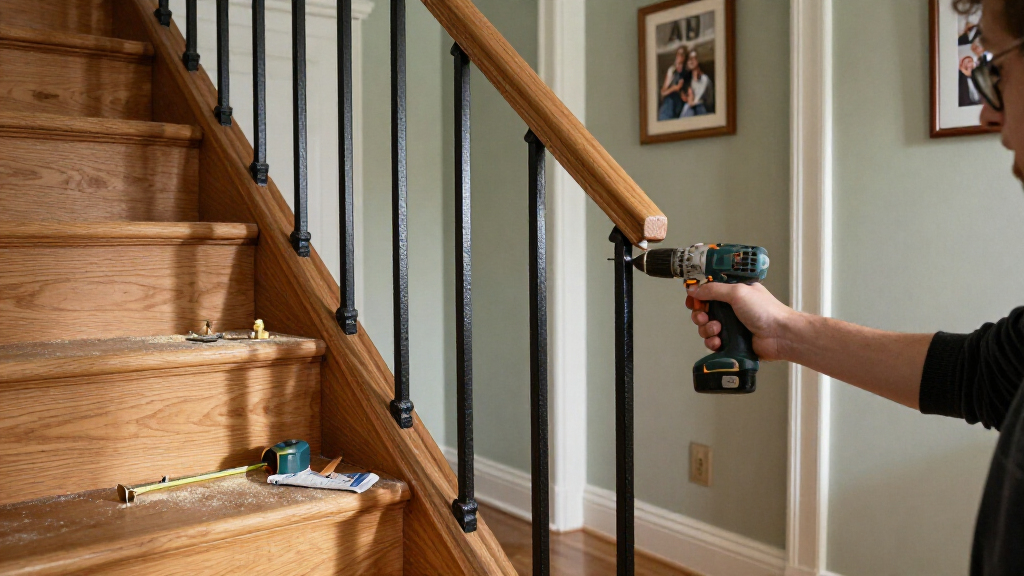
The other recommendations address handrails and balusters. Designer Prudence Bailey suggests adding a second continuous handrail where a break near a landing could leave users without support. Designer Shannon Crain recommends closely spaced vertical balusters when existing gaps may pose a risk to children or pets. The report gives four inches as a general rule of thumb for baluster spacing, while cautioning that building codes vary by location.
Safer Routes Without a Style Trade-Off
Stairs are a daily route through a home, and poor visibility, an unstable floor covering, a gap in handrail support or wide baluster openings can create hazards. The report’s practical point is that safety features need not look purely utilitarian: a runner can add color and pattern, a handrail can become a design feature, and lighting can be integrated into the stairwell.
The suggestions may be useful to people planning renovations or adapting a home for changing mobility needs. They are not a substitute for checking the staircase itself, choosing appropriate products or meeting local requirements. A visually appealing change will not make stairs safer if it is poorly installed, loose or unsuitable for the household.
Popular right now

Sony BRAVIA 5 85-Inch Mini LED 4K HDR Smart TV (K-85XR50)

KitchenAid Artisan 5-Quart Tilt-Head Stand Mixer, Almond Cream

Ninja Flip Toaster Oven and Air Fryer, 8-in-1, Stainless Steel, SP151
As an affiliate, we earn on qualifying purchases.
Four Changes Designers Recommend
The recommendations in the House Beautiful report are based on interviews with designers working on residential projects. Fiori’s example combines recessed lighting with illumination under a handrail. Aycock discusses runners on narrow, steep stairs in historic homes. Bailey focuses on continuous support around landings, while Crain addresses baluster spacing.
The article also presents the design choices as adaptable rather than as a single prescribed look. A runner may be patterned, a handrail may use a contrasting finish, and closely spaced balusters can be selected for their appearance as well as their function. The source does not provide comparative testing, injury statistics or a universal specification for all staircases.
“Recessed lighting plus handrail lighting ensured that shadows on the steps were eliminated and a trip to the ER avoided.”
— Terri Fiori, founder of Fiori + Co. and a Certified Aging in Place specialist
Codes and Installation Need Checking
The report does not specify the location or publication date of the projects, provide independent evidence that the suggested changes reduce falls, or set out a complete installation guide. The stated four-inch baluster spacing is described as a rule of thumb, not a universal code requirement. Requirements depend on location, and the appropriate solution may also depend on the staircase’s dimensions, existing condition and the people using it.
It is also unclear whether any of the featured design projects have been assessed against local building regulations or accessibility standards. Readers should not assume that a particular runner, lighting arrangement or handrail design will meet the requirements for their home without checking applicable rules and installation details.
Check the Staircase Before Renovating
For homeowners considering these changes, the next step is to review the stairs for dim areas, loose coverings, interrupted handrail support and wide baluster gaps. Before work begins, check local building rules and have the proposed changes assessed for the home’s layout and the people who use it. Lighting and rail installations should be properly planned and secured; a decorative finish alone does not establish that a feature is safe.
The source material does not announce a product launch, regulation change or formal safety program. It offers design guidance, so any further action depends on the homeowner’s needs and local requirements.
Key Questions
What are the four stair-safety ideas in the report?
The designers recommend improving lighting, fitting a stair runner securely, adding a continuous handrail where support is interrupted, and using closely spaced balusters where gaps may be hazardous.
What is a Hollywood-style stair runner?
In Fiori’s description, the runner follows the contour of each step and is secured beneath the nosing and to the riser. She says this helps limit movement and stretching compared with a waterfall-style installation.
How far apart should stair balusters be?
The report offers four inches or less as a general rule of thumb, but it also says building codes vary by location. Check local requirements rather than treating that figure as a universal standard.
Can lighting under a handrail help children?
Fiori says touch-activated handrail lighting can help small children who may not be able to reach a wall switch. The report describes a design example; it does not establish that this arrangement works for every staircase or prevents falls.
Source: rss