TL;DR

Get business pricing on tools and workshop supplies
- Business-only prices and quantity discounts
- Tax-exempt purchasing
- Multiple users, one account, clear invoices
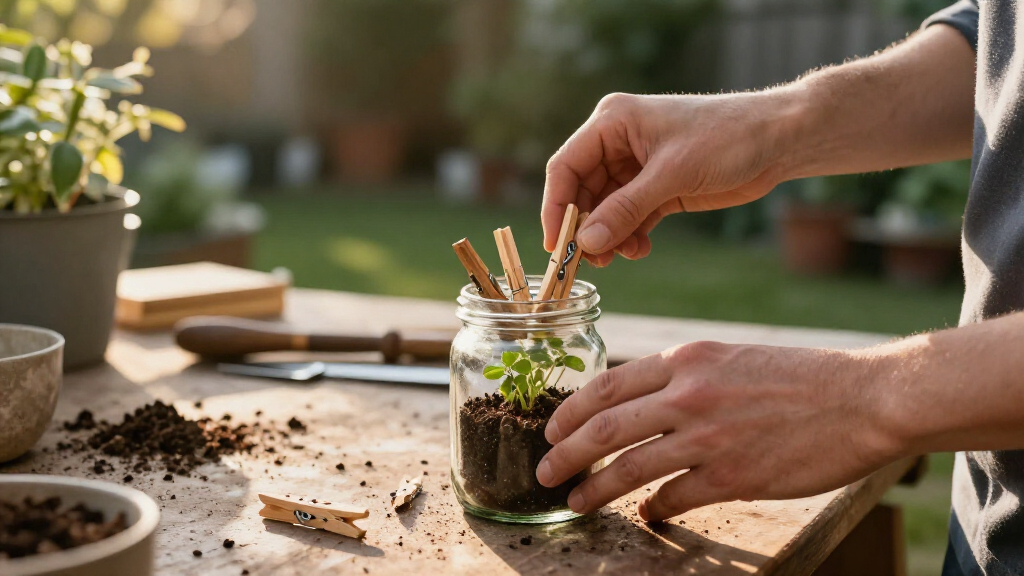
A Hunker report describes a small planter craft shared by TikToker Sally Rodero, using a glass jar, wooden clothespins, hot glue and jute twine. The jar is covered with the clothespins to create a wooden-looking exterior; stones at the bottom are advised to help with drainage.
Hunker has reported on a DIY planter shared by TikToker Sally Rodero, which turns a small glass jar into a wooden-looking container using disassembled clothespins, hot glue and jute twine. The craft offers a way to reuse a jar for a small indoor plant, though the design needs a jar shorter than the clothespins and a layer of stones is recommended at the bottom.
The project uses a small glass jar, wooden laundry clothespins, a hot glue gun and jute twine. Hunker says the jar should be shorter than the clothespins, so measuring both before starting can help determine whether the materials will fit the design. Any labels or stickers should be removed from the glass first.
To make the cover, the clothespins are taken apart by removing their wire bindings, leaving individual wooden pieces. The maker applies vertical strips of hot glue to the jar and attaches the wood pieces side by side around its surface, forming a barrel-like exterior. Twine is then wrapped around the jar and placed in the indentations of the clothespin pieces, according to the instructions in Hunker’s report.
The finished container can be painted, with the report suggesting single-color, coordinated or varied color schemes. Hunker identifies small herbs and indoor succulents as possible uses. It also advises putting stones in the bottom before adding soil to help provide drainage. The report does not specify a jar size, plant species or care schedule.
A Reuse Project for Small Plants
The project gives readers a simple way to repurpose an existing glass jar and spare clothespins rather than buying a decorative outer pot. Its practical appeal is limited to small plants and containers that suit the dimensions of the materials, but the customizable finish can make a basic jar fit a kitchen counter or windowsill.
The instructions also draw attention to a limitation of planting directly into a glass vessel: it may not have a drainage hole. Hunker recommends a layer of stones, but the report does not claim that this makes the jar equivalent to a pot with drainage. Plant choice and watering still matter, and readers should account for moisture collecting at the bottom of a closed container.
Popular right now

Ninja Hot & Iced XL Coffee Maker with Rapid Cold Brew, Black, CM371

KitchenAid Classic Series 4.5 Quart Tilt-Head Stand Mixer K45SS, Onyx Black

Bose QuietComfort Wireless Bluetooth Headphones with Active Noise Cancellation, Mic, USB‑C Charging, Deep Bass, 24‑Hour Battery – White Smok
As an affiliate, we earn on qualifying purchases.
How the Jar Cover Is Built
The craft follows a straightforward sequence: clean the jar, separate the clothespins, glue the wooden pieces around the glass, then add twine and optional paint. The wooden exterior is a decorative cover; the jar remains the inner vessel holding soil and the plant. This makes the project different from building a planter from wood, since the glass provides the container underneath.
Hunker’s report credits the idea to TikToker Sally Rodero and describes it as an afternoon craft that can be repeated for multiple small plants. It also mentions that clothespins can be purchased if readers do not have extras, but the price cited in the report may change. No details are provided about Rodero’s original posting date, the exact dimensions used or whether she tested the design with particular plants.
““You will want to make sure that your glass jar is shorter than your clothespins.””
— Hunker’s report
Drainage and Sizing Remain Open
The report does not name the jar’s dimensions, how many clothespins are needed, or how much glue and twine to use. Those amounts will vary with the jar and the size of the wooden pieces. It also does not say whether the planter was tested for long-term moisture exposure or how the glued covering holds up when watered repeatedly.
The stone layer is presented as a way to help with drainage, but the source does not explain the limits of growing plants in a glass jar without a drainage hole. Readers should not treat the craft instructions as plant-specific care advice. The report also does not establish whether every herb or succulent is suitable for this type of container.
Measure Materials Before Starting
Anyone trying the design can begin by choosing a jar and checking that it is shorter than the clothespins, then gather enough pins to cover its circumference. After removing labels, the maker can attach the wood pieces with hot glue, add twine and paint if desired, and place the recommended stone layer before soil. Plant selection and watering should be guided by the needs of the chosen species and the limitations of a glass container.
Hunker’s report does not announce a follow-up, product launch or formal test of the planter. The next practical step is therefore an individual craft project; any durability or growing results remain dependent on the materials, construction and plant care.
Key Questions
What materials does the clothespin planter require?
The project calls for a small glass jar, wooden clothespins, a hot glue gun and jute twine. Paint is optional.
How do the clothespins attach to the jar?
Remove the wire bindings to separate the wooden pieces, then glue them vertically side by side around the jar. Wrap twine into the pieces’ indentations, following the method described by Hunker.
What size jar works for the design?
Hunker says the jar should be shorter than the clothespins. The report gives no specific measurements, so compare the materials before building.
Can the jar be used for herbs or succulents?
The report suggests small herbs or indoor succulents, but it does not give plant-specific care instructions. Consider each plant’s needs and the fact that the glass jar may not have a drainage hole.
Does a layer of stones guarantee drainage?
No such guarantee is made in the report. Hunker recommends stones at the bottom to help with drainage, but does not explain how this affects water movement or plant health in a jar without a drainage hole.
Source: rss