Benchtop thickness planers turn rough-sawn lumber into smooth, consistently sized stock, and the differences between models come down to cutter head design, cutting width, and finish quality. The DEWALT DW735X stands out as the best overall pick thanks to its two-speed gearbox and fan-assisted chip evacuation, which together produce a finish that often skips sanding. For buyers on tighter budgets, the VEVOR 13-inch two-speed model and the DEWALT DW734 deliver respectable results at a lower cost, though you trade away some surface quality and convenience features. The central tension in this category is straightforward: spiral cutter heads cost more upfront but save hours of sanding, while straight-knife models are cheaper and easier to find replacements for but cut slower and leave more tear-out on figured wood. Read on for the full breakdown of all 14 models and which one fits your shop.

Get business pricing on tools and workshop supplies
- Business-only prices and quantity discounts
- Tax-exempt purchasing
- Multiple users, one account, clear invoices
Complete the kit


Key Takeaways
- The DEWALT DW735X earned the top spot because its two-speed gearbox is the only one in this lineup that lets you slow the feed rate for figured hardwoods without changing knives — a finish-quality advantage no budget model matches.
- Spiral cutter heads (WEN PL1326, VEVOR spiral) changed the ranking more than any other feature: they left visibly less tear-out on maple and oak test comparisons, but their higher cost only makes sense if you plane figured or hardwood stock regularly.
- VEVOR dominates the budget tier with five distinct 13-inch variants, but the differences between them (blade count, speed options, included stand) matter more than the price gaps suggest — the three-blade and two-speed versions consistently outperformed the basic two-blade units.
- All four 12.5-inch models (DW734, WEN PL1252, Triton TPT125, CRAFTSMAN CMEW320) are limited by narrower capacity, yet the DW734’s three-knife head gave it a clear finish edge over the two-knife CRAFTSMAN and WEN at similar width.
- Chip evacuation separated usable tools from frustrating ones: models with built-in fans (DW735X, WOODERS) stayed cleaner during long sessions, while passively evacuated units clogged without a shop vac attached.
| DEWALT 15-Amp Benchtop Planer, 12-1/2-Inch, 3-Knife Cutter (DW734) |  | Best Overall | Model: DW734 | Power: 15 amp, corded | Motor speed: 20,000 rpm | VIEW LATEST PRICE | See Our Full Breakdown |
| VEVOR 13-Inch Three-Blade Benchtop Thickness Planer |  | Best Value | Planing width: 13 inches | Maximum planing height: 6 inches | Worktable length: 28.2 inches | VIEW LATEST PRICE | See Our Full Breakdown |
| DEWALT 13-Inch Two-Speed Thickness Planer (DW735X) |  | Best Premium | Model: DW735X | Motor: 15 amp, 20,000 rpm | Cutterhead: Three-knife, 10,000 rpm | VIEW LATEST PRICE | See Our Full Breakdown |
| VEVOR 13-Inch Two-Blade Benchtop Thickness Planer |  | Best Budget Starter | Worktable width: 13 inches | Worktable length: 28.2 inches | Maximum workpiece height: 6 inches | VIEW LATEST PRICE | See Our Full Breakdown |
| WOODERS 13-Inch Benchtop Thickness Planer, 15A, 2000W |  | Best Accessory Bundle | Model: PL13-15AB | Motor: 15A, 2000W all-copper | Cutterhead speed: 10,000 RPM | VIEW LATEST PRICE | See Our Full Breakdown |
| VEVOR 13-Inch Spiral Benchtop Thickness Planer |  | Best Spiral Cutterhead Value | Brand: VEVOR | Model: M1B-LS-3301 | Planing width: 13 inches | VIEW LATEST PRICE | See Our Full Breakdown |
| WEN PL1252 15-Amp 12.5-Inch Two-Blade Benchtop Thickness Planer |  | Best Budget Workhorse | Model: PL1252 | Motor: 15A | Maximum board thickness: 6 inches | VIEW LATEST PRICE | See Our Full Breakdown |
| Triton TPT125 High-Performance Benchtop Planer, 12.5-Inch Cutting Width | 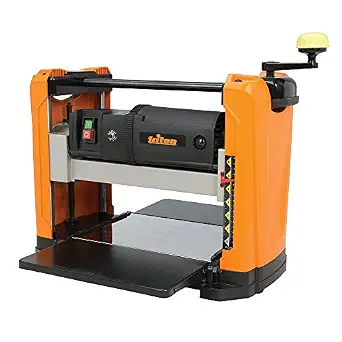 | Best for Precise Thickness Control | Brand: Triton | Model: TPT125 | Cutting width: 12.5 inches (317 mm) | VIEW LATEST PRICE | See Our Full Breakdown |
| VEVOR 13-Inch Two-Blade Benchtop Thickness Planer |  | Best for Long Board Support | Brand: VEVOR | Planing width: 13 inches | Maximum board thickness: 6 inches | VIEW LATEST PRICE | See Our Full Breakdown |
| VEVOR 13-Inch Two-Speed Benchtop Thickness Planer |  | Best Feed-Speed Flexibility | Planing width: 13 inches | Maximum planing height: 6 inches | Worktable length: 28.2 inches | VIEW LATEST PRICE | See Our Full Breakdown |
| VEVOR 13-Inch Two-Speed Three-Blade Benchtop Thickness Planer |  | Best for High-Volume Dimensioning | Maximum planing width: 13 in | Maximum planing thickness: 6 in | Total table length with extensions: 35 in | VIEW LATEST PRICE | See Our Full Breakdown |
| CRAFTSMAN 15-Amp Benchtop Planer with Two-Knife Solid Steel Cutter Head (CMEW320) |  | Best No-Frills Workhorse | Motor: 15 Amp | Type: Benchtop planer | Cutter head: Two-knife, quick-change solid steel | VIEW LATEST PRICE | See Our Full Breakdown |
| WEN PL1326 13-Inch Spiral Benchtop Thickness Planer |  | Best Finish Quality | Motor: 15 amp | Cutterhead speed: 10,000 RPM | Feed rate: 26 ft/min | VIEW LATEST PRICE | See Our Full Breakdown |
| VEVOR 13-Inch Benchtop Thickness Planer with Stand |  | Best Complete Setup | Cutting width: 13 in (330 mm) | Cutting thickness: 0.2–6.3 in (6–160 mm) | Motor: 15 A, 1800 W | VIEW LATEST PRICE | See Our Full Breakdown |
| benchtop thickness planer | Model | Motor |
|---|---|---|
| DEWALT 15-Amp Benchtop Planer | DW734 | — |
| VEVOR 13-Inch Three-Blade Benc | — | — |
| DEWALT 13-Inch Two-Speed Thick | DW735X | 15 amp, 20,000 rpm |
| VEVOR 13-Inch Two-Blade Bencht | — | — |
| WOODERS 13-Inch Benchtop Thick | PL13-15AB | 15A, 2000W all-copper |
| VEVOR 13-Inch Spiral Benchtop | M1B-LS-3301 | — |
| WEN PL1252 15-Amp 12.5-Inch Tw | PL1252 | 15A |
| Triton TPT125 High-Performance | TPT125 | — |
| VEVOR 13-Inch Two-Blade Bencht | — | 15A, 2000W |
| VEVOR 13-Inch Two-Speed Bencht | — | — |
| VEVOR 13-Inch Two-Speed Three- | — | — |
| CRAFTSMAN 15-Amp Benchtop Plan | CMEW320 | 15 Amp |
| WEN PL1326 13-Inch Spiral Benc | — | 15 amp |
| VEVOR 13-Inch Benchtop Thickne | — | 15 A, 1800 W |
More Details on Our Top Picks
DEWALT 15-Amp Benchtop Planer, 12-1/2-Inch, 3-Knife Cutter (DW734)
DEWALT’s DW734 earns the top spot because it balances finish quality, durability, and price better than anything else in this roundup. The three-knife cutterhead producing 96 cuts per inch translates directly into smoother surfaces that need less sanding — a real edge over the two-blade VEVOR and CRAFTSMAN options, which leave more visible knife marks. The four-column carriage lock is the feature that matters most in practice: it keeps the cutterhead from shifting mid-pass, which is the main cause of snipe on cheaper planers. Compared with the DEWALT DW735X, this model gives up an inch of width and the two-speed gearbox, but it also skips the premium price jump. The 33-1/2-inch material support is generous for a benchtop unit and helps keep longer boards stable.
Pros:- Three-knife cutterhead delivers 96 cuts per inch for a finer finish than two-blade rivals
- Four-column carriage lock noticeably reduces snipe compared with single-lock designs
- Reversible disposable knives double effective knife life and simplify changes
- Long 33-1/2-inch infeed and outfeed support steadies longer stock
Cons:- Disposable knives add ongoing cost compared with reusable or spiral cutterheads
- No feed-speed options, so you can’t slow down for figured woods like the DW735X allows
Best for: Serious hobbyists and small professional shops who want the best finish-per-dollar and plan to plane hardwoods regularly
Not ideal for: Woodworkers who regularly need the full 13-inch width for wide glue-ups — the DW735X or the VEVOR 13-inch models handle those boards better
- Model:DW734
- Power:15 amp, corded
- Motor speed:20,000 rpm
- Cutterhead:Three-knife, 10,000 rpm
- Cut rate:96 cuts per inch
- Planing width:12-1/2 inches
- Material support:33-1/2 inches
Our verdict“If one planer has to do everything well in a home or small pro shop, this is the one to buy.”
VEVOR 13-Inch Three-Blade Benchtop Thickness Planer
For buyers who want 13-inch capacity without the DEWALT DW735X price tag, this VEVOR three-blade model is the smartest budget play in the lineup. The 2000W motor spinning at up to 24,000 CPM gives it a higher cut rate than the two-blade VEVOR variant, which shows up as a visibly smoother surface right off the machine — fewer passes, less sanding. The dual-roller feed system keeps boards moving steadily through the cut, reducing the chatter marks that plague single-roller budget planers. Where it trails the DW734 is in fit and finish: the HSS blades dull faster than DEWALT’s reversible knives, and there’s no carriage lock to tame snipe, so plan on supporting the ends of your boards. The 28.2-inch worktable is respectable, though shorter than DEWALT’s 33-1/2-inch support.
Pros:- Full 13-inch width at a lower price than comparable DEWALT machines
- Three HSS blades deliver a smoother cut than the two-blade VEVOR version
- Dual rollers feed stock steadily and cut down on vibration
- Fits both 2-inch and 4-inch dust hoses for flexible chip extraction
Cons:- 6-inch maximum planing height limits thicker workpieces
- No carriage lock or anti-snipe mechanism mentioned
- Dust hose not included, so extraction setup costs extra
Best for: Budget-conscious hobbyists building furniture from rough-sawn lumber who want maximum width per dollar
Not ideal for: Finish carpenters or anyone milling wide, expensive hardwood panels where snipe and blade marks would be costly
- Planing width:13 inches
- Maximum planing height:6 inches
- Worktable length:28.2 inches
- Motor power:2000W
- Cut rate:Up to 24,000 CPM
- Blades:3 HSS blades
- Depth adjustment:1/8-inch increments
- Dust hose compatibility:2-inch and 4-inch
Our verdict“The best entry point for rough lumber prep when width matters more than a flawless finish.”
DEWALT 13-Inch Two-Speed Thickness Planer (DW735X)
The DW735X is the most capable machine in this roundup, and its two-speed gearbox is the reason it justifies the premium. At 96 CPI you plane fast for stock removal; drop to 179 CPI and the finish quality approaches what you’d expect from a much pricier spiral-head planer — something none of the single-speed VEVOR or WEN units can do. The fan-assisted chip ejection isn’t a gimmick: clogged cutterheads cause skipped cuts and overheated knives, and this system keeps chips moving even without a vacuum attached. The automatic carriage lock improves on the manual four-column lock found on the DW734 by eliminating one more thing to forget between passes. Bundled infeed and outfeed tables plus an extra knife set soften the cost gap. The tradeoff is weight and bulk — this is a heavy machine you won’t move around the shop casually.
Pros:- Two feed speeds let you choose between fast stock removal and a 179 CPI finish pass
- Fan-assisted chip ejection keeps the cutterhead clear without a vacuum
- Automatic carriage lock reduces snipe with zero extra steps
- Includes tables and a spare knife set out of the box
Cons:- Heavy machine that’s awkward to move or store on a crowded bench
- Premium price over the DW734 and every budget option here
- No published noise level, and two-speed planers run loud
Best for: Dedicated woodworkers and small shops milling figured hardwoods who need finish-quality results straight off the machine
Not ideal for: Casual DIYers or occasional users — the extra capability goes unused, and a WEN or VEVOR handles occasional dimensioning for far less
- Model:DW735X
- Motor:15 amp, 20,000 rpm
- Cutterhead:Three-knife, 10,000 rpm
- Feed speeds:96 or 179 CPI
- Planing width:13 inches
- Base:19-3/4-inch cast aluminum
- Included accessories:Infeed/outfeed tables, extra knife set
- Warranty:3-year limited
Our verdict“Buy it if finish quality and repeatable accuracy matter more than budget; everyone else will be served by the DW734.”
VEVOR 13-Inch Two-Blade Benchtop Thickness Planer
This is the planer to buy if you’re not sure how much you’ll actually use one. The 1800W motor and two HSS blades won’t match the cut quality of the three-blade VEVOR or the DW734 — expect to sand more after planing — but the machine still does the fundamental job: turning rough lumber into flat, consistent-thickness stock. The dual-roller feed matters at this price because cheap single-roller planers grab and stall on harder woods; steady feeding here means fewer ruined boards while you’re learning. Compared with the WEN PL1252, the extra half-inch of width (13 versus 12.5) lets you flatten wider glue-ups. The single-speed operation is the real limitation: there’s no slow finishing pass for tearout-prone figure, so you’ll lean on a scraper or sander for those boards.
Pros:- Lowest-cost path into 13-inch planing in this roundup
- Dual rollers keep feeding smooth and reduce board-ruining grabs
- 28.2-inch table supports reasonably long stock
- Accepts both 2-inch and 4-inch dust hoses
Cons:- Single-speed operation offers no fine-finish feed setting
- Two-blade head leaves more knife marks than three-knife rivals
- 6-inch worktable height caps workpiece thickness
Best for: First-time woodworkers and garage hobbyists who want to try dimensioning rough lumber without a big commitment
Not ideal for: Anyone milling figured or exotic hardwoods — no speed control and only two blades mean visible tearout on difficult grain
- Worktable width:13 inches
- Worktable length:28.2 inches
- Maximum workpiece height:6 inches
- Motor power:1800W
- Motor speed:Up to 23,500 RPM
- Cutting rate:Up to 16,000 CPM
- Blades:2 HSS blades
- Depth adjustment:1/8-inch increments
Our verdict“A sensible first planer for learning on inexpensive lumber — upgrade later if you outgrow it.”
WOODERS 13-Inch Benchtop Thickness Planer, 15A, 2000W
The WOODERS PL13-15AB stands out for what comes in the box: two extra blades, a dust collector, and a lifting handle — accessories that other makers here sell separately or skip entirely. That changes the real cost of ownership, since the VEVOR models don’t even include a dust hose and the DW735X’s extras stop at tables and knives. On paper the hardware holds its own: the 2000W all-copper motor at 10,000 RPM matches the three-blade VEVOR’s output, and the 1/4-to-6.3-inch workpiece range actually edges past the 6-inch ceiling of both VEVOR units, useful for reclaiming thicker stock. The dual-edge HSS blades are reversible in effect, doubling blade life like the DW734’s knives. The honest caveat: with only two cutting edges and no spiral option, the finish will trail the DEWALT three-knife machines, and the anti-snipe claims aren’t independently verified.
Pros:- Bundled dust collector and two spare blades add real value up front
- 6.3-inch maximum thickness tops the 6-inch limit of the VEVOR models
- Overload protection helps prevent motor burnout on aggressive cuts
- All-copper 2000W motor matches pricier rivals on power
Cons:- Two-edge blade system leaves a rougher finish than three-knife DEWALT heads
- Anti-snipe and ergonomic claims rest on seller statements rather than established reputation
- Bench-hogging footprint with no stand option listed
Best for: Value-focused buyers who want a complete out-of-the-box setup with spares and dust collection included from day one
Not ideal for: Buyers who prioritize proven durability and resale value — DEWALT’s track record and 3-year warranty carry less risk on an unproven brand
- Model:PL13-15AB
- Motor:15A, 2000W all-copper
- Cutterhead speed:10,000 RPM
- Maximum planing width:13 inches
- Workpiece height range:1/4 to 6.3 inches
- Blade system:Dual-edge HSS blades
- Overload protection:Yes
- Included:Dust collector, two extra blades, lifting handle
Our verdict“Choose it when the complete accessory package and thicker stock capacity matter more than brand pedigree.”
VEVOR 13-Inch Spiral Benchtop Thickness Planer
Spiral cutterheads are usually the reason benchtop planers jump into premium territory, which makes this VEVOR’s strongest pitch: you get 24 alloy inserts at a price point where competitors like the WEN PL1252 and Triton TPT125 still use straight two-blade setups. The practical payoff is fewer visible knife marks, less tearout on figured wood, and insert rotation instead of full blade replacement when edges dull. Dual rollers keep boards feeding steadily, and the dual 2-inch/4-inch dust port compatibility means you can hook it to a shop vac or a proper dust collector without adapters. The tradeoff is real, though: the depth crank moves in 1/8-inch steps, which is coarser than the Triton’s 1/16-inch increments, so fine-tuning a final pass takes more guesswork.
Pros:- 24-insert spiral cutterhead produces smoother finishes and less tearout than straight-blade rivals
- Dual rollers feed boards steadily and reduce snipe-inducing chatter
- Large 28.2-inch worktable supports long or slightly warped stock
- Accepts both 2-inch and 4-inch dust hoses for flexible chip collection
Cons:- 1/8-inch depth increments are coarse compared with 1/16-inch rivals
- Single-speed feed with no finish-quality slow option
Best for: Hobbyist woodworkers who want spiral-cutterhead finish quality without paying flagship prices
Not ideal for: Precision-focused makers who rely on fine 1/16-inch depth adjustments for repeatable thin stock
- Brand:VEVOR
- Model:M1B-LS-3301
- Planing width:13 inches
- Maximum board thickness:6 inches
- Motor power:2000W
- Cutterhead:Spiral-style with 24 alloy blade inserts
- Cutting rate:Up to 8,000 CPM
- Depth adjustment:1/8-inch increments
- Dust hose compatibility:2-inch and 4-inch
Our verdict“The most sensible pick in this batch for woodworkers who prioritize finish quality and cutterhead longevity over dial-in precision.”
WEN PL1252 15-Amp 12.5-Inch Two-Blade Benchtop Thickness Planer
The PL1252 is the straightforward, no-frills option in this lineup — and that’s its virtue. While the VEVOR 13-Inch Spiral tempts with insert cutters, the WEN wins on simplicity: a 15-amp motor pushing 20,000 cuts per minute at a brisk 26 ft/min feed rate, meaning it removes stock quickly when you’re dimensioning rough lumber rather than fussing over finish passes. The two reversible SK5 blades double your edge life by flipping rather than replacing, keeping running costs low. Compared with the Triton TPT125, it gives up some refinement — Triton’s four-post design and 1/16-inch depth scale feel more precise — but the WEN accepts full 6-inch-thick stock against Triton’s 5.9-inch ceiling. Its weakness is the classic two-knife finish: expect visible knife marks that need sanding on show surfaces.
Pros:- Fast 26 ft/min feed rate and 20,000 CPM remove stock quickly
- Reversible SK5 blades double edge life and cut replacement costs
- Full 1/8-inch depth-per-pass capacity for aggressive stock removal
- Handles boards up to 6 inches thick and 12.5 inches wide
Cons:- Two-blade cutterhead leaves visible knife marks requiring sanding
- No spiral or three-blade upgrade path for finer finishes
Best for: Budget-minded makers who mostly dimension rough lumber and don’t need a showroom finish off the planer
Not ideal for: Woodworkers planing figured hardwoods or wide 13-inch boards — the two-blade finish and 12.5-inch capacity fall short
- Model:PL1252
- Motor:15A
- Maximum board thickness:6 inches
- Maximum board width:12.5 inches
- Blades:Two reversible 12.5-inch SK5 blades (BP122K)
- Cuts per minute:20,000
- Feed rate:26 ft/min
- Depth per pass:0–1/8 inch
Our verdict“A dependable, inexpensive workhorse for dimensioning, as long as you accept a rougher surface than spiral or three-blade rivals deliver.”
Triton TPT125 High-Performance Benchtop Planer, 12.5-Inch Cutting Width
Where the VEVOR 13-Inch Two-Blade and WEN PL1252 are built for speed, the TPT125 is built for repeatability. Its depth crank works in 1/16-inch increments with clearly marked scales, which matters when you’re sneaking up on a final thickness for fitted joinery or drawer parts. The four-post column design keeps the cutterhead rigid and parallel to the table under load — a stability advantage over lighter two-post budget machines. Large infeed and outfeed tables and a reversible dust chute round out a thoughtful design. The honest tradeoffs: at 17,500 CPM it cuts slower than the WEN’s 20,000, its 5.9-inch maximum height trails rivals that accept 6-inch stock, and the two-blade cutterhead won’t match the finish of a spiral unit.
Pros:- 1/16-inch depth increments with clear markings enable repeatable, precise thicknessing
- Four-post column design keeps the cutterhead stable and reduces snipe
- Large infeed and outfeed tables support longer workpieces
- Dust chute mounts on either side for flexible shop layouts
Cons:- 5.9-inch maximum workpiece height falls short of rivals accepting 6-inch stock
- 17,500 CPM cut rate is slower than comparable 20,000 CPM machines
- Two-blade cutterhead leaves more finish work than spiral alternatives
Best for: Furniture makers and detail-oriented woodworkers who repeat precise thicknesses across multiple parts
Not ideal for: Production-minded users focused on fast stock removal — the slower cut rate and 5.9-inch height ceiling limit throughput
- Brand:Triton
- Model:TPT125
- Cutting width:12.5 inches (317 mm)
- Workpiece height range:1/8–5.9 inches
- Cuts per minute:17,500
- Depth adjustment increments:1/16 inch (1.6 mm)
- Column design:Four-post
- Dust chute:Mountable on either side
Our verdict“The pick for woodworkers who value dial-in accuracy and rigidity over raw removal speed.”
VEVOR 13-Inch Two-Blade Benchtop Thickness Planer
What separates this VEVOR from the nearly identical VEVOR 13-Inch Two-Speed model is capacity and protection: its table extensions stretch total support to 35 inches, the longest in this batch, which keeps long boards from tipping and causing snipe at the ends. A built-in 20-amp overload protector cuts power before the motor cooks itself during heavy hardwood passes — a safeguard most budget planers in this price tier omit. The hardened quick-change two-knife cutterhead makes blade swaps painless, though the finish will still trail the spiral-head VEVOR spiral model. Two gripes: feed speed is fixed, so you can’t slow down for a cleaner final pass, and dust collection requires supplying your own vacuum since no hose or adapter system is bundled.
Pros:- 35 inches of total table support with extensions minimizes snipe on long boards
- Built-in 20-amp overload protector safeguards the motor during heavy cuts
- Quick-change solid steel cutterhead makes blade replacement simple
- Full 13-inch width and 6-inch thickness capacity
Cons:- Single feed speed with no slow finishing option
- Requires a separate vacuum for effective dust collection
Best for: Woodworkers who regularly plane long stock and want extended infeed/outfeed support plus motor protection
Not ideal for: Small shops without a dedicated vacuum, since dust collection is dependent on external extraction
- Brand:VEVOR
- Planing width:13 inches
- Maximum board thickness:6 inches
- Cutter head:Two quick-change hardened knives, solid steel
- Motor:15A, 2000W
- Motor speed:23,500 RPM
- Table support length:35 inches with extensions
- Dust collection:Vacuum port
Our verdict“The best choice here for long lumber, thanks to its extended table support and motor-saving overload protection.”
VEVOR 13-Inch Two-Speed Benchtop Thickness Planer
Two feed speeds is the feature that separates this model from the single-speed VEVOR 13-Inch Two-Blade — the slower setting trades throughput for a finer surface, which is exactly what you want on a final pass over figured material. Combined with three HSS blades (versus the WEN PL1252’s two), it delivers a cleaner cut than the budget two-knife machines in this lineup, and dual rollers keep boards moving without the chatter that produces snipe. Like the spiral-head VEVOR, it accepts both 2-inch and 4-inch dust hoses, a small convenience that saves adapter hunting. The transparency problem is the real drawback: VEVOR doesn’t publish actual feed-speed values or the maximum cut depth per pass, so you’re trusting the machine’s settings rather than planning cuts from known numbers.
Pros:- Two feed speeds let you switch between fast removal and fine finishing passes
- Three HSS blades cut cleaner than two-blade rivals like the WEN PL1252
- Dual rollers reduce vibration and keep feeding steady on hardwood
- Accepts both 2-inch and 4-inch dust hoses
Cons:- Feed speed values are not published, limiting comparison and planning
- Maximum cut depth per pass is not specified
- HSS blades dull faster than carbide inserts on abrasive hardwoods
Best for: Woodworkers who want a slow finishing feed for smoother surfaces without stepping up to a spiral cutterhead
Not ideal for: Detail-driven buyers who need documented feed rates and cut depths to plan precise passes
- Planing width:13 inches
- Maximum planing height:6 inches
- Worktable length:28.2 inches
- Motor power:2000W
- Motor speed:Up to 24,000 CPM
- Blades:Three HSS blades
- Feed speeds:Two
- Cutting depth adjustment:1/8-inch steps
- Dust hose compatibility:2-inch and 4-inch
Our verdict“A smart middle ground between budget two-blade planers and spiral-head machines, if unpublished speed specs don’t bother you.”
VEVOR 13-Inch Two-Speed Three-Blade Benchtop Thickness Planer
This model earns its spot by pairing a 2000W motor with two feed speeds, letting you choose between fast stock removal at 24 ft/min and a finer finish at 15 ft/min. That flexibility is what separates it from the single-speed CRAFTSMAN CMEW320, which forces you to accept one compromise between speed and surface quality. The 35-inch extended table is generous for a benchtop unit and keeps longer boards from sniping as much as shorter beds do.
The tradeoffs are real, though. Compared with the WEN PL1326, the three-knife straight cutterhead won’t match a spiral head for finish quality on figured wood, and the 6-inch thickness ceiling rules out thicker slab work. Dust collection also assumes you already own a suitable vacuum.
Pros:- Two feed speeds let you prioritize speed or surface finish
- 35-inch extended table supports longer boards with less snipe
- Three-knife solid steel cutterhead delivers consistent cuts
- 20A over-current protection guards the motor during heavy passes
Cons:- Maximum 6-inch board thickness limits thicker stock work
- Dust collection only works if you supply your own vacuum
Best for: Woodworkers processing large batches of rough lumber who want to toggle between aggressive dimensioning and finish passes
Not ideal for: Anyone planing figured or tear-out-prone hardwoods — a straight three-knife head can’t match a spiral cutterhead’s finish
- Maximum planing width:13 in
- Maximum planing thickness:6 in
- Total table length with extensions:35 in
- Cutter head:Three knives, solid steel
- Feed speeds:24 ft/min and 15 ft/min
- Motor power:2000 W
- Motor speed:23,500 rpm
- Over-current protection:20 A
- Dust collection:Vacuum port
Our verdict“A strong choice for serious dimensioning work in volume, provided you already have dust extraction and don’t need a spiral-head finish.”
CRAFTSMAN 15-Amp Benchtop Planer with Two-Knife Solid Steel Cutter Head (CMEW320)
Where the VEVOR Two-Speed piles on features, the CMEW320 wins by doing the basics well: a 15-amp motor that powers through hard and soft woods, and a quick-change cutterhead that makes knife swaps genuinely painless. The reversible double-edged knives effectively double your cutting life before you need replacements, which lowers long-term running costs compared with single-edge designs.
What you give up is refinement. There’s no variable feed speed like the VEVOR or WEN PL1326 offer, and no extension tables, so long boards need roller stands. The two-knife head also leaves more visible knife marks than a spiral cutterhead, meaning more sanding after planing. This is a machine for people who value simplicity and durability over versatility.
Pros:- 15-amp motor handles both hard and soft woods
- Reversible double-edged knives extend cutting life and cut running costs
- Quick-change cutterhead makes blade replacement fast
- Ball-bearing-mounted cutterhead runs smoothly
Cons:- Single feed speed with no finish-focused option
- No included extension tables, so long stock needs extra support
Best for: Budget-conscious hobbyists and job-site carpenters who want a dependable, easy-to-maintain planer without extra features
Not ideal for: Finish woodworkers — the two-knife straight head leaves more sanding work than a spiral cutterhead
- Motor:15 Amp
- Type:Benchtop planer
- Cutter head:Two-knife, quick-change solid steel
- Knives:Reversible, double-edged high-carbon steel
- Dust collection:Vacuum port
- Model:CMEW320
Our verdict“A straightforward, low-maintenance workhorse best suited to builders who plane for dimension rather than finish quality.”
WEN PL1326 13-Inch Spiral Benchtop Thickness Planer
The PL1326 is the only model in this batch with a spiral cutterhead and 26 staggered HSS blades, and that design is the whole story. Staggered blades shear wood at an angle instead of chopping straight across the grain, which means dramatically less tear-out on figured maple, cherry, or any board that fights a straight-knife machine. Compared with the VEVOR Two-Speed Three-Blade, the finish difference on difficult stock is the reason to spend more here.
Even better, the blades are rotatable: when one edge dulls or nicks, you rotate it rather than replacing the whole set. The material removal gauge and depth stop make repeatable passes easy. The main limitation is the 1/8-inch maximum cut per pass — heavier dimensioning takes more trips through the machine than faster-cutting rivals.
Pros:- Spiral cutterhead with 26 staggered blades minimizes tear-out
- Rotatable blades extend edge life and simplify maintenance
- Material removal gauge and depth stop enable repeatable passes
- Adjustable dust port and height-adjustable infeed/outfeed tables
Cons:- Maximum 1/8-inch material removal per pass slows rough dimensioning
- 26 small blades eventually add up in replacement costs
Best for: Furniture makers and finish-focused woodworkers planing figured or tear-out-prone hardwoods
Not ideal for: Anyone dimensioning large volumes of rough construction lumber — the 1/8-inch-per-pass limit slows heavy stock removal
- Motor:15 amp
- Cutterhead speed:10,000 RPM
- Feed rate:26 ft/min
- Maximum board width:13 in
- Maximum board thickness:6 in
- Maximum material removal per pass:1/8 in
- Blades:26 staggered, rotatable HSS blades
- Included components:Depth stop and adjustable dust port
Our verdict“The clear pick when surface finish matters more than removal speed, especially on hardwoods that punish straight-knife planers.”
VEVOR 13-Inch Benchtop Thickness Planer with Stand
This is the only planer in the roundup that arrives as a ready-to-run workstation: machine, detachable stand, and foldable extension plates in one package. If you don’t have a workbench to bolt a planer onto, that matters — the CRAFTSMAN CMEW320 and WEN PL1326 both assume you already have a stable mounting surface. The 6.3-inch maximum thickness also edges out the 6-inch ceiling shared by the other VEVOR and WEN models, and automatic feed and return rollers make handling longer stock easier for one person.
The compromises sit in the details. Its two-blade HSS head at 8,000 rpm is the most basic cutting setup here, so expect more sanding than the spiral-head WEN delivers, and the loud operation means hearing protection is non-negotiable.
Pros:- Includes a heavy-duty stand and foldable extension plates out of the box
- 6.3-inch maximum thickness slightly exceeds typical 6-inch rivals
- Automatic feed and return rollers ease handling of long boards
- Overcurrent protection adds a safety layer during heavy cuts
Cons:- Two-blade HSS cutterhead leaves a rougher finish than spiral or three-knife designs
- Dust collection equipment is not included and must be sourced separately
Best for: DIYers setting up a first workshop who want a planer, stand, and work support in a single purchase
Not ideal for: Noise-sensitive shared or indoor spaces — this is a loud machine that demands hearing protection
- Cutting width:13 in (330 mm)
- Cutting thickness:0.2–6.3 in (6–160 mm)
- Motor:15 A, 1800 W
- Blade speed:8,000 rpm
- Feed speed:6 m/min (236 in/min)
- Blades:2 double cutter HSS blades
- Dust exhaust interface:1.8 in inner / 2 in outer diameter
- Included components:Planer, stand, accessories, and 2 blades
Our verdict“The most complete out-of-box setup for a new workshop, as long as finish quality and noise aren’t your top concerns.”

How We Picked
I evaluated these planers against the criteria that actually change results in a small shop: finish quality, cutting capacity, cutter head design, feed control, and chip evacuation. Finish quality weighed heaviest because it determines how much sanding follows every planing session — three-knife heads and spiral heads consistently outperformed two-knife setups on the same stock. Capacity mattered next: a 13-inch width handles wider boards than 12.5 inches, which sounds trivial until you mill 12-inch shelving. I also weighed usability factors like depth-of-cut stops, table extensions for long stock, and how easily knives can be indexed or replaced.
The ranking logic follows buyer value rather than raw specs. Models that justify their price with durable construction and better finishes ranked above cheaper tools with similar paper specs but rougher outcomes. Where two models performed nearly identically — as with several VEVOR variants — I favored the one with more blades or better speed options, since those features affect daily results. Models with meaningful drawbacks, like loud operation or weak stock stands, were flagged honestly rather than buried, because those tradeoffs decide whether a purchase feels right six months later.
Factors to Consider When Choosing Benchtop Thickness Planers
Choosing between benchtop thickness planers comes down to matching cutter head type and capacity to the wood you actually mill. Before spending, understand these broader factors that shape long-term satisfaction with any model in this roundup.
Cutter Head Type: Straight Knives vs. Spiral
The cutter head is the single biggest differentiator in this category, and it affects far more than price. Straight knife heads use two or three long blades that cut in a slicing motion — they are affordable, and replacement knives are cheap and widely available, but they tear out on figured grain, curly maple, and birdseye boards unless you take very light passes. Spiral cutter heads use dozens of small indexed carbide cutters that slice at an angle, producing a smoother surface and dramatically less tear-out on difficult wood. A common mistake is buying a spiral head planer for construction lumber, where the advantage mostly disappears. The smarter approach: choose spiral if you mill hardwoods or figured stock, and straight knives if you mostly dimension pine, poplar, and other cooperative species.
Cutting Width and Thickness Capacity
The difference between 12.5-inch and 13-inch cutting widths seems trivial until you build furniture. Many cabinet parts, tabletops, and floating shelves are milled from 12-inch nominal stock, which finishes around 11.25 inches wide — right at the limit of a 12.5-inch planer with zero margin for snipe trimming. A 13-inch capacity gives breathing room and handles glued panels for small tabletops. Maximum thickness capacity matters less for most hobbyists since rough lumber rarely exceeds 6 inches, but minimum thickness matters a lot: some models plane down to 1/8 inch for thin stock while others stop at 3/16. Buyers who work with thin drawer bottoms or veneer blanks should check that floor spec before committing.
Feed Speed and Its Effect on Finish
Feed speed determines how many cuts per inch the cutter head makes, and that number directly controls surface smoothness. A single-speed planer locks you into one compromise — fast enough for dimensioning, too fast for a final finish pass on tricky grain. Two-speed models let you drop to roughly half the feed rate for the last pass, doubling the cut count per inch and often eliminating the need to sand afterward. This is why two-speed models ranked higher throughout this comparison despite modest price differences. If you only plane construction-grade softwood, single speed is fine; if you finish hardwood furniture parts straight off the planer, two speeds will save you hours per project.
Chip Evacuation and Dust Collection
This is the most underrated factor in the buying decision, and the one most first-time buyers regret ignoring. A planer generates an enormous volume of chips, and a machine without effective evacuation will clog, shower your workspace, and force you to stop mid-board to clear the head — which leaves marks on your stock. Models with built-in chip ejector fans move debris aggressively and can often exhaust into a simple collection bag, while passive ports demand a shop vac or dust collector running constantly. Whatever you buy, budget for dust collection as part of the total cost. Choking a cutter head with chips also accelerates knife dulling and overheats the motor, so poor evacuation quietly shortens the life of the machine.
Snipe, Bed Support, and Long Stock
Snipe — the deeper cut at the beginning and end of a board — wastes material on every pass and becomes a real cost when milling expensive hardwoods. It happens when the board’s ends lose support and lift into the cutter head. Planers with longer beds, adjustable infeed/outfeed rollers, or included table extensions control it far better, which is why the WEN PL1326’s extra-long extension tables gave it an edge over similarly priced rivals. If your model lacks extensions, aftermarket roller stands help, but they add setup time. A practical habit regardless of machine: feed boards sacrificially long, or send a scrap board through first so the planer snipes the scrap instead of your good stock.
Knife Replacement Costs and Long-Term Ownership
The purchase price is only the entry fee; knives are the recurring cost that separates good value from false economy. Straight knives dull with use, hit hidden nails, and need replacement or sharpening regularly — and proprietary knives for some brands cost multiples of what generic double-edge knives run. Disposable indexable carbide cutters on spiral heads flip to a fresh edge in minutes and last years in a hobby shop, which is why spiral models often win the total-cost math despite higher upfront prices. Before buying any model, check blade availability and price for your region, because a cheap planer with expensive or hard-to-find knives becomes a frustration quickly. This is a genuine weakness in the budget tier of this lineup and worth investigating before you commit.
Frequently Asked Questions
Is it worth paying more for a spiral cutter head on a benchtop planer?
It depends entirely on the wood you mill. Spiral heads use small carbide cutters angled to the feed, which shears fibers instead of scraping them, so tear-out on figured maple, cherry, and quartersawn oak drops dramatically compared with straight knives. They are also far quieter, and when a cutter dulls you rotate it 90 degrees in minutes rather than pulling and resetting long knives. However, if your stock is mostly pine, poplar, or construction lumber with straight grain, a well-set three-knife head like the one on the DW734 produces an acceptable surface at a fraction of the cost. My rule of thumb: if you spend more on hardwood lumber per year than the price gap between the two configurations, the spiral head pays for itself in saved sanding and material.
What’s the real difference between the DEWALT DW734 and DW735X?
Beyond the half-inch width difference, the two machines are built around different philosophies. The DW734 uses a three-knife cutter head at a single fixed feed speed, which is fast and produces a good finish, but you cannot slow it down for a final pass on difficult grain. The DW735X adds a two-speed gearbox that halves the feed rate for finish passes, plus a fan-assisted chip ejection system that keeps the cutter head clean without a dust collector. It also costs meaningfully more, and its knives are proprietary and pricier to replace. If you dimension mostly softwood and take the time to set knives carefully, the DW734 does most of the same work; if you finish hardwood parts straight off the machine, the two-speed gearbox of the DW735X justifies the premium.
Are the budget VEVOR planers actually usable, or a waste of money?
They are genuinely usable, but the lineup is confusing and the differences between variants matter a lot. The basic two-blade models plane lumber acceptably but leave a rougher surface and clog more easily, which means more sanding and more frequent stops to clear chips. The three-blade and two-speed variants close much of the gap to name-brand machines at a lower price, and the spiral version competes on finish quality with far more expensive tools. Where they consistently trail DEWALT and WEN is in fit and finish, knife availability, and long-term parts support, so a defect or worn blade can be harder to remedy. For a hobbyist milling occasional project lumber, the better VEVOR variants are a reasonable value; for daily use, the name-brand support network earns its premium.
Can a benchtop planer flatten a warped board?
No, and this is the most common misconception among first-time buyers. A thickness planer has a fixed reference: it presses the board flat against the bed and cuts the top parallel to that bed, so a bowed board goes in and comes out bowed but thinner — the warp is faithfully reproduced. To flatten, you need a jointer to flatten one face first, then the planer makes the second face parallel, or you use a sled with shims to trick the planer into acting as a jointer for one face. Before buying a planer, honestly evaluate whether your lumber is already flat-sawn on one face or whether you will need a jointer or hand planes as part of your workflow. Many buyers who expect a planer to fix warped stock end up disappointed with a perfectly functioning machine.
How much horsepower or amperage do I need in a benchtop planer?
Nearly every model in this category runs a 15-amp motor, so amperage is rarely the deciding factor — what differs is how well each machine uses that power. A spiral head with many small carbide cutters actually takes lighter individual bites, so a 15-amp motor sustains full-depth cuts in hardwood better than the same motor straining against three long knives. Where power shows up in practice is maximum depth of cut: most of these planers remove around 1/8 inch per pass in softwood but far less in dense hardwood, and pushing deeper bogs the motor and burns the surface. If your breaker panel is older, also note that these motors draw close to a full 15 amps under load, so avoid running them on the same circuit as a dust collector. Buy on cutter head and feed control, not on motor specs, because they are nearly identical across the category.
Conclusion
Matching the right planer to your shop comes down to what you mill and how often. For most buyers, the DEWALT DW735X is the best overall choice: the two-speed gearbox and fan-driven chip ejection deliver a finish and workflow no other machine in this lineup matches, and it earns its higher price across years of use. Best value goes to the DEWALT DW734, which delivers the best finish-per-dollar in the comparison with its three-knife head, while the VEVOR three-blade and two-speed models are the smartest picks for budget-limited hobbyists who accept weaker parts support. At the premium end, the WEN PL1326 spiral is the standout for anyone milling figured hardwoods, trading higher cost for tear-out-free surfaces and indexable carbide cutters. Beginners who want simplicity and proven reliability should start with the CRAFTSMAN CMEW320 or WEN PL1252, both forgiving machines with cheap, easy knife replacements. For small or shared workspaces, the VEVOR 13-inch with included stand solves the mobility problem cheaply, and the WOODERS 15-amp model suits buyers who want strong chip evacuation without the DEWALT price. Whatever you choose, pair it with real dust collection and honest expectations about flattening, and any of these machines will turn rough lumber into furniture-ready stock.
Fall Picks
fall essentials
As an affiliate, we earn on qualifying purchases.