
The best router bit for edge profiling depends on the profile you want, but the Amana Tool 54302 Edge-Fluting Bit earns my top spot for its professional-grade carbide and 1/2-inch shank stability on decorative edges. If you want versatility on a budget, the Feanron 4-Piece Roundover Set covers the most common profiles, while the Bosch 6-Piece Trim and Edging Set is the strongest all-in-one starter package. The main tradeoff in this category is between single, high-precision bits and multi-piece sets: singles cut cleaner and last longer, while sets give you flexibility at lower cost per bit. Another fault line is shank size — 1/2-inch shanks resist chatter on heavy profiles, while 1/4-inch shanks fit more routers but flex under deep cuts. Keep reading for the full breakdown of all nine options.

Get business pricing on tools and workshop supplies
- Business-only prices and quantity discounts
- Tax-exempt purchasing
- Multiple users, one account, clear invoices
Complete the kit


Key Takeaways
- Single-purpose bits from Amana and Freud consistently outperformed budget sets on cut quality, thanks to finer carbide grinding and better brazing — the gap shows up most on hardwoods and end grain.
- Shank size was the biggest quality differentiator across the lineup: 1/2-inch shank bits (Amana, XDENGP, KEENTECH) ran smoother with less chatter, while several 1/4-inch shank options required lighter passes to avoid burn marks.
- Roundover sets from Feanron and TOTOWOOD deliver the best value per profile, but their smaller radii limit them to delicate edges — anyone profiling tabletops or thick stock needs bigger radii.
- The two V-groove bits split their use cases cleanly: KEENTECH’s 90-degree, 1/2-inch shank version suits sign work and deep grooves, while the Jiiolioa 20-degree bit is a specialty tool for shallow decorative scoring.
- Bearing-guided designs (Freud flush trim, both roundover sets) make setup nearly foolproof for beginners, but fixed-profile bits like the Amana fluting cutter demand a router table or guide fence to use safely.




| router bit for edge profiling | Shank Diameter | Material | Cutting Diameter | Number of Flutes |
|---|---|---|---|---|
| Freud 42-104 1/2" Bearing Flus | 1/4" | — | — | — |
| Bosch RBS006TES 6-Piece Carbid | — | — | — | — |
| Amana Tool 54302 Carbide-Tippe | 1/2 inch | — | 3/4 inch | — |
| XDENGP 22.5-Degree Chamfer Rou | 1/2 inch | Carbide | 0.5 inch | 2 |
| Feanron 4-Piece Roundover Rout | 1/4 inch | Carbide | — | 2 |
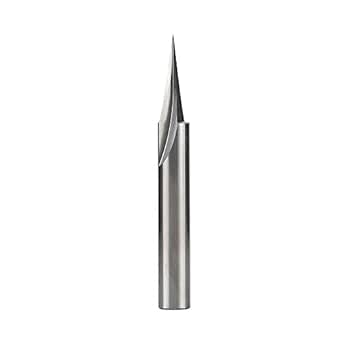
| Jiiolioa V-Point 20-Degree V-G | 1/4 inch | Carbide | 0.25 inches | 1 |
| TOTOWOOD Roundover Router Bit | — | Carbon steel body, C2 carbide inserts, tungsten steel alloy | — | — |
| KEENTECH 90° V-Groove Router B | 1/2 inch | Alloy steel body with tungsten carbide | 7/8 inch | 2 |
| YONICO 13161q 1/8-Inch Radius | 1/4 inch | C3 micro-grain tungsten carbide | 0.75 inches | 2 |
More Details on Our Top Picks
Freud 42-104 1/2″ Bearing Flush Trim Router Bit
Freud’s 42-104 stands out as the most dependable single-purpose choice when your edge profiling starts with a template or pattern. The 1/2-inch bearing riding directly above the cutter keeps the cut consistent, and the Perma-SHIELD coating resists pitch buildup that plagues cheaper bits during long runs of plywood or hardwood trimming. Compared with the Bosch RBS006TES set, this bit does one job — but does it with noticeably more precision, thanks to Freud’s grind quality and a full inch of carbide height for thicker stock. The tradeoff is flexibility: unlike the Feanron roundover set, this is not a decorative profiling bit at all, so buyers wanting ogee, chamfer, or roundover edges will need additional bits. The 1/4-inch shank also limits rigidity on heavy, deep passes where a half-inch shank would run smoother.
Pros:- Perma-SHIELD coating reduces pitch buildup and extends edge life on plywood and resinous woods
- Full 1-inch carbide height handles thicker stock in a single pass
- Works in both hand-held and table-mounted routers
- Cuts composition materials, plywoods, hardwoods, and softwoods cleanly
Cons:- 1/4-inch shank is less rigid than 1/2-inch shank alternatives for heavy cuts
- Single-purpose flush trim design offers no decorative profiling options
Best for: Woodworkers who trim edges against templates, patterns, or laminate flush and want one high-quality bit rather than a broad set
Not ideal for: Buyers seeking decorative profiles like roundovers, chamfers, or flutes — this bit only flush-trims
- Bearing Diameter:1/2″
- Number of Cutters:2
- Overall Diameter:1/2″
- Overall Length:2-13/16″
- Shank Diameter:1/4″
- Carbide Height:1″
- Coating:Freud Perma-SHIELD
Our verdict“This pick makes the most sense for pattern and template work where one excellent flush-trim bit beats a whole set of mediocre ones.”
Bosch RBS006TES 6-Piece Carbide-Tipped Trim and Edging Router Bit Set
For buyers who want variety without a big commitment, this Bosch six-piece set hits a practical sweet spot. The micrograin carbide tips grind finer than the carbide on budget sets like the Feanron 4-piece roundover kit, which shows up as smoother finish cuts on hardwood edges. An anti-friction coating keeps resin from welding itself to the flutes mid-project, and the included storage case means the bits aren’t rattling loose in a drawer. The honest limitation: six bits only covers the most common trim and edging profiles, so anyone planning complex molded edges or decorative flutes — territory the Amana 54302 covers beautifully — will outgrow this set quickly. Still, compared with buying individual bits, the per-bit value here is hard to argue with for general shop use.
Pros:- Micrograin carbide tips deliver smoother finish cuts than typical budget-set carbide
- Handles soft wood, hard wood, and wood composites
- Anti-friction coating minimizes residue buildup during extended use
- Plastic storage case keeps bits organized and portable
Cons:- Only 6 bits, so coverage of edging profiles is limited
- No 1/2-inch shank heavy-duty options for table-mounted deep cuts
Best for: Hobbyists and occasional woodworkers building a starter collection of quality edging profiles
Not ideal for: Experienced woodworkers who need specialized profiles — six bits won’t cover advanced edge work
- Brand:Bosch
- Model:RBS006TES
- Pieces:6
- Tip Material:Micrograin carbide
- Coating:Anti-friction
- Compatible Materials:Soft wood, hard wood, wood composites
- Includes:Plastic storage case
Our verdict“The smartest entry point for general trim and edging work if you’d rather own six solid profiles than one specialty bit.”
Amana Tool 54302 Carbide-Tipped Edge-Fluting Router Bit, 5/16-Inch Radius, 3/4-Inch Diameter, 1/2-Inch Shank
This is the specialist’s pick. Where the Bosch RBS006TES set covers general-purpose edges, the Amana 54302 does one decorative job — cutting a fingernail flute — with the kind of grind quality and tool-steel construction that professional cabinet and furniture makers pay for. The 1/2-inch shank runs with far less chatter than the 1/4-inch shanks on the Feanron set or the Freud 42-104, which matters when you’re cutting a visible decorative detail that shows every vibration mark. Amana also backs it with a limited lifetime guarantee, something none of the budget brands in this lineup offer. The tradeoff is narrow scope: it cuts a shallow fingernail flute rather than a full 180-degree radius flute, so it won’t replace a classic fluting bit, and it’s a single profile where sets give you range.
Pros:- 1/2-inch shank provides superior rigidity and smoother cuts than 1/4-inch shank alternatives
- Limited lifetime guarantee from a professional-grade brand
- Produces a crisp fingernail flute suited to fine decorative work
- Works in both handheld and table-mounted routers
Cons:- Fingernail flute profile rather than a full 180-degree radius flute
- Single-profile purchase — no versatility at this price point
Best for: Fine furniture and cabinet makers adding refined decorative flutes or small cornice details to visible work
Not ideal for: General-purpose DIYers — one specialty flute bit at premium quality is a poor fit for everyday edging tasks
- Brand:Amana Tool
- Model:54302
- Profile Radius:5/16 inch
- Cutting Height:1/2 inch
- Cutting Diameter:3/4 inch
- Shank Diameter:1/2 inch
- Flutes:2
- Overall Length:2-3/4 inches
- Warranty:Limited lifetime guarantee
Our verdict“Buy it if visible decorative detail quality is the priority; skip it if you need versatility over refinement.”
XDENGP 22.5-Degree Chamfer Router Bit, 1/2-Inch Shank
When the profile you want is a crisp angled bevel — picture rails, table aprons, multi-sided glue-ups — the 22.5-degree angle on this bit is the draw. That specific angle lets eight chamfered pieces join into an octagon, something the KEENTECH 90° V-groove bit or standard 45-degree chamfers can’t do, and the 1-inch cutting length handles substantial stock in a way the shorter Feanron roundover bits simply can’t. The 1/2-inch shank and anti-kickback body design keep things stable, which matters because a full-width chamfer is exactly where cheap bits get scary. The downsides are real though: this is strictly a wood-and-panel bit — no metal — and it demands careful clamping and slow feeds to get a clean result, so it punishes rushed technique more than a forgiving roundover would.
Pros:- 22.5-degree angle enables eight-piece octagon constructions
- 1-inch cutting length handles thick stock in fewer passes
- 1/2-inch shank with anti-kickback design improves stability and reduces vibration
- Carbide inserts cut wood, MDF, particleboard, plywood, and compact panels
Cons:- Wood and panel materials only — not suitable for metal or non-wood workpieces
- Demands careful clamping and slow feed for smooth results
- Single-profile bit with no bearing guide for follow-the-edge work
Best for: Woodworkers doing multi-sided projects, octagon frames, or deep chamfer details on thicker stock
Not ideal for: Impatient or newer router users — it requires careful clamping and slow feed rates to cut cleanly
- Brand:XDENGP
- Cutting Angle:22.5 degrees
- Cutting Length:1 inch
- Shank Diameter:1/2 inch
- Cutting Diameter:0.5 inch
- Number of Flutes:2
- Material:Carbide
- Quantity:1
Our verdict“The clear choice for deep 22.5-degree chamfer work — just bring the patience and clamping discipline it requires.”
Feanron 4-Piece Roundover Router Bit Set, 1/4-Inch Shank
Roundovers are the first profile most woodworkers ever cut, and this four-piece set covers the useful range — 1/8 through 5/16 inch radii — with guide bearings so a beginner can follow an edge freehand without a fence. The carbide two-flute cutters and wear-resistant guide bearings are competent for the money, and the material range including laminate and acrylic gives it more reach than a basic wood-only kit like the comparable TOTOWOOD roundover set. But compared with the Bosch RBS006TES, the grind and consistency are a step down, and the 1/4-inch shanks limit you to lighter passes — pushing hard on thick hardwood will produce chatter. It’s also roundover-only, so anyone wanting chamfers like the
Pros:- Four radii (1/8″ to 5/16″) cover nearly every common roundover size
- Guide bearings allow freehand edge-following without a fence
- Cuts wood, laminate, plywood, particleboard, and acrylic
- Low-risk introduction to edge profiling for new router users
Cons:- Limited to roundover profiles only
- 1/4-inch shanks flex under heavy cuts in thick hardwood
- Independent durability data beyond the manufacturer’s claims is thin
Best for: Beginners and casual DIYers softening edges on shelves, boxes, and small projects across wood, plywood, and acrylic
Not ideal for: Production or heavy stock work — 1/4-inch shanks and lighter build won’t hold up to aggressive, deep cuts
- Brand:Feanron
- Number of Pieces:4
- Shank Diameter:1/4 inch
- Cut Radii:1/8, 3/16, 1/4, and 5/16 inch
- Cut Type:Round-over
- Material:Carbide
- Number of Flutes:2
- Compatible Materials:Wood, laminate, particleboard, plywood, compact panel, and acrylic
Our verdict“A sensible starter set for learning edge profiling on light-duty projects, as long as you outgrow it rather than overwork it.”
Jiiolioa V-Point 20-Degree V-Groove Router Bit
Most V-groove bits in this roundup, like the KEENTECH 90° V-Groove Bit, are built for bold grooves and chamfers. The Jiiolioa takes the opposite approach: its steep 20-degree point produces narrow, shallow lines that are ideal for lettering, marking, and outlining. What sets it apart further is material range — unlike the wood-focused TOTOWOOD and YONICO roundover bits, this one is rated for plastic, aluminum, brass, and even stainless steel, which makes it a genuinely useful addition for hobbyists working across media. The tradeoff is structural: a single-flute design on a slim 1/4-inch shank means it removes material slowly and demands light, careful passes, especially in harder materials. Compared with the KEENTECH’s two-flute, 1/2-inch shank build, this bit prioritizes precision over rigidity and throughput.
Pros:- Acute 20-degree point produces exceptionally fine, crisp detail lines
- Unusual multi-material compatibility including aluminum, brass, and stainless steel
- Carbide construction holds its sharp point through repeated fine passes
- Compact 2-inch profile suits handheld and CNC detail work
Cons:- Single-flute design cuts slowly and can struggle in denser materials
- No stated compatibility guidance for specific router models or collets
- Slim 1/4-inch shank is more prone to deflection than 1/2-inch alternatives
Best for: Sign makers, engravers, and mixed-media hobbyists who need crisp fine lines in wood, plastic, or soft metals
Not ideal for: Woodworkers wanting fast, aggressive V-groove cuts — the single flute and narrow point will slow production work considerably
- Cut type:V-groove
- Angle:20 degrees
- Shank diameter:1/4 inch
- Cutting diameter:0.25 inches
- Overall length:2 inches
- Number of flutes:1
- Material:Carbide
Our verdict“Choose this only if fine engraving and multi-material line work are the goal — for heavy grooving, the KEENTECH 90° bit is the stronger pick.”
TOTOWOOD Roundover Router Bit Set, 4-Piece, 1/4 Inch Shank
Where the YONICO 13161q locks you into a single 1/8-inch radius, this set hands you four — 1/8″, 3/16″, 1/4″, and 5/16″ — for roughly the outlay of one premium bit. That spread covers most everyday edge-rounding jobs, from delicate drawer lips to chunkier tabletop edges, and the bearing guides mean you can follow a workpiece edge freehand without a fence. The C2 carbide inserts are serviceable and sharp out of the box, though they sit a grade below YONICO’s C3 micro-grain cutters in edge retention, so expect to re-sharpen or replace sooner under heavy use. Compatibility is broad — CNC, engraving, trimming, handheld, and table-mounted routers — but the 1/4-inch shank excludes routers that only take 1/2-inch shanks, a limitation the KEENTECH bit avoids.
Pros:- Four radius sizes in one set cover the most common edge-profiling tasks
- Bearing guides deliver consistent results without a fence or setup
- C2 carbide inserts cut cleanly across hardwoods, sheet goods, and acrylic
- Works with CNC, handheld, and table-mounted routers alike
Cons:- No protective storage case, so bits are vulnerable to chipped edges between jobs
- 1/4-inch shanks won’t fit routers limited to 1/2-inch collets
- Carbide grade trails the C3 cutters found on the YONICO pick
Best for: Hobbyists and newer woodworkers building a first edge-profiling kit without buying bits individually
Not ideal for: Professionals running daily production work — mid-grade carbide and the absence of a storage case will show their limits quickly
- Quantity:4 pieces
- Radius sizes:1/8″, 3/16″, 1/4″, 5/16″
- Shank size:1/4 inch
- Material:Carbon steel body, C2 carbide inserts, tungsten steel alloy
- Bearing guide:Yes
- Compatible materials:Solid wood, hardwood, softwood, MDF, particle board, plywood, acrylic
- Compatible tools:CNC routers, engraving machines, trimming machines, handheld and table-mounted routers
Our verdict“The most practical entry point for anyone who wants edge-profiling versatility on a modest budget, provided your router accepts 1/4-inch shanks.”
KEENTECH 90° V-Groove Router Bit, 1/2-Inch Shank
This is the V-groove bit for woodworkers who want deep, decisive grooves rather than the hairline detail the Jiiolioa 20-degree bit produces. Its 90° profile with a 3/4-inch cutting depth handles sign lettering, chamfers, and decorative panel work in a single confident pass, and the 1/2-inch shank adds rigidity that reduces chatter — a real advantage over every 1/4-inch-shank option in this lineup, including the TOTOWOOD set. The two-flute carbide-tipped cutter clears waste efficiently in hardwoods and sheet goods. Two caveats temper the appeal: the marketing claim of a 10× lifespan isn’t substantiated by any independent evidence, and there’s little documented feedback on real-world durability. It’s also a specialist — if your edge work leans toward rounded profiles rather than grooves, a roundover set serves you better.
Pros:- Deep 3/4-inch cutting depth completes grooves in fewer passes
- 1/2-inch shank minimizes deflection and chatter compared with 1/4-inch alternatives
- Two-flute carbide-tipped cutter evacuates chips efficiently in dense stock
- Fits handheld, table-mounted, and CNC routers
Cons:- Advertised 10× lifespan claim lacks independent verification
- Single-profile design adds nothing if your work centers on rounded edges
- Limited real-world durability information available
Best for: Sign makers and furniture builders who need deep 90° grooves and chamfers in hardwoods and sheet materials
Not ideal for: Anyone doing fine engraving or rounded edge profiles — the wide 90° cut and single-purpose design make it a poor generalist
- Shank diameter:1/2 inch
- Cutting diameter:7/8 inch
- Cutting depth:3/4 inch
- Cutting angle:90°
- Cut type:Carbide-tipped V-groove
- Number of flutes:2
- Material:Alloy steel body with tungsten carbide
- Model:KT03011408
Our verdict“A solid single-purpose choice for bold 90° grooves — buy it for that job, not as an all-round profiling bit.”
YONICO 13161q 1/8-Inch Radius Round Over Edge Forming Router Bit
Compared with the TOTOWOOD 4-piece set, the YONICO makes its case on quality over quantity: C3 micro-grain carbide cutters on a hardened steel body, induction-brazed for strength, with an anti-kickback design that makes it feel more predictable in a handheld router than cheaper multi-piece sets. For small moldings, drawer fronts, and subtle softened edges, the 1/8-inch radius produces a crisp, consistent result that coarser bits can muddy. The obvious limitation is fixed sizing — where TOTOWOOD gives you four radii to match the job, this bit does one thing only, and a 1/8-inch cutting depth caps it at genuinely small profiles. If your projects call for anything bolder, you’ll need additional bits; if your work lives in the fine-and-tidy range, this one outlasts and out-cuts budget sets.
Pros:- C3 micro-grain carbide holds a sharper edge longer than the C2 cutters on budget sets
- Anti-kickback design and build-up resistant coating improve safety and cut smoothness
- Silver induction brazing strengthens the carbide-to-body joint
- Works in both table-mounted and handheld routers
Cons:- Single 1/8-inch radius covers only the smallest edge profiles
- 1/4-inch shank excludes 1/2-inch-collet-only routers
- Buying multiple YONICO sizes to match a set costs more upfront
Best for: Woodworkers and model makers who regularly produce small moldings and subtle rounded edges on furniture-scale work
Not ideal for: Builders needing varied or larger edge profiles — the fixed 1/8-inch radius alone leaves most profiling jobs uncovered
- Radius:1/8 inch
- Cutting depth:1/8 inch
- Shank diameter:1/4 inch
- Cutting diameter:0.75 inches
- Cutting length:0.38 inches
- Number of flutes:2
- Cut type:Round-over
- Material:C3 micro-grain tungsten carbide
- Model:13161q
Our verdict“The pick when one exceptionally well-built small-radius bit beats a whole set of mediocre ones — provided fine edges are what you actually cut.”

How We Picked
I evaluated each bit against four criteria that actually determine satisfaction in edge profiling: cut quality (carbide grade, grind smoothness, and how cleanly each bit handles hardwood end grain), stability (shank size relative to cutting diameter, since chatter ruins profiles fast), versatility (whether a bit or set covers multiple projects or locks you into one profile), and value over time (resharpening potential and how well the tool holds up under repeated use). I also weighed ease of setup, because a bit that requires a router table and fence is a poor match for handheld-only woodworkers.
The ranking logic favors buyers getting the right tool for their actual work rather than the most feature-packed option. Professional-grade singles like the Amana 54302 rank high because precision and durability matter most on visible decorative edges. Budget sets rank on value per usable profile, not piece count — a six-piece set with three bits you’ll never use isn’t a better deal than four you’ll use weekly. Specialty bits like the V-groove cutters were judged strictly within their niche, since nobody buys a 20-degree V-bit for rounding over a tabletop.
| router bit for edge profiling | Material |
|---|---|
| Freud 42-104 1/2" Bearing Flus | — |
| Bosch RBS006TES 6-Piece Carbid | — |
| Amana Tool 54302 Carbide-Tippe | — |
| XDENGP 22.5-Degree Chamfer Rou | Carbide |
| Feanron 4-Piece Roundover Rout | Carbide |
| Jiiolioa V-Point 20-Degree V-G | Carbide |
| TOTOWOOD Roundover Router Bit | Carbon steel body, C2 carbide inserts, tungsten steel alloy |
| KEENTECH 90° V-Groove Router B | Alloy steel body with tungsten carbide |
| YONICO 13161q 1/8-Inch Radius | C3 micro-grain tungsten carbide |
Factors to Consider When Choosing Best Router Bit For Edge Profiling
Choosing an edge-profiling bit goes beyond picking a pretty profile shape. These are the factors that separate a satisfying purchase from a drawer full of unused cutters.Shank Size and Router Compatibility
The most common mistake buyers make is ordering a 1/2-inch shank bit for a router that only accepts 1/4-inch collets — always check your router before ordering. Beyond compatibility, shank size affects cut quality: a 1/2-inch shank flexes less under lateral load, which means fewer burn marks, less chatter, and cleaner profiles on dense hardwood. A 1/4-inch shank is perfectly adequate for small radii and shallow cuts, but pushing a large-diameter profile bit on a 1/4-inch shank is how edges get ruined. If you own both collet sizes and the bit you want comes in both, take the 1/2-inch version every time. Compact trim routers often only accept 1/4-inch shanks, which naturally pushes those users toward sets like the Feanron or TOTOWOOD roundover kits.
Profile Type and Project Match
The profile you choose should match both the wood and the project. Roundover bits are the safest all-purpose choice for furniture, easing edges that get handled often. Chamfer and fluting bits create more formal, decorative looks suited to casework, moldings, and picture frames. Flush trim bits aren’t decorative at all — they’re for pattern work and template routing, so buying one expecting a shaped edge will disappoint. V-groove bits occupy a specialty lane for signs, engraving, and accent lines. A practical approach: build your collection around two or three roundover radii first, then add specialty profiles as real projects demand them, rather than buying a large set upfront where half the profiles sit unused.
Carbide Grade and Cut Quality
Not all carbide-tipped bits are equal, and the difference shows up immediately on end grain and figured wood. Premium manufacturers grind and braze their carbide to tighter tolerances, producing a sheared surface that needs minimal sanding. Budget bits can leave tool marks and slight ripples that only disappear after aggressive sanding — which can also alter the profile you just cut. Another quality marker is the number of flutes: two-flute designs balance finish quality with chip evacuation and suit most edge work. If the edge will be visible and stained rather than painted, spending more on carbide quality pays off visibly; paint-grade projects can tolerate budget tooling.
Bearing-Guided vs. Fence-Guided Designs
Most edge-profiling bits use a pilot bearing that rides along the workpiece edge, making them nearly foolproof freehand. But not every profile is bearing-guided: fluting cutters and some larger profiles require a router table with a fence to control depth of cut. This distinction determines what equipment you need before the bit is usable. Beginners working with handheld routers should stick to bearing-guided designs like roundover sets and flush trimmers. If you own a router table, fixed-profile bits open up more decorative possibilities but demand careful setup — a fence-guided bit grabbing an edge can kick back the workpiece hard. Match the guidance system to the tool you actually own, not the one you plan to buy someday.
Sets vs. Single Bits: The Real Cost Math
Set pricing looks attractive until you calculate cost per bit you’ll actually use. A budget multi-piece set often wins on dollars-per-profile for common shapes like roundovers, and interchangeable bearings on some sets effectively double the profile count. The tradeoff is consistency: bits within a cheap set vary in quality, and the one you need most may be the weakest of the bunch. Single premium bits cost more upfront but cut better, last longer, and can be resharpened several times — professional sharpening typically costs far less than replacement. My rule of thumb: buy sets for frequently used small profiles, buy singles for large-diameter or specialty profiles where failure and tear-out are most expensive.
Cutting Diameter, Speed, and Safety Margins
Larger cutting diameters require slower router speeds, and running a big profile bit at full RPM is both dangerous and destructive to the carbide. Bits like the KEENTECH 90-degree V-groove at 7/8-inch diameter need a variable-speed router dialed down appropriately. Depth of cut matters just as much: attempting a full-depth profile in one pass overheats the bit, burns the wood, and stresses the shank. Multiple shallow passes produce cleaner results regardless of bit quality. Also confirm your router’s horsepower — heavy profiling bits in the 2-inch-plus class really want a router table and a mid-range or larger router, while small roundovers run fine in a compact trim router.
Frequently Asked Questions
Can I use 1/2-inch shank bits like the Amana 54302 in a compact trim router?
Only if your trim router has a 1/2-inch collet, which most compact models lack — the majority accept 1/4-inch shanks exclusively. Some mid-size trim routers ship with both collets, so check your manual before ordering. Even where it fits, a small router may lack the horsepower and speed control that larger-diameter bits need for clean results. If your router is 1/4-inch only, the Feanron or TOTOWOOD roundover sets are the more practical path, since their small radii suit low-power routers well. Adapters that reduce a 1/2-inch shank to 1/4-inch exist, but they introduce runout and vibration that degrade cut quality and are best avoided.
Why would I choose a flush trim bit over a decorative profiling bit?
A flush trim bit like the Freud 42-104 doesn’t create a decorative profile — it trims excess material flush against a template, which is the foundation of pattern routing. You’d choose it when you need repeatable, identical shapes: duplicate curved table aprons, matched cabinet doors, or copies of a hand-shaped original. The decorative profiles come afterward, run against the newly trimmed edge. Many woodworkers use both in sequence: flush trim to establish the shape, then a roundover or chamfer to finish it. If your work involves one-off straight edges with no templates, a flush trim bit adds little and a roundover set is the better first purchase.
Are budget roundover sets like Feanron and TOTOWOOD good enough for fine furniture?
For paint-grade work, softwoods, and occasional projects, these sets perform respectably and the value is hard to argue with. On stained hardwoods, the difference shows: budget carbide can leave faint mill marks that require sanding, and sanding a roundover changes its radius slightly — noticeable on matched edges. The TOTOWOOD set’s smaller radii range (1/8 to 5/16 inch) suits delicate work like boxes and drawer edges, while furniture-scale edges want larger radii. Fine-furniture woodworkers typically graduate to premium singles for visible work and keep budget sets for shop tasks and quick easing of edges. That layered approach gets you both economy and quality where it counts.
What’s the difference between a 20-degree and 90-degree V-groove bit, and which do I need?
The angle determines groove geometry and use case. A 90-degree bit like the KEENTECH cuts a wide, classic V that’s standard for sign lettering, engraving, and clean decorative grooves — it’s the more versatile choice for most shops. The Jiiolioa 20-degree bit cuts a very narrow, shallow accent line, closer to a scratch mark than a groove, and is best for decorative scoring and layout-style detail work. Trying to cut deep with a 20-degree bit quickly buries the cutter body and burns the wood. If you’re buying your first V-bit, start with 90 degrees; add the shallow-angle version only when a specific project calls for fine line detailing. Shank size also matters here — the KEENTECH’s 1/2-inch shank handles deep grooves with far less deflection.
Do I need a router table to do edge profiling?
No — bearing-guided bits like roundovers, chamfers, and flush trimmers work well handheld, since the bearing controls the cut depth automatically. This covers most of the bits in this roundup, including the Bosch set, both roundover sets, and the Freud flush trimmer. What genuinely benefits from a table are larger-diameter or non-bearing profiles, like the Amana fluting cutter, which needs a fence for consistent depth. A router table also improves safety and control on deep profiles and long stock, because the workpiece stays stationary and you feed it against the fence. If you’re starting out handheld-only, build your collection around bearing-guided profiles first and add a table when your projects demand fixed-fence cuts.
Conclusion
For best overall, the Amana Tool 54302 stands out with professional carbide and a rigid 1/2-inch shank — the right call if edge quality is the whole point of the purchase. The Bosch 6-Piece Set earns best value by covering the most common profiles at a reasonable cost per usable bit. For beginners, the TOTOWOOD roundover set is the friendliest entry point: bearing-guided, small-radiused profiles that forgive mistakes and suit compact routers. On the premium end, the Freud 42-104 flush trim bit rewards pattern-routing work with flawless, repeatable results. For specific needs: choose the Feanron set for everyday furniture edges on a budget, the KEENTECH 90-degree V-bit for sign work and deep grooves, the Jiiolioa 20-degree for fine decorative scoring, the XDENGP chamfer bit for clean beveled edges, and the Yonico 1/8-inch roundover as a cheap single-radius addition to an existing kit. Match the pick to the profiles you actually cut most often, and you won’t go wrong.
Fall Picks
fall essentials
As an affiliate, we earn on qualifying purchases.