
TL;DR

Get business pricing on tools and workshop supplies
- Business-only prices and quantity discounts
- Tax-exempt purchasing
- Multiple users, one account, clear invoices
The National Association of Home Builders reported that both multifamily survey indices fell five points year over year in Q3 2026. New-production sentiment registered below the survey’s 50-point threshold, while the occupancy index remained above it, indicating that respondents viewed existing apartment occupancy more positively than production conditions.
The National Association of Home Builders reported weaker confidence in the multifamily market in Q3 2026, with both its production and occupancy indices down five points from a year earlier. The Multifamily Production Index fell to 41, below the survey’s 50-point threshold, while the Multifamily Occupancy Index stood at 69, indicating respondents remained more positive than negative about occupancy in existing apartments.
The survey’s Multifamily Production Index (MPI) measures builder and developer sentiment about current production conditions in apartments and condominiums on a 0-to-100 scale. A reading below 50 means more respondents describe conditions as poor than as good. The MPI’s Q3 reading of 41 was five points lower year over year.
All four MPI components were down from a year earlier and below 50. The garden and low-rise rental component fell five points to 46; mid- and high-rise rentals dropped four points to 33; subsidized units declined six points to 49; and built-for-sale condominiums fell four points to 31. The results indicate that respondents viewed production conditions negatively across each segment measured.
The Multifamily Occupancy Index (MOI) tracks industry perceptions of occupancy in existing apartments. Its reading of 69 was also five points below the year-earlier level, but remained above 50, the threshold at which more respondents report good than poor conditions. Garden and low-rise occupancy registered 70, down six points; mid- and high-rise occupancy fell seven points to 59; and subsidized occupancy rose two points to 83.
Production Faces Broader Headwinds
The contrasting index readings point to a difference between current apartment occupancy and sentiment about adding new supply. Occupancy perceptions remained positive overall, but the production measure was below 50 in every segment. That may matter to developers weighing whether project costs, financing and approval timelines support new construction; the survey reports sentiment, however, and does not measure actual starts or establish why any individual project is delayed.
NAHB chief economist Robert Dietz said the production decline was consistent with headwinds including high interest rates and a rising rental vacancy rate. He said NAHB’s 2027 forecast calls for a decline in multifamily starts. That is a forecast, not a confirmed outcome, and the survey results alone do not show how much construction will change.
Popular right now

Bose QuietComfort Ultra Headphones (2nd Gen), Wireless Noise-Cancelling Over-Ear Headphones, Black

LG 75-Inch QNED73B Mini LED 4K Smart TV (2026)
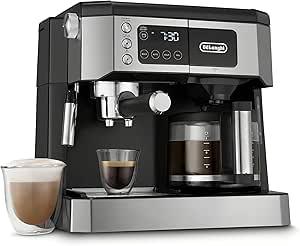
De'Longhi COM530M All-in-One Coffee and Espresso Machine, 47 oz
As an affiliate, we earn on qualifying purchases.
How the Two Indices Differ
NAHB’s Multifamily Market Survey separates perceptions of building new housing from perceptions of occupancy in existing apartments. The MPI combines sentiment across three built-for-rent categories—garden or low-rise, mid- or high-rise, and subsidized housing—and a built-for-sale condominium category. The MOI covers the three built-for-rent segments.
The indices use the same 0-to-100 scale but have different interpretations at the midpoint. For production, a score below 50 means negative responses outnumber positive ones. For occupancy, a score above 50 means positive responses outnumber negative ones. The Q3 results therefore show negative production sentiment alongside still-positive, though weaker, occupancy sentiment—not a single measure of overall market performance.
“As a result, many projects are taking longer to complete.”
— Kip Lewis
Survey Does Not Measure Starts
The survey reports industry perceptions; it does not establish the number of projects started, completed or canceled in Q3, nor does it quantify how much each cited constraint contributed to the index changes. The supplied results also do not give the survey’s respondent count, field dates or detailed methodology beyond the index descriptions. The 2027 starts outlook is NAHB’s forecast, and the figures provided do not specify its projected size or the assumptions behind it.
Occupancy readings above 50 do not, on their own, establish rent growth, vacancy rates in every market or conditions for every property. The reported figures are national survey measures; local outcomes may differ.
Watch Starts and Financing
NAHB’s stated next reference point is its 2027 multifamily starts forecast, which Dietz said anticipates a decline. Readers can compare that forecast with later construction data and subsequent survey readings to see whether production sentiment continues to weaken or stabilizes.
Lewis and Dietz identified interest rates, construction costs, permitting and infrastructure connections as issues affecting the sector. The supplied report does not announce a specific policy change or timetable for faster approvals or lower loan rates. Whether those conditions ease—and whether positive occupancy sentiment supports new projects—remains to be seen.
Key Questions
What did NAHB report for Q3 2026?
NAHB said its Multifamily Production Index was 41 and its Multifamily Occupancy Index was 69. Both readings were five points lower than a year earlier.
Does an MPI below 50 mean multifamily construction fell?
No. It means more survey respondents rated current production conditions as poor than good. The index is a measure of sentiment, not a count of construction starts or completions.
Was occupancy sentiment negative?
Not overall, according to the index threshold. The MOI’s 69 reading remained above 50, meaning more respondents viewed occupancy in existing apartments positively than negatively, although the score was lower year over year.
What pressures did industry representatives cite?
NAHB representatives cited high interest rates, construction costs relative to rents, rising rental vacancy rates, approval delays and difficulties connecting projects to roads and utilities.
What does NAHB expect for multifamily starts in 2027?
Dietz said NAHB’s 2027 forecast projects a decline in multifamily starts. The supplied report does not state the projected amount, and the forecast is not a confirmed construction result.
Source: hardwareretailing.com