TL;DR

Get business pricing on tools and workshop supplies
- Business-only prices and quantity discounts
- Tax-exempt purchasing
- Multiple users, one account, clear invoices
A Hunker report describes shaving cream as a possible way to remove everyday grease, fingerprints and food stains from painted wood cabinets. It recommends plain white cream, a microfiber cloth and a spot test, and cautions against using it on natural or unsealed wood.
Hunker has reported that plain shaving cream can help lift everyday grease, oily residue, fingerprints and food stains from painted wood cabinets, offering a household alternative to some stronger cleaners. The advice is a cleaning tip, not a claim that shaving cream is a purpose-made cabinet product: the report recommends testing it in a hidden spot and avoiding natural or unsealed wood.
The report says shaving cream’s formula includes cleaning compounds similar to those found in hand soaps, along with ingredients that give it a thick lather. Those components can help loosen everyday grime when the cream is wiped across a surface. Hunker says it tried the method on household stains, including cabinet stains, and found it effective; the article does not provide a controlled comparison with commercial cabinet cleaners or quantify the results.
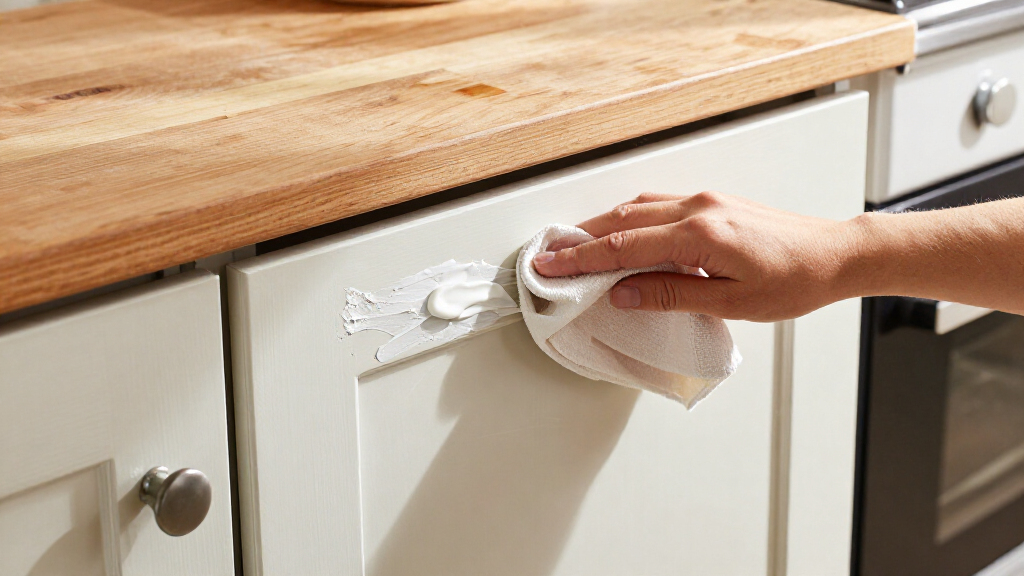
For cabinets, Hunker recommends choosing plain white shaving cream, rather than a gel, and avoiding products with fragrances or dyes. Put a small amount on a damp microfiber cloth, rub the dirty area in circular motions, and cover the cabinet face, including spots around knobs and handles. The report then advises wiping off the cream with a separate dry microfiber cloth.
Hunker also recommends testing the product first on an inconspicuous area, even on painted cabinets. It describes the method as potentially milder than using a heavy-duty cleaner, but that comparison is not backed by product testing in the supplied report. For glass doors, the article says the cream may help with water spots, soapy film and smears; unlike its cabinet instructions, it recommends leaving the cream on the glass briefly before wiping it away.
A Low-Cost Option for Painted Cabinets
The tip may appeal to people dealing with fingerprints or cooking residue who already have shaving cream at home and want to try a small-scale cleaning method before buying a dedicated product. Its practical value depends on the cabinet’s finish and the particular cream used. The report’s own cautions matter: a product that seems mild on skin can still affect a surface, so a hidden-area test is a sensible first step.
The distinction between painted and natural or unsealed wood is especially relevant. Cabinet surfaces vary, and the article does not establish that the method is safe for every paint, coating or finish. Treating the tip as a universal cleaner could risk damage or leave residue. Readers should follow cabinet-care instructions from the manufacturer where available and stop if the test area changes appearance.
Popular right now

KitchenAid Artisan 5-Quart Tilt-Head Stand Mixer, Almond Cream

Bose QuietComfort Wireless Bluetooth Headphones with Active Noise Cancellation, Mic, USB‑C Charging, Deep Bass, 24‑Hour Battery – White Smok

Ninja CREAMi Scoop & Swirl 13-in-1 Ice Cream and Soft Serve Maker, NC701
As an affiliate, we earn on qualifying purchases.
How the Cleaning Method Works
Hunker frames the method as a repurposing of a personal-care product rather than a standard cabinet-cleaning recommendation. It says traditional shaving cream contains cleaning compounds similar to hand-soap ingredients and a lathering formula, which may loosen oily dirt. The article describes its use on painted cabinets, particularly where hands regularly touch the surface, such as around handles.
The source also mentions glass applications, including bathroom or kitchen cabinet doors and mirrors. It says shaving cream can help with smears and water spots and may defog mirrors. These are additional uses described by the report, not evidence that the product is suitable for every glass treatment or coated surface. The report provides no independent test data, detailed ingredient comparison or recommendations for specific cabinet finishes beyond its warning about natural and unsealed wood.
““While shaving cream isn’t technically a household cleaner, its formula contains ingredients that can help loosen dirt, grease, and oils from surfaces.””
— Hunker
Finish Compatibility Is Not Established
The supplied report does not identify a testing protocol, sample size or results for different cabinet paints and finishes. It does not establish that all shaving creams, even plain white formulas, will behave the same way, or that the method is safe for every painted surface. It also offers no measured comparison with commercial cleaners, so its description of shaving cream as effective reflects the report’s own trial rather than a broad performance finding.
Details such as how long the cream should remain on cabinet surfaces, whether repeated use affects a finish, and how to address residue on particular coatings are not specified. The source gives a general instruction to wipe it off and test a concealed area first. Anyone unsure about a cabinet’s material or finish can check its care guidance or consult the manufacturer before applying a new product.
Test Before Cleaning More
Readers who choose to try the method can follow the report’s limited steps: select plain white, non-gel cream without added fragrance or dyes; use a small amount on a damp microfiber cloth; test an out-of-sight section; and wipe the treated area clean with a dry cloth. Do not use the suggested approach on natural or unsealed wood, according to Hunker.
The supplied source does not announce further testing, product guidance or follow-up reporting. For now, the key next step is to judge the result on the specific cabinet surface rather than assume the hack will work everywhere. If the finish changes or residue remains, stop using the cream and consult the cabinet maker’s cleaning instructions.
Key Questions
What is shaving cream supposed to remove from cabinets?
Hunker says it may help lift fingerprints, grease, oily residue, grime and food stains from painted wood cabinets. The report does not provide measured test results or guarantee the same outcome on every surface.
How does the report recommend applying it?
Use a small amount of plain white, non-gel cream on a damp microfiber cloth, rub gently in circular motions, then wipe the residue away with a dry microfiber cloth. Hunker recommends testing a hidden area first.
Can shaving cream be used on natural wood cabinets?
No. Hunker specifically advises against using it on natural or unsealed wood. The report focuses on painted cabinets and does not establish compatibility with every finish.
Does the report say shaving cream is better than cabinet cleaner?
No controlled comparison is provided. Hunker describes its own trial as effective and says the cream may be a milder option than a heavy-duty cleaner, but it supplies no comparative test data.
Can it also be used on glass?
Hunker says shaving cream may help remove water spots, soapy film and smears from glass, and may defog mirrors. For glass, the report suggests leaving it on the spot briefly before wiping; it does not address all glass coatings or treatments.
Source: rss