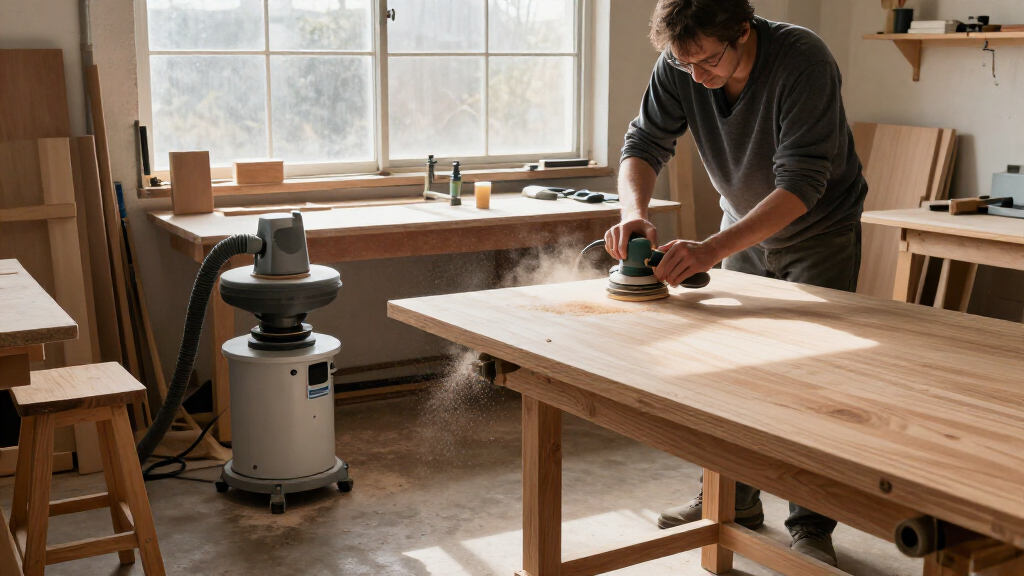

For a portable dust extractor that balances fine-dust filtration, tool connection, and shop mobility, the DEWALT DWV010 is my best overall pick. The Festool CT 15 stands out for premium portability and a refined mobile setup, while the WEN DC3474 offers larger capacity for collecting dust from woodworking machines. The main tradeoff is between compact extractors that pair with power tools and larger collectors better suited to stationary equipment. Filter performance, bag or tank capacity, and the way a unit connects to your tools all affect which type makes sense. Read on for the full comparison and picks by workshop need.

Get business pricing on tools and workshop supplies
- Business-only prices and quantity discounts
- Tax-exempt purchasing
- Multiple users, one account, clear invoices
Complete the kit


Key Takeaways
- The DEWALT DWV010 earns the overall spot for combining an 8-gallon format with HEPA filtration and automatic filter cleaning, a useful mix for frequent tool-connected work.
- Large capacity does not automatically mean better portability: the WEN DC3474’s 15-gallon design suits bigger collection jobs, while smaller extractors are easier to move between tools and work areas.
- The lineup splits into two jobs: mobile extractors such as the Festool CT 15 and 3M Xtract are oriented toward power-tool dust capture, while the WEN collectors favor broader shop collection.
- Automatic tool activation changes workflow more than tank size does for users who move between connected tools; the Rockler Dust Right includes this feature alongside HEPA filtration.
- Check the intended dust source before choosing: tank capacity and filtration labels alone do not establish compatibility with every machine, hose, or fine-dust application.
| DEWALT DWV010 8-Gallon HEPA Dust Extractor with Automatic Filter Cleaning |  | Best for Sustained Tool-Connected Dust Extraction | Capacity: 8 gallons | Filter: HEPA | Motor: 15 amps | VIEW LATEST PRICE | See Our Full Breakdown |
| WEN DC3474 15-Gallon Woodworking Dust Collector |  | Best for Stationary Shop Machines | Motor: 7.4-amp induction motor | Impeller: 9 inches | Airflow: Up to 600 CFM | VIEW LATEST PRICE | See Our Full Breakdown |
| ECOMAX 8-Gallon Wet/Dry Dust Extractor with HEPA Filter |  | Best for Mixed Woodshop Cleanup | Capacity: 8 gallons | Filter: HEPA | Motor power: 6.5 HP | VIEW LATEST PRICE | See Our Full Breakdown |
| DYNAVEX 10-Amp Woodworking Dust Extractor with 12-Gallon Tank |  | Best for Longer Runs Between Emptying | Motor: 1.5 HP | Airflow: 142 CFM | Current and power: 10 amps; 1200 watts | VIEW LATEST PRICE | See Our Full Breakdown |
| Festool CT 15 HEPA Mobile Dust Extractor |  | Best Compact Premium Pick | Model: CT 15 HEPA US; model number 578441 | Filter: HEPA | Capacity: 15 liters (3.96 gallons) | VIEW LATEST PRICE | See Our Full Breakdown |
| WEN Woodworking Dust Collector, 5.7-Amp Motor, 12-Gallon Bag, Mobile Base (DC3401) |  | Best for Compact Shop Dust Collection | Motor: 5.7-amp brushed | Impeller: 6 inches | Airflow: Up to 660 CFM | VIEW LATEST PRICE | See Our Full Breakdown |
| 3M Xtract Portable Dust Extractor, 157 CFM, 110V |  | Best for 3M Xtract Sanding Setups | Model: AB64256 | Power: 110V, corded | Maximum airflow: 74 L/min (157 CFM) at the fan | VIEW LATEST PRICE | See Our Full Breakdown |
| Rockler Dust Right 9-Gallon HEPA Dust Extractor with Power Tool Activation |  | Best for Automatic Tool-Triggered Cleanup | Model: 64351 | Capacity: 9 gallons | Filtration: Washable HEPA cartridge; captures particles down to 0.3 microns | VIEW LATEST PRICE | See Our Full Breakdown |
| portable dust extractors for woodworking | Dimensions | Capacity | Filter | Motor |
|---|---|---|---|---|
| DEWALT DWV010 8-Gallon HEPA Du | 20 × 19 × 20 inches | 8 gallons | HEPA | 15 amps |
| WEN DC3474 15-Gallon Woodworki | 43.3 × 17.7 × 20.1 inches | — | — | 7.4-amp induction motor |
| ECOMAX 8-Gallon Wet/Dry Dust E | 15.6 × 15.2 × 24.8 inches | 8 gallons | HEPA | — |
| DYNAVEX 10-Amp Woodworking Dus | 15.75 × 15.75 × 24.4 inches | — | 0.5-micron HEPA | 1.5 HP |
| Festool CT 15 HEPA Mobile Dust | — | 15 liters (3.96 gallons) | HEPA | — |
| WEN Woodworking Dust Collector | 34.25 x 13 x 14.2 inches | — | — | 5.7-amp brushed |
| 3M Xtract Portable Dust Extrac | — | — | — | — |
| Rockler Dust Right 9-Gallon HE | — | 9 gallons | — | — |
More Details on Our Top Picks
DEWALT DWV010 8-Gallon HEPA Dust Extractor with Automatic Filter Cleaning
For woodworking that involves repeated cuts or sanding with a connected power tool, the DWV010’s automatic filter-cleaning pulses every 30 seconds are its defining advantage: they help maintain airflow without stopping to clean the filter by hand. Its power-tool actuation, 15-foot anti-static hose, and swivel connector also make it a more jobsite-ready extractor than the WEN DC3474, which is built around a 4-inch dust port for stationary machines rather than smaller tool connections. At 8 gallons and 22 pounds, the DEWALT balances capacity with manageable wheeled portability. The tradeoffs are its corded operation and the added requirement of DWV9330 filters for EPA Lead RRP Rule compliance. Choose it for tool-linked work and filtered cleanup, not as a substitute for a high-volume collector serving several machines.
Pros:- Automatic filter-cleaning pulses every 30 seconds support sustained operation.
- Power-tool actuation starts and stops the extractor with a connected tool.
- 15-foot anti-static hose with a swivel-capable universal connector offers useful reach and maneuverability.
- Heavy-duty wheels and casters make the 22-pound unit easier to move between work areas.
Cons:- EPA Lead RRP Rule compliance requires DWV9330 filters.
- Corded operation limits use to areas with a suitable power outlet.
- Its 8-gallon capacity and tool-extractor format are less suited to high-volume collection from multiple stationary machines than the WEN DC3474.
Best for: Woodworkers who regularly connect handheld power tools and want automatic filter cleaning during longer sessions.
Not ideal for: Shops needing high-volume collection from stationary machines through a 4-inch port, or crews who need cordless operation.
- Capacity:8 gallons
- Filter:HEPA
- Motor:15 amps
- Airflow:150 CFM in item details; 155 CFM in product description
- Hose:15 feet long; 1.25 inches in diameter
- Weight:22 pounds
- Power:Corded, 120 volts
- Dimensions:20 × 19 × 20 inches
- Warranty:1-year limited warranty
Our verdict“Choose the DEWALT for frequent power-tool-connected woodworking where automatic filter cleaning matters more than high-volume stationary collection.”
WEN DC3474 15-Gallon Woodworking Dust Collector
The WEN DC3474 is the lineup’s clearest choice for a woodworking machine with a 4-inch dust port: its 9-inch impeller moves up to 600 CFM, a different kind of collection setup from the DEWALT DWV010’s portable power-tool extraction. Its 15-gallon, 5-micron bag gives it more capacity for ongoing chip and dust collection than the smaller-container options here, while four swivel casters make it movable around a shop. An optional wall-mount setup can free up floor space, though mounting means removing the wheels. This is a shop collector, not the most flexible pick for handheld tools or fine-dust cleanup where HEPA filtration is a priority. Buyers also need a compatible 4-inch connection; the DC3474 is less plug-and-play for tools with smaller dust ports.
Pros:- Up to 600 CFM suits collection from compatible stationary woodworking machines.
- 15-gallon zippered bag holds more debris than the 8-gallon DEWALT and ECOMAX extractors.
- Four swivel casters and an onboard handle support shop-floor mobility.
- Optional wall mounting provides a way to reclaim floor space.
Cons:- The 4-inch dust port requires compatible machine connections or adapters.
- Its 5-micron collection bag is not HEPA filtration.
- Wall mounting requires removing the wheels, so it gives up rolling mobility when installed.
Best for: Woodworkers with a stationary saw, planer, or similar machine that has a compatible 4-inch dust port and a regular place in the shop.
Not ideal for: Users seeking HEPA filtration, direct connection to smaller handheld tools, or a compact extractor for moving between rooms or jobsites.
- Motor:7.4-amp induction motor
- Impeller:9 inches
- Airflow:Up to 600 CFM
- Dust port:4 inches
- Collection bag:15 gallons, 5-micron, zippered
- Mobility:Four 2-inch swivel casters and onboard carrying handle
- Mounting:Optional wall mount; wheels must be removed for mounting
- Dimensions:43.3 × 17.7 × 20.1 inches
- Weight:41.1 pounds
Our verdict“Pick the WEN DC3474 for high-volume collection from a compatible stationary machine, not for HEPA-filtered extraction from handheld tools.”
ECOMAX 8-Gallon Wet/Dry Dust Extractor with HEPA Filter
The ECOMAX earns its place by combining power-tool activation with wet/dry cleanup, making it a practical multipurpose pick for a small shop that handles both sawdust and occasional liquid spills. Its semi-automatic filter cleaning and dust-full indicator give users more feedback about filter and container upkeep than the simpler WEN DC3474, while the stainless steel tank with a drain port is useful when cleanup involves liquids. The included adapters, nozzles, wands, and disposable bags also make it ready for varied cleanup tasks. Its 8-gallon capacity is more modest than the WEN’s 15-gallon bag, and the 10-foot hose offers less reach than the DEWALT DWV010’s 15-foot hose. Treat it as a flexible extractor and cleanup vacuum, not a high-volume collector for multiple stationary machines.
Pros:- Power-tool activation starts the vacuum when a connected tool turns on.
- Semi-automatic filter cleaning and a dust-full indicator help track maintenance.
- Stainless steel tank has a drain port for emptying liquids and debris.
- Includes a broad set of nozzles, wands, adapters, bags, and filters.
Cons:- The 8-gallon tank may need frequent emptying during larger cleanup jobs.
- Its 10-foot hose is shorter than the DEWALT DWV010’s 15-foot hose.
- Corded operation requires access to a power outlet.
Best for: Small-shop woodworkers who want one HEPA-filtered, tool-activated unit for sawdust, general cleanup, and occasional liquid pickup.
Not ideal for: Users who need a long hose reach, extended collection between emptying, or high-volume airflow for several stationary machines.
- Capacity:8 gallons
- Filter:HEPA
- Motor power:6.5 HP
- Power:Corded electric, 120 volts
- Tank material:Stainless steel
- Hose length:10 feet
- Dimensions:15.6 × 15.2 × 24.8 inches
- Included accessories:Two extension wands, floor nozzle, universal adapter, crevice nozzle, round brush, three disposable filter bags, HEPA filter, utility nozzle, and foam filter
Our verdict“Choose the ECOMAX if you want one portable unit for tool-triggered dust collection and varied wet/dry shop cleanup.”
DYNAVEX 10-Amp Woodworking Dust Extractor with 12-Gallon Tank
The DYNAVEX pairs a 12-gallon steel tank with a 0.5-micron HEPA filter, giving it a useful middle ground between smaller portable extractors and the WEN DC3474’s large-bag stationary-shop format. Its 142 CFM airflow and auto-start outlet suit woodworking tools, while the tank holds more debris than the 8-gallon DEWALT DWV010 and ECOMAX before emptying. The included adapters, clamps, hose, and replacement paper filters add flexibility when setting it up. The key limitation is the auto-start outlet: connected tools must stay within 550 watts, and continuous use through that outlet is limited to one hour. Its 4-inch-by-6.5-foot hose is also a different fit from the narrower, longer hoses supplied with some portable extractors. Check tool compatibility and hose needs before choosing it.
Pros:- 12-gallon tank reduces how often it needs emptying compared with the 8-gallon DEWALT and ECOMAX.
- 0.5-micron HEPA filter is specified for fine-particle capture.
- Auto-start outlet synchronizes extraction with a compatible connected tool.
- Includes hose, adapters, clamps, and two replacement paper filters.
Cons:- Connected power tools must not exceed 550 watts.
- Continuous use through the auto-start outlet is limited to one hour.
- Wheel fittings are included, but wheel installation is optional and may require setup.
Best for: Woodworkers who want a larger-capacity portable tank and use connected tools within the auto-start outlet’s power limit.
Not ideal for: Users with tools above 550 watts, those needing uninterrupted auto-start use beyond one hour, or buyers who want a long, narrow tool hose.
- Motor:1.5 HP
- Airflow:142 CFM
- Current and power:10 amps; 1200 watts
- Tank capacity:12 gallons
- Filter:0.5-micron HEPA
- Hose:4 inches × 6.5 feet
- Auto-start outlet limit:550 watts; continuous use up to one hour
- Weight:29.5 pounds
- Dimensions:15.75 × 15.75 × 24.4 inches
Our verdict“Choose the DYNAVEX for a larger portable dust capacity, provided your connected tool fits the outlet’s limits.”
Festool CT 15 HEPA Mobile Dust Extractor
The Festool CT 15 is the most compact choice in this group, with a 15-liter (3.96-gallon) container, a stable chassis, and onboard storage for its crevice nozzle and upholstery brush. Its HEPA filtration and adjustable high-performance turbine suit dust extraction and cleanup where a smaller footprint matters more than holding a full shop’s worth of debris. Compared with the DEWALT DWV010, it offers less container capacity and the supplied information does not list automatic filter cleaning or power-tool actuation; the DEWALT is the more clearly specified choice for repeated tool-triggered woodworking sessions. The Festool’s included hose and cleaning accessories broaden its use beyond sawdust, but its single speed limits adjustment. I’d choose it for compact, mobile cleanup—not for buyers prioritizing large capacity or explicit tool-sync features.
Pros:- Compact chassis and onboard accessory storage help keep a small work area organized.
- HEPA filtration supports fine-dust cleanup.
- 15-liter container is larger than a small handheld vacuum while staying compact.
- Included crevice nozzle and upholstery brush extend cleanup beyond woodworking tools.
Cons:- 3.96-gallon capacity is smaller than the 8-gallon DEWALT DWV010 and ECOMAX.
- Single speed offers limited adjustment.
- The supplied product data does not specify power-tool actuation or automatic filter cleaning.
Best for: Woodworkers who need a compact HEPA extractor for small work areas, furniture cleanup, and upholstery or floor cleaning.
Not ideal for: Users who want a large collection container, multiple speed settings, or documented automatic tool activation for frequent cutting and sanding.
- Model:CT 15 HEPA US; model number 578441
- Filter:HEPA
- Capacity:15 liters (3.96 gallons)
- Power source:Corded electric
- Speed settings:1
- Form factor:Canister
- Included components:Suction hose (27/32 × 3.5 m), filter bag, crevice nozzle, and upholstery brush
- Recommended uses:Bare floor, carpet, furniture, hard floor, home, office, and upholstery
Our verdict“Pick the Festool CT 15 when compact HEPA cleanup and onboard accessories matter more than capacity or documented tool-triggered operation.”
WEN Woodworking Dust Collector, 5.7-Amp Motor, 12-Gallon Bag, Mobile Base (DC3401)
The DC3401 is the lineup’s clearest fit for a small woodworking shop that needs high-volume airflow rather than a sealed extractor for fine sanding dust. Its 6-inch impeller moves up to 660 CFM through a 4-inch port, making it suited to a compatible machine connection, while the 12-gallon bag gives chips and sawdust room to collect. At 17 pounds, with casters and a carrying handle, it is easier to reposition or store than a larger stationary collector such as the WEN DC3474. The tradeoff is that the 4-inch connection limits which tools it can serve without adapters, and the 5-micron bag is less suited to fine-dust capture than HEPA options such as the Rockler Dust Right. Its brushed motor is another compromise for buyers prioritizing motor type.
Pros:- Up to 660 CFM airflow suits woodworking machines that use a 4-inch dust port.
- Light 17-pound body, carrying handle, and lockable casters make repositioning practical.
- 12-gallon zippered bag provides capacity for routine chip and sawdust collection.
- Optional wall mounting offers a way to free up floor space.
Cons:- The 4-inch port may not connect directly to smaller-tool outlets.
- The 5-micron bag is not HEPA filtration for fine sanding dust.
- Uses a brushed motor.
Best for: Woodworkers with a compact shop and 4-inch-port machines who want a lightweight collector for chips and general sawdust.
Not ideal for: Sanding-focused users seeking HEPA-level fine-dust filtration, or owners of tools without a compatible 4-inch dust connection.
- Motor:5.7-amp brushed
- Impeller:6 inches
- Airflow:Up to 660 CFM
- Dust port:4 inches
- Collection bag:12-gallon, 5-micron zippered
- Dimensions:34.25 x 13 x 14.2 inches
- Weight:17 pounds
- Mobility and mounting:Lockable swivel casters, carrying handle, optional wall mount
- Warranty:Two years
Our verdict“Choose the DC3401 for mobile, general-purpose collection from 4-inch woodworking machines, not as a fine-dust sander extractor.”
3M Xtract Portable Dust Extractor, 157 CFM, 110V
This 3M extractor is the most specialized pick here: it is built around compatible 3M Xtract random orbital sanders, not general-purpose shop machines. Automatic filter cleaning helps maintain airflow during sanding without pausing to clear the filter, while adjustable airflow lets the operator tune suction to the task. Its HEPA filtration and 9-gallon bin make it a more relevant choice for indoor sanding cleanup than the WEN DC3401, whose 5-micron bag is aimed more at general sawdust collection. The tradeoff is flexibility: buyers with other brands of sander or larger woodworking machines may get more use from the Rockler Dust Right, which includes a broader set of floor and hose accessories. The 3M’s stated indoor use also makes it a poor match for outdoor work.
Pros:- Automatic filter cleaning helps sustain airflow during sanding.
- HEPA filtration is suited to indoor fine-dust collection.
- Three power levels and adjustable airflow provide control for compatible sanding work.
- 9-gallon collection bin reduces the frequency of emptying during routine sessions.
Cons:- Designed for compatible 3M Xtract random orbital sanders, limiting tool flexibility.
- Specified for indoor use rather than outdoor or general site work.
- Maximum airflow is 157 CFM at the fan, well below the WEN DC3401’s stated 660 CFM for high-volume machine collection.
Best for: Woodworkers who use compatible pneumatic or electric 3M Xtract random orbital sanders and want managed dust collection during indoor sanding.
Not ideal for: Shops seeking one extractor for mixed-brand tools, large dust ports, or outdoor use.
- Model:AB64256
- Power:110V, corded
- Maximum airflow:74 L/min (157 CFM) at the fan
- Collection capacity:35 L (9 gal)
- Filter type:HEPA
- Noise level:69 dB
- Power levels:3
- Sander compatibility:Compatible pneumatic and electric 3M Xtract random orbital sanders
- Usage:Indoor
Our verdict“Pick the 3M Xtract when compatible 3M sanders and indoor fine-dust control matter more than broad tool compatibility.”
Rockler Dust Right 9-Gallon HEPA Dust Extractor with Power Tool Activation
The Rockler Dust Right is the most convenient choice in this group for a mixed power-tool workflow: plug a compatible tool into its 110V socket, and the extractor starts automatically, then runs for five seconds after the tool stops to catch lingering dust. Its washable HEPA filter captures particles down to 0.3 microns, and pulse cleaning helps manage filter buildup. Compared with the 3M Xtract, it is less tied to one sander ecosystem and includes a 12-foot hose, wands, and floor-cleaning attachments. But its 85 CFM suction is not a substitute for the WEN DC3401’s higher-volume airflow at a 4-inch machine port. Power activation is limited to tools drawing up to 7 amps, and the included collection bag is disposable, so this pick suits portable cleanup and compatible power-tool extraction more than heavy chip collection.
Pros:- Tool-triggered startup and a five-second delay help capture dust after a cut or sanding pass.
- Washable HEPA filter captures particles down to 0.3 microns.
- Pulse filter cleaning helps manage filter buildup during use.
- 12-foot hose, included floor and utility attachments, and oversized casters support varied shop tasks.
Cons:- Power-tool activation supports tools drawing no more than 7 amps.
- The included filter bag is disposable.
- 85 CFM suction is less suited to high-volume collection than the WEN DC3401’s 660 CFM airflow.
Best for: Woodworkers using compatible tools rated up to 7 amps who want automatic startup, HEPA filtration, and accessories for shop cleanup.
Not ideal for: Owners of higher-draw tools or those needing high-volume collection from large machines and a reusable collection bag.
- Model:64351
- Capacity:9 gallons
- Filtration:Washable HEPA cartridge; captures particles down to 0.3 microns
- Suction:85 CFM
- Power-tool activation:110V socket; compatible with tools up to 7 amps
- Shutoff delay:5 seconds
- Noise level:≤65 dB
- Hose and cord:12-foot hose; 20-foot power cord
- Included accessories:Disposable filter bag, two extension wands, floor brush, utility nozzle, crevice tool, and hose accessory adapter
Our verdict“Choose the Rockler for portable, HEPA-filtered cleanup with compatible tools, but look elsewhere for high-volume machine dust collection.”
How We Picked
I compared the eight options by how well their stated features address woodworking dust at the source: filtration, compatibility with power tools or shop machines, capacity, mobility, and practical operation. I also considered maintenance-related features, such as automatic filter cleaning, and whether the design appears aimed at portable tool use or higher-volume collection. These factors matter because a compact extractor and a larger dust collector solve different workshop problems.
The ranking gives the most weight to a balanced fit for common portable woodworking tasks, then recognizes products with a strong, more specific use case. That puts the DEWALT first for its combination of HEPA filtration and automatic cleaning, while the Festool and 3M offer compelling mobile-tool alternatives and the WEN DC3474 leads for larger-capacity collection. Models with less detail available about their intended setup rank lower, not because they cannot work, but because buyers have fewer stated features to match against their own tools and dust needs.
Factors to Consider When Choosing Portable Dust Extractors For Woodworking
Choosing among portable dust extractors starts with the dust source and the way you work, not with the largest capacity figure. These broader checks can help you avoid buying a unit that is awkward to connect, undersized for a machine, or more involved to maintain than your shop routine allows.
Match the Extractor to the Dust Source
Dust from a handheld sander or track saw is a different collection job from chips produced by a planer or jointer. Portable extractors are commonly paired with power tools, while larger collectors may better suit stationary machines that produce more waste. Before choosing, check the tool maker’s recommended airflow and hose requirements, then confirm the extractor supports the connection you need. A reducer or adapter can solve a fitting mismatch, but it cannot make an undersized collector perform like a larger system. If you plan to move between both types of equipment, decide which job matters most and whether a second collection setup may be needed.
Treat Filtration as a Whole-System Question
A HEPA label can be useful when fine dust is a priority, but it does not answer every filtration question. Check whether the filter, bag, and exhaust arrangement are designed to work together, and follow the manufacturer’s instructions for handling and replacement. A clogged filter can reduce airflow, so cleaning access and filter-maintenance steps matter in regular use. Also distinguish dust extraction at the tool from general room air cleaning: an extractor is most effective when connected close to the dust source. If you sand frequently, put filtration and a reliable seal ahead of a larger tank alone.
Choose Capacity for Your Work Rhythm
Capacity determines how often you stop to empty or change a bag, but a bigger container can add bulk and make a unit less convenient to move. Consider the duration of your typical work session and the amount of waste each tool produces. Fine sanding dust may fill a bag differently from larger chips, so capacity figures do not translate directly into identical run times across jobs. If your priority is moving quickly among handheld tools, a smaller unit can be the better daily fit. For long sessions or higher-volume machine use, less frequent emptying may justify a larger footprint.
Check Tool Activation and Electrical Compatibility
Automatic tool activation can start the extractor when a connected power tool runs, reducing extra steps during repeated cuts or sanding passes. It is most helpful when the extractor and tool are compatible and the user frequently switches between short operations. Verify the outlet, voltage, and electrical limits before connecting a tool; do not assume every extractor’s controls or sockets support every machine. Manual switching is simpler and may be enough for occasional use, but it can leave the extractor running longer than needed. Compare this convenience against the unit’s other strengths rather than treating it as a substitute for suitable airflow or filtration.
Evaluate Mobility Beyond the Word Portable
A compact body is only part of portability. Wheels, handles, hose storage, cord management, and how easily the unit follows a tool around a crowded shop all affect daily use. Think about thresholds, stairs, and where the extractor will be stored between sessions. A larger collector on a mobile base may move well across a level floor but still be awkward to lift or load into a vehicle. If you work across rooms or take tools to jobsites, prioritize carrying and storage details; if the extractor mostly stays in one workshop zone, capacity and connection options may matter more.
Account for Bags, Filters, and Ongoing Upkeep
Filter cleaning and dust disposal are part of ownership, not afterthoughts. Automatic filter cleaning can reduce interruptions during demanding work, while a simpler design may need more frequent manual attention. Check which replacement bags and filters fit the model and how easy they are to source before settling on a unit. For fine dust, contained disposal can reduce the mess created when emptying a bin, though bags add recurring maintenance. A low-effort cleaning routine is especially valuable if the extractor will see frequent use; occasional users may prefer a straightforward setup with fewer moving parts.
Frequently Asked Questions
Can I use one portable extractor for both a sander and a table saw?
Possibly, but the connection fitting is only one part of the match. Sanders benefit from close-coupled extraction and fine-dust filtration, while a table saw can produce more material and may need a collector designed for higher-volume airflow. Check the saw and extractor guidance for airflow needs, hose size, and connection compatibility before relying on one unit for both. A portable extractor may work for light or occasional saw use, but it may not keep up with every cut or setup. If both tasks are frequent, prioritize the more demanding machine or plan for separate collection equipment.
Is a HEPA filter enough to control fine woodworking dust?
HEPA filtration can be an important part of fine-dust control, but the extractor also needs a sound filter seal, suitable bags or collection components, and a working connection at the tool. A loose fitting or poorly maintained filter can undermine the benefit. Use the extractor as close to the dust source as practical and follow the manufacturer’s instructions for filter care and disposal. Room ventilation and cleanup practices still matter, particularly after sanding. Treat the filter rating as one buying factor rather than a guarantee of a dust-free shop.
Should I choose automatic filter cleaning or a larger tank?
Choose based on what interrupts your work most. Automatic filter cleaning is useful for longer or dust-heavy sessions where filter buildup could affect airflow and require pauses. A larger tank or bag can reduce emptying during high-volume collection, especially when working with machines that make chips or substantial waste. These features solve different problems, so one does not replace the other. For frequent tool-connected sanding, filter upkeep may deserve priority; for long collection runs, capacity may matter more.
Can a woodworking dust collector also handle wet cleanup?
Do not assume so from the word extractor or collector. Only use a unit for wet pickup when its manufacturer explicitly identifies it as suitable for that task and provides the required setup instructions. Wet debris can damage filters or create electrical and maintenance concerns in equipment intended only for dry dust. The ECOMAX listing specifies wet/dry use, but that capability should not be generalized to the other models in this roundup. Check the manual for filter removal, float mechanisms, and cleanup requirements before collecting liquids.
How do I tell whether a portable extractor will fit my power tools?
Compare the tool’s dust port diameter with the extractor hose and included fittings, and check whether adapters are available for your specific connection. Also confirm that the extractor’s electrical outlet or tool-activation feature supports your tool if you want synchronized operation. A physical fit does not guarantee effective collection; airflow and hose length also affect performance. Avoid relying on improvised reducers that sharply narrow the path or loosen under movement. When details are unclear, consult the manufacturers’ compatibility information before buying.
Conclusion
For most woodworkers who want one portable unit for connected-tool work, I recommend the DEWALT DWV010 as the best overall, thanks to its HEPA filtration and automatic filter cleaning. The WEN DC3474 is my best value-style pick for larger-capacity collection, while the Festool CT 15 is the best premium choice for buyers prioritizing a dedicated mobile extractor. Beginners who want a clear starting point can focus on the DEWALT’s balanced feature set, then confirm it matches their tool connections and workload. For specific needs, choose the Rockler Dust Right if power-tool activation is a priority, the 3M Xtract for its stated portable 157 CFM setup, or the ECOMAX when wet/dry capability is required. The two WEN models and the DYNAVEX may suit buyers seeking collector-style capacity, but I would match their stated designs to the machines and dust volume in the shop before choosing.