The best Woodpeckers woodworking tools depend on whether you need reliable layout, repeatable machine setup, or more control over joinery. My best overall pick is the in-DEXABLE Miter Gauge, which combines accurate crosscut setup with an adjustable stop for repeat work. The Table Saw Gauge and Alignment Tool is a standout for diagnosing saw alignment, while the Precision Triangle Set gives layout-focused woodworkers two handy reference sizes. The main tradeoff is choosing between versatile tools that serve many tasks and specialized gauges that solve one setup problem particularly well. Read on for the full breakdown of all 15 tools and how I’d match them to a shop.

Get business pricing on tools and workshop supplies
- Business-only prices and quantity discounts
- Tax-exempt purchasing
- Multiple users, one account, clear invoices
Complete the kit


Key Takeaways
- The miter gauge is the strongest all-around choice for woodworkers who make repeat crosscuts and value an integrated micro-adjustable stop.
- Machine setup tools fill a different role from layout tools: the table saw gauge checks alignment, while squares and rules help mark and verify workpieces.
- Reference size changes usefulness. The 32-inch T-square and 36-inch straight edge suit long stock and panel work; the mini square and 6-inch saddle T-square fit tighter spaces.
- Specialized tools earn their place when they solve a recurring problem. The router plane targets joinery refinement, while 3D setup blocks speed repeatable height and spacing checks.
- Several options overlap in measuring and marking. Buyers can avoid redundant purchases by choosing tools based on their most frequent task, rather than collecting every size and format.
| Woodpeckers 12-Inch Precision Aluminum Woodworking Rule |  | Best for Everyday Measuring | Model: WWR12 | Material: Aluminum | Length: 12 inches | VIEW LATEST PRICE | See Our Full Breakdown |
| Woodpeckers in-DEXABLE Miter Gauge with Micro-Adjustable Flip Stop |  | Best for Repeatable Table-Saw Angles | Model: IMG-I | Miter slot fit: Nominal 3/8 × 3/4 inch | Fence length: Extends from 18 to 31 inches | VIEW LATEST PRICE | See Our Full Breakdown |
| Woodpeckers Precision Woodworking Triangle Set, 4 and 6 Inch |  | Best for Compact Angle Checks | Model: PTR46SET | Material: Aluminum | Sizes: 4 inches and 6 inches | VIEW LATEST PRICE | See Our Full Breakdown |
| Woodpeckers Router Plane – Precision Woodworking Tool for Joinery with 3 Mount Positions, Zero‑Backlash Thumbwheel, Spear & Straight Blades, Ductile Iron Base |  | Best for Fine Joinery | Model number: WRP | Power source: Hand-powered | Cutting width: 3.5 inches | VIEW LATEST PRICE | See Our Full Breakdown |
| Woodpeckers SERX 36-Inch Precision Straight Edge Tool | 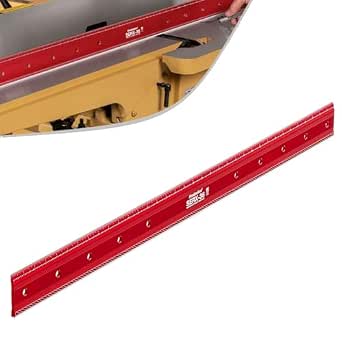 | Best for Long-Span Machine Alignment | Model: SERXL-36 | Length: 36 inches | Material: Aluminum | VIEW LATEST PRICE | See Our Full Breakdown |
| Woodpeckers 12-Inch Precision Aluminum Woodworking Square |  | Best for Accurate General-Purpose Layout | Length: 12 inches | Material: Aluminum | Accuracy: Within 0.001 inch | VIEW LATEST PRICE | See Our Full Breakdown |
| Woodpeckers Mighty Mini Carbide Scraper with Cambered Insert |  | Best for Glue Cleanup and Tight Spaces | Manufacturer: Woodpeckers | Part number: MSCRAPE-NEW | Material: Carbide | VIEW LATEST PRICE | See Our Full Breakdown |
| Woodpeckers 32-Inch Precision Woodworking T-Square |  | Best for Large-Sheet Layout | Model: TS-32-2 | Blade length: 32 inches | Material: Aluminum | VIEW LATEST PRICE | See Our Full Breakdown |
| Woodpeckers Table Saw Gauge and Alignment Tool with Dial Indicator and Storage Case |  | Best for Table Saw Calibration | Part number: SG-WP | Material: Aluminum | Weight: 2.2 pounds | VIEW LATEST PRICE | See Our Full Breakdown |
| Woodpeckers inDexable 6-Inch Combination Square System |  | Best Compact Combination Square | Part number: MCSQ-21 | Rule length: 6 inches | Material: Stainless steel | VIEW LATEST PRICE | See Our Full Breakdown |
| Woodpeckers 3D Setup Blocks, 7-Piece Aluminum Set |  | Best for Repeatable Machine Setup | Set size: 7 blocks | Block sizes: 1/8, 3/16, 1/4, 5/16, 3/8, 7/16, and 1/2 in. | Integrated bevel angles: 90°, 85°, 80°, 70°, 60°, 45°, and 30° | VIEW LATEST PRICE | See Our Full Breakdown |
| Woodpeckers 6-Inch Saddle T-Square with Scribing Guides |  | Best for Short-Span Edge-to-Face Marking | Length: 6 in. | Material: Aircraft-grade aluminum | Graduation: 1/32 in. | VIEW LATEST PRICE | See Our Full Breakdown |
| Woodpeckers 3D Multi-Marking Square, Inch Version |  | Best for Joinery Layout and Machine Setup | Version: Inch | Material: Aircraft-grade aluminum | Color: Red, White | VIEW LATEST PRICE | See Our Full Breakdown |
| Woodpeckers Edge Rule Inch Set, Aluminum Woodworking Rulers |  | Best for Measuring Stock Edges at Multiple Lengths | Measurement system: Inch | Ruler lengths: 6, 12, 24, and 36 in. | Short-side width: 3/8 in. | VIEW LATEST PRICE | See Our Full Breakdown |
| Woodpeckers Mini Aluminum Woodworking Square |  | Best Compact Setup Square | Model: MINISQUARE | Material: Aluminum | Inside dimensions: 1-1/8 × 2 in. | VIEW LATEST PRICE | See Our Full Breakdown |
| Woodpeckers woodworking tool | Material |
|---|---|
| Woodpeckers 12-Inch Precision | Aluminum |
| Woodpeckers in-DEXABLE Miter G | — |
| Woodpeckers Precision Woodwork | Aluminum |
| Woodpeckers Router Plane | — |
| Woodpeckers SERX 36-Inch Preci | Aluminum |
| Woodpeckers 12-Inch Precision | Aluminum |
| Woodpeckers Mighty Mini Carbid | Carbide |
| Woodpeckers 32-Inch Precision | Aluminum |
| Woodpeckers Table Saw Gauge an | Aluminum |
| Woodpeckers inDexable 6-Inch C | Stainless steel |
| Woodpeckers 3D Setup Blocks | Aircraft-grade aluminum |
| Woodpeckers 6-Inch Saddle T-Sq | Aircraft-grade aluminum |
| Woodpeckers 3D Multi-Marking S | Aircraft-grade aluminum |
| Woodpeckers Edge Rule Inch Set | — |
| Woodpeckers Mini Aluminum Wood | Aluminum |
More Details on Our Top Picks
Woodpeckers 12-Inch Precision Aluminum Woodworking Rule
For routine layout work, this rule earns its place through clear, flexible scale reading rather than a long feature list. Laser-engraved L2R and center scales let me read measurements from either end or locate a board’s midpoint without flipping the rule around. Its beveled edges make it easier to position, while the flat aluminum body sits steadily on a workpiece. The stated ±0.004-inch total engraving tolerance supports precise shop measurements, though that figure describes the scale, not a guarantee of the rule’s overall straightness. Compared with the 36-inch Woodpeckers SERX, this is easier to handle for small parts but cannot check long machinery beds or span wider stock. I’d choose it as a compact bench companion; its 12-inch reach is the defining limitation.
Pros:- L2R and center scales support different reading directions and quick midpoint layout
- Laser-engraved graduations are specified with ±0.004-inch total accumulated error
- Beveled edges help with handling and positioning
- Flat, sturdy aluminum body sits steadily on a work surface
Cons:- 12-inch length limits use on long boards and wide machine surfaces
- 1/16-inch graduations are less detailed than finer layout scales
Best for: Woodworkers who regularly mark, measure, and find centers on small or medium-sized parts at the bench
Not ideal for: Anyone measuring long stock or checking the alignment of wide machinery, where a 12-inch rule cannot span enough distance
- Model:WWR12
- Material:Aluminum
- Length:12 inches
- Width:1.5 inches
- Scales:L2R and center
- Graduation:1/16 inch
- Engraving tolerance:±0.004 inch total accumulated error
- Weight:5.6 ounces
- Country of manufacture:USA
Our verdict“Choose this rule for versatile everyday bench measurements; pick the Woodpeckers SERX when long-span alignment matters more.”
Woodpeckers in-DEXABLE Miter Gauge with Micro-Adjustable Flip Stop
This miter gauge is the lineup’s most specialized pick: it combines indexed angle stops with a long, adjustable fence for repeatable table-saw cuts. The hairline reticle helps set angles precisely, while the leaf-spring bar is designed to compensate for slot wear and fit variation. Its fence extends from 18 to 31 inches, and the tool-free micro-adjustable flip stop makes repeated crosscuts easier to set than with the compact Woodpeckers 12-Inch Precision Aluminum Woodworking Rule. The tradeoff is a more involved setup and a dependence on compatible table-saw slots. Fence stability when extended beyond the table may call for the optional Flop Stop; the Miter Sled Upgrade Kit is also separate. I’d favor this gauge for repeat production cuts, not occasional angle work where a simpler measuring tool will do.
Pros:- Indexed stops and a hairline reticle support repeatable angle settings
- Leaf-spring miter bar is designed to accommodate slot wear and fit variation
- Extending fence and tool-free micro-adjustable flip stop support repeat cuts up to 31 inches
- Removable T-slot retainers allow use with T-track or square slots
Cons:- Miter Sled Upgrade Kit and Flop Stop are optional accessories
- Extended fence stability may require the optional Flop Stop
- Requires a compatible table-saw slot and more setup than a basic rule
Best for: Table-saw owners making repeated crosscuts or indexed angle cuts who want a long fence and adjustable stop
Not ideal for: Woodworkers whose saw lacks a compatible nominal 3/8-by-3/4-inch miter slot, or who rarely need repeatable angled cuts
- Model:IMG-I
- Miter slot fit:Nominal 3/8 × 3/4 inch
- Fence length:Extends from 18 to 31 inches
- Fence graduations:Inch or metric
- Fence material:Extruded aluminum
- Miter bar:Patented leaf-spring design
- Handle material:Metal
- Made in:Strongsville, Ohio, USA
Our verdict“Pick this gauge for repeatable table-saw angles and crosscuts, provided your saw slot fits and you can accommodate its extended fence.”
Woodpeckers Precision Woodworking Triangle Set, 4 and 6 Inch
This pair makes angle checking and short-distance layout more convenient than carrying a single large square. The 4-inch and 6-inch aluminum triangles are CNC-machined to a stated ±0.0085° tolerance, lie flat for checking square, and can help set a miter gauge. Their laser-engraved sixteenths scales read in two directions from a shared zero point, so I can measure from either end without mentally reversing the scale. Brass knobs connect the pieces, and the wall-mountable MDF case gives the set a dedicated home. Unlike the Woodpeckers in-DEXABLE Miter Gauge, these triangles check or guide setup rather than provide indexed stops and a cutting fence. Their short legs suit compact work, but they cannot replace a larger square for checking broad panels or long edges.
Pros:- Two CNC-machined sizes cover compact layout and setup tasks
- Stated ±0.0085° tolerance supports precise angle checking
- Shared-zero sixteenths scales read in two directions
- Includes connecting brass knobs and a wall-mountable MDF case
Cons:- The set includes only 4-inch and 6-inch triangles
- Short legs limit reach on large panels and long workpieces
Best for: Woodworkers who need compact reference triangles for checking square, setting a miter gauge, and laying out small parts
Not ideal for: Anyone who needs a long straight reference or a single large triangle for checking wide panels and long edges
- Model:PTR46SET
- Material:Aluminum
- Sizes:4 inches and 6 inches
- Tolerance:±0.0085°
- Scale graduations:Sixteenths
- Set count:2 triangles
- Included accessories:Brass knobs and wall-mountable MDF case
- Made in:Strongsville, Ohio, USA
Our verdict“Choose this set for precise, compact angle checks and miter-gauge setup; use a longer square for broad work.”
Woodpeckers Router Plane – Precision Woodworking Tool for Joinery with 3 Mount Positions, Zero‑Backlash Thumbwheel, Spear & Straight Blades, Ductile Iron Base
Where the rulers and gauges here guide layout, this hand-powered router plane is built to refine joinery directly. Its zero-backlash thumbwheel allows controlled depth adjustments without lost motion, helping me bring a recess or joint to a consistent level. Three mounting positions and a reversible carriage expand blade reach, while the opposite-mounted handles support balanced control. The included pre-lapped square and spearpoint blades give it more flexibility out of the box than a tool supplied with one cutting profile. Compared with the Woodpeckers Precision Woodworking Triangle Set, this is a dedicated cutting tool rather than a setup reference, so it suits fitting work more than general layout. Its 3.5-inch cutting width and hand-powered operation limit its pace on larger jobs, and the fence is sold separately.
Pros:- Zero-backlash thumbwheel supports precise, repeatable depth adjustment
- Three mounting positions and a reversible carriage provide varied blade reach
- Opposite-mounted handles support balanced handling
- Includes pre-lapped square and spearpoint blades
Cons:- 3.5-inch cutting width limits coverage on wider work
- Hand-powered operation takes more effort on larger jobs
- Optional fence must be purchased separately
Best for: Furniture makers and joinery-focused woodworkers who need controlled, hand-powered trimming of recesses and joint surfaces
Not ideal for: Woodworkers handling broad, repetitive material removal or anyone who needs a fence included for guided work
- Model number:WRP
- Power source:Hand-powered
- Cutting width:3.5 inches
- Base material:Ductile iron
- Adjustment:Zero-backlash thumbwheel
- Mount positions:3
- Included components:Router plane, square blade, and spearpoint blade
- Style:Traditional
- Brand:Woodpeckers
Our verdict“Choose this router plane for careful hand-trimmed joinery and controlled depth changes, not fast removal across wide surfaces.”
Woodpeckers SERX 36-Inch Precision Straight Edge Tool
For checking a machine bed or aligning a long surface, the SERX offers reach that the Woodpeckers 12-Inch Precision Aluminum Woodworking Rule cannot. Its 36-inch aluminum body is machined to a stated 0.0015 inches per foot, while the freestanding V-groove base helps it rest securely without needing a hand to hold it in place. A high-visibility white bar is intended to make surface irregularities easier to spot, turning the tool into a practical reference for machinery setup rather than just a long ruler. The engraved scale adds measurement utility, with 1/32-inch graduations and ±0.004-inch total accumulated error. That scale tolerance is distinct from the machining tolerance. At 5.5 pounds, it is far less convenient to move around than the smaller rule, and its weight and length call for dedicated storage.
Pros:- 36-inch length spans machinery and work surfaces beyond the reach of a 12-inch rule
- Machined to a stated 0.0015 inches per foot
- Freestanding V-groove base provides stable footing
- White contrast bar helps reveal surface irregularities
Cons:- Weighs 5.5 pounds, making it cumbersome for frequent handheld measuring
- Requires storage space for a 36-inch tool
- Scale has ±0.004 inches of total accumulated error across its length
Best for: Woodworkers aligning or checking long machine surfaces, shop tables, and other extended reference edges
Not ideal for: Small-shop users who need a lightweight everyday measuring tool or lack storage for a 36-inch, 5.5-pound straight edge
- Model:SERXL-36
- Length:36 inches
- Material:Aluminum
- Machining tolerance:0.0015 inches per foot
- Scale error:±0.004 inches total accumulated error
- Graduation range:1/32 inches
- Weight:5.5 pounds
- Scale edge angle:30°
- Country of manufacture:United States
Our verdict“Choose the SERX for long-span straightness checks and machine alignment; select a shorter rule for portable bench measuring.”
Woodpeckers 12-Inch Precision Aluminum Woodworking Square
The 12-inch Precision Aluminum Woodworking Square is the strongest fit here for checking and marking square across everyday cabinet and furniture parts. Its stated accuracy of within 0.001 inch along its length gives it a more exacting role than the compact inDexable 6-Inch Combination Square System, while the longer blade reaches farther across stock. A self-standing base and shoulder lip help hold the square in place during hands-free checking, and scales on both sides make it easier to mark from either orientation. The cast-aluminum tool-plate construction and included wall mount suit a shop that wants a dedicated, accessible reference tool. The tradeoff is that its graduations stop at 1/16 inch, so it is less suited to fine incremental layout than a rule with denser markings.
Pros:- Machined from a single piece of cast aluminum tool plate
- Specified accuracy within 0.001 inch along its length
- Self-standing base and shoulder lip support hands-free positioning
- Laser-engraved scales on both sides and included wall mount
Cons:- Graduations are limited to 1/16-inch increments
- Its 12-inch format takes up more storage space than the 6-inch combination square
Best for: Woodworkers who regularly check 90-degree corners and mark parts up to 12 inches wide, and want a stable square kept within reach at the bench
Not ideal for: Buyers who need fine graduations for small measurements or a square compact enough for pocket-sized layout work
- Length:12 inches
- Material:Aluminum
- Accuracy:Within 0.001 inch
- Graduation:1/16 inch
- Item thickness:0.25 inches
- Dimensions:14.5 × 10 inches
- Made in:USA
- Included components:Woodworking square and Rack-It wall mount
Our verdict“Choose this square for accurate, stable general layout across larger workpieces, but pick the 6-inch combination square for compact measurements and 45-degree work.”
Woodpeckers Mighty Mini Carbide Scraper with Cambered Insert
Unlike the squares and layout tools elsewhere in this roundup, the Mighty Mini Carbide Scraper solves a finishing problem: removing glue residue where a larger scraper is awkward. Its compact body can reach tight spots, and the cambered carbide edges are designed to reduce the risk of marring the surrounding wood while scraping. Four usable edges let you rotate the insert as an edge wears, and the blade is intended for both wet and dried glue. Compared with the Woodpeckers 12-Inch Precision Aluminum Woodworking Square, this is a specialized cleanup tool rather than a reference for layout; it earns its place for joinery and assembly work where squeeze-out needs attention. The main limitation is versatility at corners: the square insert is optional, so this version’s cambered profile is not the answer for every sharp-corner scraping task.
Pros:- Four usable carbide edges can be rotated as they wear
- Designed to remove both wet and dried glue
- Compact format reaches tight spaces
- Cambered edges help reduce surface marring
Cons:- Square insert for square corners is sold separately
- Specialized for scraping rather than general measuring or layout
- The listing provides no blade dimensions or edge-life specification
Best for: Woodworkers who assemble glued projects and need a compact scraper for squeeze-out around joints, curves, and confined areas
Not ideal for: Buyers who mainly need a flat scraper for broad surfaces or need a square-edged insert for sharp inside corners
- Manufacturer:Woodpeckers
- Part number:MSCRAPE-NEW
- Material:Carbide
- Blade edges:4
- Weight:1 pound
- Package dimensions:11 × 5 × 0.63 inches
- Made in:Strongsville, Ohio, USA
- Optional accessory:Square insert sold separately
Our verdict“Choose this scraper for controlled glue cleanup in confined areas, but look elsewhere if you need a square-corner insert included or a broad-purpose shop tool.”
Woodpeckers 32-Inch Precision Woodworking T-Square
For laying out sheet goods or wide panels, the 32-inch Precision Woodworking T-Square covers more ground than the 12-inch woodworking square and the 6-inch combination square in this lineup. Its long machined aluminum blade pairs with a solid billet handle, while support lips help keep the tool from tipping or rolling during use. The 1/32-inch graduations, pencil scribing guide, and shelf-pin holes add useful layout options beyond a simple straightedge; the holes, spaced on 1-inch centers, can speed repeated cabinet drilling layouts. Scale accuracy is specified within 0.004 inches, so buyers should distinguish that figure from the tighter stated accuracy of the 12-inch square. At 10 pounds and 36 inches long overall, this is a substantial shop tool, not a lightweight square for frequent carrying or small parts.
Pros:- 32-inch blade spans large panels and sheet goods
- Support lips help prevent tipping and rolling
- Scribing guide and shelf-pin holes support repeatable layout
- Laser-engraved scales, beveled edges, and included wall-mounting kit
Cons:- Weighs 10 pounds, making frequent repositioning less convenient
- 36-inch overall length requires dedicated storage space
- Scale accuracy is specified within 0.004 inches, not as tightly as the 12-inch square
Best for: Cabinetmakers and furniture builders who routinely mark long cuts, shelf-pin rows, or other layouts across full-size panels
Not ideal for: Woodworkers with limited wall or bench space, or those who need a lightweight square for small stock and frequent repositioning
- Model:TS-32-2
- Blade length:32 inches
- Material:Aluminum
- Graduation range:1/32 inch
- Scale accuracy:Within 0.004 inches
- Scribing guide:1 mm holes spaced every 1/16 inch
- Shelf-pin holes:1/4-inch holes on 1-inch centers
- Dimensions and weight:36 L × 12 W inches; 10 pounds
- Included components:32-inch T-square and mounting kit
Our verdict“Pick this T-square for repeatable panel and cabinet layout; choose a shorter square if your work rarely extends beyond small stock.”
Woodpeckers Table Saw Gauge and Alignment Tool with Dial Indicator and Storage Case
The Table Saw Gauge and Alignment Tool is the most machine-specific pick in this group: it helps check whether a saw blade and rip fence run parallel to the miter slot, rather than marking workpieces like the Woodpeckers 32-Inch Precision Woodworking T-Square. Its pin system adjusts to fit 5/8-inch and 3/4-inch miter slots, and the dial indicator’s 0.001-inch graduations support fine comparisons as the gauge moves along the slot. That makes it useful when setting up a saw where alignment can affect cut quality and operation. The fitted case keeps the gauge and accessories together between adjustments. Its narrow purpose is also its central tradeoff: buyers who do not need to tune a table saw gain little from it, and the supplied information does not specify a stated accuracy tolerance for the complete gauge.
Pros:- Designed to check blade and rip-fence alignment to the miter slot
- Pin system fits 5/8-inch and 3/4-inch slots
- Dial indicator has 1 inch of travel with 0.001-inch graduations
- Includes a fitted storage case
Cons:- Purpose-built for table-saw alignment rather than everyday layout
- No complete-gauge accuracy tolerance is listed
- Dial indicator is excluded from the USA-made portion of the gauge
Best for: Table-saw owners who tune blade and rip-fence alignment against the miter slot and want the gauge and pins stored together
Not ideal for: Woodworkers seeking a general-purpose measuring square, or anyone whose saw has a miter slot outside the listed 5/8-inch and 3/4-inch sizes
- Part number:SG-WP
- Material:Aluminum
- Weight:2.2 pounds
- Dimensions:10 × 8.5 × 3.5 inches
- Miter slot compatibility:5/8-inch and 3/4-inch
- Dial indicator travel:1 inch
- Dial indicator graduations:0.001 inch
- Included items:Gauge, pin set, dial indicator, and fitted storage case
Our verdict“Choose this tool if table-saw alignment is your specific setup task; for marking panels or checking corners, the T-square or woodworking square is more useful.”
Woodpeckers inDexable 6-Inch Combination Square System
The inDexable 6-Inch Combination Square System is the compact choice for short measurements and quick checks at the bench. Its sliding head supports 45° and 90° angles, giving it broader angle-setting use than the 12-inch Precision Aluminum Woodworking Square, while its short stainless-steel rule is easier to handle around small parts. One-inch indexing intervals lock the head in position, and laser-cut scribing guides on 1/16-inch centers support repeatable marking. The engraved graduations and included wall-mountable Rack-It make it a tidy, accessible setup for fine joinery and small components. The compromise is reach: a 6-inch rule cannot replace a longer square when checking wider panels or marking across larger stock, and its short scale limits the length of any single measurement.
Pros:- Checks both 45-degree and 90-degree angles
- Indexing system locks the sliding head in place
- Laser-cut scribing guides are spaced at 1/16 inch
- Laser-engraved graduations and included wall-mountable Rack-It
Cons:- Six-inch rule limits reach on larger workpieces
- Short scale is less suited to long measurements than the 12-inch square or 32-inch T-square
Best for: Woodworkers focused on small parts, joinery, and bench layout who want one compact tool for 45-degree and 90-degree checks
Not ideal for: Cabinetmakers and panel builders who need to check or mark across stock wider than a 6-inch rule can reach
- Part number:MCSQ-21
- Rule length:6 inches
- Material:Stainless steel
- Graduation range:0–6 inches
- Scribing guide spacing:1/16 inch
- Indexing intervals:1 inch
- Angles:45° and 90°
- Included components:inDexable combination square and Rack-It wall-mountable storage
- Made in:USA
Our verdict“Choose this combination square for compact bench layout and both common angles, but select a longer square for panels and broad stock.”
Woodpeckers 3D Setup Blocks, 7-Piece Aluminum Set
For setting a table-saw blade, router bit, or fence to a known height, this set offers more purpose-built references than a general square such as the Woodpeckers 12-Inch Precision Aluminum Woodworking Square. Each of the seven blocks has four measuring surfaces plus an integrated bevel angle, so one kit covers both height checks and common blade-angle setups. The anodized aluminum blocks have laser-engraved markings, and the included wall rack gives the set a defined home rather than leaving small pieces loose in a drawer. The tradeoff is its fixed selection: the set covers sizes from 1/8 to 1/2 inch, not every thickness a project may call for. I’d choose it for a shop that frequently repeats machine settings, not as a substitute for a general measuring tool.
Pros:- Four measuring surfaces on each block support several setup orientations
- Integrated bevel angles help set common saw and miter angles
- Laser-engraved markings and anodized finish aid legibility and wear resistance
- Wall-mountable rack keeps the seven blocks organized
Cons:- The set includes only seven fixed block sizes, from 1/8 to 1/2 inch
- Its specialized setup function does not replace a general rule or square
Best for: Woodworkers who regularly set table-saw blades, router depths, and fences to repeatable dimensions
Not ideal for: Shops that need a broad range of thickness gauges or one general-purpose measuring tool
- Set size:7 blocks
- Block sizes:1/8, 3/16, 1/4, 5/16, 3/8, 7/16, and 1/2 in.
- Integrated bevel angles:90°, 85°, 80°, 70°, 60°, 45°, and 30°
- Material:Aircraft-grade aluminum
- Finish:Red anodized
- Included accessories:Wall-mountable rack and mounting screws
- Item weight:1.98 lb
- Country of manufacture:United States
Our verdict“Choose this set if repeatable machine setups matter more to your workflow than a wider range of general measuring functions.”
Woodpeckers 6-Inch Saddle T-Square with Scribing Guides
The saddle shape is the reason to pick this tool: it hooks over a workpiece edge so a mark can carry from the face to the edge in one pass. Its 1/32-inch-spaced pencil holes also help lay out parallel lines without repeatedly measuring from scratch. Compared with the much longer Woodpeckers 32-Inch Precision Woodworking T-Square, this 6-inch model is easier to handle on smaller parts, but it cannot span broad panels or long stock as readily. A laser-engraved scale and beveled edges make the graduations easier to read, while the 3/4-inch reference edge provides a defined wraparound contact. The small format has limits: the short reach restricts layout length, and accurate use of the closely spaced holes calls for careful pencil alignment.
Pros:- Saddle design transfers marks from face to edge in one motion
- Pencil holes spaced every 1/32 inch support parallel scribing
- Laser-engraved scale and beveled edges aid reading
- Aircraft-grade aluminum body is machined in the USA
Cons:- Six-inch length limits reach on larger stock and panels
- Small pencil holes require careful alignment for consistent marks
Best for: Woodworkers laying out short, repeatable marks across the face and edge of small parts
Not ideal for: Cabinetmakers or panel builders who need a square with a long reach across wide workpieces
- Length:6 in.
- Material:Aircraft-grade aluminum
- Graduation:1/32 in.
- Reference edge depth:3/4 in.
- Dimensions:10 × 4 in.
- Color:Red
- Part number:SDLT0619
- Country of manufacture:USA
Our verdict“Pick this compact saddle square for short edge-to-face layouts, but choose the 32-inch T-square for long spans.”
Woodpeckers 3D Multi-Marking Square, Inch Version
This square earns its place by combining layout work with shop setup: its stable legs can rest on a surface while you adjust a machine, and the center groove helps keep the blade perpendicular. It also marks faces and edges, checks corners, and supports joinery layouts, making it more versatile at the bench than the Woodpeckers Mini Aluminum Woodworking Square, which is better suited to quick checks in tight spaces. The inch-version markings target common 1/4, 3/8, and 1/2-inch layouts, so the tool is especially useful when those increments recur in a project. That focus is also its limitation: it is not the right choice for metric-only work, and buyers seeking a long-reach square may prefer the 12-Inch Precision Aluminum Woodworking Square.
Pros:- Supports marking on both faces and edges
- Useful for joinery layouts as well as machine setup
- Stable legs allow hands-free positioning during adjustments
- Precision-milled aluminum construction includes a center groove for perpendicular alignment
Cons:- Inch version may not suit metric-only workflows
- Its multi-marking format is less suited to long-span measuring than a larger square
Best for: Inch-based woodworkers who want one square for joinery marks, corner checks, and machine adjustments
Not ideal for: Metric-only shops or buyers who need a long reference edge for larger workpieces
- Version:Inch
- Material:Aircraft-grade aluminum
- Color:Red, White
- Marking increments:1/4, 3/8, and 1/2 in.
- Included component:3D Multi-Marking Square
- Manufacturer:Woodpeckers
- Part number:3D-MMS-I
- UPC:810137205625
Our verdict“Choose this square for versatile inch-based layout and setup work, and favor a larger square when reach is the priority.”
Woodpeckers Edge Rule Inch Set, Aluminum Woodworking Rulers
This bundle is the broadest edge-measuring option in this group: four rulers cover lengths from 6 to 36 inches, and their wraparound profiles let you read the stock edge and face without switching tools. That makes the set more adaptable to mixed workpiece sizes than the Woodpeckers 6-Inch Saddle T-Square, which is focused on short-span marking rather than a range of ruler lengths. Four included stops support repeatable marking, while the storage rack keeps the different sizes together. The listed accumulated scale error is ±0.004 inches, and the rulers have beveled edges for reading. One detail deserves attention: the 89° angle is not a true 90° reference, so this set should not stand in for a square when checking exact right angles.
Pros:- Four lengths cover workpieces from small parts to long stock
- Wraparound, dual-sided scales serve both edge and face measurements
- Four stops support repeatable marking
- Beveled edges and laser-engraved graduations aid reading
Cons:- The 89° angle is not a substitute for a true 90° square
- The four-ruler set and rack require more storage space than a single rule
- Stops may not be needed for every measuring task
Best for: Woodworkers who measure and mark stock edges across a mix of short and long workpiece lengths
Not ideal for: Buyers seeking a true 90° reference or a single compact ruler for occasional measurements
- Measurement system:Inch
- Ruler lengths:6, 12, 24, and 36 in.
- Short-side width:3/8 in.
- Long-side width:3/4 in.
- Scale accuracy:±0.004 in. total accumulated error
- Angle:89°
- Included components:4 rulers, 4 stops, and Rack-It storage rack
- Manufacturer location:Strongsville, Ohio, USA
Our verdict“Choose this set for varied-length edge measurement and repeatable marking, but use a true square for right-angle checks.”
Woodpeckers Mini Aluminum Woodworking Square
For checking a cutter edge, a small assembly, or a tight corner, this pocket-sized square is easier to place than the Woodpeckers 12-Inch Precision Aluminum Woodworking Square. Its 2.5-inch overall length and 3.2-ounce weight make it a handy bench or pocket tool, while the red anodized finish helps reveal gaps against a work surface. The design is aimed at setup and close-in checks, not laying out large panels; that short reach is a meaningful constraint rather than a substitute for a full-size square. Its aluminum construction is also intended to avoid chipping tools during contact. I’d keep it near a machine or assembly bench for quick checks, but choose the 3D Multi-Marking Square when joinery layout and hands-free machine adjustments are part of the job.
Pros:- Compact dimensions make it easy to keep close at hand
- Lightweight aluminum construction weighs 3.2 ounces
- Red finish helps reveal gaps during checks
- Designed to reduce the risk of chipping tools
Cons:- Small size limits use on larger workpieces
- Short reach is less useful for long layout lines than a full-size square
Best for: Woodworkers who want a light, pocketable square for checking cutter edges and small assemblies
Not ideal for: Users who need to check large panels, mark long lines, or perform broader layout work
- Model:MINISQUARE
- Material:Aluminum
- Inside dimensions:1-1/8 × 2 in.
- Overall dimensions:2.5 in. L × 1.5 in. W
- Weight:3.2 oz.
- Color:Red
- Country of manufacture:USA
- Number of items:1
Our verdict“Keep this mini square for quick checks on tools and small parts, not as your primary layout square.”

How We Picked
I ranked these tools by the problems they solve in a woodworking shop: making accurate marks, checking geometry, setting up machines, repeating cuts, and refining joinery. I weighed practical versatility, ease of reading and adjustment, construction suited to shop use, and how much setup time each tool can save. A tool with a clear role and broad usefulness ranks ahead of a more specialized option, unless the specialized tool addresses a common task exceptionally well.
The ranking also accounts for overlap. Several products are rules, squares, or setup references, so I gave more weight to meaningful differences in scale and function than to small variations in format. The list includes a mix of general-purpose picks and focused tools; a lower position does not mean a tool is poorly suited to its task, only that fewer woodworkers are likely to need it before the higher-ranked options.
| Woodpeckers woodworking tool | Material |
|---|---|
| Woodpeckers 12-Inch Precision | Aluminum |
| Woodpeckers in-DEXABLE Miter G | — |
| Woodpeckers Precision Woodwork | Aluminum |
| Woodpeckers Router Plane | — |
| Woodpeckers SERX 36-Inch Preci | Aluminum |
| Woodpeckers 12-Inch Precision | Aluminum |
| Woodpeckers Mighty Mini Carbid | Carbide |
| Woodpeckers 32-Inch Precision | Aluminum |
| Woodpeckers Table Saw Gauge an | Aluminum |
| Woodpeckers inDexable 6-Inch C | Stainless steel |
| Woodpeckers 3D Setup Blocks | Aircraft-grade aluminum |
| Woodpeckers 6-Inch Saddle T-Sq | Aircraft-grade aluminum |
| Woodpeckers 3D Multi-Marking S | Aircraft-grade aluminum |
| Woodpeckers Edge Rule Inch Set | — |
| Woodpeckers Mini Aluminum Wood | Aluminum |
Factors to Consider When Choosing Best Woodpeckers Woodworking Tools
Before choosing among Woodpeckers tools, I’d start with the jobs that cause the most rework in your shop. The right reference tool can prevent repeated measuring, but adding several tools that do the same job can leave you with costly overlap. These factors help separate useful capability from extra formats and sizes.
Choose tools around recurring shop tasks
Make a short list of tasks you repeat every week, such as crosscutting, laying out joinery, or checking a machine after a blade change. A miter gauge is more useful when repeat crosscuts dominate your work, while a router plane makes more sense if you regularly tune grooves and recessed joinery by hand. Buyers sometimes choose a tool because it covers an impressive range of tasks, then find that their actual workflow rarely calls for it. Match the tool to a task you already perform, not a project you might attempt someday. If your needs are mixed, favor a versatile reference tool before buying a specialist. This approach also makes it easier to identify which tool should be upgraded first.
Match reference length to your workpieces
A longer straight edge or T-square can reference a broad panel without shifting the tool through several checks. Compact squares and short rules are easier to store and handle around small parts, edges, and confined setups. A common mistake is buying the longest available reference for every job; a large tool can be awkward on small stock and may spend more time stored than in use. Think about the dimensions of your typical boards and assemblies, then pick a reference that spans the work comfortably. For a varied shop, one long reference paired with a compact square may cover more ground than multiple medium-size tools. Storage space and bench layout matter too, especially for long straight edges.
Separate marking accuracy from machine alignment
A square or triangle helps establish and check relationships on a workpiece, but it does not replace a dial-indicator-based alignment check for a table saw. Confusing those jobs can leave a machine slightly out of alignment even when a marked line appears square. Decide whether your current problem is inaccurate layout, inconsistent cutting, or uncertainty about the machine itself. If cuts vary despite careful setup, investigate the saw and its adjustment process rather than buying another marking tool. If your machine is sound but your lines and reference checks are inconsistent, prioritize squares, rules, or a straight edge. Keeping these functions distinct helps prevent duplicate purchases that do not address the underlying issue.
Look for repeatability, not just fine adjustment
Micro-adjustments, flip stops, and indexed references can reduce time spent resetting a tool between repeated cuts or measurements. Their value rises when you make batches of identical parts; for one-off projects, a simpler setup may be quicker and easier to manage. Fine adjustment alone does not guarantee repeatable results if the workpiece is not registered consistently or the stop is not locked securely. Consider the entire workflow, including how stock meets the fence and how settings are recorded. A dedicated stop or setup block can help standardize a process, but only if you return to that process often. Buyers should pay for repeatability where it saves repeated setup, not just because a feature sounds precise.
Plan for overlap before expanding a measuring set
Rules, combination squares, edge rules, and marking squares can all support layout, yet they do not all need to live in the same tool roll. Before adding another measuring tool, compare its scale, reach, and registration method with what you already own. A compact square may complement a long T-square, while a second short ruler may contribute little if its markings and access are similar to an existing rule. Consider whether a tool can stay set up at a machine or must move between benches. Dedicated tools are convenient when a task is frequent, but shared tools can be a sensible choice for occasional work. Choosing by function first keeps a collection useful rather than repetitive.
Pay for specialization when it removes a bottleneck
Premium precision tools make the most sense when a recurring setup problem costs time, creates scrap, or limits the work you can take on. A table saw alignment gauge may be a better investment than another general-purpose square if diagnosing the saw is the persistent challenge. A router plane or carbide scraper is harder to justify for a shop that rarely performs fine hand-tool cleanup. Beginners can usually build a capable foundation with a small set of clear, easy-to-use references before adding niche tools. More experienced woodworkers may value a dedicated gauge because it makes a familiar process faster and easier to repeat. The best purchase is the one that removes a real bottleneck in your workflow.
Frequently Asked Questions
Which Woodpeckers tool should I buy first if I do not own a precision layout set?
I’d begin with a square or triangle suited to the size of work you handle most, then add a rule if you regularly need measured layout. A compact square is easier to use on small parts, while a larger reference reaches across wider stock. If your main frustration is inconsistent machine cuts rather than marking, a layout set will not fix the root problem. Identify whether errors begin at the workpiece or at the machine before choosing. Add specialized gauges after you know which repeated task needs more control.
Do I need both the table saw alignment gauge and the miter gauge?
They address separate jobs, so one does not replace the other. The alignment tool helps check the relationship between parts of the saw setup, while the miter gauge guides work during angled or crosscut operations. If your saw is already aligned and you mainly want repeatable cuts, the miter gauge may be the more immediate addition. If cut quality or consistency suggests an alignment issue, diagnosing the saw should come first. A shop that makes frequent crosscuts and also tunes its machines may eventually benefit from both.
How can I choose between the long T-square, saddle T-square, and mini square?
Choose by the surface you need to reference, not simply by the largest measurement. The 32-inch T-square is suited to broader sheet or panel layout, while the 6-inch saddle T-square is built for compact work and edge registration. The mini square is useful when a small reference is easier to place than a long tool. A larger tool can bridge more distance but may be cumbersome for small components. If your projects vary, a long reference and a compact square serve more distinct roles than two tools of similar reach.
Are the 3D setup blocks useful for a beginner?
They can be, but they are most helpful when a beginner already has a repeatable setup task, such as setting a cutter height or checking a gap. Their value comes from giving you fixed references instead of relying on repeated visual estimates. They will not replace learning safe machine setup or understanding what dimension a particular operation requires. For an occasional project, a simpler measuring approach may be enough. A beginner who frequently resets tools or builds batches of matching parts is more likely to benefit.
Is the router plane a better first joinery tool than the other specialty options?
That depends on the kind of joinery you make. A router plane is focused on bringing grooves, recesses, and other joinery surfaces to a controlled depth, so it is useful when that finishing step appears often in your work. The scraper and setup blocks address different needs and will not substitute for it. If you mostly build with machine-cut joinery or rarely need hand adjustment, a general layout tool may serve you more often. Choose the router plane when controlled cleanup is a recurring part of your process, rather than as a general-purpose first purchase.
Conclusion
For a single tool with broad appeal, I’d choose the in-DEXABLE Miter Gauge as my best overall pick, especially for repeat crosscuts. My best value recommendation is the Precision Triangle Set for woodworkers who need practical layout references in two sizes without buying a larger specialized system. The Table Saw Gauge and Alignment Tool is my best premium-style specialist for buyers focused on machine setup, while the 12-Inch Precision Aluminum Square is my best starting point for beginners who want a straightforward reference for everyday layout. For specific needs, choose the Router Plane for controlled joinery cleanup, the 32-Inch T-Square or 36-Inch Straight Edge for longer work, and the Mini Square for tight spaces. Start with the task that causes the most friction, then add tools only when their distinct function earns a place in your workflow.
Fall yard work Picks
leaf blowers
As an affiliate, we earn on qualifying purchases.