
TL;DR

Get tools and workshop supplies delivered free — and shop member deals
- Fast, free delivery on millions of items
- Access to Prime Big Deal Days deals on October 6–7
- Prime Video, Amazon Music and more included
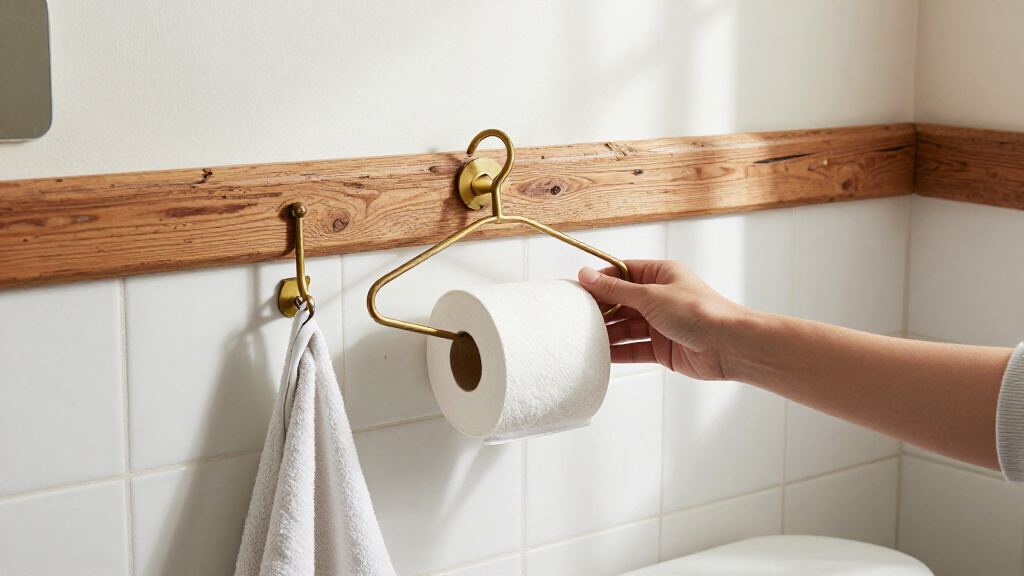
A Hunker report describes a DIY toilet paper holder made from a wire hanger, its cardboard crossbar and craft supplies. YouTube creator Kelly Barlow wraps the frame in twine and adds burlap and faux flowers; the project involves cutting wire, so eye protection and proper tools are advised.
Hunker has reported on a do-it-yourself toilet paper holder made from a wire clothes hanger, its cardboard crossbar and inexpensive craft materials. The project, demonstrated by YouTube creator Kelly Barlow, offers a way to repurpose a common dry-cleaning hanger into a small bathroom fixture rather than discard it.
Barlow’s design uses the hanger as the frame and, when available, reuses its removable cardboard tube as the spindle that supports the toilet paper roll. The listed supplies include pliers, wire cutters, a ruler, a marker, tape, twine, hot glue, burlap ribbon and scissors. Barlow also uses distress ink and adds a faux sunflower and greenery for decoration.
In the steps described by Hunker, Barlow removes the cardboard tube, cuts off the curved wire ends that had sat inside it, then measures and cuts the hanger near its neck. She tapes two shortened wire pieces back to the hanger’s lower section and trims the cardboard tube to fit between them. Twine is wrapped around the frame and tube and fixed with hot glue.
The final look is optional rather than necessary to the holder’s function. Hunker says makers can substitute yarn or ribbon for twine, choose different embellishments, or leave the holder plain. The source also recommends wearing safety glasses when cutting wire, keeping a firm grip on the tool and using pliers with a wire cutter or dedicated wire cutters.
A Small Bathroom Reuse Project
The project is a low-cost example of reusing a wire hanger for a purpose beyond clothing storage. For readers who already have the materials, it may offer a way to make a functional bathroom accessory without buying a conventional holder. The source does not provide a price comparison, durability testing or evidence that the homemade design is more economical than retail options.
Its practical appeal depends on the hanger’s condition and construction. A hanger with a cardboard crossbar can supply the spindle described in the tutorial; other hanger designs may not provide that piece. The project also combines utility with decoration, but its rustic appearance is a styling choice, not a requirement. That flexibility lets makers adapt the finish to a bathroom without changing the basic reuse idea.
As an affiliate, we earn on qualifying purchases.
How the Hanger Becomes a Spindle
The reported project starts with a familiar object from dry-cleaning: a lightweight wire hanger. Barlow’s approach keeps the hanger’s general shape but modifies the lower bar to hold a toilet paper roll. The cardboard tube normally fitted over that bar is repurposed as the roll’s spindle, with short wire sections attached to support it.
After the frame is assembled, twine covers the wire and cardboard, while glue holds the wrapping in place. The burlap bow, faux flower and greenery shown in the design create its rustic look. Hunker notes that these decorative materials can be replaced or omitted. The source also mentions pairing the holder with separate toilet paper storage, but provides no details about a particular storage design.
“Don’t get hung up on the farmhouse look if it’s not your style.”
— Hunker, on adapting the decoration
As an affiliate, we earn on qualifying purchases.
Fit, Stability and Long-Term Use
The source does not report whether the holder fits every wire hanger, toilet paper roll or bathroom layout. It also gives no testing information on how securely the modified wire supports a roll, how well the cardboard spindle holds up over time, or whether the hot-glue wrapping remains intact in a humid bathroom. The instructions rely on a hanger with a removable cardboard tube for the described spindle, so people with a different style may need another solution.
No cost breakdown, measured dimensions beyond the instruction to cut roughly five inches from each bend near the neck, or independent assessment of the finished holder is provided. The article describes a craft project, not a product tested against standard holders. Anyone following it should check that the frame is stable and that cut wire ends are not exposed in a way that could scratch or snag.
As an affiliate, we earn on qualifying purchases.
Check the Frame Before Hanging
For anyone attempting the project, the next steps are to inspect the hanger and decide whether its crossbar can serve as the spindle, then gather the listed tools and materials. During cutting, wear safety glasses, use appropriate wire-cutting tools and maintain a steady grip. After wrapping and decorating, check that the paper roll turns freely and the holder sits securely before putting it to regular use.
The Hunker report does not announce a product launch, broader rollout or scheduled follow-up. The immediate next step for readers is to adapt the craft instructions to the hanger and materials they have, while treating the rustic decorations as optional.
As an affiliate, we earn on qualifying purchases.
Key Questions
What materials does the hanger toilet paper holder use?
The project uses a wire hanger and, if it has one, the hanger’s removable cardboard crossbar. Other listed supplies include pliers, wire cutters, tape, twine, hot glue, burlap ribbon and scissors; the flower and greenery are decorative options.
Does the holder have to look rustic?
No. Hunker says makers can use colorful yarn or coordinating ribbon instead of twine and burlap, choose other decorations, or leave the holder undecorated.
Can any wire hanger be used?
The described design reuses a removable cardboard tube from the hanger as the toilet paper spindle. The source does not confirm that every hanger type can be adapted in the same way.
What safety steps does the tutorial recommend?
Wear safety glasses when cutting wire, use pliers with a built-in cutter or dedicated wire cutters, and keep a firm, steady grip. Check the finished frame for exposed or sharp wire ends before use.
Source: rss
Halloween Picks
halloween
As an affiliate, we earn on qualifying purchases.