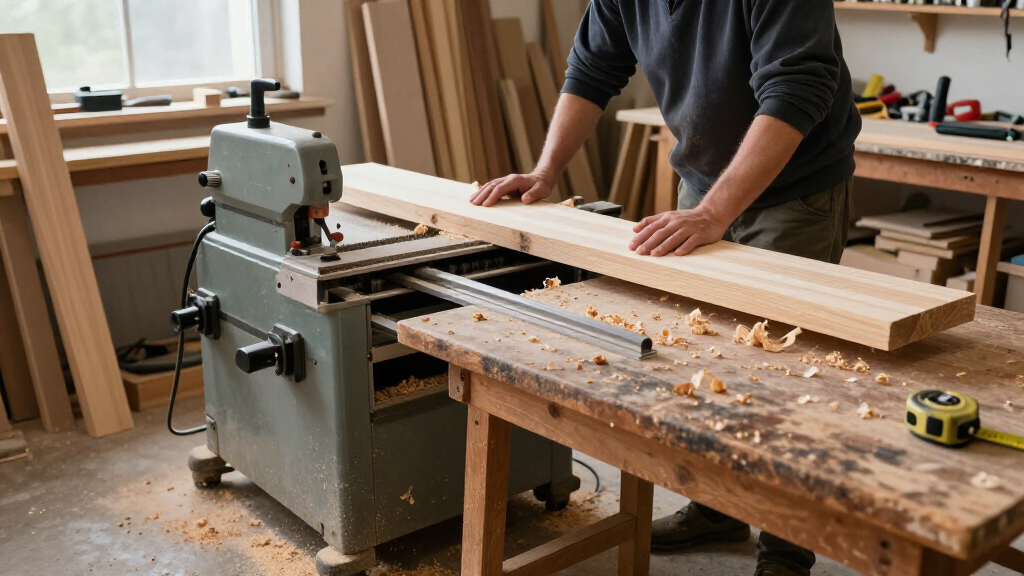
For a small shop, the best benchtop planer balances board capacity and surface quality with limited floor space, dust control, and setup demands. I’d put the DEWALT DW735X first for its two-speed feed and included infeed and outfeed tables, while the Cutech 40700H stands out for its spiral cutterhead and the WEN PL1326 for its spiral-style cutterhead at a simpler feature level. The main tradeoff is between cutterhead finish and maintenance, wider capacity and storage space, and convenience features versus a more basic machine. A 6-inch planer or a jointer-planer combo may suit a very tight shop, but each limits the kind of stock you can handle in a single pass. Continue reading for the full comparison, selection criteria, and guidance by shop size and workload.

Get business pricing on tools and workshop supplies
- Business-only prices and quantity discounts
- Tax-exempt purchasing
- Multiple users, one account, clear invoices
Complete the kit

Key Takeaways
- The DEWALT DW735X is the most feature-complete pick: two feed speeds and included tables support a more flexible small-shop workflow, though its size and accessories take space.
- Spiral cutterheads recur among the standout options: the Cutech 40700H, JET, WEN PL1326, and WOODERS spiral model prioritize a different cutting approach than the two-knife machines.
- A 13-inch capacity appears across many models: the WOODERS, VEVOR, and several others share that width, so cutterhead type, support, and adjustment matter more than width alone.
- The DEWALT DW734 offers a three-knife alternative: it differs from the two-knife DW735X and may appeal to buyers who want a conventional cutterhead design without the DW735X’s two-speed setup.
- The INTBUYING 6-inch planer and Hoteche combo address distinct space needs: each gives up the broad stock capacity of a standard 12½- or 13-inch thickness planer, so they fit specialized workflows rather than serving as direct substitutes.
| Cutech 40700H 12½-Inch Benchtop Planer with Spiral Cutterhead |  | Best Finish Quality for Small Shops | Brand: Cutech | Model: 40700H | Planing width: 12½ inches | VIEW LATEST PRICE | See Our Full Breakdown |
| CRAFTSMAN 15-Amp Benchtop Planer with Two-Knife Solid Steel Cutter Head (CMEW320) |  | Best Value Straight-Knife Pick | Brand: CRAFTSMAN | Model: CMEW320 | Motor: 15 amp | VIEW LATEST PRICE | See Our Full Breakdown |
| WOODERS 13-Inch Benchtop Thickness Planer, 15-Amp, 2000W |  | Best Capacity on a Budget | Brand: WOODERS | Model: PL13-15AB | Planing width: 13 in (330 mm) | VIEW LATEST PRICE | See Our Full Breakdown |
| INTBUYING 6 Inch Benchtop Woodworking Planer, 1800W Portable Bench Planer |  | Best Compact Option for Tiny Workspaces | Brand: INTBUYING | Power: 1800W, AC | Cutting width: 6 inches | VIEW LATEST PRICE | See Our Full Breakdown |
| Triton TPT125 Benchtop Planer, 12.5-Inch Cutting Width | 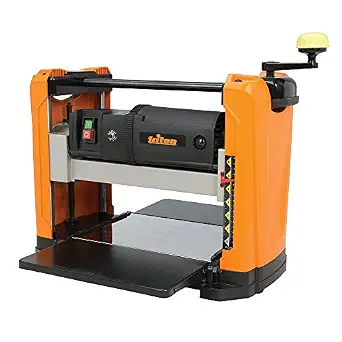 | Best for Precise, Repeatable Depth Control | Brand: Triton | Model: TPT125 | Cutting width: 12.5 inches (317 mm) | VIEW LATEST PRICE | See Our Full Breakdown |
| WOODSTARTER 13-Inch Benchtop Wood Planer with 3 HSS Blades |  | Best for Long Boards | Motor power: 2000W | Maximum planing width: 13 inches | Maximum stock thickness: 6-3/16 inches | VIEW LATEST PRICE | See Our Full Breakdown |
| VEVOR 13-Inch Two-Blade Benchtop Thickness Planer |  | Best for Long Stock Support | Motor: 15 A, 2000 W | Planing width: 13 inches | Maximum board thickness: 6 inches | VIEW LATEST PRICE | See Our Full Breakdown |
| JET 13-Inch Benchtop Thickness Planer with Helical Cutterhead |  | Best Premium Cutterhead | Motor: 2 HP, 15 A | Voltage: 120V, single phase | Cutterhead: Helical style, 156 quick-change HSS inserts | VIEW LATEST PRICE | See Our Full Breakdown |
| WEN PL1326 13-Inch Spiral Benchtop Thickness Planer |  | Best for Faster Feed | Motor: 15 A | Cutterhead speed: 10,000 RPM | Feed rate: 26 ft/min | VIEW LATEST PRICE | See Our Full Breakdown |
| WOODSTARTER 13-Inch Benchtop Wood Planer TP10K, 15AMP 10000RPM |  | Best Value for Straightforward Planing | Motor power: 2000W, 15 A | Maximum planing width: 13 inches | Maximum planing thickness: 6.2 inches | VIEW LATEST PRICE | See Our Full Breakdown |
| Hoteche 10-Inch Benchtop Jointer and Planer Combo with Stand |  | Best Two-in-One Space Saver | Motor: 13 A | No-load speed: 9,000 RPM | Maximum cutting width: 10 in | VIEW LATEST PRICE | See Our Full Breakdown |
| WOODERS 13-Inch Thickness Planer with Spiral Helical Cutterhead |  | Best Spiral Cutterhead Value | Planing width: 13 inches | Material height range: 1/4 to 6-1/4 inches | Maximum cutting depth: 1/8 inch per pass | VIEW LATEST PRICE | See Our Full Breakdown |
| VEVOR 13-Inch Two-Blade Benchtop Thickness Planer |  | Best Budget 13-Inch Workhorse | Planing width: 13 inches | Worktable length: 28.2 inches | Motor power: 1800W | VIEW LATEST PRICE | See Our Full Breakdown |
| DEWALT 13-Inch Thickness Planer, 15 Amp, Two-Speed (DW735X) |  | Best Overall | Planing width: 13 inches | Motor: 15 amp, 20,000 rpm | Cutterhead speed: 10,000 rpm | VIEW LATEST PRICE | See Our Full Breakdown |
| DEWALT DW734 Benchtop Planer, 15-Amp, 12-1/2-Inch, 3-Knife Cutter |  | Best Value in a Trusted Brand | Model: DW734 | Motor: 15 amp, 20,000 RPM | Planing width: 12-1/2 inches | VIEW LATEST PRICE | See Our Full Breakdown |
| benchtop planer for small shop | Motor |
|---|---|
| Cutech 40700H 12½-Inch Benchto | — |
| CRAFTSMAN 15-Amp Benchtop Plan | 15 amp |
| WOODERS 13-Inch Benchtop Thick | 15 A, 2000 W, all-copper |
| INTBUYING 6 Inch Benchtop Wood | — |
| Triton TPT125 Benchtop Planer | — |
| WOODSTARTER 13-Inch Benchtop W | — |
| VEVOR 13-Inch Two-Blade Bencht | 15 A, 2000 W |
| JET 13-Inch Benchtop Thickness | 2 HP, 15 A |
| WEN PL1326 13-Inch Spiral Benc | 15 A |
| WOODSTARTER 13-Inch Benchtop W | — |
| Hoteche 10-Inch Benchtop Joint | 13 A |
| WOODERS 13-Inch Thickness Plan | 15A, 2000W |
| VEVOR 13-Inch Two-Blade Bencht | — |
| DEWALT 13-Inch Thickness Plane | 15 amp, 20,000 rpm |
| DEWALT DW734 Benchtop Planer | 15 amp, 20,000 RPM |
More Details on Our Top Picks
Cutech 40700H 12½-Inch Benchtop Planer with Spiral Cutterhead
This model stands out for bringing a spiral cutterhead with carbide inserts into a compact benchtop package, which is exactly what a small shop needs when it wants salvage-planer finish without hours of sanding. Compared with the DEWALT DW734‘s straight three-knife head, the six rows of staggered two-sided inserts shear wood rather than chop it, so tearout on figured stock drops noticeably. The four lead screws with a coupling design are aimed at snipe control, a common weak point on cheaper benchtop units like the VEVOR two-blade planers. The tradeoff is single-speed operation and a narrower 12½-inch capacity, so wide glue-ups and slow finish passes on tricky grain aren’t in its repertoire the way they are with a two-speed DEWALT.
Pros:- Spiral cutterhead with six staggered insert rows produces a smooth, low-tearout finish
- Two-sided tungsten carbide inserts can be rotated for a fresh edge without re-sharpening
- Four lead screws with coupling design actively target snipe
- Board return rollers make repeat passes a one-person job
Cons:- Single-speed cutterhead limits fine-tuning for difficult grain
- No published noise, snipe, or cut-quality figures to verify performance claims
Best for: Small-shop woodworkers who plane figured or tricky hardwoods and want a carbide-insert finish straight off the machine
Not ideal for: Anyone regularly milling 13-inch glue-ups — the 12½-inch width will leave boards untouched
- Brand:Cutech
- Model:40700H
- Planing width:12½ inches
- Cutterhead:Spiral, six rows of two-sided tungsten carbide inserts
- Speed:Single speed
- Snipe control:Four lead screws with patented coupling design
- Additional features:Depth-of-cut indicator; board return rollers
Our verdict“This pick makes the most sense for finish-focused hobbyists who value carbide-insert cut quality over raw capacity.”
CRAFTSMAN 15-Amp Benchtop Planer with Two-Knife Solid Steel Cutter Head (CMEW320)
The CMEW320 is the straightforward workhorse of this lineup: a 15-amp motor, a ball-bearing-mounted two-knife cutter head, and reversible double-edged high-carbon steel knives that effectively double blade life. Where the Cutech 40700H spends its budget on a spiral cutterhead, this model keeps things simple and affordable — meaning buyers trade insert-style finish quality for a lower entry cost and cheap, easy knife replacements. The vacuum port is a genuine plus over budget machines like the WOODERS PL13-15AB that require you to supply your own dust strategy. The honest tradeoff: two straight knives leave more chatter and tearout than any spiral head here, and there’s no stated cut rate or speed data to gauge feed performance.
Pros:- 15-amp motor handles both hard and soft wood
- Reversible, double-edged knives stretch blade life and keep replacement costs low
- Vacuum port supports shop dust collection
- Ball-bearing-mounted cutter head is built for smooth, durable operation
Cons:- Two straight knives can’t match the finish of spiral cutterhead models like the Cutech 40700H
- No published speed or cut-rate specifications
Best for: Budget-conscious DIYers and occasional hardwood hobbyists who want dependable thicknessing without paying for a spiral cutterhead
Not ideal for: Woodworkers who frequently plane highly figured stock — straight knives will tear out where a spiral head like Cutech’s stays clean
- Brand:CRAFTSMAN
- Model:CMEW320
- Motor:15 amp
- Cutter head:Two-knife solid steel, ball-bearing mounted
- Knives:High-carbon steel, double-edged and reversible
- Dust collection:Vacuum port
Our verdict“The sensible choice if you want honest thicknessing performance at the lowest complexity, as long as finish perfection isn’t the goal.”
WOODERS 13-Inch Benchtop Thickness Planer, 15-Amp, 2000W
If your projects lean toward wide glue-ups and thick stock, this WOODERS offers a full 13-inch width and 6.3-inch thickness capacity at a price tier well below a DEWALT DW735X. The 2000W all-copper motor spinning at 10,000 RPM gives it real appetite for hardwood, and the inclusion of two spare HSS blades plus overload protection makes it friendlier to beginners than the comparable VEVOR 13-inch two-blade planer, which ships with fewer consumables. The compromises are real, though: it’s heavy enough that repositioning it in a tight shop is a chore, and the HSS blade system — unlike the carbide inserts on the WOODERS spiral model or the Cutech — dulls faster on abrasive or dirty wood. Effective dust extraction also assumes you already own a capable vacuum.
Pros:- Full 13-inch width and 6.3-inch thickness capacity handle wide boards and thick stock
- 2000W all-copper motor runs the cutterhead at 10,000 RPM
- Two spare HSS blades included out of the box
- Overload protection guards the motor during heavy cuts
Cons:- Heavy build makes it awkward to move around a small workshop
- HSS blades dull faster than carbide inserts on abrasive material
- Requires a suitable vacuum system for the dust port to be useful
Best for: Hobbyists building furniture from wide boards who need full 13-inch capacity without a premium price
Not ideal for: Shops with no dust collection — the dust port is only useful if you have a vacuum strong enough to keep up
- Brand:WOODERS
- Model:PL13-15AB
- Planing width:13 in (330 mm)
- Thickness range:1/4–6.3 in (6–160 mm)
- Motor:15 A, 2000 W, all-copper
- Cutterhead speed:10,000 RPM
- Blade system:Dual-edge HSS blades
- Overload protection:Yes
- Includes:Dust collector, 2 extra blades, lifting handle
Our verdict“A strong capacity-per-dollar pick for wide-board furniture work, provided you have dust extraction and don’t mind the weight.”
INTBUYING 6 Inch Benchtop Woodworking Planer, 1800W Portable Bench Planer
This INTBUYING unit plays a completely different role from everything else here: with a 6-inch cutting width and a compact aluminum table, it’s built for detailed work, education, and model-making rather than lumber thicknessing. Compared with even the modest 12.5-inch Triton TPT125, the 155 x 580mm table is short, which limits support for longer workpieces — but that’s the point. It trades capacity for footprint, and its 1800W all-copper motor at 12,000 RPM plus a 90–135° adjustable rear retainer plate give it real versatility for angled and small-part work. The 0–10cm depth adjustment range is unusual for this class. The tradeoffs: this is a niche machine, the brand’s track record is thin compared with CRAFTSMAN or Triton, and it simply cannot dimension typical furniture boards.
Pros:- Compact footprint suits truly tiny workspaces and bench corners
- 1800W all-copper motor with strong heat dissipation at 12,000 RPM
- Adjustable rear retainer plate (90–135°) supports angled work
- Overload protection powers the motor off automatically
Cons:- Short 10cm-wide table limits support for larger workpieces
- Narrow 6-inch capacity excludes most lumber-dimensioning tasks
- Limited ownership data makes long-term reliability hard to judge
Best for: Model makers, educators, and craft-focused makers who need powered planing on narrow stock in a very small footprint
Not ideal for: Furniture builders — a 6-inch width and short table rule out dimensioning typical lumber
- Brand:INTBUYING
- Power:1800W, AC
- Cutting width:6 inches
- Working table:155 x 580 mm aluminum
- Cutting depth:0–10 cm
- Max speed:12,000 rpm
- Rear retainer plate:Adjustable 90–135°
- Safety:Overload protection with automatic shutoff
Our verdict“Buy this only if your work is small-scale and detailed — for lumber thicknessing, spend the same money on a 13-inch machine.”
Triton TPT125 Benchtop Planer, 12.5-Inch Cutting Width
The Triton TPT125 differentiates itself through control and stability rather than raw cutting power. Its 17,500 cuts per minute outpace the WOODERS PL13-15AB’s 10,000 RPM head, which translates directly into more knife marks per inch and a smoother board. The graduated depth crank in 1/16-inch increments is the standout feature — none of the budget entries here offer that level of dial-in, and it matters when you’re sneaking up on a final thickness. Four-post column construction and long infeed/outfeed tables give it better support for longer stock than the compact CRAFTSMAN CMEW320. The compromise is the 12.5-inch width and a conventional blade head — for figured hardwoods, the Cutech 40700H’s spiral cutterhead still finishes better, and buyers wanting 13-inch capacity should look at the DEWALT DW735X instead.
Pros:- 17,500 cuts per minute produce a fine finish with light passes
- Depth crank adjusts in precise 1/16-inch increments for repeatable results
- Four-post column design keeps the cutterhead stable under load
- Large infeed and outfeed tables support longer workpieces
Cons:- 12.5-inch width misses the 13-inch standard of rivals like the WOODERS and DEWALT
- Straight-blade cutterhead is more prone to tearout than spiral-head alternatives
- No two-speed option for difficult grain
Best for: Detail-oriented woodworkers who take multiple light passes and want repeatable 1/16-inch depth settings on longer stock
Not ideal for: Wide-board furniture makers — 12.5 inches of capacity falls just short of standard 13-inch glue-ups
- Brand:Triton
- Model:TPT125
- Cutting width:12.5 inches (317 mm)
- Height range:1/8 to 5.9 inches
- Cut rate:17,500 cuts per minute
- Depth increments:1/16 inch (1.6 mm)
- Dust chute:Mounts on either side
- Safety:Circuit breaker
Our verdict“The pick for woodworkers who prize precision and finish over maximum width — if 13-inch capacity isn’t on your list.”
WOODSTARTER 13-Inch Benchtop Wood Planer with 3 HSS Blades
The 29-inch worktable and adjustable infeed and outfeed supports make this WOODSTARTER a practical fit for a small shop that regularly planes longer boards. Its three HSS blades and 2000W motor offer a different balance from the two-blade WOODSTARTER TP10K: the extra blade may help produce a smoother finish, while both share a 21 ft/min feed rate and broad 13-inch capacity. The tradeoff is blade upkeep; HSS blades can dull sooner than carbide options, so frequent users should account for sharpening or replacement. A maximum 1/8-inch cut per pass also favors taking measured passes over aggressive stock removal. The multiple dust-port sizes make it easier to connect common shop extraction hoses.
Pros:- 13-inch width and 6-3/16-inch thickness capacity cover a broad range of shop stock.
- 29-inch table with adjustable infeed and outfeed supports long boards.
- Three HSS blades may provide a smoother finish than the two-blade TP10K.
- Three dust-port sizes fit common vacuum and dust-collection hoses.
Cons:- HSS blades may dull faster than carbide alternatives and need sharpening or replacement.
- The maximum 1/8-inch cut per pass can make heavy stock removal slower.
Best for: Small-shop woodworkers who regularly plane long, wide boards and want adjustable support tables.
Not ideal for: Frequent heavy users who want longer-lasting carbide cutters or need to remove substantial stock in fewer passes.
- Motor power:2000W
- Maximum planing width:13 inches
- Maximum stock thickness:6-3/16 inches
- Cutterhead speed:10,000 RPM
- Feed rate:21 ft/min
- Blades:3 HSS blades
- Maximum depth per pass:1/8 inch
- Worktable length:29 inches
- Dust port sizes:1-2/5, 2-1/2, and 4 inches
Our verdict“Choose this model if long-board support and three-blade cutting matter more to your small shop than minimizing blade maintenance.”
VEVOR 13-Inch Two-Blade Benchtop Thickness Planer
The VEVOR gives a small shop 35 inches of total table support, the longest stated support span among these five picks, which can help steady longer boards as they enter and leave the cutter. Its 13-inch width and 6-inch thickness capacity are close to the WOODSTARTER models, while its two-knife cutterhead keeps the setup straightforward. The product data lists a 23,500 RPM motor speed, but does not provide a separate cutterhead speed or feed rate, so direct speed comparisons with the JET and WEN are limited. This is a single-speed planer, and chip extraction depends on connecting a vacuum or dust collector. It suits shops prioritizing board support and capacity over variable feed choices or an explicitly described spiral cutterhead.
Pros:- 13-inch planing width handles broad boards.
- 35 inches of total table support steadies longer stock.
- 2000W motor and two-knife cutterhead are specified for hardwood and softwood planing.
- Vacuum port allows connection to shop dust collection.
Cons:- Single-speed operation offers no feed-rate choice.
- A vacuum or dust collector is required for chip extraction and is not listed as included.
- Product data does not specify a maximum cut depth per pass.
Best for: Small-shop owners who routinely plane long boards and already have a vacuum or dust collector to connect.
Not ideal for: Woodworkers who want multiple feed-rate choices, an included chip collection setup, or a stated spiral cutterhead.
- Motor:15 A, 2000 W
- Planing width:13 inches
- Maximum board thickness:6 inches
- Motor speed:23,500 RPM
- Cutterhead:Two knives
- Total table support:35 inches
- Overcurrent protection:20 A
- Dust collection:Vacuum port
Our verdict“Pick the VEVOR if extended board support is your priority and your shop already has dust extraction.”
JET 13-Inch Benchtop Thickness Planer with Helical Cutterhead
The JET stands apart from the two-knife VEVOR and WOODSTARTER TP10K with a helical-style cutterhead holding 156 quick-change HSS inserts. That arrangement is aimed at smoother, quieter cutting, while replaceable inserts let an owner address individual cutters rather than treating the head as a pair of full-width knives. Its cast iron bed and four-post design support controlled planing, and two feed rates—18 or 26 FPM—give more choice than the single-speed options here. That capability comes with a 120V, 15A power requirement and a 1/8-inch maximum cut depth per pass. Folding tables help it fit a compact shop when stored, though the product data does not give their extended length.
Pros:- 156 quick-change HSS inserts are designed for smoother, quieter cuts.
- Two feed rates provide more control than the single-speed VEVOR.
- Precision-machined cast iron bed and four-post design support stable planing.
- Folding infeed and outfeed tables save storage space.
Cons:- Maximum cut depth is 1/8 inch per pass.
- Requires a 120V, 15A power supply.
- Product data does not state the extended table support length.
Best for: Small-shop woodworkers who value quieter, smoother cuts, adjustable feed rates, and repeatable depth settings.
Not ideal for: Buyers seeking a simpler two-knife machine or who need deep cuts per pass to speed up rough stock removal.
- Motor:2 HP, 15 A
- Voltage:120V, single phase
- Cutterhead:Helical style, 156 quick-change HSS inserts
- Cutterhead speed:10,000 RPM
- Feed rates:18 and 26 FPM
- Maximum capacity:13 inches wide by 6 inches deep
- Maximum depth of cut:1/8 inch
- Bed:Precision-machined cast iron
Our verdict“Choose the JET if cutterhead refinement and two feed rates justify its more involved setup in your small shop.”
WEN PL1326 13-Inch Spiral Benchtop Thickness Planer
The WEN PL1326 pairs a 26 FPM feed rate with a spiral cutterhead fitted with 26 rotatable HSS blades, giving small-shop owners a faster stated feed than the 21 FPM WOODSTARTER TP10K. Its 13-inch width and 6-inch thickness capacity cover similar stock, while the onboard gauge and depth stop help make repeat settings easier when dimensioning several boards. The adjustable dust port and height-adjustable support tables add useful flexibility for a compact workspace. Unlike the JET, the WEN data lists one feed rate, so there is no slower setting to select for a particular cut. The 1/8-inch maximum cut per pass also limits how aggressively it can reduce thickness, and dust collection equipment is not specified as included.
Pros:- 26 FPM feed rate is faster than the 21 FPM WOODSTARTER TP10K specification.
- Spiral cutterhead uses 26 staggered, rotatable HSS blades.
- Onboard material-removal gauge and depth stop support repeatable settings.
- Adjustable dust port and height-adjustable infeed and outfeed tables suit varied shop setups.
Cons:- Offers one listed feed rate, unlike the two-speed JET.
- Maximum cut depth is 1/8 inch per pass.
- Dust collection equipment is not specified as included.
Best for: Small-shop users who want a stated 26 FPM feed rate, repeatable depth settings, and rotatable spiral cutter blades.
Not ideal for: Woodworkers who need multiple feed rates, deeper cuts per pass, or dust collection equipment included with the planer.
- Motor:15 A
- Cutterhead speed:10,000 RPM
- Feed rate:26 ft/min
- Maximum board width:13 inches
- Maximum board thickness:6 inches
- Cutter blades:26 staggered, rotatable HSS blades
- Maximum cut depth:1/8 inch per pass
- Included features:Depth stop and adjustable dust port
Our verdict“The WEN is a strong fit if a faster stated feed and repeatable setup matter more than having multiple feed choices.”
WOODSTARTER 13-Inch Benchtop Wood Planer TP10K, 15AMP 10000RPM
The TP10K covers the core needs of a small shop with a 13-inch width, 6.2-inch thickness capacity, and 21 ft/min feed speed. Its two HSS blades make it a simpler alternative to the three-blade WOODSTARTER TP20K, while the shared 29-inch extended table, overload and overheat protection, and three-size dust port keep the practical shop setup similar. The two-blade design may be less suited to buyers seeking the finish advantage associated with more blades; the listing itself flags this as a possible limitation. It also specifies a 1/8-inch maximum cut per pass, so heavy dimensioning takes multiple passes. This pick makes the most sense when straightforward capacity and common hose compatibility matter more than cutterhead refinement.
Pros:- 13-inch width and 6.2-inch thickness capacity handle substantial shop stock.
- 29-inch table with adjustable infeed and outfeed extensions supports longer boards.
- Three-size dust port fits common vacuum and dust-collection hoses.
- Overload and overheat protection is specified.
Cons:- Two HSS blades may limit finish smoothness compared with the three-blade TP20K.
- HSS blades may require sharpening or replacement with use.
- Maximum 1/8-inch cut per pass slows heavy stock removal.
Best for: Small-shop hobbyists who need 13-inch capacity, table extensions, and flexible dust-port connections for routine board sizing.
Not ideal for: Woodworkers focused on the smoothest finish or faster heavy stock removal, who may prefer the three-blade TP20K or a spiral-cutterhead model.
- Motor power:2000W, 15 A
- Maximum planing width:13 inches
- Maximum planing thickness:6.2 inches
- Speed:10,000 RPM
- Feed speed:21 ft/min
- Blades:2 HSS blades
- Extended table length:29 inches
- Dust port sizes:1-2/5, 2-1/2, and 4 inches
Our verdict“Choose the TP10K for straightforward wide-stock planing and shop-friendly connections if you can accept a two-blade finish and shallow passes.”
Hoteche 10-Inch Benchtop Jointer and Planer Combo with Stand
Most picks in this roundup do one job, but the Hoteche P805302A squeezes a jointer and a thickness planer into a single footprint — a genuine advantage when floor space is the scarcest resource in a small shop. The included stand means no bench real estate is consumed at all, something no other model here offers. Compared with the DEWALT DW735X, the Hoteche’s 10-inch cutting width is noticeably narrower, so wide glued panels are off the menu. The tradeoff goes deeper: converting between jointing and planing modes adds setup friction, and the 0–2 mm planing depth range is far shallower than dedicated planers. Its real value is letting a woodworker flatten a face, square an edge, and hit thickness without buying two machines. Buyers who already own a jointerer should look elsewhere.
Pros:- Combines jointer and planer functions in one machine
- Includes a stand, freeing up bench space entirely
- Separate jointer and planer tables keep both functions usable
- Adjustable cutting depths across two working modes
Cons:- 10-inch cutting width is narrower than the 13-inch class leaders
- Shallow planing depth range slows stock removal on thick boards
- No-load speed is specified but performance under load is unclear
Best for: Small-shop woodworkers on a tight budget and footprint who need both jointing and thicknessing in one machine
Not ideal for: Anyone planing boards wider than 10 inches, or who already owns a jointer and needs maximum planing depth per pass
- Motor:13 A
- No-load speed:9,000 RPM
- Maximum cutting width:10 in
- Planer cutting depth:0–2 mm
- Cutting thickness range:5–120 mm
- Feed speed:6 m/min
- Dimensions:36.22 × 13.38 × 16.14 in
Our verdict“Buy this only if you need jointing and planing from one machine in a cramped shop; dedicated planers in this lineup do each job better.”
WOODERS 13-Inch Thickness Planer with Spiral Helical Cutterhead
A spiral helical cutterhead with tungsten carbide inserts is the feature that separates smooth, tear-out-free results from sanding-heavy ones — and this WOODERS model brings it to a 13-inch benchtop at a far friendlier price point than the JET 13-Inch Helical. Where the VEVOR two-blade relies on straight HSS blades that dull and need full replacement, individual carbide inserts can be rotated when nicked, and four spares come in the box. The micro-adjustable depth control also outclasses the VEVOR’s coarse 1/8-inch steps for fine finish passes. The compromises are real: a 1/8-inch maximum cut per pass means more trips through the machine for heavy stock removal, and at 62 pounds this is not a machine you’ll shuffle around the garage casually.
Pros:- Spiral carbide cutterhead reduces tear-out and extends edge life
- Four extra cutter inserts included for cheap maintenance
- Micro-adjustment controls enable repeatable, precise passes
- 13-inch width plus 6-1/4-inch height capacity handles wide, thick stock
Cons:- Maximum 1/8-inch cut per pass limits heavy stock removal
- 62-pound weight makes it awkward to move or store
Best for: Woodworkers working with figured or tear-out-prone hardwoods who want helical-cutterhead results without a premium-brand budget
Not ideal for: Anyone who frequently needs to thickness rough-sawn lumber aggressively, since the 1/8-inch-per-pass limit slows that work considerably
- Planing width:13 inches
- Material height range:1/4 to 6-1/4 inches
- Maximum cutting depth:1/8 inch per pass
- Motor:15A, 2000W
- Cutterhead speed:10,000 RPM
- Cutterhead:Spiral helical with tungsten carbide inserts
- Weight:62 pounds
Our verdict“This is the smart pick if finish quality on difficult woods matters more to you than raw removal speed.”
VEVOR 13-Inch Two-Blade Benchtop Thickness Planer
If the goal is simply getting 13-inch-wide boards to thickness without spending much, the VEVOR two-blade planer covers the fundamentals better than most entry-level machines. The dual feed rollers keep boards moving steadily, which directly reduces the chatter marks that cheap planers often leave, and the 28.2-inch-long worktable gives long boards support that the smaller INTBUYING 6-inch simply cannot match. Compared with the WOODERS spiral model, the straight HSS blades here will dull faster and tear out more on figured stock, and the 1/8-inch depth increments rule out the fine-tuned finish passes woodworkers making furniture parts will want. Single-speed operation also means no slow finish setting. Still, for construction lumber, softwoods, and general dimensioning, this is honest capability at a base price.
Pros:- Dual rollers feed boards steadily and cut vibration
- Full 13-inch planing width at an entry-level price
- Long 28.2-inch worktable supports longer boards
- Accepts both 2-inch and 4-inch dust hoses
Cons:- Single-speed operation offers no slow finish-pass option
- Depth adjusts only in coarse 1/8-inch increments
- Straight HSS blades dull faster than carbide insert systems
Best for: Hobbyists and DIYers who mostly dimension softwoods and construction lumber and want 13-inch width capacity on a tight budget
Not ideal for: Fine-furniture makers working figured hardwoods, since straight HSS blades and coarse 1/8-inch adjustments limit finish quality
- Planing width:13 inches
- Worktable length:28.2 inches
- Motor power:1800W
- Motor speed:Up to 23,500 RPM
- Cutting rate:Up to 16,000 CPM
- Blades:Two HSS blades
- Dust hose compatibility:2-inch and 4-inch hoses
Our verdict“A straightforward value pick for rough dimensioning — just don’t expect refined surface quality on demanding hardwoods.”
DEWALT 13-Inch Thickness Planer, 15 Amp, Two-Speed (DW735X)
The DEWALT DW735X earns the top spot because it solves the problems every other machine here compromises on. Its two-speed gearbox means one feed rate for fast dimensioning and another for glass-smooth finish passes — a flexibility the single-speed VEVOR and the 1/8-inch-per-pass WOODERS spiral can’t match. The fan-assisted chip ejection keeps the cutterhead clear without an external vacuum, and the automatic carriage lock actively reduces snipe rather than relying on the operator to remember a manual lock like the DW734’s four-column system. The three-knife head, spare knife set, and folding infeed/outfeed tables round out a genuinely complete package. The honest tradeoffs: it’s heavy, it’s loud, and disposable knives mean ongoing costs compared with a carbide-insert machine like the WEN PL1326.
Pros:- Two feed speeds for both fast stock removal and fine finishing
- Fan-assisted chip ejection keeps the cutterhead clear without a vacuum
- Automatic carriage lock reduces snipe without extra steps
- Includes infeed/outfeed tables and a spare knife set
Cons:- Disposable three-knife design means recurring blade replacement costs
- Heavier and louder than most benchtop competitors
Best for: Serious small-shop woodworkers who want one planer that handles both aggressive dimensioning and fine finish work with repeatable results
Not ideal for: Casual hobbyists planing a few boards a year — the capability premium is wasted, and a carbide-insert machine avoids disposable knife costs
- Planing width:13 inches
- Motor:15 amp, 20,000 rpm
- Cutterhead speed:10,000 rpm
- Cutterhead:Three knives
- Feed speeds:96 or 179 cuts per inch
- Base:19-3/4-inch cast aluminum
- Warranty:3-year limited
Our verdict“If your small shop can only have one planer and budget allows, this is the machine that makes every other pick here a specific-compromise alternative.”
DEWALT DW734 Benchtop Planer, 15-Amp, 12-1/2-Inch, 3-Knife Cutter
The DEWALT DW734 is the DW735X’s steadier, simpler sibling — and for many small shops, the smarter buy. You give up the two-speed gearbox and powered chip ejection, but you keep the 96 cuts per inch finish quality, a 33-1/2-inch table support length that beats the DW735X’s folding tables for stability on long boards, and a four-column carriage lock that does solid snipe-control duty. The turret depth stop makes repeatable thickness settings painless — something the budget VEVOR and WOODSTARTER models don’t offer at all. The 12-1/2-inch width means a hair less capacity than the 13-inch class, and reversible knives are still disposable. But the trade is durability, finish quality, and a proven track record at a noticeably lower cost than the flagship.
Pros:- 96 cuts per inch delivers a fine finish without a finish-speed gearbox
- Four-column carriage lock reduces snipe-causing movement
- 33-1/2-inch table support stabilizes long stock
- Turret depth stop makes repeatable thickness settings simple
Cons:- Knives are disposable with no resharpening option
- 12-1/2-inch width is narrower than the 13-inch competitors
- No chip-ejection fan, so dust collection depends entirely on a vacuum
Best for: Woodworkers who want DEWALT build quality and finish results at a mid-tier price, especially those planing longer boards
Not ideal for: Maximum-capacity buyers — the 12-1/2-inch width excludes some 13-inch glued panels, and those wanting a finish feed speed should step up to the DW735X
- Model:DW734
- Motor:15 amp, 20,000 RPM
- Planing width:12-1/2 inches
- Cutter head:Three knives, 10,000 RPM
- Cuts per inch:96
- Knife type:Disposable, reversible
- Table support length:33-1/2 inches
- Depth stop:Turret
Our verdict“The DW734 is the rational middle path: nearly all of DEWALT’s finish quality and stability for shoppers who can’t justify the DW735X’s step-up price.”
How We Picked
I compared the listed machines around the constraints that shape a small-shop purchase: usable capacity, cutterhead design, feed and adjustment features, footprint, and the work needed to support and maintain the machine. A wider planer can handle more stock in one pass, but it also needs room for long boards and dust collection. Cutterhead type affects the choice of finish and the nature of blade or insert maintenance, so I treated spiral, helical, and knife-based designs as meaningful differences rather than interchangeable labels.
The ranking favors machines whose stated features serve a broad range of small-shop work, then distinguishes picks for particular priorities such as a compact setup, a conventional cutterhead, or a jointer-planer combination. Models with sparse or overlapping descriptions are harder to separate on the available specifications, so I give them narrower roles rather than claiming performance advantages that the listed details do not establish. The two VEVOR entries are the same named model; I treat them as one option and do not present the duplicate listing as a separate recommendation.
Factors to Consider When Choosing Benchtop Planer For Small Shops
Before choosing a benchtop planer, I’d match the machine to the boards and workflow that actually pass through the shop. Capacity and cutterhead specs matter, but so do board support, dust handling, available power, storage, and how often you expect to change knives or inserts.
Choose Capacity Around Your Typical Stock
A planer’s cutting width sets the maximum board width it can handle in one pass, but it does not tell you whether the machine fits your shop workflow. Think about the widest boards you regularly flatten and whether you can rip oversized stock before planing. Long boards need support at both ends; without it, even a compact machine can be awkward to use and may produce uneven results. Measure the machine’s footprint and the clear space needed to feed boards through it, not just the bench where it will sit. A narrower model can make sense for trim, small furniture parts, or a dedicated compact station. Avoid buying extra capacity you cannot use, but do not assume a large planer solves the need for a jointer or proper stock preparation.
Match Cutterhead Design to Finish and Maintenance
Planers in this group use two-knife, three-knife, spiral, and helical descriptions, and those labels point to different maintenance routines. Knife systems call for attention to sharpness, alignment, and replacement or resharpening logistics. Cutterheads with multiple small inserts may let you rotate an affected insert when a cutting edge is damaged, but they still need inspection and care. Do not assume every product using the word spiral has identical geometry or finish quality; compare the maker’s specifications and replacement parts. If you plane figured or knotty stock, finish quality may matter more than maximum feed speed. For rough construction lumber, a simpler cutterhead may be adequate if you accept more sanding and careful setup.
Plan the Full Board Path and Dust Setup
Small shops often underestimate how much space a planer needs while it is running. Infeed and outfeed clearance can exceed the machine’s own length, especially when working with long boards. Folding or removable tables, rollers, and a mobile base can help, but each adds setup steps and storage needs. Plan for dust collection before buying: chips accumulate quickly, and a compatible extraction setup helps keep the work area usable. Check the dust port size and collection requirements in the product documentation rather than assuming a shop vacuum will be enough. A planer that stores neatly but is difficult to roll out, connect, and support may see less use.
Consider Feed Speed and the Work You Repeat
Feed speed affects how quickly stock moves through the machine and can influence the finish a given pass produces. A two-speed planer gives a small shop another way to balance throughput and surface quality, but it adds a feature you may rarely use if most work is rough sizing. For repeated cabinet or furniture parts, consistent results and straightforward adjustments may save more time than raw feed rate. If your projects vary, consider whether the planer makes it practical to switch between a faster dimensioning pass and a slower finishing pass. Take multiple light passes when the machine, stock, or desired finish calls for them instead of trying to remove too much material at once. Match the feature to the work you do often, not to a best-case specification.
Budget for Setup, Consumables, and Support
The machine is only one part of the ownership decision. Knives or inserts, replacement parts, dust fittings, board supports, and a stable bench can all affect how useful a planer becomes. Before choosing a less familiar model, check whether its cutting components and service information are easy to identify and obtain. For an established machine, confirm which accessories are included; tables or stands can change how much extra setup you need. A lower-feature planer may be a sensible choice for occasional use if its basic capacity fits your work. Paying more makes more sense when a feature solves a repeated bottleneck, such as needing a slower feed setting or a cutterhead design that suits your finish priorities.
Frequently Asked Questions
Is a benchtop planer enough for a small furniture shop?
It can handle thicknessing for many furniture parts, but a planer does not flatten a bowed or twisted face by itself. You need a flat reference face, often made with a jointer, a sled, or another reliable method, before thicknessing the opposite face. A jointer-planer combo can save space if its working width and setup suit your stock. For boards wider than the machine’s capacity, you will need to rip them narrower or use another approach. Choose based on your full stock-preparation process, not the planer alone.
Should I choose a spiral cutterhead over a knife cutterhead?
Choose based on the surfaces you plane and the maintenance routine you prefer. Spiral or helical designs use multiple small cutting edges, while conventional knife systems use longer blades that need careful alignment and sharpening or replacement. The model descriptions in this roundup do not establish that every spiral or helical machine delivers the same finish. Check insert availability, replacement costs, and the manufacturer’s care instructions before deciding. If your work includes figured grain or frequent edge damage, the cutterhead design may weigh more heavily than a modest difference in capacity.
Will a 13-inch planer fit better in my shop than a 12½-inch model?
The width difference alone says little about the space needed to run and store either machine. Compare the body dimensions, table arrangement, stand or bench requirements, and the room needed for board support. A 13-inch capacity can save a rip-and-reassemble step for wider stock, but it does not reduce the infeed and outfeed clearance needed for long boards. A 12½-inch model may still be the better fit if its accessories and footprint suit your setup. Measure the complete working area before choosing by capacity alone.
Does a two-speed planer matter if I only plane stock occasionally?
It may matter less if you mainly dimension a few boards at a time and are comfortable taking suitable passes for the finish you need. Two speeds offer more control over how stock moves through the machine, which can help when the same shop handles both rough sizing and more finish-sensitive work. The DW735X is the listed model here with a two-speed feed, while the DW734 has a three-knife cutterhead and a different feature set. Compare those differences against your regular tasks rather than treating extra settings as automatic value. Occasional users may prefer a simpler machine that fits their stock and storage limits.
Can I use a planer as a substitute for a jointer in a small shop?
A thickness planer brings two faces parallel when one face already provides a stable reference, but it does not replace the flattening role of a jointer. A planer sled can help support a twisted board so you can create a reference face, though it adds setup and consumes usable capacity. The Hoteche listing combines jointer and planer functions, which may suit a space-limited workflow if its stated 10-inch capacity matches your stock. A combo machine also means considering both operations and their setup needs. If you regularly process rough, warped lumber, plan the flattening step before selecting a thickness planer.
Conclusion
For the broadest small-shop workflow, I’d choose the DEWALT DW735X as best overall, especially when two feed speeds and included tables match the work and space available. The WEN PL1326 is my value-oriented pick for buyers who want a 13-inch spiral-style option without prioritizing the DW735X’s feature set; compare current specifications and support before purchase. For a premium feature focus, the JET 13-inch helical model is the pick to investigate, while the CRAFTSMAN CMEW320 suits a beginner who prefers a conventional two-knife design and a straightforward role. Choose the INTBUYING 6-inch planer for narrow stock and a very compact station, or the Hoteche combo if combining jointing and planing matters more than wider capacity. If you want a three-knife alternative, consider the DEWALT DW734; the right choice comes down to your stock width, finish priorities, and room to support boards.
Fall Picks
fall essentials
As an affiliate, we earn on qualifying purchases.