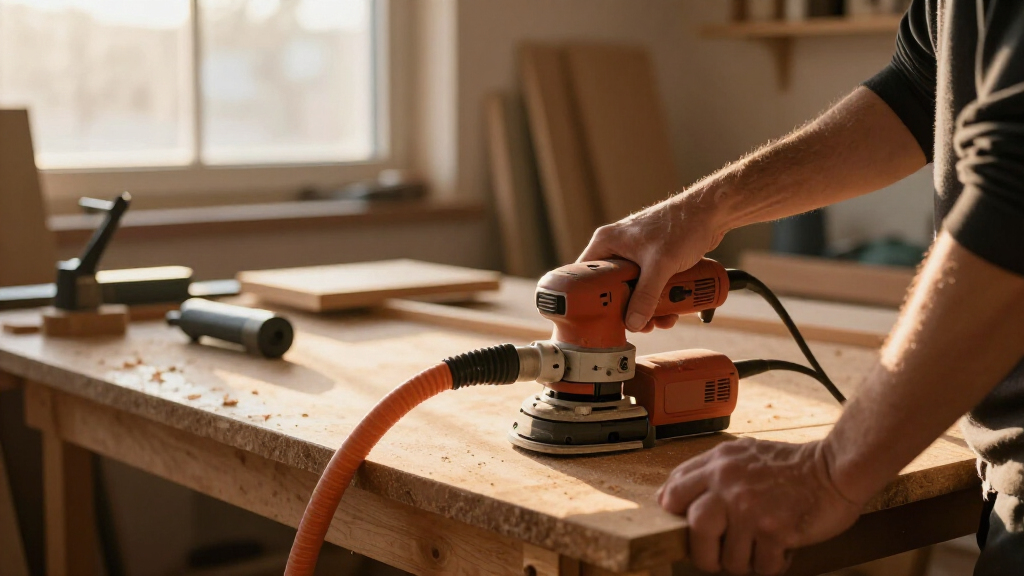

A compact dust collection system has to solve a specific problem: capturing sawdust at the source without eating the floor space of a small workshop. After comparing seven leading options, the Rockler Dust Right 650 CFM Wall Mount stands out as the best overall pick because it bolts to a wall, moves serious air, and keeps every square foot of floor clear. The Bucktool 1.2 HP Auto-Start is the standout for convenience thanks to its automatic startup, while the WEN DC1300 delivers the most raw airflow of the group if you have room for a rolling base. The core tradeoff in this category is capacity versus footprint: wall-mounted models save space but limit you to one machine at a time, while floor-standing collectors handle multiple tools but demand garage real estate and bigger filter maintenance. Filtration fineness is the second dividing line, ranging from 5 microns down to 1 micron. Read on for the full breakdown of which system matches your shop size, tools, and budget.

Get business pricing on tools and workshop supplies
- Business-only prices and quantity discounts
- Tax-exempt purchasing
- Multiple users, one account, clear invoices
Complete the kit


Key Takeaways
- Wall-mounted models (Rockler, VEVOR, POWERTEC) dominated the space-saving category, but the Rockler earned the top spot because its quick-connect Dust Right fitting makes moving it between machines far less of a chore than fixed-inlet rivals.
- The Bucktool‘s auto-start feature was the single biggest convenience differentiator in the lineup — no other model here turns itself on when your tool powers up, which matters most for solo woodworkers running one machine at a time.
- Filtration quality varied more than airflow: the POWERTEC’s 1-micron bags filter finest, while the WEN DC1300 moves the most air (1,300 CFM) but with coarser filtration — proof that raw CFM and lung protection are different purchases.
- The WEN 5.7-Amp 12-gallon model is the true budget entry point, but its lower airflow makes it better for handheld sanders and small tools than for a tablesaw or planer.
- The 1,100 CFM 1-1/2 HP model and the WEN DC1300 both cross out of ‘compact’ territory for tiny shops — they only make sense if you can dedicate floor space to a mobile base and multiple 4-inch duct runs.


| compact dust collection system | Motor | Filtration | Airflow |
|---|---|---|---|
| Rockler Dust Right 650 CFM Wal | 3/4 HP, 12 amps, 110V | 30-micron stock bag, upgradeable | — |
| VEVOR Wall Mount Dust Collecto | 1 HP induction, 120V | 2.5-micron | 560 CFM |
| 1100 CFM Dust Collector | 1-1/2 HP | 2-micron | 1100 CFM |
| WEN Woodworking Dust Collector | 5.7 amps | — | 660 CFM |
| Bucktool 1.2 HP Auto-Start Dus | 1.2 HP, 120V, 6.5A full load | 2.5-micron cloth upper bag | 750 CFM |
| POWERTEC 1 HP Wall Mount Dust | — | — | — |
| WEN DC1300 1,300 CFM 14-Amp Wo | 14 amps | — | — |
More Details on Our Top Picks
Rockler Dust Right 650 CFM Wall Mount Dust Collector
Among wall-mounted options in this roundup, the Rockler Dust Right stands out for balancing real suction power with a genuinely space-saving footprint. Its 650 CFM airflow and 5-inch static pressure rating give it enough muscle to serve a table saw or jointer one at a time, which is more pull than the VEVOR 560 CFM unit manages with a similar mounting profile. The clear 30-micron bag lets you see fill levels at a glance, and upgradeable finer filtration means you can improve air quality later instead of replacing the whole unit. The tradeoff is honest: this is a single-tool machine. Compared with the 1100 CFM floor-standing model, it simply cannot run a multi-branch ducted system, and noise at full load is noticeable in a small garage.
Pros:- 650 CFM with 5-inch static pressure handles demanding single machines
- Wall mount frees floor space entirely
- Clear bag makes fill level visible at a glance
- Filtration can be upgraded later to finer micron ratings
Cons:- Not suitable for multi-branch, plumbed-in ducting systems
- Loud enough to be fatiguing in small, enclosed shops
Best for: Woodworkers in small garages who want dedicated dust collection at one machine without surrendering floor space
Not ideal for: Shops planning multi-branch ductwork to several tools at once — this unit isn’t built for plumbed systems
- Flow Rate:650 CFM
- Motor:3/4 HP, 12 amps, 110V
- Static Pressure:5.00 inches of water
- Bag Capacity:15 gallons
- Filtration:30-micron stock bag, upgradeable
- Height:48 inches
- Weight:50 lbs
Our verdict“This pick makes the most sense for the small-shop woodworker who wants serious suction at one station and zero floor footprint.”
VEVOR Wall Mount Dust Collector 1 HP, 560 CFM
The VEVOR 1 HP wall mount earns its spot with 2.5-micron filtration out of the box — something the Rockler only achieves after buying an upgraded bag. For a woodworker whose priority is breathing cleaner air while sanding, that finer filter matters more than raw CFM. Its 21-gallon collection bag is also the largest capacity of any wall-mounted model here, so you empty it less often, and the zipper dump makes cleanup fast. Compared with the WEN 12-gallon portable unit, you trade floor mobility for a higher capacity and better filtration in a fixed position. The honest drawback: 560 CFM is modest for a cabinet saw, and this unit is sized for small-to-medium workshops, not sprawling industrial layouts.
Pros:- 2.5-micron filtration captures fine sanding dust from day one
- 21-gallon bag is the largest of any wall-mount in this lineup
- Zipper closure makes emptying quick and mess-free
- 24-pound weight makes wall installation manageable solo
Cons:- 560 CFM limits it to one mid-sized machine at a time
- Runs at up to 90 dB, which demands hearing protection
Best for: Small-to-medium shop woodworkers who prioritize fine-particle filtration and large bag capacity on a budget
Not ideal for: Large or multi-station industrial shops — airflow and single-point design can’t keep up
- Motor:1 HP induction, 120V
- Airflow:560 CFM
- Filtration:2.5-micron
- Collection Capacity:21 gallons (80L)
- Noise Level:≤ 90 dB
- Dimensions:40.94 x 13.78 x 15.75 inches
- Weight:24 lbs
- Material:Q235A steel, non-woven fabric
Our verdict“Buy this if fine-dust capture and infrequent bag changes matter more to you than maximum airflow or portability.”
1100 CFM Dust Collector, 1-1/2 HP, 2-Micron
For buyers whose ambitions outgrow the compact category, this 1100 CFM, 1-1/2 HP collector is the step-up choice that still earns a place here thanks to its mobile base. Where the Rockler wall mount serves one machine, this unit’s dual 4-inch ports and 6-inch main inlet can feed multiple tools, and the auto-start outlet fires the motor the moment your tool does — no walking back to flip a switch. The quick-release bags with a transparent window beat the zipper-and-lift routine of the VEVOR when you’re emptying large volumes. The tradeoff is physical: this is the bulkiest option in the batch, and it needs proper ducting to hit its rated airflow — run it open-ended with sloppy hose runs and performance drops off fast.
Pros:- 1100 CFM airflow supports multiple machines or a short duct run
- Auto-start outlet powers the collector with your tool
- Quick-release bags with transparent window simplify maintenance
- Mobile base and included hoses/reducers get you running immediately
Cons:- Bulky footprint despite the casters
- Needs proper ducting and sealed connections to deliver rated performance
Best for: Serious hobbyists or small professional shops running several machines who need high airflow with room to grow
Not ideal for: Tight single-car garages — the footprint and ducting requirements will overwhelm a cramped space
- Airflow:1100 CFM
- Motor:1-1/2 HP
- Filtration:2-micron
- Bag System:Quick-release with transparent window
- Ports:Dual 4-inch, 6-inch main inlet
- Included Ducting:Flexible hoses and reducers
- Mobile Base:Yes
Our verdict“Choose this when one machine at a time isn’t enough anymore — it’s the growth path from every compact pick here.”
WEN Woodworking Dust Collector with 5.7-Amp Motor and 12-Gallon Bag
At 17 pounds, this WEN is the lightest machine in the roundup by a wide margin — the Bucktool nearly doubles it and the Rockler nearly triples it. That makes it the natural choice for woodworkers who roll a collector between a miter saw, band saw, and benchtop tools rather than dedicating it to one station. The lockable swivel casters and carry handle mean it moves when you want and stays put when you don’t, and the wall mount bracket is available if your setup changes. The compromises are real: 5-micron filtration is the coarsest here, fine sanding dust will pass through, and the 12-gallon bag fills quickly on heavy planing or routing days. Compared with the VEVOR, you give up filtration and capacity in exchange for true portability.
Pros:- 17-pound weight makes it genuinely one-person portable
- Lockable swivel casters plus handle for tool-to-tool use
- 660 CFM is impressive airflow for its size class
- Two-year warranty backs the budget price point
Cons:- 5-micron bag lets the finest, most hazardous dust escape
- 12-gallon capacity demands frequent emptying on big projects
- Wall mount bracket sold separately
Best for: Hobbyists and beginners who want to wheel a collector from tool to tool and store it in a corner afterward
Not ideal for: Anyone doing heavy planing or fine sanding — 5-micron filtration and a 12-gallon bag won’t keep up
- Motor:5.7 amps
- Airflow:660 CFM
- Impeller:6 inches
- Dust Port:4 inches
- Collection Bag:12 gallons, 5-micron zippered
- Dimensions:34.25 x 13 x 14.2 inches
- Weight:17 lbs
- Warranty:2 years
Our verdict“If your shop is a shared garage and your collector needs to move and stow, this is the lowest-friction entry point in the lineup.”
Bucktool 1.2 HP Auto-Start Dust Collector, 750 CFM
The Bucktool 1.2 HP splits the difference between the fixed wall mounts and the big 1100 CFM system: it rolls on casters like the WEN, but pulls 750 CFM — more than the Rockler’s 650 — while adding the auto-start convenience that eliminates switch-flipping entirely. Its bag setup is the most flexible in this batch, shipping with a plastic lower bag, a cloth lower, and a 2.5-micron cloth upper, so you can configure for coarse chips or fine dust depending on the machine you’re running. The included 5-foot hose covers short runs to a nearby tool. Tradeoffs: it’s heavier than the WEN to shove around, 6.5 amps of draw means it shares a circuit carefully with your tool, and like every compact collector here it’s built for wood dust, not metal or masonry debris.
Pros:- Auto-start powers up with your tool for hands-off operation
- 750 CFM out-pulls every compact competitor here
- Three bag options let you tune for chips or fine dust
- 5-foot hose and casters make it usable out of the box
Cons:- Heavier and less effortless to reposition than the WEN
- Needs a dedicated or carefully shared 120V circuit
- Wood-dust only — not suited to metal or masonry debris
Best for: Woodworkers who want set-and-forget operation — the collector starts with the tool and rolls where needed
Not ideal for: Shops on crowded circuits — running the collector and a high-amp tool together can trip breakers
- Motor:1.2 HP, 120V, 6.5A full load
- Airflow:750 CFM
- Speed:3450 RPM
- Filtration:2.5-micron cloth upper bag
- Bag Options:Plastic lower, cloth lower, 2.5-micron cloth upper
- Included Hose:5 ft x 4 inches
- Mobility:Caster wheels
Our verdict“This is the pick for the woodworker who values automation and airflow flexibility over absolute lightness.”
POWERTEC 1 HP Wall Mount Dust Collector with 560 CFM and 1 Micron Dust Bags
Most wall-mounted collectors in this roundup force you to compromise on filtration, but this POWERTEC unit pairs its 560 CFM airflow with a 1-micron reusable bag — a finer catch rate than the VEVOR Wall Mount Dust Collector’s 2.5-micron filter. That difference matters if you’re sanding fine hardwoods, where sub-micron particles are the ones that linger in the air and in your lungs. The vortex base design helps keep dust moving into the bag rather than settling in the housing, and the viewing window means you can check fill level without unzipping anything. Compared with the WEN 5.7-amp model with its 12-gallon bag, this one trades capacity for cleanliness of output. The tradeoff is maintenance discipline: the 4-inch inlet port can clog over time, and this collector performs best when checked and cleaned on a regular schedule rather than forgotten about.
Pros:- 1-micron reusable bag captures finer particles than most wall-mount rivals
- Vortex base design improves dust removal efficiency into the bag
- Viewing window lets you monitor fill level without opening the bag
- Dual 120V/240V operation adds wiring flexibility
Cons:- 4-inch inlet port can clog over time and needs routine maintenance
- Single-bag capacity fills faster than drum-style collectors like the VEVOR’s 21-gallon bag
Best for: Small-shop woodworkers in garages or basements who want fine 1-micron filtration without giving up any floor space
Not ideal for: Anyone running multiple machines simultaneously or producing high chip volume — the single-bag design and 560 CFM ceiling will bottleneck quickly
- Motor Power:1 HP
- Airflow Capacity:560 CFM
- Voltage:120V/240V
- Motor Speed:3450 RPM
- Inlet Port:4 inches
- Dust Bag:Reusable 1-micron with viewing window
- Mounting:Wall mount
Our verdict“This pick makes the most sense for space-constrained hobbyists who prioritize fine dust capture over raw chip-moving capacity.”
WEN DC1300 1,300 CFM 14-Amp Woodworking Dust Collector with 50-Gallon Collection Bag and Mobile Base
If the rest of this list is about saving space, the WEN DC1300 is about never emptying a bag mid-project again. Its 50-gallon collection bag dwarfs the WEN 5.7-amp model’s 12-gallon bag, and its 1,300 CFM airflow out-moves even the 1,100 CFM 1-1/2 HP collector — enough suction to keep up with a thickness planer, which smaller units simply cannot do. The dual 4-inch inlets let you run two branch lines instead of constantly swapping hoses, and the mobile base with swivel casters turns a bulky machine into something you can roll machine to machine. Be honest about the footprint, though: between the drum and the base, this is the least compact option here by a wide margin, and the single-speed motor means no dialing back airflow for smaller tools. This is a small-shop centerpiece, not a tuck-it-in-a-corner accessory.
Pros:- 1,300 CFM airflow handles high-volume chip producers like planers
- 50-gallon collection bag dramatically reduces emptying frequency
- Dual 4-inch inlets support two tools or branch lines at once
- Mobile base with swivel casters makes repositioning easy despite the size
Cons:- Single-speed motor offers no airflow adjustment for lighter tasks
- Large footprint conflicts with the compact footprint most of this roundup targets
Best for: Serious hobbyists or small production shops running chip-heavy machines like planers and jointers who need serious capacity
Not ideal for: Tight garage or shared-space workshops — the 50-gallon bag and mobile base demand floor room that compact buyers don’t have
- Maximum Airflow:1,300 CFM
- Motor:14 amps
- Collection Capacity:50 gallons
- Inlets:Dual 4-inch
- Filter Type:Cartridge
- Base:Mobile base with 4 swivel casters
- Speeds:1
- Usage:Indoor, machined wood and hard floors
Our verdict“Buy this if airflow and capacity outrank compactness in your shop; skip it if floor space is your scarcest resource.”
How We Picked
My ranking logic started with the promise of the category itself: a compact dust collection system must deliver meaningful airflow while respecting limited shop space. I weighted footprint and mounting flexibility heavily, which is why wall-mounted units fill three of the seven slots. Next came airflow matched to realistic tool demand — a single benchtop tool needs roughly 350–400 CFM, while a planer or cabinet saw wants 650 CFM or more, so I judged each model against the machines it can actually serve rather than against each other’s spec sheets.
From there, I scored filtration fineness (2-micron and below protects lungs better than the 30-micron bags of older designs), collection capacity (bigger bags mean less frequent emptying, but bigger bodies), and usability details like the Rockler’s tool-less coupling and the Bucktool’s auto-start. Durability signals — motor rating, bag quality, and frame construction — broke ties. Products that excel at one dimension while failing the compact mandate ranked lower, which is why the high-CFM floor models sit at the bottom rather than the top despite their power.
Factors to Consider When Choosing Compact Dust Collection System
Choosing a compact dust collector is mostly an exercise in honest self-assessment about your shop, your tools, and your lungs. These are the factors that actually separate a satisfying purchase from a dusty regret.Airflow: Match CFM to Your Worst Machine, Not Your Average One
A common mistake is buying a collector rated for the tool you use most, when the correct target is the dustiest machine you own. A random-orbit sander is happy with 300 CFM; a lunchbox planer can throw chips fast enough to clog anything under 650 CFM. Undersizing the collector doesn’t just mean leftover dust — it means chips settle inside your ductwork and eventually block it entirely. Remember that advertised CFM is measured at the inlet with no hose attached; every foot of flex hose and every bend cuts real-world airflow, often by 30 percent or more. If your shop centers on one large stationary machine, budget for a 650-plus CFM unit. If your work is mostly handheld and benchtop tools, a smaller wall-mount unit will genuinely keep up.
Filtration Micron Rating: The Spec That Protects Your Lungs
CFM determines whether dust reaches the collector; the micron rating determines whether it stays there. Particles under 10 microns are the ones that reach deep into your lungs, and they’re exactly what cheap 30-micron bags let pass straight back into the room. A 2.5-micron filter is a real improvement; 1-micron bags or canisters are better still, especially in a basement or attached-garage shop where fine dust migrates into your living space. The catch is that finer filters clog faster and restrict airflow, so they need periodic cleaning to maintain rated CFM. Canister filters with cleaning paddles are easier to maintain than bag-style filters, which is worth weighing if you plane or resaw regularly. Whatever you buy, plan to add a fine secondary filter later if the stock one is coarse — it’s the cheapest lung insurance in woodworking.
Wall-Mount Versus Mobile Base: Decide Before You Shop
This is the single biggest fork in the road, and it’s a shop-layout decision, not a feature decision. A wall-mounted collector permanently claims zero floor space and pairs well with a short hose and quick-connect fittings, but it limits you to one machine at a time and caps your ductwork ambitions. A floor-standing collector on a mobile base can be rolled machine to machine or connected to a simple duct network, at the cost of a 4-by-4-foot footprint in a shop that may not have it. Woodworkers with two-car-garage shops and multiple stationary tools almost always outgrow wall units within a year. Buyers in a shared basement or shed shop almost never regret going wall-mount. Be honest about how many machines you’ll own in two years, not just today.
Collection Capacity and Emptying Hassle
Bag size sounds boring until you’re emptying it mid-session. A 12-gallon bag fills surprisingly fast if you run a planer — surfacing a dozen board feet can generate a gallon of chips by itself. Larger 21-to-50-gallon capacities buy you weeks between emptyings, but they also mean a heavier, messier job when the time comes. A growing best practice at any capacity is fitting a separating drum or Thien baffle ahead of the collector: it captures 95 percent of chips in an easy-to-dump container and keeps the main filter clean, which restores lost airflow and extends filter life. If your chosen model has a small bag, budget for a separator from day one. Also check how the bag attaches — snap-ring bags are faster to swap than strap-and-buckle designs.
Noise and Auto-Start: The Comfort Features People Forget
Dust collectors are among the loudest machines in a shop, and unlike a tablesaw, they run the entire time you work. Before buying, check whether the motor is a quieter induction type or a shrill universal motor — the difference is noticeable over a two-hour session, and it matters double in attached-garage shops with family on the other side of the wall. Auto-start functionality, where the collector powers on when your tool does, is genuinely transformative for one-person shops: it removes the excuse to skip dust collection entirely, which is how most of us actually get hurt by dust. Retrofit auto-start switches exist for models that lack the feature, so it shouldn’t disqualify an otherwise strong pick. Also consider remote-control pendants, which many woodworkers add to fixed collectors for under thirty dollars.
Hose Size and Duct Compatibility: The Hidden Cost
Not every 4-inch inlet is created equal, and the hose-and-fitting ecosystem around your collector is a real expense people forget to budget. Most compact collectors here use 4-inch mains, but your tools may have 2.5-inch ports — reducing down hurts airflow less than you’d fear on handheld tools, but choking a 4-inch collector to 1.5 inches for a router table defeats its purpose. Check whether your machines have dual 4-inch ports (common on cabinet saws) or undersized OEM ports you’ll want to replace. If you plan future ductwork, confirm the collector can handle static pressure from multiple bends and longer runs — that’s where the higher-horsepower floor models earn their keep. Budget roughly the cost of a good hose, a few quick-connect fittings, and hose clamps on top of the collector itself.
Frequently Asked Questions
Is a wall-mounted dust collector powerful enough for a tablesaw or planer?
It depends on the model and the machine. A wall unit in the 560-to-650 CFM range handles a contractor-style tablesaw reasonably well because sawdust there is relatively fine and the dust port is close to the blade. Planers are harder: they generate high volumes of heavy chips that need sustained airflow, and a 560 CFM unit at the end of a 10-foot hose may drop below what keeps the chute clear. If a planer or jointer is central to your work, favor the higher-CFM options like the Rockler 650 or a floor-standing unit. Keeping the hose short — under eight feet — makes any wall unit perform noticeably better.
Do I really need a 2-micron or finer filter, or is a standard bag enough?
A standard 30-micron bag captures chips but passes the fine dust that actually damages your lungs, so for any indoor shop the finer filter is worth it. The POWERTEC’s 1-micron bags and the 2-micron filters on several models here are the meaningful threshold — below about 2.5 microns, you’re capturing the respirable fraction that lingers in the air for hours. In a detached shop with good cross-ventilation, the urgency drops somewhat. In a basement or attached garage, fine dust migrates into your house, and a coarse bag is actively working against you. You can also upgrade stock bags later, so a great collector with a mediocre filter isn’t disqualified.
Can I connect one compact collector to multiple machines with ductwork?
Yes, but with firm limits. A 1 HP wall-mounted unit can support a short duct run with blast gates serving two or three machines — think a straight line along one wall, not a loop around the shop. Each bend and each additional foot of pipe adds static pressure loss, which reduces the CFM reaching your tool, so keep runs under roughly 15 feet with minimal turns. The 1-1/2 HP, 1,100-plus CFM models exist precisely for this job: they maintain airflow through longer, more complex duct networks. If you dream of a fully ducted shop with six drops, a compact collector is the wrong tool and you should be shopping the larger mobile or stationary category. Blast gates on every drop are non-negotiable for a one-fan system.
Is auto-start worth paying extra for?
For a one-person shop, auto-start is one of the few features that changes behavior rather than just convenience. The Bucktool’s automatic startup means you never have to walk to the collector before making a cut, which removes the exact moment when most woodworkers skip dust collection. Over months, that consistency does more for your air quality than an extra 100 CFM would. The tradeoff is that auto-start models typically serve one machine at a time, since the switched outlet controls a single tool. If you already own any collector, an add-on automatic switch replicates the feature for a modest cost, so it’s not strictly a reason to choose one model over another — but between two similar picks, take the one with it built in.
What size collection bag do I actually need?
Size your bag to your dustiest activity. If you plane, resaw, or thickness-sand regularly, a 21-gallon-or-larger bag saves you from emptying mid-project — planing alone can fill a 12-gallon bag in a couple of sessions. If your work is mostly scroll saws, sanders, and occasional router cuts, a 12-gallon bag is manageable and keeps the whole unit lighter and easier to mount. A smarter move than chasing bag size is adding a chip separator ahead of the collector: it catches the bulk of the chips in a simple trash-can-style drum, so the collector’s own bag only sees fine dust and needs emptying a few times a year. That combo often outperforms simply buying a bigger machine.
Conclusion
The right pick here depends less on specs and more on your shop’s reality. For most small-shop woodworkers, the Rockler Dust Right 650 CFM Wall Mount is the best overall choice — it hits the airflow sweet spot for stationary tools, saves floor space, and its quick-connect system makes single-collector, multi-machine setups genuinely workable. If budget leads the decision, the VEVOR 560 CFM and WEN 12-gallon model are the best value plays: the VEVOR for a fixed station serving one big tool, the smaller WEN for handheld-tool shops just getting serious about dust.
On the premium end, the Bucktool 1.2 HP Auto-Start earns its price through automation and airflow — the best fit for solo woodworkers who know they’ll skip collection unless the machine turns itself on. For buyers whose ‘compact’ shop still has room for a rolling base, the WEN DC1300 is the best near-compact powerhouse, and the 1,100 CFM 1-1/2 HP model suits anyone planning real ductwork. Finally, if fine-dust protection in a shared indoor space is your top priority, the POWERTEC’s 1-micron filtration makes it the lung-health pick. Choose by footprint first, filtration second, and airflow matched to your dustiest machine — in that order — and you won’t go wrong.
Fall Picks
fall essentials
As an affiliate, we earn on qualifying purchases.