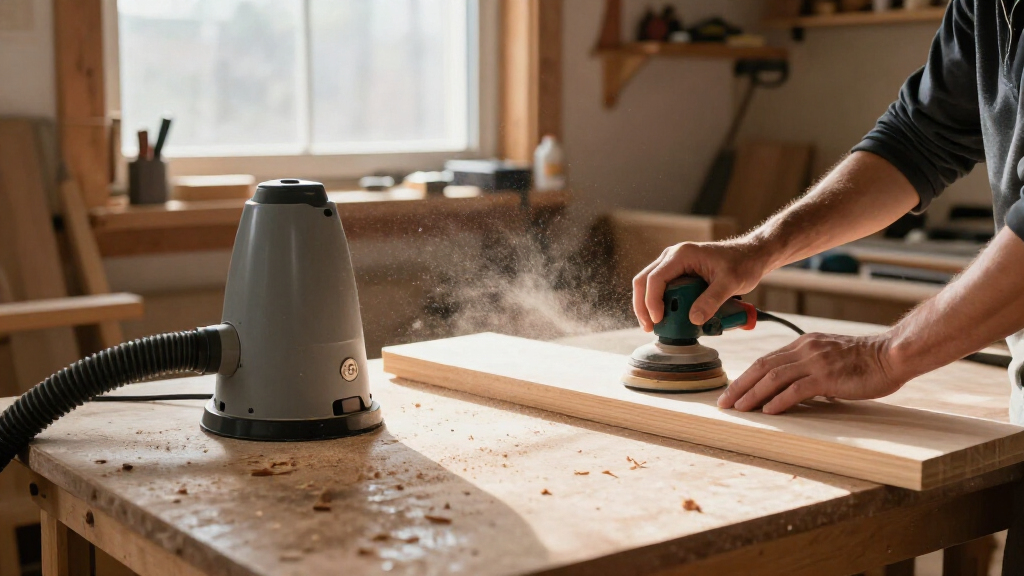
For most buyers seeking the best dust extractor vacuum, I’d start with the Festool CLEANTEC CT 26 EI HEPA: it balances HEPA filtration, workshop-ready capacity, and tool-focused features. The Bosch VAC090AH stands out for automatic filter cleaning, while the Makita VC4210L offers a larger wet/dry setup for longer jobs. The main tradeoffs are filtration and filter maintenance versus capacity, portability, and the cost of a connected tool system. A shop vacuum may handle general cleanup, but reliable dust capture at a power tool depends on more than suction alone. Read on for the full breakdown and guidance on which features matter for your work.

Get business pricing on tools and workshop supplies
- Business-only prices and quantity discounts
- Tax-exempt purchasing
- Multiple users, one account, clear invoices
Complete the kit



Key Takeaways
The Festool CT 26 EI is the most balanced pick in this group, pairing HEPA filtration and a practical capacity with features designed for connected tool use.
Automatic filter cleaning is a meaningful split: the Bosch VAC090AH, Bosch VAC140AH, and DEWALT DWV010 suit dusty, sustained work better than models without that feature.
Capacity changes the work rhythm. The 14-gallon Bosch VAC140AH and 11-gallon Makita VC4210L reduce bin interruptions, while compact options are easier to move and store.
Wet/dry versatility and fine-dust control are not the same thing. Buyers should check filtration, filter-cleaning design, and tool compatibility rather than assume a shop-vac label means jobsite dust extraction.
Pre-separation can help with heavy debris. The PEMEDOR’s dual-cyclone separator has a distinct role, but buyers should weigh its added components against the simpler setup of a conventional extractor.
| Festool CLEANTEC CT 26 EI HEPA Dust Extractor |  | Best for Connected Festool Workflows | Capacity: 26 liters | Filter: HEPA | Maximum suction: 96 inches | VIEW LATEST PRICE | See Our Full Breakdown |
| Fein Turbo I Wet/Dry Dust Extractor, 5.8-Gallon |  | Best Quiet Wet/Dry Pick | Capacity: 5.8 gallons | Motor power: 1100 watts | Airflow: 151 CFM | VIEW LATEST PRICE | See Our Full Breakdown |
| Makita VC4210L 11-Gallon Wet/Dry HEPA Dust Extractor |  | Best for Long, Dust-Heavy Sessions | Capacity: 11 gallons | Motor: 12 amps | Airflow: 148 CFM | VIEW LATEST PRICE | See Our Full Breakdown |
| Festool CT 15 HEPA Mobile Dust Extractor |  | Best Compact Indoor Extractor | Capacity: 15 liters (3.96 gallons) | Filter: HEPA | Power source: Corded electric | VIEW LATEST PRICE | See Our Full Breakdown |
| ECOMAX 8-Gallon Stainless Steel Wet/Dry Shop Vacuum and Dust Extractor |  | Best Versatile Shop-Vac Value | Capacity: 8 gallons | Tank material: Stainless steel | Filter: HEPA | VIEW LATEST PRICE | See Our Full Breakdown |
| PEMEDOR 9-Gallon Wet/Dry Dust Extractor with Dual Cyclone Pre-Separator |  | Best for Coarse Debris and Mixed Cleanup | Tank capacity: 9 gallons | Motor power: 1400 W | Maximum suction: Up to 19 kPa | VIEW LATEST PRICE | See Our Full Breakdown |
| Festool 578512 CT MIDI I HEPA Dust Extractor with Bluetooth and Automatic Tool Start |  | Best for Compact, Connected Tool Extraction | Filter type: HEPA | Power source: Corded electric | Tool activation: Automatic tool start | VIEW LATEST PRICE | See Our Full Breakdown |
| Dapper Supply 8-Gallon Wet/Dry Dust Extractor with HEPA Filter |  | Best for Automatic Filter Cleaning | Capacity: 8 gallons | Motor power: 1200 W | Airflow: Up to 140 CFM | VIEW LATEST PRICE | See Our Full Breakdown |
| Vacmaster Professional Beast 10-Gallon Wet/Dry Vac with FLT+ and Synchro Technology |  | Best for High-Capacity Wet/Dry Cleanup | Capacity: 10 gallons | Motor: 6.5 peak HP | Wattage: 1440 W | VIEW LATEST PRICE | See Our Full Breakdown |
| YOWMOFT 8-Gallon Wet/Dry Dust Extractor with Remote Control |  | Best for Remote-Controlled General Cleanup | Capacity: 8 gallons | Motor power: 1000 W | Filter: HEPA | VIEW LATEST PRICE | See Our Full Breakdown |
| Festool CLEANTEC CT 36 EI HEPA Dust Extractor |  | Best for Festool Tool-System Integration | Capacity: 9.5 gallons | Filter: HEPA | Power: Corded electric, 120 V, 800 W | VIEW LATEST PRICE | See Our Full Breakdown |
| Bosch VAC090AH 9-Gallon Dust Extractor with Automatic Filter Cleaning |  | Best for Maintaining Suction During Long Sessions | Capacity: 9 gallons | Filter: HEPA; 99.97% capture of particles 0.3 microns and larger | Automatic filter cleaning: Every 15 seconds | VIEW LATEST PRICE | See Our Full Breakdown |
| Bosch VAC140AH 14-Gallon Dust Extractor with Automatic Filter Cleaning and HEPA Filter |  | Best for High-Capacity Dust Collection | Capacity: 14 gallons | Filter: HEPA; 99.97% capture of particles 0.3 microns and larger | Maximum airflow: 150 CFM | VIEW LATEST PRICE | See Our Full Breakdown |
| DEWALT DWV010 8-Gallon HEPA Dust Extractor with Automatic Filter Cleaning |  | Best for Long-Reach Jobsite Cleanup | Capacity: 8 gallons | Filter: HEPA | Motor: 15 A | VIEW LATEST PRICE | See Our Full Breakdown |
| dust extractor vacuum | Capacity | Filter | Weight |
|---|---|---|---|
| Festool CLEANTEC CT 26 EI HEPA | 26 liters | HEPA | 17.19 kg |
| Fein Turbo I Wet/Dry Dust Extr | 5.8 gallons | HEPA | 25 pounds |
| Makita VC4210L 11-Gallon Wet/D | 11 gallons | — | — |
| Festool CT 15 HEPA Mobile Dust | 15 liters (3.96 gallons) | HEPA | — |
| ECOMAX 8-Gallon Stainless Stee | 8 gallons | HEPA | — |
| PEMEDOR 9-Gallon Wet/Dry Dust | — | — | 35.5 lb |
| Festool 578512 CT MIDI I HEPA | — | — | — |
| Dapper Supply 8-Gallon Wet/Dry | 8 gallons | HEPA | — |
| Vacmaster Professional Beast 1 | 10 gallons | HEPA media wet/dry | 23.1 lb |
| YOWMOFT 8-Gallon Wet/Dry Dust | 8 gallons | HEPA | 18.4 lb |
| Festool CLEANTEC CT 36 EI HEPA | 9.5 gallons | HEPA | 39.3 lb |
| Bosch VAC090AH 9-Gallon Dust E | 9 gallons | HEPA; 99.97% capture of particles 0.3 microns and larger | 28 lb |
| Bosch VAC140AH 14-Gallon Dust | 14 gallons | HEPA; 99.97% capture of particles 0.3 microns and larger | — |
| DEWALT DWV010 8-Gallon HEPA Du | 8 gallons | HEPA | 22 lb in specifications; 21 lb also stated |
More Details on Our Top Picks
Festool CLEANTEC CT 26 EI HEPA Dust Extractor
The CT 26 EI suits buyers who want HEPA-filtered cleanup that can work alongside a connected tool setup, rather than a basic shop vacuum. Its five suction levels let you adjust draw for different indoor tasks, while Bluetooth start support and the T-LOC Systainer attachment help integrate it with compatible equipment. Compared with the smaller Festool CT 15 HEPA, its 26-liter capacity means fewer interruptions to empty the canister, and its two products serve different priorities: the CT 15 emphasizes a compact footprint, while this model offers more capacity and suction adjustment. The tradeoff is a 17.19 kg body that is less appealing to carry between floors, and the supplied information describes automatic tool activation around compatible tools rather than universal cordless compatibility. It is an indoor-focused choice, not a wet/dry extractor.
Pros:- HEPA filtration for indoor dust collection
- Five suction levels adapt draw to different cleaning tasks
- Bluetooth start support for compatible tools or battery packs
- T-LOC attachment connects compatible Systainers
Cons:- At 17.19 kg, it is a substantial unit to carry
- Designed for indoor use rather than wet or outdoor cleanup
- Automatic tool activation depends on compatible equipment
Best for: Festool users who need a larger-capacity HEPA extractor for indoor cleaning and compatible tool-triggered dust collection.
Not ideal for: Buyers needing wet pickup, frequent stair carrying, or a compact extractor for small work areas.
- Capacity:26 liters
- Filter:HEPA
- Maximum suction:96 inches
- Suction levels:5
- Weight:17.19 kg
- Hose:Anti-static smooth suction hose, 27/32 × 3.5 m
- Included components:Main filter, SELFCLEAN filter bag, suction hose
- Special features:Bluetooth support and T-LOC Systainer attachment
Our verdict“Choose the CT 26 EI if you want a higher-capacity indoor Festool extractor with adjustable suction and compatible tool integration.”
Fein Turbo I Wet/Dry Dust Extractor, 5.8-Gallon
The Fein Turbo I is a strong fit for workshops where noise and reach matter alongside dust collection. Its 66 dB operation, 13-foot hose, and nearly 20-foot power cord make it easier to work around a station without constantly relocating the extractor. The tool-activated outlet starts collection with a connected corded tool, and its 5.8-gallon tank handles both wet and dry cleanup. Compared with the Makita VC4210L, the Fein offers lower listed airflow but a lighter 25-pound body and notably quiet operation; the Makita counters with a much larger tank and automatic filter cleaning. The Fein’s HEPA filter and anti-static function suit dust-conscious work, though the anti-static protection may require optional accessories. Its corded power and smaller capacity also make it less suitable for large, dispersed jobs.
Pros:- Quiet listed operating level of 66 dB
- Handles both wet and dry cleanup
- 13-foot hose and 19.7-foot power cord provide useful reach
- Tool-activated outlet includes a power-on delay
Cons:- 5.8-gallon capacity is smaller than the Makita VC4210L’s 11-gallon tank
- Corded operation requires access to an outlet
- Anti-static protection may require optional accessories
Best for: Woodworkers and workshop users who want a quiet wet/dry extractor with a long hose and tool-activated operation.
Not ideal for: Crews needing a large-capacity extractor for extended cleanup or users who need cordless operation.
- Capacity:5.8 gallons
- Motor power:1100 watts
- Airflow:151 CFM
- Water lift:98 inches
- Filter:HEPA
- Noise level:66 dB
- Hose and cord:13-foot hose; 19.7-foot power cord
- Weight:25 pounds
Our verdict“Pick the Fein Turbo I for quieter, mobile workshop cleanup, but choose the Makita VC4210L if capacity and automatic filter cleaning matter more.”
Makita VC4210L 11-Gallon Wet/Dry HEPA Dust Extractor
For jobs where frequent emptying and filter upkeep disrupt work, the Makita VC4210L offers a practical combination of an 11-gallon tank and automatic filter cleaning. Its two-stage filtration includes a HEPA filter, while the tool-activated outlet starts with a connected power tool and shuts off after a delay. Compared with the Fein Turbo I, the Makita has nearly twice the listed capacity and automatic filter cleaning, making it better suited to sustained concrete or woodworking cleanup; the Fein is lighter and quieter at its listed 66 dB. The Makita’s 60 dB(A) noise level is a notable advantage for an extractor of this size, but its 35-pound weight makes it less convenient to carry. The listed 240-volt requirement may also restrict where it can be plugged in, so check site power before choosing it.
Pros:- Large 11-gallon capacity reduces emptying interruptions
- Automatic filter cleaning helps maintain airflow during work
- Two-stage filtration includes a HEPA filter
- Quiet listed operation at 60 dB(A)
Cons:- 35-pound weight makes frequent carrying less convenient
- Listed 240-volt requirement may limit outlet compatibility
- Corded design ties the unit to available power
Best for: Concrete and woodworking crews with compatible power access who want a large tank and reduced manual filter maintenance.
Not ideal for: Users who need a lightweight extractor to carry between floors or whose available outlets do not match the listed 240-volt requirement.
- Capacity:11 gallons
- Motor:12 amps
- Airflow:148 CFM
- Water lift:92 inches
- Filtration:Two-stage, including HEPA filtration
- Noise level:60 dB(A)
- Hose:13-foot anti-static hose
- Weight and power:35 pounds; listed 240 volts
Our verdict“Choose the Makita for longer, dust-heavy sessions when its capacity and automatic filter cleaning outweigh the weight and power requirements.”
Festool CT 15 HEPA Mobile Dust Extractor
The Festool CT 15 HEPA is the more manageable choice for indoor cleaning where a large canister would be cumbersome. Its 15-liter container, compact chassis, and included crevice nozzle and upholstery brush make it useful beyond tool dust, covering furniture, stairs, and floor edges. Automatic tool start and AutoClean add jobsite utility, while HEPA filtration keeps it in dust-extractor territory rather than ordinary household vacuuming. Compared with the Festool CT 26 EI, this model trades capacity and adjustable suction levels for a smaller format and included cleaning tools; the CT 26’s five settings better suit buyers who want more control over draw. The CT 15 has just one listed speed, so there is less flexibility, and its corded power limits where it can work without an outlet. Its 15-liter capacity also means more frequent emptying than larger options.
Pros:- Compact chassis is easier to position in indoor work areas
- HEPA filtration with an AutoClean system
- Includes crevice and upholstery attachments
- Automatic tool start supports connected work
Cons:- 15-liter capacity requires more frequent emptying than the CT 26 EI
- Only one listed speed limits suction adjustment
- Corded power restricts use away from outlets
Best for: Home users and tradespeople who need a compact HEPA extractor for indoor floors, upholstery, and occasional tool-connected cleanup.
Not ideal for: Buyers running long, high-volume extraction sessions who need a larger tank or several selectable suction settings.
- Capacity:15 liters (3.96 gallons)
- Filter:HEPA
- Power source:Corded electric
- Speeds:1
- Form factor:Canister
- Special features:Automatic tool start and AutoClean system
- Included accessories:Crevice nozzle, upholstery brush, filter bag, suction hose
- Hose:27/32 × 3.5 m
Our verdict“Choose the CT 15 for compact indoor versatility and included detail tools, rather than for large-volume extraction or adjustable power.”
ECOMAX 8-Gallon Stainless Steel Wet/Dry Shop Vacuum and Dust Extractor
The ECOMAX 8-Gallon stands out for buyers who want one machine to switch between workshop dust collection and general wet/dry cleanup. It offers power-tool activation, a HEPA filter, semi-automatic filter cleaning, and a dust-full indicator, while the stainless steel tank and drain port simplify liquid cleanup. Its accessory package is broad, with wands, floor and utility nozzles, brushes, and disposable bags. Compared with the Fein Turbo I, the ECOMAX provides a larger listed tank and a drain port, but its 10-foot hose is shorter than the Fein’s 13-foot hose. The 8-gallon capacity sits between the Fein and the larger Makita VC4210L, making it a flexible general workshop option rather than the best fit for uninterrupted high-volume extraction. It is corded, and its reach may require repositioning near larger work areas.
Pros:- Switches between dust-extractor and wet/dry vacuum modes
- Power-tool activation supports dust capture during woodworking
- Stainless steel tank includes a drain port for liquid cleanup
- HEPA filter, semi-automatic cleaning, and dust-full indicator
Cons:- 10-foot hose offers less reach than the Fein Turbo I’s 13-foot hose
- Corded operation requires a nearby power outlet
- Smaller capacity than the Makita VC4210L for extended cleanup
Best for: Home workshop owners who want a single corded machine for tool-connected dust capture, wet cleanup, and varied household or shop tasks.
Not ideal for: Users who need long hose reach, cordless mobility, or a larger tank for continuous heavy-duty dust collection.
- Capacity:8 gallons
- Tank material:Stainless steel
- Filter:HEPA
- Motor power:6.5 HP
- Power:Corded electric, 120 volts
- Hose:10-foot anti-static hose
- Filter cleaning:Semi-automatic
- Dimensions:15.6 × 15.2 × 24.8 inches
Our verdict“Choose the ECOMAX if you want a versatile wet/dry shop vacuum with tool activation and useful accessories, and can work around its shorter hose.”
PEMEDOR 9-Gallon Wet/Dry Dust Extractor with Dual Cyclone Pre-Separator
The PEMEDOR’s dual cyclone pre-separator gives it a specific advantage for woodworking jobs that produce chips and shavings alongside fine dust: it separates larger debris before it reaches the HEPA filter, which can mean less frequent filter cleaning. Its 9-gallon tank and wet/dry capability also suit larger cleanup jobs that include damp waste or common non-corrosive spills. Compared with the Dapper Supply 8-Gallon, PEMEDOR offers more tank capacity and cyclone separation, while the Dapper adds automatic filter cleaning and a longer hose. The tradeoff is that PEMEDOR’s 35.5-pound weight makes it less appealing to move between rooms or floors. I’d choose it for a stationary workshop, not for corrosive liquids or frequent carry-and-go use.
Pros:- Dual cyclone separation diverts larger debris before it reaches the HEPA filter.
- 9-gallon capacity suits longer cleanup sessions.
- Handles both dry debris and common non-corrosive liquid spills.
- Anti-static hose is suited to dust-extraction tasks.
Cons:- At 35.5 pounds, it is relatively heavy to move.
- Corrosive-liquid compatibility is not specified.
- The 8.2-foot hose may restrict reach in larger work areas.
Best for: Woodworkers and garage users who collect chips, shavings, sawdust, and occasional non-corrosive liquid spills in a larger workspace.
Not ideal for: Users who need a lightweight extractor to carry between floors, or anyone handling corrosive liquids not specified as compatible.
- Tank capacity:9 gallons
- Motor power:1400 W
- Maximum suction:Up to 19 kPa
- Filtration:HEPA filter
- Debris separation:Dual cyclone pre-separator
- Hose:8.2 ft anti-static hose
- Use:Wet and dry cleanup
- Weight:35.5 lb
Our verdict“Choose the PEMEDOR for a workshop where cyclone separation and wet/dry capacity matter more than easy portability.”
Festool 578512 CT MIDI I HEPA Dust Extractor with Bluetooth and Automatic Tool Start
The Festool CT MIDI I is the most focused pick here for users who value a compact mobile setup and coordinated tool operation over a large collection tank. Its Bluetooth connectivity and automatic tool start can reduce trips back to the extractor when paired with compatible tools, while four wheels and touch controls keep routine setup straightforward. Compared with the 10-gallon Vacmaster Beast, it is better suited to indoor woodworking and tighter work areas, but the supplied details do not give it the same clearly stated high-capacity wet/dry advantage. Filter cleaning is manual, unlike the Dapper Supply’s automatic cleaning cycle, so ongoing upkeep takes more user attention. I’d pick the Festool for a compact, tool-connected station; skip it if you need cordless operation or a low-maintenance filter system.
Pros:- Bluetooth connectivity supports remote operation.
- Automatic tool start coordinates extraction with compatible tools.
- Compact four-wheel chassis is easy to reposition indoors.
- Tool-free filter changes and touch controls simplify routine handling.
Cons:- Corded power requires access to an outlet.
- Manual filter cleaning takes user involvement.
- The supplied product data does not specify tank capacity or suction performance.
Best for: Woodworkers and tradespeople working indoors who want a compact wheeled extractor with Bluetooth and compatible-tool activation.
Not ideal for: Buyers who need cordless freedom, automatic filter cleaning, or a clearly specified large wet/dry collection tank.
- Filter type:HEPA
- Power source:Corded electric
- Tool activation:Automatic tool start
- Connectivity:Integrated Bluetooth
- Wheels:4
- Filter cleaning:Manual
- Included hose:Smooth suction hose, 27/32 × 3.5 m AS/CTR
- Recommended uses:Construction, hard floors, hardwood, home, office, tile floors, and woodworking
Our verdict“Choose the CT MIDI I for compact indoor work where Bluetooth and tool-linked operation matter more than tank size or automatic filter cleaning.”
Dapper Supply 8-Gallon Wet/Dry Dust Extractor with HEPA Filter
The Dapper Supply is a strong fit for people who want automatic HEPA filter cleaning without stepping up to a larger extractor: the unit cleans its filter every 25 seconds to help maintain airflow during extended use. Its 140 CFM airflow, 20 kPa maximum suction, wet/dry collection, and tool-activated outlet make it more job-oriented than the remote-controlled YOWMOFT, which lists lower airflow and no tool outlet. The Dapper’s 8-gallon tank is smaller than the Vacmaster Beast’s 10 gallons, but its 13.1-foot hose and 19.7-foot cord provide a useful working span. One limitation is the tool outlet’s 5.5A ceiling, which rules out some higher-draw tools; the hose may also fall short in wide setups. I’d favor it when filter upkeep is the deciding factor.
Pros:- Automatic HEPA filter cleaning runs every 25 seconds.
- Provides up to 140 CFM airflow and 20 kPa maximum suction.
- Tool-activated outlet supports automatic start and stop with compatible tools.
- Wet/dry collection and a four-wheel rolling base suit varied jobsite cleanup.
Cons:- Tool activation is limited to tools rated up to 5.5A.
- The 13.1-foot hose may restrict reach in some setups.
- Its 8-gallon capacity is smaller than the Vacmaster Beast’s 10-gallon tank.
Best for: Woodworkers and remodelers who want wet/dry cleanup, automatic filter cleaning, and tool-linked starting for compatible lower-draw tools.
Not ideal for: Users with tools drawing more than 5.5A, or those who need a longer hose or larger tank for expansive work areas.
- Capacity:8 gallons
- Motor power:1200 W
- Airflow:Up to 140 CFM
- Maximum suction:20 kPa
- Filter:HEPA
- Filter cleaning:Automatic every 25 seconds
- Hose length:13.1 ft
- Power cord length:19.7 ft
- Warranty:2 years, parts and labor
Our verdict“Choose the Dapper Supply if automatic filter cleaning and tool activation matter more than maximum tank capacity or broad tool compatibility.”
Vacmaster Professional Beast 10-Gallon Wet/Dry Vac with FLT+ and Synchro Technology
The Vacmaster Beast earns its place through 10-gallon capacity and a single HEPA media filter specified for both wet and dry cleanup. That combination is useful when a workshop generates enough debris to make frequent emptying disruptive. Its Synchro technology supports power-tool integration, while FLT+ is designed to extend suction performance and reduce filter changes. Compared with the PEMEDOR, the Vacmaster offers a larger tank and lighter listed weight, but PEMEDOR provides dual cyclone separation ahead of its HEPA filter. The Beast’s 7-foot hose is the main practical constraint, even with a stated 27-foot total reach from hose and cord. It also needs an AC outlet. I’d choose it for capacity and mixed cleanup, but not where hose length or cordless mobility leads the decision.
Pros:- 10-gallon tank reduces interruptions for emptying.
- HEPA media wet/dry filter is specified for both cleanup types.
- Synchro technology supports integration with power tools.
- FLT+ is designed to extend suction performance and reduce filter changes.
Cons:- The 7-foot hose can limit reach around large workpieces.
- Requires access to AC power.
- The listed 6.5 peak HP figure does not provide a direct airflow comparison with models specifying CFM.
Best for: Workshop owners and contractors who need a large wet/dry tank and power-tool integration for repeated cleanup.
Not ideal for: Users who need a long standalone hose, cordless operation, or cyclone pre-separation ahead of the filter.
- Capacity:10 gallons
- Motor:6.5 peak HP
- Wattage:1440 W
- Maximum suction:72 inches of water lift
- Filter:HEPA media wet/dry
- Hose length:7 ft
- Cleaning reach:Up to 27 ft, including cord and hose
- Weight:23.1 lb
Our verdict“Choose the Vacmaster Beast for high-capacity wet/dry collection and tool integration, provided its short hose suits your setup.”
YOWMOFT 8-Gallon Wet/Dry Dust Extractor with Remote Control
The YOWMOFT stands out for flexible cleanup rather than extraction metrics: it handles wet, dry, and blower tasks, and its remote control lets a user switch it on or off from a distance. An 8-gallon tank and included HEPA filter make it a practical garage or hobby-shop option, while the 11.5-foot hose reaches farther than the Vacmaster Beast’s 7-foot hose. The difference is that the Vacmaster lists Synchro tool integration and a higher-capacity tank, making it the more purpose-built choice for demanding tool-connected extraction. YOWMOFT lists 85 CFM airflow and a 1000W motor, so buyers focused on heavy dust-producing tools may prefer the Dapper Supply’s stated 140 CFM and automatic filter cleaning. Its 78 dB noise level and corded power are notable compromises.
Pros:- Remote control supports operation from a distance.
- Wet, dry, and blower functions cover several cleanup tasks.
- 11.5-foot hose offers more reach than the Vacmaster Beast’s 7-foot hose.
- HEPA filtration and included paper bag support dust collection.
Cons:- Listed airflow is 85 CFM, below the Dapper Supply’s stated 140 CFM.
- The 78 dB noise level may be noticeable during use.
- Corded power limits movement away from outlets.
Best for: Garage owners and hobbyists who want remote operation and one machine for light dust, wet spills, and blowing debris.
Not ideal for: Professionals needing automatic filter cleaning, stronger stated airflow, or tool-activated extraction for demanding power tools.
- Capacity:8 gallons
- Motor power:1000 W
- Filter:HEPA
- Functions:Wet, dry, and blowing
- Airflow:85 CFM
- Hose length:11.5 ft
- Noise level:78 dB
- Weight:18.4 lb
- Included accessories:Cleaning brushes, straight tubes, paper bag, remote control, adapters, and wheels
Our verdict“Choose the YOWMOFT for remote-controlled, multi-purpose garage cleanup, but pick a stronger tool-oriented extractor for sustained fine-dust work.”
Festool CLEANTEC CT 36 EI HEPA Dust Extractor
The CT 36 EI is the lineup’s strongest fit for a workshop built around Festool tools and Systainers. Its Bluetooth connectivity can trigger operation with compatible battery packs, while automatic start with compatible corded tools cuts down on separate switching. Five suction settings help match extraction to the task rather than relying on one fixed level. Compared with the Bosch VAC090AH, which emphasizes automatic filter cleaning and wet/dry collection, the Festool’s case is more about tool-system convenience and adjustable suction. Its 9.5-gallon capacity offers useful room for debris, but the 39.3-pound body is heavier than the Bosch VAC090AH. Buyers also need an outlet, and its stated design is for indoor use, so it is less suited to untethered or outdoor cleanup.
Pros:- HEPA filter supports fine-dust collection.
- Bluetooth and compatible-tool activation reduce manual switching.
- Five suction levels let users tailor extraction to different tasks.
- Four wheels and a T-LOC attachment support movement with Systainers.
Cons:- Corded operation requires access to a power outlet.
- At 39.3 pounds, it is heavier than the Bosch VAC090AH.
- Designed for indoor use rather than outdoor cleanup.
Best for: Festool owners who want HEPA dust collection that can start with compatible tools and keep Systainers attached for transport.
Not ideal for: Buyers who need cordless or outdoor cleanup, or who prioritize automatic filter cleaning and a lighter extractor.
- Capacity:9.5 gallons
- Filter:HEPA
- Power:Corded electric, 120 V, 800 W
- Suction levels:5
- Connectivity:Bluetooth
- Weight:39.3 lb
- Dimensions:25 × 14.4 × 23.4 in
- Warranty:3 years
Our verdict“Choose the CT 36 EI if you want a HEPA extractor that integrates closely with compatible Festool tools and Systainers.”
Bosch VAC090AH 9-Gallon Dust Extractor with Automatic Filter Cleaning
The Bosch VAC090AH earns its place for buyers who want filter maintenance handled in the background: its system cleans automatically every 15 seconds to help sustain suction during dusty work. The HEPA filter is specified to capture 99.97% of particles 0.3 microns and larger, and the fleece bag helps contain dry debris. Unlike the Festool CLEANTEC CT 36 EI, it also supports wet/dry collection and gives priority to automatic filter cleaning rather than Bluetooth integration or multiple numbered suction levels. Its 28-pound weight and wheels make it easier to move than the heavier Festool, while the 9-gallon capacity is smaller than the Bosch VAC140AH’s 14 gallons. It remains a corded machine, and its automatic cleaning and wet/dry versatility may matter less to buyers who mainly want a connected tool-system extractor.
Pros:- Automatic filter cleaning cycles every 15 seconds to help maintain suction.
- HEPA filtration is specified for 99.97% capture at 0.3 microns and larger.
- Wet/dry collection supports varied cleanup tasks.
- Power-tool activation, adjustable suction, and wheels add practical jobsite flexibility.
Cons:- Corded operation limits use to locations with an outlet.
- Its 9-gallon capacity is smaller than the Bosch VAC140AH’s 14 gallons.
- At 28 pounds, it still requires lifting when stairs or vehicle loading are involved.
Best for: Workshop and jobsite users who want HEPA filtration, wet/dry collection, and automatic filter cleaning in a wheeled 9-gallon unit.
Not ideal for: Festool system owners seeking Bluetooth-based tool activation, or crews who need the larger capacity of the Bosch VAC140AH.
- Capacity:9 gallons
- Filter:HEPA; 99.97% capture of particles 0.3 microns and larger
- Automatic filter cleaning:Every 15 seconds
- Maximum airflow:150 CFM
- Maximum static water lift:97 in
- Power:Corded electric, 120 V
- Weight:28 lb
- Dimensions:20.5 × 14.5 × 22.6 in
- Noise level:60 dB
Our verdict“Pick the VAC090AH if automatic filter cleaning and wet/dry versatility matter more than Bluetooth integration or a larger tank.”
Bosch VAC140AH 14-Gallon Dust Extractor with Automatic Filter Cleaning and HEPA Filter
When emptying less often is the priority, the Bosch VAC140AH has the clearest advantage in this group: its 14-gallon capacity exceeds the VAC090AH’s 9 gallons and the Festool CT 36 EI’s 9.5 gallons. Bosch pairs that larger tank with HEPA filtration rated to capture 99.97% of particles 0.3 microns and larger, plus filter cleaning every 15 seconds to help keep airflow consistent. Tool activation and the Power Broker dial let users adjust extraction for different applications. The tradeoff is a larger-capacity setup that makes most sense for extended shop or jobsite work, not buyers seeking a compact extractor. The supplied data also lists a 22.25-inch hose length while separately naming a 9.85-foot hose, so I would verify the hose specification before choosing it for a layout where reach is a deciding factor.
Pros:- 14-gallon capacity means fewer interruptions to empty the extractor than with the Bosch VAC090AH.
- HEPA filter is specified to capture 99.97% of particles 0.3 microns and larger.
- Automatic filter cleaning cycles every 15 seconds.
- Power-tool activation and an adjustable Power Broker dial support task-specific extraction.
Cons:- The larger capacity is less suited to buyers prioritizing a compact extractor.
- Hose-length information conflicts: one specification lists 22.25 inches, while the included-components list names a 9.85-foot hose.
- Corded 120 V operation requires an accessible outlet.
Best for: Woodworkers and jobsite crews who generate substantial debris and want a larger tank with HEPA filtration and automatic filter cleaning.
Not ideal for: Small-shop users who need a compact machine, or buyers who depend on a clearly verified hose length before purchase.
- Capacity:14 gallons
- Filter:HEPA; 99.97% capture of particles 0.3 microns and larger
- Maximum airflow:150 CFM
- Maximum suction:97.3 in
- Automatic filter cleaning:Every 15 seconds
- Power:120 V
- Noise level:65 dB
- Included components:HEPA flat filter, fleece filter bag, 9.85 ft vacuum hose, bend nozzle, power tool adapter nozzle
Our verdict“Choose the VAC140AH when tank capacity and recurring filter cleaning outweigh compactness and the need for unambiguous hose specifications.”
DEWALT DWV010 8-Gallon HEPA Dust Extractor with Automatic Filter Cleaning
The DEWALT DWV010 is the most compelling pick here for moving around a jobsite without repeatedly repositioning the extractor. Its 15-foot anti-static hose, universal swivel connector, and four wheels support a broader working radius than the Bosch VAC090AH’s listed details provide. Automatic filter cleaning pulses every 30 seconds, less often than the Bosch models’ 15-second cycles, and the 8-gallon tank is the smallest of these four. That makes it a better match for mobile, intermittent tool use than long sessions that fill a tank quickly. The 15-amp motor and HEPA filter provide a capable dust-collection setup, but published details conflict on airflow (150 versus 155 CFM) and weight (21 versus 22 pounds). EPA RRP compliance applies only when DWV9330 filters are used.
Pros:- 15-foot anti-static hose and swivel connector support extended reach around tools and work areas.
- Automatic filter cleaning pulses during operation.
- HEPA filtration is included.
- Four wheels support movement around a jobsite.
Cons:- The 8-gallon capacity is lower than the Bosch VAC090AH, Bosch VAC140AH, and Festool CT 36 EI.
- Airflow is listed as both 150 and 155 CFM, and weight as both 21 and 22 pounds.
- EPA RRP compliance applies only when DWV9330 filters are used.
Best for: Jobsite users who value a long anti-static hose, wheeled mobility, and a compact 8-gallon extractor for connected-tool cleanup.
Not ideal for: Crews handling high volumes of debris over long sessions, or buyers who need unambiguous airflow and weight specifications.
- Capacity:8 gallons
- Filter:HEPA
- Motor:15 A
- Power:Corded, 120 V
- Airflow:150 CFM in item details; 155 CFM also stated
- Automatic filter cleaning:Pulses every 30 seconds
- Hose:15 ft anti-static hose, 1.25 in diameter
- Weight:22 lb in specifications; 21 lb also stated
- Warranty:1-year limited
Our verdict“Choose the DWV010 for hose reach and jobsite mobility, but look to the Bosch VAC140AH for longer runs with a larger debris capacity.”
How We Picked
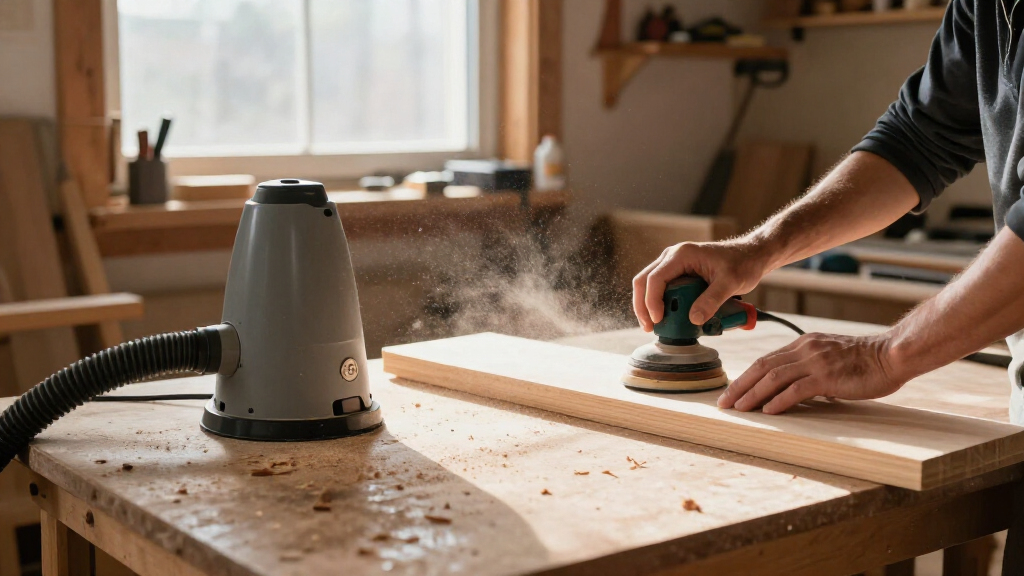
I compared these 14 models as dust extractors first, not just as wet/dry vacuums. The key factors were filtration claims, automatic or manual filter maintenance, dust-bin capacity, tool-start or remote-control features, portability, wet/dry use, and the practical demands of connecting a vacuum to a power tool. I also looked at how each design could affect everyday work: a larger tank can mean fewer stops, while a lighter or more compact unit may be easier to move between a bench and a jobsite.
The ranking favors balanced dust control and usability over any single headline spec. Models with useful extraction features and a clear fit for workshop use rank ahead of basic or less differentiated options; specialized choices rank well for buyers whose needs match their particular advantage. Capacity alone does not make a model better, and HEPA wording alone does not establish fit for every dust-control requirement. I also treat product claims as specifications to verify against the tools, filters, and work materials a buyer actually uses.
| dust extractor vacuum | Filter |
|---|---|
| Festool CLEANTEC CT 26 EI HEPA | HEPA |
| Fein Turbo I Wet/Dry Dust Extr | HEPA |
| Makita VC4210L 11-Gallon Wet/D | — |
| Festool CT 15 HEPA Mobile Dust | HEPA |
| ECOMAX 8-Gallon Stainless Stee | HEPA |
| PEMEDOR 9-Gallon Wet/Dry Dust | — |
| Festool 578512 CT MIDI I HEPA | — |
| Dapper Supply 8-Gallon Wet/Dry | HEPA |
| Vacmaster Professional Beast 1 | HEPA media wet/dry |
| YOWMOFT 8-Gallon Wet/Dry Dust | HEPA |
| Festool CLEANTEC CT 36 EI HEPA | HEPA |
| Bosch VAC090AH 9-Gallon Dust E | HEPA; 99.97% capture of particles 0.3 microns and larger |
| Bosch VAC140AH 14-Gallon Dust | HEPA; 99.97% capture of particles 0.3 microns and larger |
| DEWALT DWV010 8-Gallon HEPA Du | HEPA |
Factors to Consider When Choosing Best Dust Extractor Vacuums
Choosing among dust extractors is less about finding the largest motor and more about matching the vacuum to the dust, tools, and work pattern. I’d start with your most frequent task, then check filtration, filter upkeep, and how the machine connects to your tools. These broader tradeoffs can prevent a capable vacuum from becoming awkward or inadequate in daily use.
Match Filtration to the Dust You Make
Fine dust from sanding or cutting places different demands on a vacuum than chips and general workshop debris. Check the exact filter and filtration claims, and confirm whether the complete system—including bags, seals, and exhaust filtration—fits your workplace requirements. A HEPA label can be a useful marker, but it does not tell you how the unit performs with every tool or material. Avoid assuming that a wet/dry vacuum with a dust-extractor name is automatically appropriate for hazardous dust. If your work involves regulated materials, follow the material’s safety guidance and workplace rules rather than relying on a product title.
Treat Filter Cleaning as a Work-Pattern Choice
Automatic filter cleaning can help maintain airflow during dusty, sustained tasks, but it adds mechanisms and may produce periodic noise or interruptions. For brief jobs and occasional cleanup, manual filter maintenance may be acceptable if you are willing to stop and service the unit. Think about how often you sand or cut continuously, not just the most demanding task you do once a month. A clogged filter can undermine collection even when the vacuum still sounds powerful. Also check whether replacement filters and bags are easy to source for the model you choose.
Size Capacity for the Debris, Not the Room
A larger tank can reduce emptying stops during long jobs, but it also takes more storage space and may be harder to maneuver when full. Capacity matters most when the extractor collects bulky debris or runs through extended sessions; fine dust may fill a bag differently from wood chips. Compact models can be a better fit for a small shop where the vacuum must pass around tools and furniture. Avoid choosing solely by gallon count: tank shape, bag capacity, and how easily the container empties affect real convenience. If you move the extractor often, consider the loaded weight as well as its advertised capacity.
Check Tool Connections Before Buying
Automatic tool start, Bluetooth control, and remote operation can make extraction easier, but they only help if the vacuum works with your tools and connection setup. Compare hose diameter, adapter availability, and the power-tool triggering method before treating a control feature as a reason to buy. A connected system may be especially useful when you switch tools often, while a simple switch can suit a fixed bench setup. Hose fit matters because a poor connection can leak dust or restrict airflow. Check whether the adapters you need are included or must be purchased separately.
Decide Whether Wet/Dry Use Is Worth the Compromise
Wet/dry capability is useful for mixed cleanup, but collecting liquids and extracting fine dry dust can call for different setups and maintenance. Read the manual for instructions on changing filters or removing bags before wet pickup, and confirm whether the unit is intended for the liquids you expect to collect. If nearly all your work involves fine dust, prioritize filtration and tool connection over occasional wet use. If you need one machine for a garage that handles spills, debris, and power-tool dust, versatility may justify a larger or more involved design. Never assume a filter suitable for dry dust can remain installed for wet pickup.
Compare the Full Setup, Not Just the Vacuum
The extractor is only one part of the dust-collection system: hoses, cuffs, adapters, bags, and replacement filters shape how well it fits your tools and workflow. Before choosing, list the tools you use most and check their dust ports against the vacuum’s hose and available fittings. A less expensive or simpler machine can become a poor fit if it needs several extra components to connect properly. Likewise, a premium extractor may make sense when its controls and accessories work smoothly with the rest of your setup. Factor storage, filter availability, and cleaning time into the decision, not just the initial feature list.
Frequently Asked Questions
Can I use a regular shop vacuum as a dust extractor for power tools?
Sometimes, but a general shop vacuum may not provide the filtration, tool triggering, or filter maintenance needed for frequent fine-dust collection. Check the vacuum’s filter, dust-bag setup, and connection fit rather than judging by suction or tank size. A loose adapter or poorly matched hose can let dust escape or reduce collection at the tool. For occasional cleanup, a shop vacuum may be adequate; for sustained sanding or cutting, a purpose-built extractor is usually the more suitable direction. Follow the safety requirements for the material you are collecting.
Is HEPA filtration enough to make an extractor suitable for every hazardous dust?
No. A HEPA filter claim alone does not confirm that the whole vacuum system is certified or appropriate for every hazardous material. Bags, seals, filter installation, disposal practices, and the rules for the specific dust all matter. Check the manufacturer’s documentation and applicable workplace guidance before collecting hazardous material. For routine fine workshop dust, HEPA filtration can be a useful feature, but it should not replace a task-specific safety assessment. Do not rely on a product label as a substitute for required controls or protective equipment.
Should I choose automatic filter cleaning or a larger dust capacity?
Choose based on what interrupts your work most. Automatic filter cleaning can help during prolonged, dusty tasks where airflow loss is a recurring problem; a larger capacity can reduce stops to empty the container. If your jobs are short but produce bulky waste, capacity may matter more. If you run a sander for long sessions, filter upkeep may deserve priority even if the tank is smaller. These features solve different problems, so consider your typical job length and debris before deciding.
What should I check before connecting an extractor to my sander or saw?
Check the tool’s dust-port size, the extractor hose diameter, and whether a compatible cuff or adapter is available. Confirm how the vacuum starts: some systems use a power-tool outlet, while others rely on Bluetooth or a remote control. Also consider whether the hose will restrict movement or pull on a lightweight tool during use. A secure connection and a suitable hose often matter more than extra control features. Test the setup with the tool switched off first, and follow the instructions for both devices.
Do I need a wet/dry extractor if I only collect workshop dust?
Not necessarily. If your main job is capturing fine dust from power tools, filtration, filter cleaning, and a compatible tool connection are usually higher priorities than liquid pickup. Wet/dry capability is useful for a shared garage or workshop where spills and general cleanup are part of the routine. It can also mean more setup steps when switching between wet and dry use, so check the manual’s filter instructions. Choose the broader capability only if you expect to use it. A dedicated dry-dust setup may be simpler for a shop focused on extraction.
Conclusion
For the broadest mix of workshop dust control and tool-focused usability, I’d choose the Festool CLEANTEC CT 26 EI as best overall. Buyers seeking a more feature-led option should compare the Bosch VAC090AH for automatic filter cleaning, while those needing a larger container can look to the Bosch VAC140AH or Makita VC4210L. For a best-value choice, I’d start with the Vacmaster Professional Beast 10-Gallon and verify that its filtration and connections suit the specific work; value here means a useful feature mix, not a guarantee of fit for fine or hazardous dust. Beginners who want a compact, straightforward setup can compare the Festool CT 15 with the Fein Turbo I. For specific needs, the PEMEDOR is the standout to investigate for pre-separation, while the Festool CT MIDI I and YOWMOFT offer control-focused alternatives. I’d make the final choice by matching the extractor to your dust, tools, and work rhythm.
Black Friday Picks

Sony WH-1000XM6 Wireless Noise-Canceling Headphones, Black
As an affiliate, we earn on qualifying purchases.